Here is the latest episode in NASA’s Space to Ground weekly report on activities related to the International Space Station:
** Christina Koch’s Memorable Moments: Part 1
NASA astronaut Christina Koch’s record for the longest single spaceflight ever by a female astronaut or cosmonaut has reached a new milestone: today, it’s been 300 days (and still counting) since her launch on March 14, 2019! She’s racked up quite a few favorite moments so far—check out two of her most memorable.
** Down to Earth – Out of the Bubble
As we continue to celebrate the space station 20th anniversary, NASA astronaut Karen Nyberg shares what it was like to see the Earth from above during her two spaceflights in this episode of “Down to Earth – Out of the Bubble.” As she describes it, she experienced a shift in her worldview known as “the Overview Effect,” a term coined by space philosopher Frank White.
It has been a busy year of science aboard the International Space Station. In November, we kicked off the 20th year of continuous human presence aboard the space station, which so far has hosted 239 people and more than 2,700 science experiments. During the past year, research has ranged from growing leafy greens in microgravity to analyzing mining microbes to testing out autonomous robots. This research is benefiting people on Earth while helping prepare us to go forward to the Moon in 2024, and then on to Mars. Learn more: https://go.nasa.gov/36pXycY Learn more about the research being conducted on Station: https://www.nasa.gov/iss-science
Fabricating new tissue: “NASA astronaut Christina Koch activates the BioFabrication Facility (BFF) to test its ability to print organ-like tissues in space. Scientists and medical professionals have long dreamed of using 3D biological printers to produce usable human organs. But printing the tiny, complex structures found inside human organs has proven difficult in Earth’s gravity. The BFF allows researchers to explore whether the microgravity environment of space may support the fabrication of human organs in space.” Credits: NASA
Here is the latest episode in NASA’s Space to Ground weekly report on activities related to the International Space Station:
** Down to Earth Swimming in the Universe – “I’d give a lot to see that view again” – Mike Fossum. I don’t understand why people doubt the economic value of space tourism. Many people will pay a lot to go to space to see the sights Fossum and other astronauts have been lucky see.
In anticipation of the space station 20th anniversary, NASA astronaut Mike Fossum shares how he experienced the universe differently during his time in low-Earth orbit in this episode of “Down to Earth – Swimming in the Universe.” This shift is known as “the Overview Effect,” a term coined by space philosopher Frank White.
** Christina Koch Record Breaking Spaceflight Interviews – December 27, 2019
Aboard the International Space Station, Expedition 61 Flight Engineer Christina Koch of NASA discussed her record-setting mission and life on the orbital outpost during a series of media interviews Dec. 27. Koch, who launched to the station back in March, will pass former NASA astronaut Peggy Whitson’s mark of 288 days in space for the longest single spaceflight by a woman on Dec. 28. Koch is scheduled to return to Earth Feb. 6 on a Russian Soyuz spacecraft with a total of 328 days in space, second only to former NASA astronaut Scott Kelly’s record of 340 days in space as the longest single flight by an American astronaut.
** #AskNASA┃ How Will Astronauts Live at the Moon?
NASA is working with its partners to design and develop a small spaceship that will orbit the Moon called the Gateway. This spaceship will be a temporary home and office for astronauts, just about a five-day, 250,000-mile commute from Earth. NASA’s Gateway Program Logistics Element Manager Mark Weiss answers questions about the Gateway’s development’s for the Artemis Missions. The first logistics service to the orbital outpost is expected to deliver science, cargo and other supplies in support of the agency’s new Artemis lunar exploration program, which includes sending the first woman and the next man to the surface of the Moon by 2024.
“This rainbow-colored map shows underground water ice on Mars. Cool colors are closer to the surface than warm colors; black zones indicate areas where a spacecraft would sink into fine dust; the outlined box represents the ideal region to send astronauts for them to dig up water ice. Credits: NASA/JPL-Caltech/ASU”
A new paper published in Geophysical Research Letters will help [select landing spots on Mars] by providing a map of water ice believed to be as little as an inch (2.5 centimeters) below the surface.
Water ice will be a key consideration for any potential landing site. With little room to spare aboard a spacecraft, any human missions to Mars will have to harvest what’s already available for drinking water and making rocket fuel.
NASA calls this concept “in situ resource utilization,” and it’s an important factor in selecting human landing sites on Mars. Satellites orbiting Mars are essential in helping scientists determine the best places for building the first Martian research station. The authors of the new paper make use of data from two of those spacecraft, NASA’s Mars Reconnaissance Orbiter (MRO) and Mars Odyssey orbiter, to locate water ice that could potentially be within reach of astronauts on the Red Planet.
“You wouldn’t need a backhoe to dig up this ice. You could use a shovel,” said the paper’s lead author, Sylvain Piqueux of NASA’s Jet Propulsion Laboratory in Pasadena, California. “We’re continuing to collect data on buried ice on Mars, zeroing in on the best places for astronauts to land.”
** Recent interviews on The Space Show dealing with space settlement:
**** Fri, 12/13/2019 – Morgan Irons discussed “space farming and agriculture, closed and quasi-closed loop life support, food security and lots more”.
**** Thu, 12/05/2019 – Al Globus discussed”new information and an implementation program for his ELEO space habitat” concepts.
**** Tue, 12/03/2019 – Bryce Meyer discussed “space farms, growing food in space, lunar agriculture, food on Mars, recycling human waste, space farm energy needs and TRL’s”.
Before we get too far into this, it is important to clearly differentiate between “space settlement” and “a space settlement.” Space settlement is the general process of developing and settling space. A space settlement is a specific place in space where people live, work, and raise families.
Let’s start with a relevant dictionary definition of settlement—“the settling of persons in a new place.” This definition is almost immediately self-referential, as it refers to “settling of persons.” When we look at “settle” the verb, we see definitions that include “to migrate to and organize (an area, territory, etc); colonize,” “to cause to take up residence,” and “to furnish (a place) with inhabitants or settlers.”
All these definitions revolve around people living in a new place—“colonizing,” “taking up residence,” etc. This is very important—“taking up residence” implies permanence, family life, a job, and so on. A soldier being assigned to a base for a year is not “colonizing” or “taking up residence”—instead they are “being deployed.” A scientist might be “assigned” to work at a base in Antarctica for a period of time, but they are not “colonizing” Antarctica.
Thus, I propose that a “space settlement” is a group of people (men, women, children) who move to some specific location in space (Moon, Mars, an asteroid, orbital free space, etc.) to take up permanent residence there. This implies that they will raise their children in this “space settlement,” work in or near the “space settlement,” and in all probability die and have their remains disposed of there as well.
Skan concludes with
To summarize, the space settlements we are working to establish have the following characteristics:
Families live in them on a permanent basis
The settlements engage in commercial activity that generates the wealth needed to sustain them, and are not dependant on infusions of government funds.
They are large enough and diverse enough to be, at least potentially, both economically and biologically self-sustaining.
They may have a variety of organizational forms, including kibbutz style common ownership of the settlement, systems based on private property, company towns, or religious communities.
To say that OffWorld’s dream is an ambitious one is to put it mildly. The company envisions a future in which millions of smart robots work together using swarm intelligence “on and offworld” to build the infrastructure of tomorrow. Long term, they even imagine the possibility of using the robots to mine for materials which could be used to build new chips “with zero reliance on terrestrial supply.”
** A video of “Olympus”, Bigelow’s largest expandable habitat design:
Featuring a simple cut-away view of the B2100 “Olympus” to show the interior, this video is a compilation of previously uploaded Bigelow habitat clips as well as some new ones. Enjoy!
B330 and B2100 models by fragomatik. ISS model by NASA, adapted for use within IMAGINE v2.19 by fragomatik.
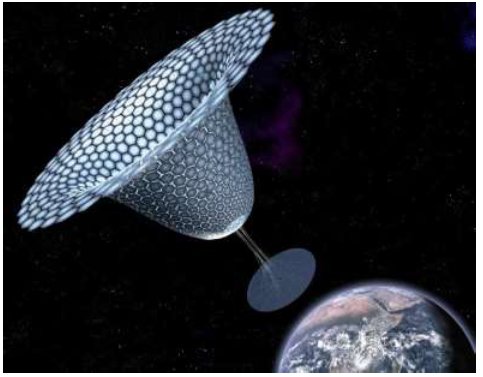
** Space based solar power has been failed to reach orbit despite decades of proposals and advocacy. Perhaps big drops in launch costs and cheaper SBSP system designs will finally make it practical, especially for powering remote sites: How to Get Solar Power on a Rainy Day? Beam It From Space | WIRED
In October, the Air Force Research Lab announced a $100 million program to develop hardware for a solar power satellite. It’s an important first step toward the first demonstration of space solar power in orbit, and [long time SBSP proponent John Mankins] says it could help solve what he sees as space solar power’s biggest problem: public perception. The technology has always seemed like a pie-in-the-sky idea, and the cost of setting up a solar array on Earth is plummeting. But space solar power has unique benefits, chief among them the availability of solar energy around the clock regardless of the weather or time of day.
It can also provide renewable energy to remote locations, such as forward operating bases for the military. And at a time when wildfires have forced the utility PG&E to kill power for thousands of California residents on multiple occasions, having a way to provide renewable energy through the clouds and smoke doesn’t seem like such a bad idea. (Ironically enough, PG&E entered a first-of-its-kind agreement to buy space solar power from a company called Solaren back in 2009; the system was supposed to start operating in 2016 but never came to fruition.)
“Illustration of One Version of the SPS-ALPHA Concept”. Credits: SPS-ALPHA NIAC study
The NASA Haughton-Mars Project (HMP) and collaborating organizations SETI Institute, Mars Institute, NASA Ames Research Center, Collins Aerospace, and Ntention are announcing the successful field test of an “astronaut smart glove” for future human exploration of the Moon, Mars, and beyond. The smart glove is a prototype for a human-machine interface (HuMI) that would allow astronauts to wirelessly operate a wide array of robotic assets, including drones, via simple single-hand gestures.
Here is a video about the project:
Haughton-Mars Project (HMP) video showing the first field test of a prototype “Astronaut Smart Glove”, a human-machine interface (HuMI) and augmented reality (AR) spacesuit system for future Moon and Mars exploration. Filmed at Haughton Crater, Devon Island, High Arctic. Collaborating organizations: Mars Institute, SETI Institute, NASA Ames Research Center, Collins Aerospace, and Ntention.
Here is the latest episode in NASA’s Space to Ground weekly report on activities related to the International Space Station:
** Expedition 61 Inflight University of New Mexico – December 10, 2019
Aboard the International Space Station, Expedition 61 Flight Engineer Christina Koch of NASA discussed life and research on board the orbital outpost during an in-flight educational event Dec. 10 with students at the University of New Mexico in Albuquerque. Koch is nearing the home stretch of a long-duration mission on the station which is expected to span 328 days by the time she returns to Earth in early February – more days in space than any other woman in history
** Expedition 61 Inflight event with Second Baptist School – December 13, 2019
Aboard the International Space Station, Expedition 61 Flight Engineer Christina Koch of NASA discussed life and research aboard the outpost during an in-flight educational event Dec. 13 with the Second Baptist School in Houston, Texas. The event featured Senator Ted Cruz of Texas who attended the private school and graduated as valedictorian in 1988. Koch is nearing the home stretch of a long-duration mission on the station which is expected to span 328 days by the time she returns to Earth in early February – more days in space than any other woman in history.
Here is the latest episode in NASA’s Space to Ground weekly report on activities related to the International Space Station:
** What Launches to Space On SpaceX’s 19th Cargo Mission? – NASA
On its 19th resupply mission, SpaceX’s Dragon spacecraft will deliver cutting-edge scientific experiments to crew members aboard the International Space Station. Learn more about some of the scientific investigations riding on Dragon to the orbiting laboratory: [SpaceX Launching Research for Better Earth Images, Easier Leak Checks | NASA]
** Down to Earth – What Else is Out There? – NASA
One year ago today, NASA astronaut Anne McClain launched on her first spaceflight to the International Space Station. In this episode of “Down to Earth – What Else is Out There?” Anne recalls her first spacewalk and how it changed her perception of Earth. The shift in worldview is inspired by space philosopher Frank White
** How Astronauts On The Space Station Watch TV & Movies – Scott Manley