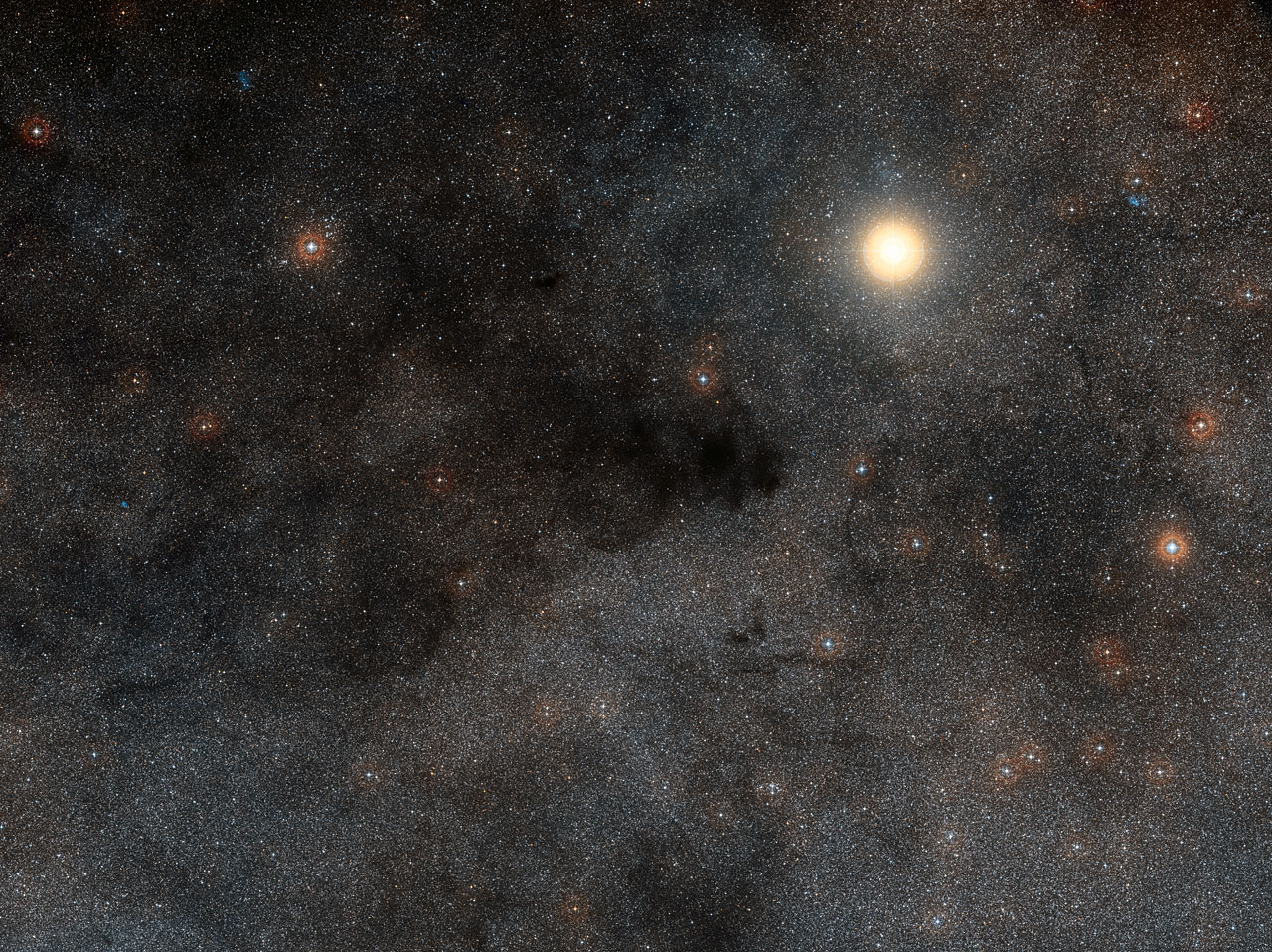
NASA JPL posts this preview of the November night sky:
NASA JPL posts this preview of the November night sky:
A couple of recent SpacePod short reports from TMRO.tv:
* What’s up! November 2015 – SpacePod 10/30/15
* The Mystery of KIC8462852 – SpacePod 10/23/15
The TMRO.tv programs are audience supported:
TMRO Space Pods are crowd funded shows. If you like this episode consider contributing to help us to continue to improve. Head over tohttp://www.patreon.com/spacepod for information, goals and reward levels. Don’t forget to check out our weekly live show campaign as well over at http://www.patreon.com/tmro
A new report from ESO (European Southern Observatory)
VISTA Discovers New Component of Milky Way
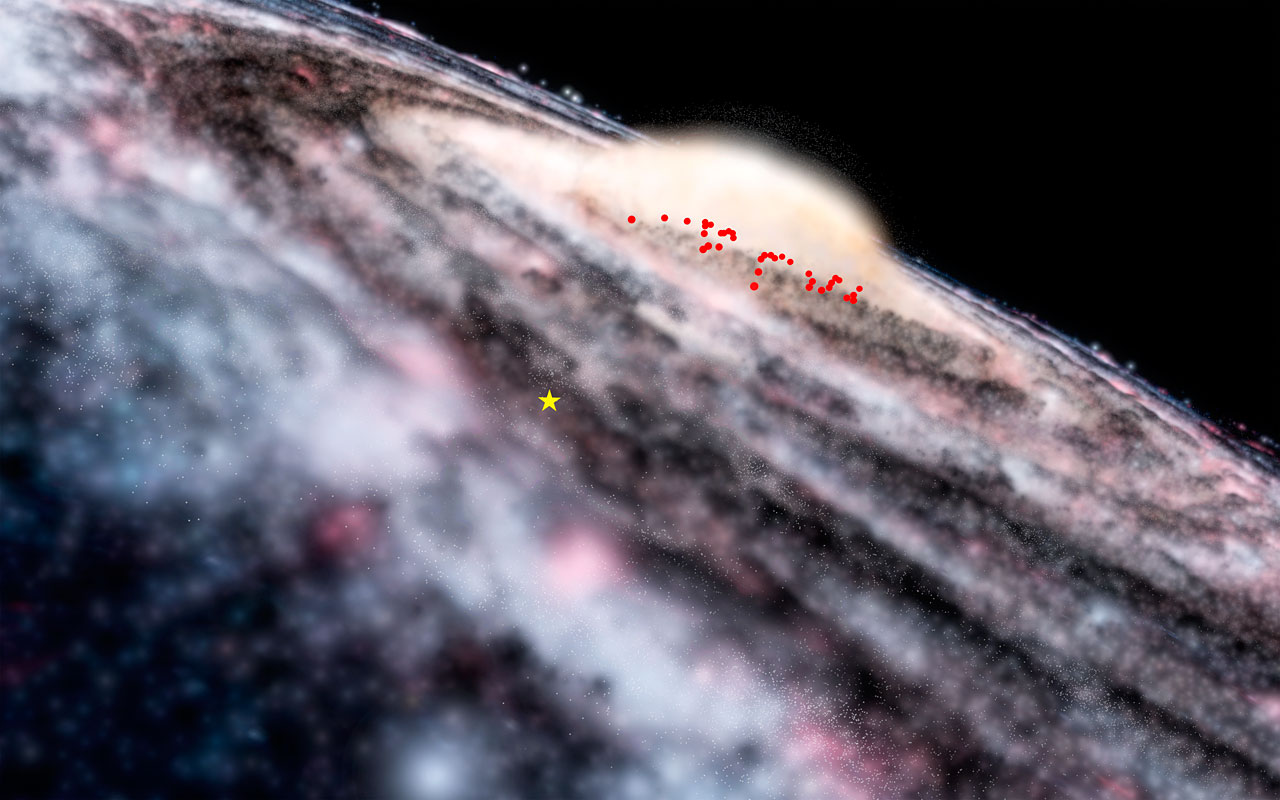
Astronomers using the VISTA telescope at ESO’s Paranal Observatory have discovered a previously unknown component of the Milky Way. By mapping out the locations of a class of stars that vary in brightness called Cepheids, a disc of young stars buried behind thick dust clouds in the central bulge has been found.
The Vista Variables in the Vía Láctea Survey (VVV) [1] ESO public survey is using the VISTA telescope at the Paranal Observatory to take multiple images at different times of the central parts of the galaxy at infrared wavelengths [2]. It is discovering huge numbers of new objects, including variable stars, clusters and exploding stars (eso1101, eso1128,eso1141).
Astronomers using the VISTA telescope at ESO’s Paranal Observatory have discovered a previously unknown component of the Milky Way. By mapping out the locations of a class of stars that vary in brightness called Cepheids, a disc of young stars buried behind thick dust clouds in the central bulge has been found.
This video shows the locations of the newly discovered Cepheids (red dots) in an artist’s rendering of the Milky Way. Credit: ESO/Microsoft Worldwide Telescope
A team of astronomers, led by Istvan Dékány of the Pontificia Universidad Católica de Chile, has now used data from this survey, taken between 2010 and 2014, to make a remarkable discovery — a previously unknown component of our home galaxy, the Milky Way.
“The central bulge of the Milky Way is thought to consist of vast numbers of old stars. But the VISTA data has revealed something new — and very young by astronomical standards!” says Istvan Dékány, lead author of the new study.
Analysing data from the survey, the astronomers found 655 candidate variable stars of a type called Cepheids. These stars expand and contract periodically, taking anything from a few days to months to complete a cycle and changing significantly in brightness as they do so.
The time taken for a Cepheid to brighten and fade again is longer for those that are brighter and shorter for the dimmer ones. This remarkably precise relationship, which was discovered in 1908 by American astronomer Henrietta Swan Leavitt, makes the study of Cepheids one of the most effective ways to measure the distances to, and map the positions of, distant objects in the Milky Way and beyond.
Astronomers using the VISTA telescope at ESO’s Paranal Observatory have discovered a previously unknown component of the Milky Way. By mapping out the locations of a class of stars that vary in brightness called Cepheids, a disc of young stars buried behind thick dust clouds in the central bulge has been found.
This video shows the locations of the newly discovered Cepheids (red dots) in an artist’s rendering of the Milky Way. Credit: ESO/Microsoft Worldwide Telescope
But there is a catch — Cepheids are not all the same — they come in two main classes, one much younger than the other. Out of their sample of 655 the team identified 35 stars as belonging to a sub-group called classical Cepheids — young bright stars, very different from the usual, much more elderly, residents of the central bulge of the Milky Way.
The team gathered information on the brightness, pulsation period, and deduced the distances of these 35 classical Cepheids. Their pulsation periods, which are closely linked to their age, revealed their surprising youth.
“All of the 35 classical Cepheids discovered are less than 100 million years old. The youngest Cepheid may even be only around 25 million years old, although we cannot exclude the possible presence of even younger and brighter Cepheids,” explains the study’s second author Dante Minniti, of the Universidad Andres Bello, Santiago, Chile.
The ages of these classical Cepheids provide solid evidence that there has been a previously unconfirmed, continuous supply of newly formed stars into the central region of the Milky Way over the last 100 million years. But, this wasn’t to be the only remarkable discovery from the survey’s dataset.
Mapping the Cepheids that they discovered, the team traced an entirely new feature in the Milky Way — a thin disc of young stars across the galactic bulge. This new component to our home galaxy had remained unknown and invisible to previous surveys as it was buried behind thick clouds of dust. Its discovery demonstrates the unique power of VISTA, which was designed to study the Milky Way’s deep structures by wide-field, high-resolution imaging at infrared wavelengths.
“This study is a powerful demonstration of the unmatched capabilities of the VISTA telescope for probing extremely obscured galactic regions that cannot be reached by any other current or planned surveys,” remarks Dékány.
“This part of the galaxy was completely unknown until our VVV survey found it!” adds Minniti.
Further investigations are now needed to assess whether these Cepheids were born close to where they are now, or whether they originate from further out. Understanding their fundamental properties, interactions, and evolution is key in the quest to understand the evolution of the Milky Way, and the process of galaxy evolution as a whole.
Notes
[1] The VVV survey is observing the central parts of our galaxy in five near-infrared bands. The total area of this survey is 520 square degrees and contains at least 355 open and 33 globular clusters. The VVV is multi-epoch in nature in order to detect a large number of variable objects and will provide more than 100 carefully spaced observations at different times for each part of the sky covered. A catalogue with about a billion point sources including about a million variable objects is expected. These will be used to create a three-dimensional map of the bulge of the Milky Way galaxy.
[2] The dust clouds in interstellar space absorb and scatter visible light very effectively and make them opaque. But at longer wavelengths, such as those observed by VISTA, the clouds are much more transparent, allowing the regions beyond the dust to be probed.
A new report from ESO (European Southern Observatory):
Final Kiss of Two Stars Heading for Catastrophe
VLT finds hottest and most massive touching double star
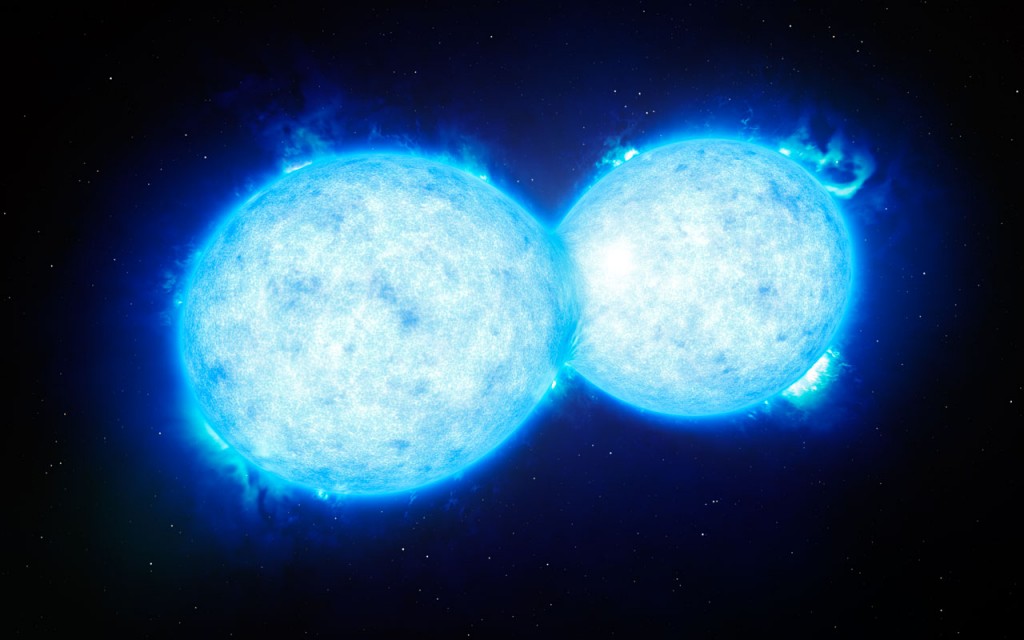
Using ESO’s Very Large Telescope, an international team of astronomers have found the hottest and most massive double star with components so close that they touch each other. The two stars in the extreme system VFTS 352 could be heading for a dramatic end, during which the two stars either coalesce to create a single giant star, or form a binary black hole.
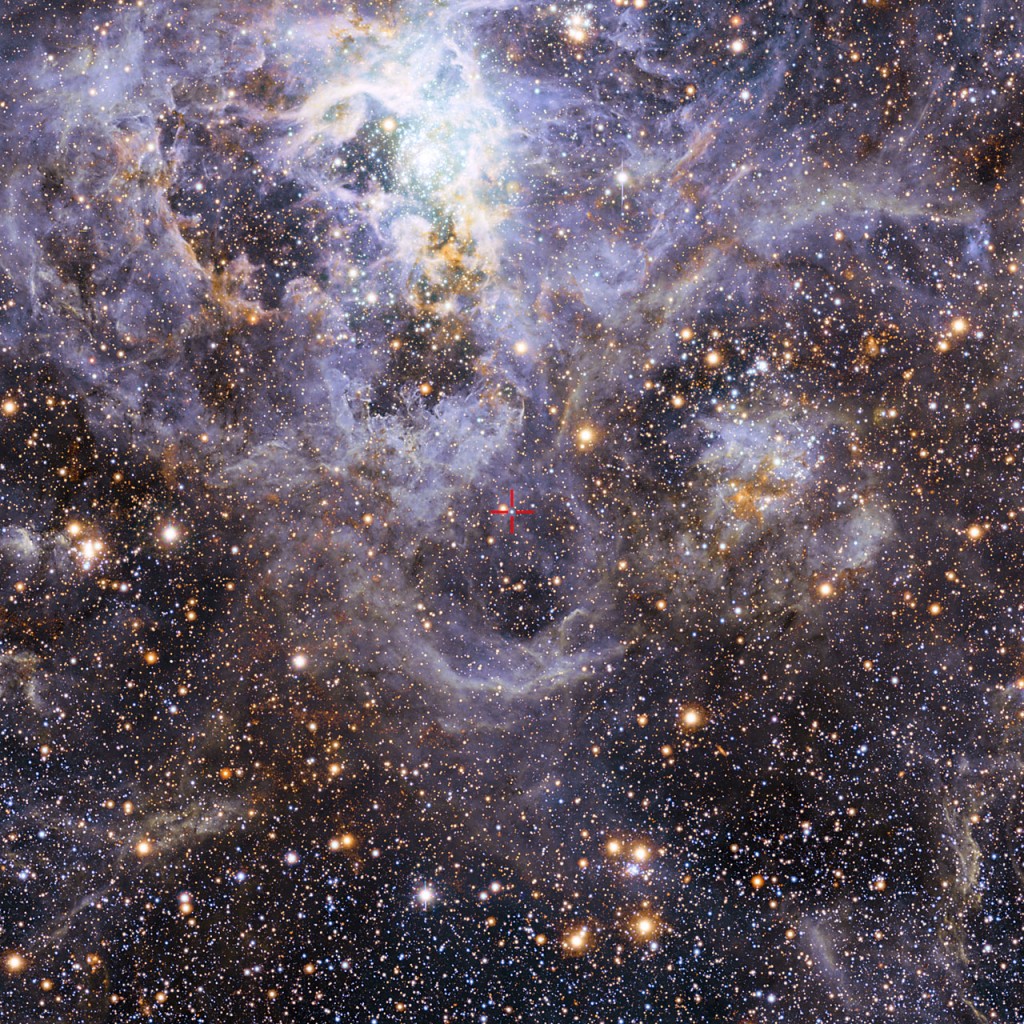
The double star system VFTS 352 is located about 160 000 light-years away in the Tarantula Nebula [1]. This remarkable region is the most active nursery of new stars in the nearby Universe and new observations from ESO’s VLT [2] have revealed that this pair of young stars is among the most extreme and strangest yet found.
VFTS 352 is composed of two very hot, bright and massive stars that orbit each other in little more than a day. The centres of the stars are separated by just 12 million kilometres [3]. In fact, the stars are so close that their surfaces overlap and a bridge has formed between them. VFTS 352 is not only the most massive known in this tiny class of “overcontact binaries” — it has a combined mass of about 57 times that of the Sun — but it also contains the hottest components — with surface temperatures above 40 000 degrees Celsius.
Extreme stars like the two components of VFTS 352, play a key role in the evolution of galaxies and are thought to be the main producers of elements such as oxygen. Such double stars are also linked to exotic behaviour such as that shown by “vampire stars”, where a smaller companion star sucks matter from the surface of its larger neighbour (eso1230).
This animated artist’s impression shows VFTS 352 — the hottest and most massive double star system to date where the two components are in contact and sharing material. The two stars in this extreme system lie about 160 000 light-years from Earth in the Large Magellanic Cloud. This intriguing pair could be heading for a dramatic end, either with the creation of a single monster star or the formation of a binary black hole. Credit: ESO/L. Calçada
In the case of VFTS 352, however, both stars in the system are of almost identical size. Material is, therefore, not sucked from one to another, but instead may be shared [4]. The component stars of VFTS 352 are estimated to be sharing about 30 per cent of their material.
Such a system is very rare because this phase in the life of the stars is short, making it difficult to catch them in the act. Because the stars are so close together, astronomers think that strong tidal forces lead to enhanced mixing of the material in the stellar interiors.
This zoom sequence starts with a broad panorama of the southern night sky and closes in on the Tarantula star-forming region in the Large Magellanic Cloud. Among the many hot young stars here lies VFTS 352 — the hottest and most massive double star system to date where the two components are in contact and sharing material. The final frames show a close-up of the region of this exotic object, in an image created from images from the Wide Field Imager at the MPG/ESO 2.2-metre telescope at La Silla. Credit: Credit: ESO/N. Risinger (skysurvey.org)/R. Gendler Music Johan B Monell
“The VFTS 352 is the best case yet found for a hot and massive double star that may show this kind of internal mixing,” explains lead author Leonardo A. Almeida of the University of São Paulo, Brazil. “As such it’s a fascinating and important discovery.”
Astronomers predict that VFTS 352 will face a cataclysmic fate in one of two ways. The first potential outcome is the merging of the two stars, which would likely produce a rapidly rotating, and possibly magnetic, gigantic single star. “If it keeps spinning rapidly it might end its life in one of the most energetic explosions in the Universe, known as a long-duration gamma-ray burst,” says the lead scientist of the project, Hugues Sana, of the University of Leuven in Belgium [5].
The second possibility is explained by the lead theoretical astrophysicist in the team, Selma de Mink of University of Amsterdam: “If the stars are mixed well enough, they both remain compact and the VFTS 352 system may avoid merging. This would lead the objects down a new evolutionary path that is completely different from classic stellar evolution predictions. In the case of VFTS 352, the components would likely end their lives in supernova explosions, forming a close binary system of black holes. Such a remarkable object would be an intense source of gravitational waves.”
Proving the existence of this second evolutionary path [6] would be an observational breakthrough in the field of stellar astrophysics. But, regardless of how VFTS 352 meets its demise, this system has already provided astronomers with valuable new insights into the poorly understood evolutionary processes of massive overcontact binary star systems.
[1] This star’s name indicates that it was observed as part of the VLT FLAMES Tarantula Survey, which utilised the FLAMES and GIRAFFE instruments on ESO’s Very Large Telescope (VLT) to study over 900 stars in the 30 Doradus region of theLarge Magellanic Cloud (LMC). The survey has already led to many exciting and important findings including the fastest rotating star (eso1147), and an extremely massive solitary runaway star (eso1117). It is helping to answer many fundamental questions concerning how massive stars are affected by rotation, binarity and the dynamics in dense star clusters.
[2] This study also used brightness measurements of VFTS 352 over a period of twelve years made as part of the OGLE survey.
[3] Both components are classed as O-type stars. Such stars are typically between 15 and 80 times more massive than the Sun and can be up to a million times brighter. They are so hot that they shine with a brilliant blue-white light and have surface temperatures over 30 000 degrees Celsius.
[4] These regions around the stars are known as Roche lobes. In an overcontact binary such as VFTS 352 both stars overfill their Roche lobes.
[5] Gamma-ray Bursts (GRBs) are bursts of highly energetic gamma rays that are detected by orbiting satellites. They come in two types — short duration (shorter than a few seconds), and long duration (longer than a few seconds). Long-duration GRBs are more common and are thought to mark the deaths of massive stars and be associated with a class of very energetic supernova explosions.
[6] Predicted by Einstein’s theory of general relativity, gravitational waves are ripples in the fabric of space and time. Significant gravitational waves are generated whenever there are extreme variations of strong gravitational fields with time, such as during the merger of two black holes.
ESO releases its latest astronomical findings:
A Cosmic Sackful of Black Coal
Dark smudges almost block out a rich star field in this new image captured by the Wide Field Imager camera, installed on the MPG/ESO 2.2-metre telescope at ESO’s La Silla Observatory in Chile. The inky areas are small parts of a huge dark nebula known as the Coalsack, one of the most prominent objects of its kind visible to the unaided eye. Millions of years from now, chunks of the Coalsack will ignite, rather like its fossil fuel namesake, with the glow of many young stars.
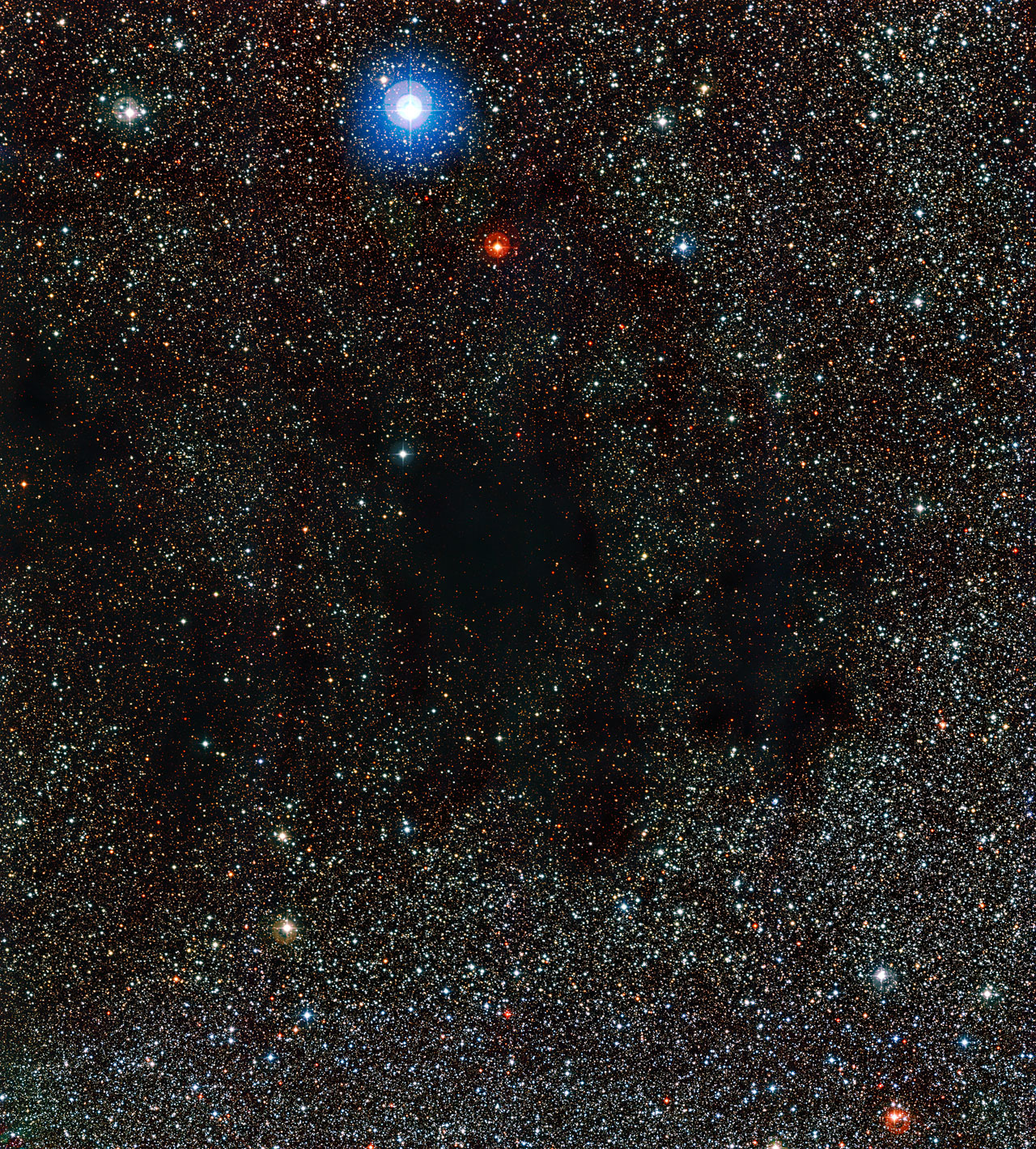
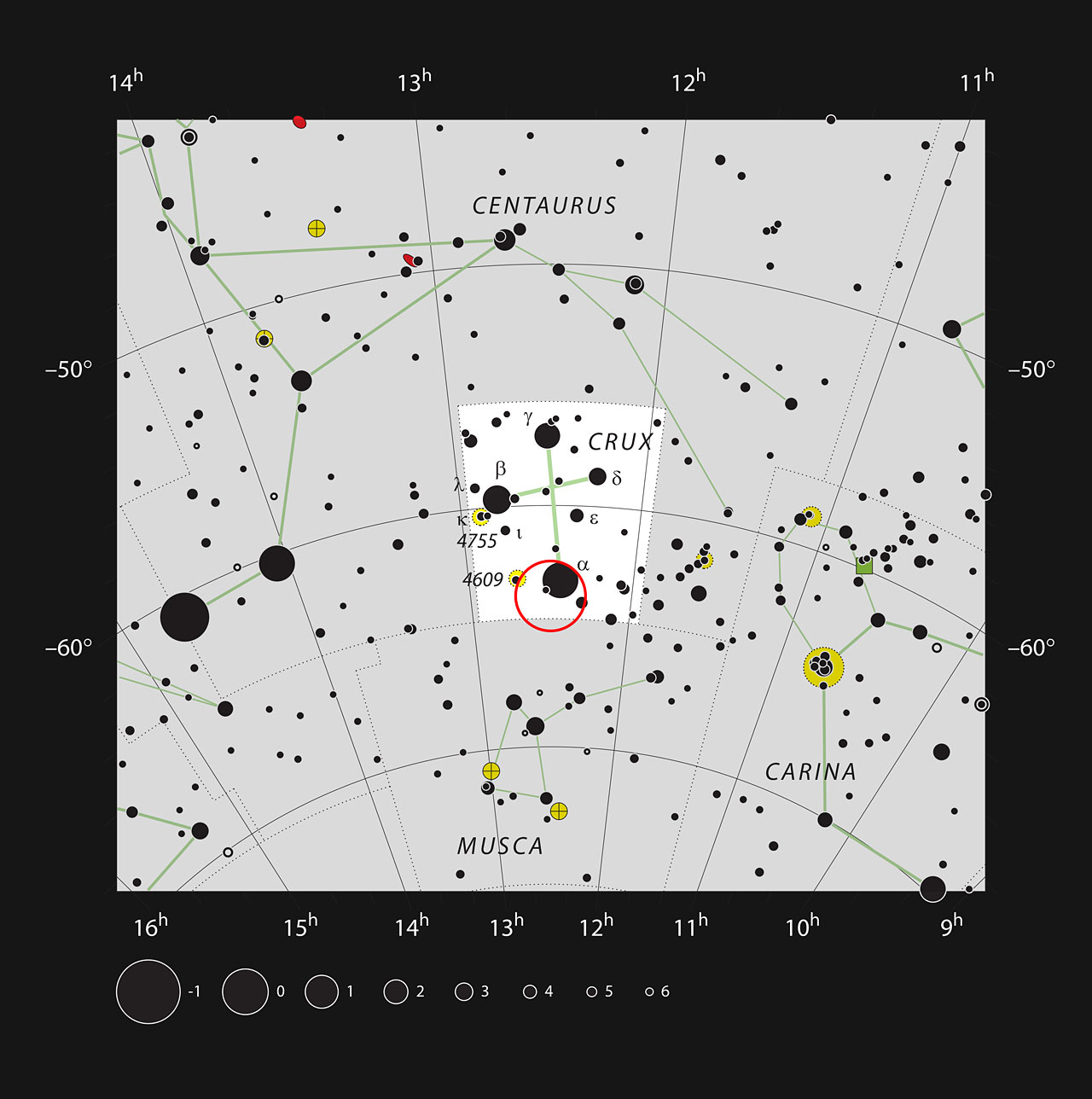
The Coalsack Nebula is located about 600 light-years away in the constellation of Crux (The Southern Cross). This huge, dusky object forms a conspicuous silhouette against the bright, starry band of the Milky Way and for this reason the nebula has been known to people in the southern hemisphere for as long as our species has existed.
The Spanish explorer Vicente Yáñez Pinzón first reported the existence of the Coalsack Nebula to Europe in 1499. The Coalsack later garnered the nickname of the Black Magellanic Cloud, a play on its dark appearance compared to the bright glow of the two Magellanic Clouds, which are in fact satellite galaxies of the Milky Way. These two bright galaxies are clearly visible in the southern sky and came to the attention of Europeans during Ferdinand Magellan’s explorations in the 16th century. However, the Coalsack is not a galaxy. Like other dark nebulae, it is actually an interstellar cloud of dust so thick that it prevents most of the background starlight from reaching observers.
This zoom video starts with a broad view of the Milky Way. We then zoom in towards the famous small constellation of Crux, the Southern Cross, and to its left, the huge dark area called the Coalsack. The final sequence takes a very close look at some of the darkest parts of this cloud and also reveals many faint stars whose light has been reddened by scattering from the dust. Credit: ESO, N. Risinger (skysurvey.org), Digitized Sky Survey 2. Music: Johan Monell (www.johanmonell.com)
A significant number of the dust particles in dark nebulae have coats of frozen water, nitrogen, carbon monoxide and other simple organic molecules. The resulting grains largely prevent visible light from passing through the cosmic cloud. To get a sense of how truly dark the Coalsack is, back in 1970, the Finnish astronomer Kalevi Mattila published a study estimating that the Coalsack has only about 10 percent of the brightness of the encompassing Milky Way. A little bit of background starlight, however, still manages to get through the Coalsack, as is evident in the new ESO image and in other observations made by modern telescopes.
This video takes a close-up look at a new image from the Wide Field Imager on the MPG/ESO 2.2-metre telescope. It shows part of the huge cloud of dust and gas known as the Coalsack Nebula, close to the Southern Cross in the southern Milky Way. The dust in this nebula absorbs and scatters the light from background stars, making many of them appear fainter and redder. Credit: ESO. Music: Johan Monell (www.johanmonell.com)
The little light that does make it through the nebula does not come out the other side unchanged. The light we see in this image looks redder than it ordinarily would. This is because the dust in dark nebulae absorbs and scatters blue light from stars more than red light, tinting the stars several shades more crimson than they would otherwise be.
Millions of years in the future the Coalsack’s dark days will come to an end. Thick interstellar clouds like the Coalsack contain lots of dust and gas — the fuel for new stars. As the stray material in the Coalsack coalesces under the mutual attraction of gravity, stars will eventually light up, and the coal “nuggets” in the Coalsack will “combust”, almost as if touched by a flame.
More information
ESO is the foremost intergovernmental astronomy organisation in Europe and the world’s most productive ground-based astronomical observatory by far. It is supported by 16 countries: Austria, Belgium, Brazil, the Czech Republic, Denmark, France, Finland, Germany, Italy, the Netherlands, Poland, Portugal, Spain, Sweden, Switzerland and the United Kingdom, along with the host state of Chile. ESO carries out an ambitious programme focused on the design, construction and operation of powerful ground-based observing facilities enabling astronomers to make important scientific discoveries. ESO also plays a leading role in promoting and organising cooperation in astronomical research. ESO operates three unique world-class observing sites in Chile: La Silla, Paranal and Chajnantor. At Paranal, ESO operates the Very Large Telescope, the world’s most advanced visible-light astronomical observatory and two survey telescopes. VISTA works in the infrared and is the world’s largest survey telescope and the VLT Survey Telescope is the largest telescope designed to exclusively survey the skies in visible light. ESO is a major partner in ALMA, the largest astronomical project in existence. And on Cerro Armazones, close to Paranal, ESO is building the 39-metre European Extremely Large Telescope, the E-ELT, which will become “the world’s biggest eye on the sky”.