Check out the night sky this month, August 2024. Here are videos highlighting the top sights to observe.
** What’s Up: August 2024 Skywatching Tips from NASA – NASA JPL
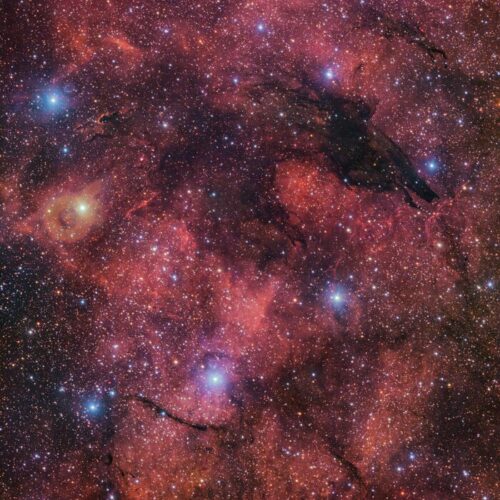
What are some skywatching highlights in August 2024? Mars and Jupiter have a super close meetup, the conditions look good for the Perseid meteors, and how to observe a stellar nursery – the Lagoon Nebula.
0:00 Intro 0:14 Moon & planet highlights 1:14 Perseid meteor shower peaks 1:51 Observing the Lagoon Nebula (M8) 3:59 August Moon phases
Additional information about topics covered in this episode of What’s Up, along with still images from the video, and the video transcript, are available at https://solarsystem.nasa.gov/skywatch….
The Perseids meteors will peak during the night of August 13 but be visible throughout the middle of the month. This image shows a time-lapse of meteors from the August 2009 shower. Credits NASA/JPL
In August, a flock of star-studded figures soars overhead. Look for the Vega and Lyra constellations, which point to Epsilon Lyrae and the Ring Nebula. You can also spot three bright summer stars: Vega, Deneb, and Altair, which form the Summer Triangle. Keep watching for space-based views of these and other stars and nebulas.
About this Series … “Tonight’s Sky” is a monthly video of constellations you can observe in the night sky. The series is produced by the Space Telescope Science Institute, home of science operations for the Hubble Space Telescope, in partnership with NASA’s Universe of Learning. This is a recurring show, and you can find more episodes—and other astronomy videos—at https://hubblesite.org/resource-gallery/tonights-sky.
What’s in the night sky tonight? Pete Lawrence and Paul Abel discuss August 2024’s astronomy and stargazing highlights, including a lunar occultation of Saturn, the Perseid meteor shower and the glorious sights of the Summer Milky Way.
00:00 Intro 00:15 Inner planets 03:22 Outer planets 09:37 Jupiter and Saturn moon events 11:22 Perseid meteor shower 12:22 Saturn moon events 13:43 Moon conjunctions 14:24 Jupiter occults a star 15:33 Moon near the Beehive 15:45 Summer Milky Way sights
Check out the night sky this month, July 2024. Here are videos highlighting the top sights to observe.
** What’s Up: July 2024 Skywatching Tips from NASA – NASA JPL
What are some skywatching highlights in July 2024? The Moon and planets come together twice in the morning sky – at the start and end of July, find the elusive planet Uranus with some help from Mars, and two star clusters – M6 and M7 – are well placed for viewing in the evening.
0:00 Intro 0:xx Moon & planet highlights x:xx Use Mars to locate planet Uranus x:xx Star clusters M6 & M7 in Scorpius x:xx July Moon phases
Additional information about topics covered in this episode of What’s Up, along with still images from the video, and the video transcript, are available at https://solarsystem.nasa.gov/skywatch….
In July, find the Scorpius constellation to identify the reddish supergiant Antares, which will lead you to discover a trio of globular star clusters. Keep watching for space-based views of these densely packed, spherical collections of ancient stars, as well as three nebulas: the Swan Nebula, the Lagoon Nebula, and the Trifid Nebula.
About this Series … “Tonight’s Sky” is a monthly video of constellations you can observe in the night sky. The series is produced by the Space Telescope Science Institute, home of science operations for the Hubble Space Telescope, in partnership with NASA’s Universe of Learning. This is a recurring show, and you can find more episodes—and other astronomy videos—at https://hubblesite.org/resource-gallery/tonights-sky.
What’s in the night sky tonight? Pete Lawrence and Paul Abel talk us through July 2024’s night-sky highlights, including noctilucent clouds, Ceres and Pluto at opposition, Galilean Moon transits and deep-sky objects in the Milky Way.
00:00 Intro 00:18 Inner planets 03:38 Outer planets 08:10 Noctilucent clouds 12:20 Ceres at opposition 12:45 Galilean moons transit 13:14 Pluto at opposition 16:39 Milky Way and deep-sky objects 19:50 Summer Triangle
** Sky & Telescope’s Sky Tour Podcast – July 2024 | Summer Stargazing and the Moon – Sky & Telescope Youtube
Our monthly Sky Tour #astronomy #podcast provides an informative and entertaining 10-minute guided tour of the nighttime sky. Join us for the July 2024 episode and get some #stargazing tips, check dates for the #Moon’s #phases, watch #Saturn migrate into the evening #sky, and tour of the #stars of summer.
Listen and subscribe to this podcast at https://skyandtelescope.org/observing/ and don’t forget to subscribe to S&T’s YouTube channel to get alerts about new videos, including this monthly podcast
Learn more about #observing and #stargazing on our website, https://skyandtelescope.org/ and subscribe to our monthly magazine at https://skyandtelescope.org/subscribe.
What’s in the Night Sky: July 2024 Jupiter and Mars Mare Frigoris ✨ Constellation of the Month: Corona Borealis
Whether you’re a beginner or an expert, looking at the night sky with the naked eye, binoculars or a telescope, check out Hayley’s tour of the night sky to find out what you can see this month.
This poster shows 42 of the largest objects in the asteroid belt, located between Mars and Jupiter (orbits not to scale). The images in the outermost circle of this infographic have been captured with the Spectro-Polarimetric High-contrast Exoplanet REsearch (SPHERE) instrument on ESO’s Very Large Telescope. The asteroid sample features 39 objects larger than 100 kilometres in diameter, including 20 larger than 200 kilometres. The poster highlights a few of the objects, including Ceres (the largest asteroid in the belt), Urania (the smallest one imaged), Kalliope (the densest imaged) and Lutetia, which was visited by the European Space Agency’s Rosetta mission.
In late 2019, the galaxy SDSS1335+0728 suddenly started shining brighter than ever before and was classified as having an active galactic nucleus, powered by a massive black hole in the galaxy’s core. This is the first time the awakening of a massive black hole has been observed in real time. This artist’s impression shows the growing disc of material being pulled in by the black hole as it feeds on the gas available in its surroundings, making the galaxy light up.
In late 2019 the previously unremarkable galaxy SDSS1335+0728 suddenly started shining brighter than ever before. To understand why, astronomers have used data from several space and ground-based observatories, including the European Southern Observatory’s Very Large Telescope (ESO’s VLT), to track how the galaxy’s brightness has varied. In a study out today, they conclude that they are witnessing changes never seen before in a galaxy — likely the result of the sudden awakening of the massive black hole at its core.
“Imagine you’ve been observing a distant galaxy for years, and it always seemed calm and inactive,”
says Paula Sánchez Sáez, an astronomer at ESO in Germany and lead author of the study accepted for publication in Astronomy & Astrophysics.
“Suddenly, its [core] starts showing dramatic changes in brightness, unlike any typical events we’ve seen before.”
This is what happened to SDSS1335+0728, which is now classified as having an ‘active galactic nucleus’ (AGN) — a bright compact region powered by a massive black hole — after it brightened dramatically in December 2019 [1].
Some phenomena, like supernova explosions or tidal disruption events — when a star gets too close to a black hole and is torn apart — can make galaxies suddenly light up. But these brightness variations typically last only a few dozen or, at most, a few hundreds of days. SDSS1335+0728 is still growing brighter today, more than four years after it was first seen to ‘switch on’. Moreover, the variations detected in the galaxy, which is located 300 million light-years away in the constellation Virgo, are unlike any seen before, pointing astronomers towards a different explanation.
The team tried to understand these brightness variations using a combination of archival data and new observations from several facilities, including the X-shooter instrument on ESO’s VLT in Chile’s Atacama Desert [2]. Comparing the data taken before and after December 2019, they found that SDSS1335+0728 is now radiating much more light at ultraviolet, optical, and infrared wavelengths. The galaxy also started emitting X-rays in February 2024.
“This behaviour is unprecedented,”
says Sánchez Sáez, who is also affiliated with the Millennium Institute of Astrophysics (MAS) in Chile.
“The most tangible option to explain this phenomenon is that we are seeing how the [core] of the galaxy is beginning to show (…) activity,”
says co-author Lorena Hernández García, from MAS and the University of Valparaíso in Chile.
“If so, this would be the first time that we see the activation of a massive black hole in real time.”
Massive black holes — with masses over one hundred thousand times that of our Sun — exist at the centre of most galaxies, including the Milky Way.
“These giant monsters usually are sleeping and not directly visible,”
explains co-author Claudio Ricci, from the Diego Portales University, also in Chile.
“In the case of SDSS1335+0728, we were able to observe the awakening of the massive black hole, [which] suddenly started to feast on gas available in its surroundings, becoming very bright.”
[Hernández García says,]
“[This] process (…) has never been observed before,”
[…] Previous studies reported inactive galaxies becoming active after several years, but this is the first time the process itself — the awakening of the black hole — has been observed in real time. Ricci, who is also affiliated with the Kavli Institute for Astronomy and Astrophysics at Peking University, China, adds:
“This is something that could happen also to our own Sgr A*, the massive black hole (…) located at the centre of our galaxy,”
but it is unclear how likely this is to happen.
Follow-up observations are still needed to rule out alternative explanations. Another possibility is that we are seeing an unusually slow tidal disruption event, or even a new phenomenon. If it is in fact a tidal disruption event, this would be the longest and faintest such event ever observed.
“Regardless of the nature of the variations, [this galaxy] provides valuable information on how black holes grow and evolve,”
Sánchez Sáez says.
“We expect that instruments like [MUSE on the VLT or those on the upcoming Extremely Large Telescope (ELT)] will be key in understanding [why the galaxy is brightening].”
Notes
[1] The SDSS1335+0728 galaxy’s unusual brightness variations were detected by the Zwicky Transient Facility (ZTF) telescope in the US. Following that, the Chilean-led Automatic Learning for the Rapid Classification of Events (ALeRCE) broker classified SDSS1335+0728 as an active galactic nucleus.
[2] The team collected archival data from NASA’s Wide-field Infrared Survey Explorer (WISE) and Galaxy Evolution Explorer (GALEX), the Two Micron All Sky Survey (2MASS), the Sloan Digital Sky Survey (SDSS), and the eROSITA instrument on IKI and DLR’s Spektr-RG space observatory. Besides ESO’s VLT, the follow-up observations were conducted with the Southern Astrophysical Research Telescope (SOAR), the W. M. Keck Observatory, and NASA’s Neil Gehrels Swift Observatory and Chandra X-ray Observatory.
Check out the night sky this month, June 2024. Here are videos highlighting the top sights to observe.
** What’s Up: June 2024 Skywatching Tips from NASA – NASA JPL
What are some skywatching highlights in June 2024?
Saturn and Mars continue to dominate the a.m. sky, but they’re joined by Jupiter as the month goes on. And some tips for identifying some commonly seen objects in the night sky.
0:00 Intro 0:14 Moon & planet highlights 1:03 Identifying common objects 4:14 June Moon phases
“Planet Parade” note: Some online sources have shared excitement about a “parade of planets” visible in the morning sky in early June. In reality, only two of the six planets supposedly on display will actually be visible. Jupiter and Mercury will be at or below the horizon in morning twilight and not visible; Uranus and Neptune are far too faint to see without a telescope, especially as the morning sky brightens. The real planet parade will be June 29, when Saturn, the Moon, Mars, and Jupiter will line up across the morning sky. We’ll talk more about that lineup in the July “What’s Up” video.
Additional information about topics covered in this episode of What’s Up, along with still images from the video, and the video transcript, are available at https://solarsystem.nasa.gov/skywatch….
Though the nights are shorter in June, they are filled with fine sights. Look for the Hercules constellation, which will lead you to a globular star cluster with hundreds of thousands of densely packed stars. You can also spot Draco the dragon, which will point you to the Cat’s Eye Nebula. Keep watching for space-based views of globular star clusters and the nebula.
About this Series … “Tonight’s Sky” is a monthly video of constellations you can observe in the night sky. The series is produced by the Space Telescope Science Institute, home of science operations for the Hubble Space Telescope, in partnership with NASA’s Universe of Learning. This is a recurring show, and you can find more episodes—and other astronomy videos—at https://hubblesite.org/resource-gallery/tonights-sky.
Pete Lawrence and Paul Abel reveal what’s in the night sky this month, including how to find Comet C/2023 A3 Tsuchinshan-ATLAS, how to locate the T Coronae Borealis nova event, Ceres at opposition and noctilucent clouds.
00:00 Intro 00:15 Inner planets 06:12 Outer planets 09:52 The Moon 10:59 Comet C/2023 A3 Tsuchinshan-ATLAS 14:56 Daytime Moon 16:36 Summer Solstice 17:05 Einstein crater, Mare Orientale 18:49 Ceres at opposition 19:34 Noctilucent clouds 20:55 Arcturus and Boötes 21:50 T Coronae Borealis nova 25:31 Spica and Antares 27:27 Ophiuchus
** Sky & Telescope’s Sky Tour Podcast – June 2024 | Summer Solsctice and a Snake-handler in the Sky. – Sky & Telescope Youtube
Our monthly Sky Tour #astronomy #podcast provides an informative and entertaining 10-minute guided tour of the nighttime sky. Join us for the June 2024 episode where we time this month’s #solstice, trace the #Moon’s cycle of phases, spot three #planets before dawn, and track down a snake-handler in the early summer #sky.
Check out the night sky this month, May 2024. Here are videos highlighting the top sights to observe.
** What’s Up: May 2024 Skywatching Tips from NASA – NASA JPL
What are some skywatching highlights in May 2024?
Mars and Saturn tussle with the Moon, Mercury makes a brief a.m. appearance, East Coasters can see red giant star Antares emerge from behind the Moon, and the eta Aquariid meteors peak on May 6th.
0:00 Intro 0:15 Moon & planet highlights 1:06 Moon occults Antares 1:53 eta Aquariid meteor shower 3:54 May Moon phases
Additional information about topics covered in this episode of What’s Up, along with still images from the video, and the video transcript, are available at https://solarsystem.nasa.gov/skywatch….
In May, we are looking away from the crowded, dusty plane of our own galaxy toward a region where the sky is brimming with distant galaxies. Locate Virgo to find a concentration of roughly 2,000 galaxies and search for Coma Berenices to identify many more. Keep watching for space-based views of galaxies like the Sombrero Galaxy, M87, and M64.
About this Series … “Tonight’s Sky” is a monthly video of constellations you can observe in the night sky. The series is produced by the Space Telescope Science Institute, home of science operations for the Hubble Space Telescope, in partnership with NASA’s Universe of Learning. This is a recurring show, and you can find more episodes—and other astronomy videos—at https://hubblesite.org/resource-gallery/tonights-sky.
What can you see in the night sky tonight? Pete Lawrence and Paul Abel reveal the best things to see in the night sky this month, including the Eta Aquariid meteor shower, Asteroid Pallas at opposition, noctilucent clouds and a tantalising lunar occultation of star cluster M4.
00:00 Intro 00:21 Solar System planets 04:39 Eta Aquariid meteor shower 05:29 The Moon 10:52 Minor planet (2) Pallas opposition 11:16 Noctilucent Clouds 12:39 Lunar occultation of M4 14:03 Arcturus and Boötes 17:45 Corona Borealis 19:47 Keystone asterism in Hercules 21:05 Globular cluster M13 25:19 Spica 26:00 Virgo 27:17 Antares
** Sky & Telescope’s Sky Tour Podcast – May 2024 | Full Moon and the Swiss Army knife of the Sky – Sky & Telescope Youtube
Our monthly Sky Tour #astronomy #podcast provides an informative and entertaining 10-minute guided tour of the nighttime sky. Join us for the May 2024 episode where we highlight this month’s #lunar phases, track down three #planets before dawn, keep alert for bits of #Halley’s #Comet, and get to know the Swiss Army knife of the #night #sky.
Listen and subscribe to this podcast at https://skyandtelescope.org/observing/ and don’t forget to subscribe to S&T’s YouTube channel to get alerts about new videos, including this monthly podcast