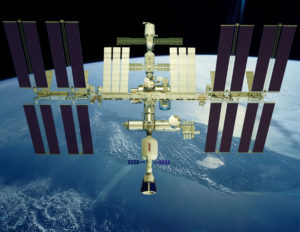
Here is the latest episode in NASA’s Space to Ground weekly report on activities related to the International Space Station:
** Nauka unexpectedly fires thrusters after docking, tilts space station – NASA explains – VideoFromSpace
The Nauka multipurpose module inadvertently began firing its thrusters after docking with the International Space Station. NASA public affairs officer Rob Navias explains. All the astronauts aboard are safe. — Russia’s Nauka module briefly tilts space station with unplanned thruster fire: https://www.space.com/nauka-module-th…
** Watch conversations and footage between Houston and the ISS in the dangerous event that occurred – space googlevesaire
Watch the conversations between Houston and the space station and side shift footage from the direction the Space Station is in during the dangerous event at the International Space Station. At the end of the video, the astronauts also mention that the situation is stable.
** … Expedition 65 International Space Station Update… – NASA Video – A real-time ISS control room report during Thursday, July 29 after the unplanned firings of the thrusters on the Nauka module.
Space Station Stable After Earlier Unplanned MLM Thruster Firing Following the docking of the Multipurpose Laboratory Module (MLM), named Nauka, to the International Space Station at 9:29 am EDT Thursday, July 29, Russian cosmonauts aboard the space station conducted leak checks between Nauka and the service module. At 12:45 pm, the flight control team noticed the unplanned firing of MLM thrusters that caused the station to move out of orientation. Ground teams have regained attitude control and the motion of the space station is stable. The crew was never and is not in any danger, and flight controllers in Mission Control Houston are monitoring the status of the space station. Updates on the space station will be provided on NASA.gov and the agency’s social media pages.
** Media Teleconference: International Space Station Update – NASA Video – An audio briefing from NASA on Thursday, July 29th about the anomalous firing of thrusters on the Russian Nauka module, which docked with the station earlier that day.
** Expedition 65 Multipurpose Laboratory Module Nauka Docking – July 29, 2021 – NASA Video
The Russian “Nauka” Multipurpose Laboratory (MLM) docked to the space station July 29 following a launch from the Baikonur Cosmondrome in Kazakhstan on July 21. “Nauka”, the Russian word for science, replaced the Pirs Docking Compartment which undocked from the station July 24 and was deorbited by an unpiloted Progress supply ship after 20 years of service at the orbiting outpost. The Multipurpose Laboratory Module will serve as a research lab, docking port, and airlock for Russian segment spacewalks.
** Expedition 65 Scripps Institution of Oceanography – July 20, 2021 – NASA Video
Aboard the International Space Station, Expedition 65 Flight Engineer Megan McArthur of NASA discussed the view of Earth from orbit and other research topics during an in-flight interview July 20 with members of the Scripps Institution of Oceanography in San Diego. McArthur is in the midst of a planned six-month mission aboard the complex, having launched in April on the SpaceX Crew Dragon “Endeavour”.
** Orbital Flight Test-2: Crew and Science Briefing – NASA’s Kennedy Space Center – An Orbital Flight Test-2 (OFT-2) virtual NASA Social “chat with NASA astronauts and learn more about the science launching aboard Boeing’s Starliner spacecraft“.
** Pirs docking compartment departs space station in stunning time-lapse – VideoFromSpace
** SpaceX Crew Dragon spacecraft re-docks with space station after changing ports – VideoFromSpace
SpaceX Crew-2 astronauts NASA’s Shane Kimbrough and Megan McArthur, JAXA’s Akihiko Hoshide and ESA’s Thomas Pesquet moved the Crew Dragon Endeavour to a new docking port on the International Space Station on July 21, 2021.
** Celebrating 20 Years of International Space Station Spacewalks – NASA Johnson
On July 20, 2001, two NASA astronauts took the first “steps” out of the International Space Station’s Quest airlock, marking the start of two decades of successful spacewalks in support of station assembly, maintenance, and upgrades enabling all of the life and work onboard to take place. On the same date 32 years before this milestone spacewalk outside the space station, two Apollo astronauts were taking historic steps of their own on the lunar surface for the first time. Astronaut Mike Gernhardt tells us what it was like to follow in such momentous footsteps and how crucial innovations, like the airlock and many others, are to the future of human exploration near and far.
This roundup provides a sampling of recent articles, videos, and images dealing with space transport (find previous roundups here). Part 2 here focuses on SpaceX while Part 1 reports on activities and news of other space transportation companies and organizations around the world.
There were no Starship prototype flights since the last roundup on May 18th but a tremendous amount of activity continued at SpaceX regardless. The Starship section below describes the action in Boca Chica Beach. We start, though, with a look at Falcon 9 and non-Starship related activities:
Launch/Landing: A rapid F9 mission rate continued up till a pause in July due to a scheduled pause for launches to allow KSC/Cape Canaveral to carry out annual maintenance. There have been 20 F9 launches so far this year. Only one of the 20 booster landings failed.
Reuse of F9 boosters has reached as many as 10 flights. The max number could reach significantly more than that according to Elon Musk. So far, SpaceX has detected no need for retirement, or even major refurbishment, of boosters after 10 missions, which was the original target for the number of reuses with minimal refurbishment between flights.
Starlink constellation reached the initial operational size of nearly 1600 active satellites with the Starlink 28 v1.0 mission. Once all the satellites reach their final target orbits, uninterrupted global service between the polar circles will be available.
New customized droneship goes operational for landings on the Atlantic and a droneship arrives on the West Coast. Starlink launches into polar orbit will start this summer from Vandenberg AFB and a droneship is needed to provide for booster landings.
CRS-22 Cargo Dragon launched, docked, departed, and landed safely.
** May 26 : Starlink 28 v1.0 put 60 more satellites into orbit. With this launch, the total number of satellites fills the “first shell” needed to provide global coverage between +/- 53 degrees latitude. The first stage booster previously flew once before for the Sentinel-6A mission. The booster landed successfully on the “Just Read the Instructions” droneship in the Atlantic Ocean. According to SpaceX, “One half of Falcon 9’s fairing previously supported four Starlink missions, and the other previously supported a Starlink mission and the Transporter-1 mission.”
*** June 3: Cargo Dragon launched to the ISS and docked two days later. The CRS-22 mission involves a brand new Dragon craft (denoted as C209) and the Falcon 9 used a a brand new Falcon 9 booster (denoted as B1067). Along with supplies and science materials, the Dragon delivered two new solar arrays for the ISS.
*** June 6: Falcon 9 launched SirusXM Radio satellite SXM-8, built by Maxar. The first stage booster landed successfully for the 3rd time. It previously flew for SpaceX’s Crew-1 and Crew-2 missions carrying astronauts to the International Space Station. The first stage landed on the “Just Read the Instructions” droneship, located in the Atlantic Ocean.
*** June.17: Falcon 9 launches GPS satellite for USAF. This was the fiirst national security satellite to launch on reused booster. The booster landed safely on a droneship platform in the Atlantic.
** June 30: SpaceX launches Transporter-2 Rideshare mission with 88 satellites on board. The first stage landed safely back at Cape Canaveral after its 8th flight.
*** Customized droneship for F9 booster landings unveiled: The new droneship, A Shortfall of Gravitas (ASOG), will soon provide a platform for boosters landings in the Atlantic. ASOG differs significantly from the older droneships –Just Read The Instructions (JRTI) and Of Course I Still Love You (OCISLY) – in looks and capabilities. Most of the support equipment is protected from the rocket’s flames within dark metal casings. The landing pad is somewhat smaller. ASOG also has its own propulsion system so it doesn’t need towing to and from the recovery location. Combined with the robotic Octagrabber robot that secures the booster after it lands, the ship will eventually allow for recovery and transport to port to be controlled remotely with no need for workers to come on board.
July 9: The “Of Course I Still Love You” (OCISLY) droneship arrived on the West Coast after a long trip from Florida aboard the semi-submersible ship “Mighty Servant 1“. OCISLY will provide a landing platform for boosters launched from Vandenberg Space Force Base that cannot return to the launch site for landing.
==================
Check out the The Lurio Report
for news and analysis of key developments in NewSpace
The latest issue: Bezos to Fly, SpaceX Gains, Commercial Space Markets
Vol. 16, No. 4, June 8, 2021
Space Frontier Foundation Award for NewSpace Journalism
==================
*** Starship
The primary focus of the Starship program since the successful SN15 flight on May 5th has been the construction of the orbital launch and landing facility at Boca Chica Beach plus assembly and testing of two Super Heavy Booster prototypes. The goal of all this work is to carry out an orbital test flight of a combined Starship/Super Heavy booster as soon as possible. (See the animation below of the orbital test, which would have the Starship reenter and land on the ocean near Hawaii, short of a complete orbit.)
Booster #3: This non-flight unit was assembled and moved to the suborbital launch pad area where it was prepared for pressure and firing tests. Three Raptor engines were attached and on
Booster #4: Stacking is underway in the High Bay building. This will be the first flight-capable Super Heavy booster.
Starship SN20 is expected to be the first Starship prototype to do an orbital test flight. It is currently being assembled in the Mid Bay hangar.
Raptor engine progress includes full duration firing, acceleration of assembly of new engines, and plans for a new Raptor factory at the McGregor, Texas site.
Orbital launch tower reached its final height on July 28th with the lifting of the final segment into place. Considerable work remains to install the tower’s infrastructure of power lines, propellant piping, crane, etc.
Orbital launch site tank farm involves several large tanks to provide propellants for the vehicle plus water to flood the area beneath the rocket blast at liftoff. The tanks are constructed in a manner similar to the Starship/Super Heavy tank bodies using nine meter diameter stainless still rings. There are also shells being built to cover the metal tanks to provide for insulation to maintain the cryogenic temperatures of the propellants. A complex network of pipes, pumps, cooling systems, etc. supports the tank farm.
Summer target for the first orbital test launch has been a goal. However, FAA regulatory hurdles, including a possible requirement to carry out a whole new environmental impact study for Starship/Super Heavy launches from Boca Chica, could lead to a long delay and, worst case, a permanent block.
Sea launch facilities using two converted oil drilling platforms could be ready by early 2022. If launches from the Boca Chica site suffer a lengthy delay due to regulatory issues, these platforms could become a viable alternative.
Starship applications will extend far beyond just transporting settlers to Mars. Delivery of large bunches of Starlink satellites to orbit, space debris retrieval, orbiting of large space telescopes, etc have been mentioned recently.
Final decision made earlier this week on booster engine count. Will be 33 at ~230 (half million lbs) sea-level thrust. All engines on booster are same, apart from deleting gimbal & thrust vector actuators for outer 20.
Yeah, that would be cool. Also, using ship itself as structure for new giant telescope that’s >10X Hubble resolution. Was talking to Saul Perlmutter (who’s awesome) & he suggested wanting to do that.
** Lots of Raptor engines will be needed for the 100s of StarShips (6 engines) and Super Heavy boosters (33 engines) rolling off the assembly line in the coming years. SpaceX has already produced a good sized flock of Raptors:
** USAF program studying use of Starship-class vehicles for fast global transportation. The Air Force is requesting $47.9 million in the 2022 budget for a study of “Rocket Cargo“. (The US military is starting to get really interested in Starship | Ars Technica.) Since the 1960s there have been occasional studies by the military into using suborbital rocket transports for super-fast global delivery of supplies and troops to crisis spots. The emergence of the fully reusable, vertical takeoff and landing Starship has clearly generated renewed interest in such technology, which is no longer just theoretical. From the start, SpaceX has a promoted the Starship as capable of suborbital, point-to-point transport in additional to orbital and deep space missions. This was presented in the context of civilian passenger flight services but clearly military transport is an option as well.
While speaking at the National Defense Transportation Association’s Fall Meeting on Oct. 7, U.S. Army Gen. Stephen R. Lyons, commander, U.S. Transportation Command (USTRANSCOM), announced USTRANSCOM is looking to space to quickly move critical logistics during time-sensitive contingencies or to deliver humanitarian assistance, helping to project and sustain the Joint Force in support of national objectives.
Speaking at the virtual meeting from the command’s headquarters at Scott Air Force Base, Illinois, on Oct. 7, Lyons told the audience about USTRANSCOM’s partnership with Space Exploration Technologies Corporation (SpaceX) and Exploration Architecture Corporation (XArc) to explore this emerging capability of rapid transportation through space.
“Think about moving the equivalent of a C-17 payload anywhere on the globe in less than an hour,” Lyons asked the virtual audience. “Think about that speed associated with the movement of transportation of cargo and people. There is a lot of potential here and I’m really excited about the team that’s working with SpaceX on an opportunity, even perhaps, as early as 21, to be conducting a proof of principle.”
Logistics traditionally labors under the tyranny of distance and time, and global access. For example, operations in the Pacific Ocean theater may transit 10,000 miles—one way.
“For the past 75 years or so, we have been constrained to around 40,000 feet altitude and 600 miles per hour in our very fastest method of logistics delivery—airlift,” said USTRANSCOM deputy commander, U.S. Navy Vice Adm. Dee Mewbourne, who leads the command’s effort in this area.
Current space transportation is also more weight- and volume-constrained than airlift, and faces challenges in positioning, launching, and recovery operations. As industry advances to overcome these challenges as well as increase its pace of launches to decrease costs, a space transportation capability to put a crucial cargo quickly on target at considerable distances makes it an attractive alternative.
The XArc CRADA [Cooperative Research and Development Agreements] tasks are to determine global spaceport basing criteria for Point-to-Point space transportation and delivery, and assess the ground support and logistics requirements needed for integrating a spacelift capability. The research study evaluates ground support infrastructure requirements with regard to support facilities, cargo standardizations and logistics for materiel handling, mission dedicated equipment, supplies, materiel and personnel, and intermodal cargo transfer. International regulatory issues of air and space law are also addressed, as well as infrastructure security considerations.
The goal is to establish a seamless integration of air and space transport modalities to work through a variety of possible contingencies. The study considers a variety of emerging space transportation technologies in development by commercial service providers, and also considers Orbital Depots to determine viability of “space drop” supply logistics.
It seems clear that defense leaders are eager to be an early adopter of these technologies. Officials said the Department of Defense would even consider buying initial launches at a reduced price to both support the companies’ test programs as well as to test logistics materials and procedures.
And while, initially, cargo-carrying rockets probably would land at existing spaceports or runways, that need not always be the case. One day, such urgent rocket deliveries might land anywhere on the planet, rugged terrain or not, Spanjers said. He noted that rockets, after all, have landed on the Moon.
“If they can land in those places, we’re interested in knowing to what extent we can extend that to a larger range of terrains on Earth, so that we can do immediate cargo transports to basically anywhere on the planet quickly,” he said.
Artist’s view of a delivery of emergency cargo via a VTOL rocket vehicle. Credits: USAF/Ars Technica
With suborbital Starship tests seemingly complete with SN15’s successful landing, all eyes are on the first orbital test flight of a full Starship-Super Heavy stack. This test, scheduled to take place only in a few month’s time, will feature the world’s tallest and most powerful rocket ever built taking flight for the first time. This animation shows the proposed flight plan of that first orbital test flight. NOTE: Some aspects of this animation are inaccurate or out of date. During the production many new pieces of information were revealed that weren’t known at the time certain scenes were animated.
*** Sampling of daily video reports from Boca Chica:
*** July.20: Super Heavy Booster 3 Static Fires for the First Time | SpaceX Boca Chica – NASASpaceflight – YouTube
SpaceX performs a full duration static fire of Super Heavy Booster 3. This is the first prototype booster to be fueled and ground tested. Booster 3 has three Raptor engines installed though Elon Musk stated they may try to fire it with nine engines in the future. Video from Mary (@BocaChicaGal) and the NSF Robotic Camera Team. Edited by Brady Kenniston (@TheFavoritist)
*** July.21: New Raptor Boost Engine “R2B2” Delivered for Super Heavy | SpaceX Boca Chica – NASASpaceflight – YouTube
As crews inspect Booster 3 after its successful static fire, more Raptor engines for a Super Heavy booster are delivered. Dubbed “R2B2” by McGregor crews, Raptor Boost 2 (RB2) may be mounted on the outer engine ring of a Booster prototype in the coming months. Video & Photos from Mary (@BocaChicaGal) and the NSF Robotic Camera Team. Edited by Nathan Shields
** July 23: Raptor Engine Removed from Super Heavy Booster 3 | SpaceX Boca Chica – NASASpaceflight – YouTube
Raptor engine RC59 was removed from Super Heavy Booster 3, work started on the 9th section of the Launch Tower, and a Super Heavy Aft dome was spotted being worked on inside one of the production tents. Video and Pictures from Steven Marr (@spacecoast_stve). Edited by Nate Shields.
Three Raptor engines were delivered, Super Heavy Booster 4’s Methane Transfer Tube (also known as the downcomer) was installed, and work on the orbital launch table continued. Video and Pictures from Mary (@BocaChicaGal) and the NSF robots. Edited by Nate Sheilds.
*** Other Starship and space transport videos:
*** July.26: Starship Tests Payload Bay Design, Booster 3 Static Fire, New Test Rig Built | This Week in Starbase – NASASpaceflight – YouTube
As SpaceX pushes toward the Orbital Test Flight, critical pieces needed to support the flight start to fall into place. Ian Atkinson walks you through the progress being made at Starbase. Hosted by Ian Atkinson (@IanPineapple).
*** July.21: SpaceX working on design for Starship 2.0! – What about it!?
Today we’ll talk Starship 2.0. SpaceX’s latest design changes that will be present on the orbital flight. We’ll also talk about the lead theory for the mystery structure, and we’ll talk about the Super High Bay. SpaceX’s even larger Starship high bay to begin construction soon! Let’s find out!
*** July.24: SpaceX’s Mechazilla Rises, Starliner Prepares, Nauka Launch, Wally Funk’s flight to Space – Marcus House
Not only did we see Raptor action this week with SpaceX’s record-sized rocket booster, but we witnessed the launch of Russia’s Nauka Laboratory for the International Space Station. Better late than never. We have updates on Hubble’s Trouble and Rocket Lab’s anomaly review. The Dragon has been tamed yet again, and of course, we had the first crewed flight of New Shepard with Wally Funk’s long-awaited ride to space. Quite the action-packed week right there!
*** July.27: SpaceX’s Mechazilla Rises, Starliner Prepares, Nauka Launch, Wally Funk’s flight to Space – Marcus House
Today, we’ll have a closer look at how NASA and SpaceX might fly to the Moon. We already teased the scenarios in the last video talking about SpaceX’s Human Landing System and what mission options could be possible, but today, we want to add some numbers. True, there are lots of official numbers missing but we have found some clues on how it might go. …
*** July.12: Why SpaceX Will Move To New Thrusters To Simplify Starship – Scott Manley
Starship and SuperHeavy development continue, there hasn’t been any more test flights of Starship as they have decided to move on to testing the booster and putting Starship into orbit.
A sampling of recent articles, videos, and images dealing with space transport (find previous roundups here). Part 1 focuses on news from companies and organizations around the world. Part 2 Roundup focuses on SpaceX.
** July 20: Blue Origin flies New Shepard with people for first time. On the 52nd anniversary of the first human landing on the Moon, a Blue Origin New Shepard vertical-takeoff-and-landing rocket lifted off from the company’s East Texas facility with humans aboard for the first time. The crew included Jeff Bezos, his brother Mark, Wally Funk, and 18 year old Oliver Daemen (see items below about Funk and Daemen). Their capsule rode atop the New Shepard’s booster powered by a BE-3 liquid hydrogen-liquid oxygen engine. The engine shut off after about 110 seconds at roughly 40 kilometers in altitude and the rocket continued upward to over 100 kilometer. Near apogee the capsule separated from the booster. The booster returned for a powered landing while the capsule came back to earth via parachutes.
Blue Origin successfully completed New Shepard’s first human flight today with four private citizens onboard. The crew included Jeff Bezos, Mark Bezos, Wally Funk and Oliver Daemen, who all officially became astronauts when they passed the Kármán Line, the internationally recognized boundary of space.
Upon landing, the astronauts were greeted by their families and Blue Origin’s ground operations team for a celebration in the West Texas desert.
A Historic Mission
Wally Funk, 82, became the oldest person to fly in space.
Oliver Daemen, 18, was the first ever commercial astronaut to purchase a ticket and fly to space on a privately-funded and licensed space vehicle from a private launch site. He also became the youngest person to fly in space.
New Shepard became the first commercial vehicle under a suborbital reusable launch vehicle license to fly paying customers, both payloads and astronauts, to space and back.
Jeff and Mark Bezos became the first siblings to ever fly in space together.
“Today was a monumental day for Blue Origin and human spaceflight,” said Bob Smith, CEO, Blue Origin. “I am so incredibly proud of Team Blue, their professionalism, and expertise in executing today’s flight. This was a big step forward for us and is only the beginning.”
Blue Origin expects to fly two more crewed flights this year, with many more crewed flights planned for 2022.
Blue has not yet announced ticket prices or how sales will be arranged. However, during the briefing (see video below), Jeff Bezos said that in private interactions with auction bidders and others have led to reservations adding up to $100 million:
*** July 18: A pre-flight briefing from Blue Origin:
*** July 15: It was announced that the winner of the seat auction (see below) will ride on a later flight. Daemen will take the auction winner’s place on the July 20th flight. It’s said that Oliver’s father, Joes Daeman, a billionaire founder of a private equity firm, was one of the high bidders during the auction.
Today, Blue Origin announced Oliver Daemen will be the first paying customer to fly on board New Shepard, marking the beginning of commercial operations for the program. He will join Jeff Bezos, Mark Bezos, and Wally Funk aboard the first human flight on July 20. At 18-years-old and 82-years-young, Oliver Daemen and Wally Funk represent the youngest and oldest astronauts to travel to space.
The winner of Blue Origin’s auction, who has asked to remain anonymous at this time, has chosen to fly on a future New Shepard mission due to scheduling conflicts. Club for the Future announced this week the auction gift has enabled Club to donate $1 million to 19 non-profit organizations ($19 million in total), all of which are working to support the future of living and working in space.
*** A comparison of the two suborbital space flight systems:
*** $28M buys a ticket to fly to space with Jeff Bezos and his brother. An open bidding session on June 12th was the final phase of the auction of a seat on the first New Shepard to go to suborbital space with people on board the capsule. The flight is set for July 20th, the 52nd anniversary of the first human to walk on the Moon. The identity of the winner of the auction will be revealed in a few weeks, presumably after the money is transferred. (With auction fees, the total is actually $29.6M.)
Funk was a member of the group of women pilots in the 1960s who, in a private, non-NASA related project, passed a similar suite of physiological tests as given to male astronaut candidates by NASA and the USAF. However, the women pilots, later dubbed the “Mercury 13”, could not become NASA astronauts due to the rules of the day, particularly the requirement that astronauts must have experience as test pilots. (For more about women and NASA spaceflight in the 1960s, see The Myth of the Mercury 13 – Space KSC)
However, over the last year, Bezos took note as SpaceX launched and landed its Starship vehicle. This is one of the reasons he decided to initiate a project named “Jarvis” at Blue Origin within the reusable second-stage program. Sources said Bezos has walled off parts of the second-stage development program from the rest of Blue Origin and told its leaders to innovate in an environment unfettered by rigorous management and paperwork processes.
Work has advanced quickly on the Jarvis project, apparently named after the character in the Marvel Cinematic Universe. Initial tank tests could begin as soon as this fall on stainless steel hardware at Blue Origin’s site in Florida, followed by further tests if the approach proves feasible. For now, at least, the company’s plan is to launch New Glenn initially with an expendable second stage before transitioning to the fully reusable upper stage in the mid-2020s. Such a fully reusable launch system is now seen as a key to competing with SpaceX to launch large payloads.
** July 11: Virgin Galactic SpaceShipTwo Unity flies Richard Branson to suborbital space along with 3 other passengers and 2 pilots. Although the SpaceShipTwo vehicle VSS Unity has reached space three times before (see entry below about the May 22nd flight), this flight was the first with a full crew of six. It also marked a long promised milestone by taking the founder to space, highlighting the management’s confidence in the safety of the system.
There will be two more test flights and then operational flights will start with paying customers on board. Meanwhile, the company is getting a bit of revenue from carrying research experiments on board, some of which will require crew tending. Even on this flight, VG executive Sirisha Bandla operated a small hand-held microgravity plant experiment from the University of Florida and funded by NASA – Virgin Galactic’s SpaceShip Two Carries NASA-Supported Payload | NASA.
Today’s flight was the 22nd test flight of VSS Unity and the first test flight with a full crew in the cabin, including the Company’s founder, Sir Richard Branson. The crew fulfilled a number of test objectives related to the cabin and customer experience, including evaluating the commercial customer cabin, the views of Earth from space, the conditions for conducting research and the effectiveness of the five-day pre-flight training program at Spaceport America.
…
VSS Unity achieved a speed of Mach 3 after being released from the mothership, VMS Eve. The vehicle reached space, at an altitude of 53.5 miles, before gliding smoothly to a runway landing at Spaceport America.
This seminal moment for Virgin Galactic and Sir Richard Branson was witnessed by audiences around the world. It gave a glimpse of the journey Virgin Galactic’s Future Astronauts can expect when the Company launches commercial service following the completion of its test flight program.
…
The mission specialists in the cabin were Beth Moses, Chief Astronaut Instructor; Colin Bennett, Lead Flight Operations Engineer; Sirisha Bandla, Vice President of Government Affairs and Research Operations; and the Company’s founder, Sir Richard Branson. The VSS Unity pilots were Dave Mackay and Michael Masucci, while Kelly Latimer and CJ Sturckow piloted VMS Eve.
Check out the webcast of Virgin Galactic’s Unity 22 flight. Here is a video of highlights from takeoff through landing:
Virgin Galactic VP Sirisha Bandla looks out a SS2 port window. Credit: Virgin Galactic
The “Unity 22” mission will be the twenty-second flight test for VSS Unity and the Company’s fourth crewed spaceflight. It will also be the first to carry a full crew of two pilots and four mission specialists in the cabin, including the Company’s founder, Sir Richard Branson, who will be testing the private astronaut experience.
Building on the success of the Company’s most recent spaceflight in May, Unity 22 will focus on cabin and customer experience objectives, including:
Evaluating the commercial customer cabin with a full crew, including the cabin environment, seat comfort, the weightless experience, and the views of Earth that the spaceship delivers — all to ensure every moment of the astronaut’s journey maximizes the wonder and awe created by space travel
Demonstrating the conditions for conducting human-tended research experiments
Confirming the training program at Spaceport America supports the spaceflight experience
There will be a live streaming webcast from the cabin. This video introduces the pilots and crew:
Virgin Galactic today completed its third spaceflight and the first ever spaceflight from Spaceport America, New Mexico. Today’s flight sees New Mexico become the third US state to launch humans into space.
VSS Unity achieved a speed of Mach 3 after being released from the mothership, VMS Eve, and reached space, at an altitude of 55.45 miles before gliding smoothly to a runway landing at Spaceport America.
On VSS Unity’s flight deck were CJ Sturckow and Dave Mackay, while Kelly Latimer and Michael Masucci piloted VMS Eve. CJ, who flew as pilot-in-command, becomes the first person ever to have flown to space from three different states. The crew experienced extraordinary views of the bright, blue-rimmed curvature of the earth against the blackness of space. New Mexico’s White Sands National Park sparkled brilliantly below. Their experience today gives Virgin Galactic’s Future Astronaut customers a glimpse of what lies ahead.
Michael Colglazier, Chief Executive Officer of Virgin Galactic, said: “Today’s flight showcased the inherent elegance and safety of our spaceflight system, while marking a major step forward for both Virgin Galactic and human spaceflight in New Mexico. Space travel is a bold and adventurous endeavor, and I am incredibly proud of our talented team for making the dream of private space travel a reality. We will immediately begin processing the data gained from this successful test flight, and we look forward to sharing news on our next planned milestone.”
Virgin Galactic fulfilled a number of test objectives during the flight, including:
Collected data to be used for the final two verification reports that are required as part of the current FAA commercial reusable spacecraft operator’s license.
Tested the spaceship’s upgraded horizontal stabilizers and flight controls and validated EMI reductions.
Following the flight, and in line with normal procedures, Virgin Galactic will conduct a review of all test data gathered and thoroughly inspect the spaceship and mothership. Once the team confirms the results, the Company plans to proceed to the next flight test milestone.
One of the payloads aboard is an electromagnetic field measurement experiment from the Johns Hopkins Applied Physics Laboratory (APL). Previous flight tests led to the technology’s evolution into the JANUS platform, which provides suborbital researchers with vital information about the environmental conditions inside a spacecraft, while also adding to knowledge about the lower ionosphere encountered at suborbital flight altitudes and how it may impact the performance of spacecraft and the technologies aboard them.
Progressively refined versions of the system have flown on Masten’s Xodiac vertical takeoff and vertical landing system and Blue Origin’s New Shepard rocket-powered system, and the upcoming flight will be the second on SpaceShipTwo. The APL team is shaping JANUS into an integration platform for scientific research and suborbital instrument development, and adds to the technology’s environmental monitoring capabilities with each iterative flight. This progressive flight testing could eventually enable external suborbital environmental monitoring as well, by mounting the payload to the outside of a spacecraft.
“The access to these commercial flight vehicles through the Flight Opportunities program is truly game changing,” said H. Todd Smith, the JANUS principal investigator at APL. “This enables new phases of research and technology development with lower cost and repeatable testing. Without it, technologies that are highly relevant to suborbital flight research would be years behind where we are now.”
Also aboard SpaceShipTwo will be the Collisions into Dust Experiment (COLLIDE) from the University of Central Florida in Orlando. In addition to early tests aboard the space shuttle, the technology has flown on New Shepard, SpaceShipTwo, and parabolic flights. The experiment aims to advance our understanding of the behavior of dust and fine particles in response to human and robotic activities in space – on the Moon, Mars, and asteroids. It could also add to what scientists know about planet formation. Changes to the experiment setup since the last flight include improved stabilization of the payload and changes to the triggering of the experiment to maximize data collection in microgravity.
“We’re able to observe and learn more because of the ability to fly and then fly again,” said principal investigator Josh Colwell. “Our experiments on SpaceShipTwo are designed to help us learn more about the particular types of dust and particle collisions that previous flights showed us could be very interesting to study more closely – and to fix parts of our experiment that didn’t work the first time we tried them. So, the ability to make design changes and fly again is so crucial to gathering the data we need and hopefully increasing the science return on our work.”
The flight had been delayed to check an issue with the WhiteKnightTwo VMS Eve carrier aircraft:
Virgin Galactic regularly monitors its vehicles to verify their condition and inform timing of future upgrades and modifications that can improve performance or reduce future maintenance work. A post-flight inspection of VMS Eve in early May called for further engineering analysis to assess a known maintenance item in the tail of the vehicle, which was scheduled to be addressed during the next maintenance period. This analysis has been completed with the Company determining structures healthy, clearing Eve for flight.
Virgin Galactic today announced that the Federal Aviation Administration (“FAA”) updated the Company’s existing commercial space transportation operator license to allow the spaceline to fly customers to space.
The Company also announced that it has completed an extensive review of data gathered from its May 22 test flight and confirmed that the flight performed well against all flight objectives.
The adjustment to Virgin Galactic’s operator’s license, which the Company has held since 2016, marks the first time the FAA has licensed a spaceline to fly customers. It is further validation of the Company’s methodical testing program, which has met the verification and validation criteria required by the FAA.
Michael Colglazier, Chief Executive Officer of Virgin Galactic, said, “We’re incredibly pleased with the results of our most recent test flight, which achieved our stated flight test objectives. The flight performed flawlessly, and the results demonstrate the safety and elegance of our flight system. Today’s approval by the FAA of our full commercial launch license, in conjunction with the success of our May 22 test flight, give us confidence as we proceed toward our first fully crewed test flight this summer.”
Virgin Galactic has announced a new contract to fly Kellie Gerardi, a researcher for the International Institute for Astronautical Sciences (IIAS), on a dedicated research flight, during which Kellie will conduct experiments and test new healthcare technologies while she is in space.
The IIAS and Virgin Galactic teams will collaborate with academic and government partners to carefully plan Kellie’s flight activities to maximize the science and technology advancements gained from the research experiments.
Since 2015, IIAS has established research and education programs that use a variety of space-analog environments. The research spaceflight will advance the scientific knowledge gained from a number of Kellie’s previous reduced gravity flight campaigns performed here on Earth, including with the National Research Council of Canada and the Canadian Space Agency (CSA).
The IIAS experiments to be flown in space include the Astroskin Bio-Monitor wearable sensors system, developed by Canadian company Carré Technologies Inc. (Hexoskin) with the support of the CSA, as well as a free-floating fluid configuration experiment. The IIAS and Virgin Galactic teams will collaborate closely with academic and government partners to carefully plan Kellie’s spaceflight activities to maximize the science and technology advancements gained from her research experiments.
IIAS Founder Dr. Jason Reimuller said, “We’re excited to leverage the unique benefits of Virgin Galactic’s Spaceflight System for human-tended research. This has been a long-time goal of our institute and IIAS is proud to be the first research institute to produce a commercial astronaut. Throughout her years working with our institute, Kellie has demonstrated the expertise needed to produce novel research in dynamic operational environments. We’re looking forward to enabling the next generation of scientist-astronauts to conduct their research in space. ”
Kellie Gerardi said, “I’m enormously proud of my work with IIAS and I’m grateful to Dr. Reimuller and the team for the continued investment in me. I’m also excited by the precedent we’re setting with this human-tended research flight. I’m honored to take this first step on behalf of our community, and I’m looking forward to supporting the many talented researchers who will certainly follow.”
The dedicated mission is scheduled for lift-off on July 29, 2021 NZT (July 29 UTC) and will see Electron deploy an Air Force Research Laboratory-sponsored demonstration satellite called Monolith. The satellite will explore and demonstrate the use of a deployable sensor, where the sensor’s mass is a substantial fraction of the total mass of the spacecraft, changing the spacecraft’s dynamic properties and testing ability to maintain spacecraft attitude control. Analysis from the use of a deployable sensor aims to enable the use of smaller satellite buses when building future deployable sensors such as weather satellites, thereby reducing the cost, complexity, and development timelines. The satellite will also provide a platform to test future space protection capabilities.
…
The mission was procured by the Department of Defense (DoD) Space Test Program (STP) and the Rocket Systems Launch Program (RSLP), both based at Kirtland Air Force Base, New Mexico.; in partnership with the Defense Innovation Unit (DIU) as part of the Rapid Agile Launch Initiative (RALI). The mission is being managed by the Launch Enterprise’s Small Launch and Targets Division, which is part of the USSF’s launch organization of choice. The mission has been named ‘It’s a Little Chile Up Here’ in a nod to the beloved green chile of New Mexico where the Space Test Program is based.
‘It’s a Little Chile Up Here’ will be Rocket Lab’s fourth launch for the year and the company’s 21st Electron launch overall.
Originally slated for lift-off from Launch Complex 2 (LC-2) at the Mid-Atlantic Regional Spaceport on NASA’s Wallops Island, Virginia, the mission has been transferred to Launch Complex 1 (LC-1) in New Zealand while NASA continues certification processes for autonomous flight termination system software for launches from LC-2.
The May 15 anomaly occurred after 17 successful orbital flights of the Electron launch vehicle which has deployed more than 100 satellites to orbit since 2018. Immediately following the anomaly, Rocket Lab launched a rigorous internal review, assembling its investigation team with oversight by the Federal Aviation Administration (FAA). The investigation team scoured thousands of channels of telemetry and systems data from the flight and worked systematically through an extensive fault tree analysis to determine the cause of the failure.
The review concluded that an issue occurred within the second stage engine igniter system almost three minutes and 20 seconds into the flight. This induced a corruption of signals within the engine computer that caused the Rutherford engine’s thrust vector control (TVC) to deviate outside nominal parameters and resulted in the engine computer commanding zero pump speed, shutting down the engine.
The igniter fault resulted from a previously undetectable failure mode within the ignition system that occurs under a unique set of environmental pressures and conditions. The issue was not evident during extensive pre-flight testing for this mission, including more than 400 seconds of burn for this particular engine, more than 1,500 Rutherford engine hot fires to date, and 17 successful orbital launches. Rocket Lab has since been able to reliably replicate the issue in testing and has implemented redundancies in the ignition system to prevent any future reoccurrence, including modifications to the igniter’s design and manufacture.
The anomaly review confirmed that Electron’s first stage performed flawlessly during the mission and did not contribute to the flight issue. As a result, Rocket Lab was able to conduct a successful reentry, ocean splashdown and recovery of the first stage as planned, marking a major milestone in the company’s program to make Electron a reusable launch vehicle.
** Chinese commercial companies developing reusable rockets. Several rocket startup companies in China are pursuing reusable vehicles. Some are starting from small, low altitude vertical-takeoff-and-landing (VTOL) rockets, similar to the Masten Space vehicles, to learn the basics of reusable rocket construction and operation. They then plan to build orbital class rockets similar to the SpaceX Falcon 9 with a reusable first stage booster and expendable upper stage.
The funds will be used for the first flight on the Tianlong-1 reusable kerosene-liquid oxygen launch vehicle. Few details of the Tianlong-1 rocket have been revealed. Space Pioneer stated in September 2020 that the first flight vehicle would have a payload capacity to low Earth orbit of more than three metric tons. The first flight was slated for 2021 but Space Pioneer offered no date for the Tianlong-1 launch with the funding announcement.
Space Pioneer says it also completed the final assembly of the Tiansuo-1 vertical takeoff, vertical landing test stage in recent days. Fellow Chinese commercial firms iSpace and Deep Blue Aerospace are also closing in VTVL test stage “hop” tests. Space Pioneer also performed multiple hot fire tests of its 30-ton-thrust HCP liquid engine in the first half of 2021.
Space Pioneer says it is developing low-cost, highly reliable launch vehicles to respond to the requirements of China’s national Satellite Internet project, launching domestic and international commercial satellites and generally boosting China’s space economy.
** July.19: China launches Long March 2C rocket with 3 Yaogan-30 remote sensing satellites and Tianqi-15 communications satellite from the Xichang Satellite Launch Center. The Yaogan-30 satellites are believed to be used for signals intelligence. An attempt was made to recover the two payload fairings that comprise the nosecone. (SpaceX now often successfully recovers Falcon 9 payload fairings from the sea and reuses them.) The test was considered a success: China successfully tests technology that controls rocket fairing landings – People’s Daily Online.
** July 9: China sends five satellites to orbit on fourth launch in a week. The Long March 6 carried five remote sensing satellites labeled the Zhongzi-02 group. The rocket lifted off from the inland Taiyuan Satellite Launch Center in the northern Shanxi Province of China.
** July 3: China launches Long March-2D rocket with five satellites from the Taiyuan Satellite Launch Center in northern China. The payloads were sent into a sun synchronous orbit (SSO) and included three types of earth imaging satellites: Jilin-1 Kuanfu-01B for high res wide area viewing, 3 Jilin-1 Gaofen-03D remote sensing narrow area, and the Xingshidai-10 smallsat.
** June.18: China launches Long March-2C with three Yaogan military reconnaissance satellites. There was also the Tianqi-14 commercial smallsat that will be used to test Internet of Things (IoT) services for the company Beijing Guodian Gaoke Technology Co. Ltd. The rocket lifted off from the Xichang Satellite Launch Center in southwest China’s Sichuan Province.
** June.17: China launches Shenzhou-12 spacecraft with crew of 3 to space station on Long March 2F rocket. The spacecraft docked with the Tianhe space station six and half hours later. The rocket launched from the Jiuquan Satellite Launch Center in northwest China’s Gobi Desert at 9:22 am. (Beijing Time). From Xinhua
The three astronauts are commander Nie Haisheng, a 56-year-old veteran who participated in the Shenzhou-6 and Shenzhou-10 missions, Liu Boming, 54, who was part of the Shenzhou-7 mission, and Tang Hongbo, 45, who is in his first space mission.
The three astronauts are expected to set a new record for China’s manned space mission duration, exceeding the 33 days kept by the Shenzhou-11 crew in 2016.
…
Their work will be more complicated and challenging than previous crewed missions, according to CMSA director Hao Chun.
The Shenzhou-12 crew will complete four major tasks in orbit, said Ji Qiming, assistant to the CMSA director, at a press conference held at launch center on Wednesday.
First, they will operate and manage the complex, including the in-orbit test of the Tianhe module, verification of the recycling and life support system, testing and operation training of the robotic arm, as well as management of materials and waste.
Second, they will move, assemble and test extravehicular spacesuits and perform two extravehicular activities for work including assembling an extravehicular toolbox, lifting the panoramic camera and installing extended pump sets.
Third, they will carry out space science experiments and technology experiments, as well as public outreach activities.
Fourth, they will manage their own health through daily life care, physical exercise, and regular monitoring and assessment of their own health status.
Beijing-3 is a 0.5 meter resolution Earth observation satellite co-operated by Twenty First Century Aerospace Technology, a Beijing based aerospace company that specializes in providing Earth Observation services, and DFH Satellite Co, another Chinese based company that has produced around one third of Chinese satellites currently in orbit.
Despite being named Beijing-3, the satellite is actually set to become the fifth in a constellation of Earth observation spacecraft in Low Earth Orbit.
** June.3: China launches weather satellite on Long March-3B from the Xichang Satellite Launch Center in southwest China’s Sichuan Province The Fengyun-4B (FY-4B) is a next-generation Chinese weather satellite that will provide “weather analysis and forecasting, and environmental and disaster monitoring” from geostationary orbit.
** May.29: China launches cargo craft to the ISS. Docks to Tianhe station 8 hours later. A Long March-7 Y3 rocket lifted off from the Wenchang Spacecraft Launch Site on the coast of the southern island province of Hainan with the the cargo spacecraft Tianzhou-2. The vehicle is scheduled to dock with the new Tianhe space station core module to deliver supplies, equipment and propellant.China launches cargo spacecraft to dock with space station module – Xinhua
Measuring 10.6 meters in length and with a maximum diameter of 3.35 meters, the Tianzhou-2 cargo ship has a maximum takeoff weight of 13.5 tonnes and carries 6.8 tonnes of goods and materials.
More than 160 large and small packages, including supplies for astronauts and space-science equipment, and two tonnes of propellant have been loaded into the cargo freighter, according to the China Academy of Space Technology (CAST).
…
In addition to supplies for three astronauts, the gear delivered by Tianzhou-2 also includes two spacesuits for extra-vehicular activities, each weighing more than 100 kg.
Tianzhou-2 is also delivering space food, dubbed “space deliveries” by Chinese engineers, including many traditional Chinese dishes.
The cargo craft will operate in orbit for one year. Its power supply capacity is not less than 2,700 watts. It can also carry out multiple in-orbit refueling missions.
“China plans to build the space station into a state-level space lab supporting long astronaut stays and large-scale scientific, technological and application experiments,” said Zhou Jianping, chief designer of China’s manned space program.
** May.19: China Long March-4B rocket puts Haiyang-2D (HY-2D) ocean monitoring satellite into orbit. The rocket lifted off from the Jiuquan Satellite Launch Center in Gansu Province in northwest China. The satellite joins 5 other Haijang satellites that monitor global ocean colors and water temperatures.
** July 3: Japan’s InterstellarTechnologies successfully launches suborbital rocket. This is the second successful flight following two failed attempts in 2020.
** July.21: Russian Proton-M rocket launches new ISS module: The long awaited Nauka (“Science”) module for the Int. Space Station was finally launched today from Baikonur Cosmodrome in Uzbekistan. The original target date for the addition to the station was 2007. The Nauka will arrive at the ISS on July 29th and will dock to the Zvezda service module, replacing the Pirs module, which will be de-orbited. The primary function of Nauka is to support scientific research with work stations, glove box, viewing port for earth observation studies, etc. It will also add 70 cubic meters of volume to the ISS and will provide another sleeping compartment for the Russian side of the station, a new toilet, and more water recycling and oxygen generation capabilities. ESA is sending a new robotic arm to the station via the Nauka module.
** July 1: Arianespace/Russian Soyuz launches 36 OneWeb satellites. The Soyuz 2.1b rocket lifted off from the Vostochny Cosmodrome in far east Russia. According to OneWeb:
The latest launch takes OneWeb’s in-orbit constellation to 254 satellites, or 40% of OneWeb’s planned fleet of 648 LEO satellites that will deliver high-speed, low-latency global connectivity. OneWeb intends to make global service available in 2022.
Service demonstrations will begin this summer in several key locations – including Alaska and Canada – as OneWeb prepares for commercial service in the next six months. Offering enterprise-grade connectivity services, the Company has already announced distribution partnerships across several industries and businesses including with BT, ROCK Network, AST Group, PDI, Alaska Communications and others, as OneWeb expands its global capabilities. The Company continues to engage with telecommunications providers, ISPs, and governments worldwide to offer its low-latency, high-speed connectivity services and sees growing demand for new solutions to connect the hardest to reach places.
It will take about 10 more launches to complete the constellation. Find more about the launch and the OneWeb system at:
** June 29: Russian Progress cargo vehicle launched to the ISS from the Baikonur Cosmodrome in Kazakhstan. The docking with the station is set for 9:03 pm EDT on Thursday (0103 GMT Friday). The vehicle will deliver about 2.3 metric tons of propellants, water, spare parts, and scientific materials.
** June.25: Russia launches next-gen ocean signals reconnaissance satellite on Soyuz-2-1b rocket from the Plesetsk Cosmodrome located in Northern Russia. The Pion-NKS No.901 satellite detects radio signals from ships at sea and also uses radar for ship tracking. The satellite is one of a series intended to replace Soviet era designed signals satellites.
** June 30: Virgin Orbit successfully launches 7 satellites on first operational mission, following two demo flights.
Virgin Orbit confirmed it successfully deployed into orbit all 7 customer satellites onboard its LauncherOne rocket during today’s Tubular Bells: Part One mission.
Virgin Orbit’s 747 carrier aircraft Cosmic Girl took off from Mojave Air and Space Port this morning at approximately 6:50 A.M. PDT/1:50 PM UTC and flew out to a launch site over the Pacific Ocean, about 50 miles south of the Channel Islands. After a smooth release from the aircraft, the LauncherOne rocket ignited and propelled itself towards space, ultimately deploying its payload into a precise target orbit approximately 500km above the Earth’s surface.
The satellites came from three customers:
U.S. Department of Defense Space Test Program (STP) – four technology demo smallsats.
Poland’s SatRevolution – STORK-4 and STORK-5 Earth observation smallsats for a constellation that will eventually include 14 satellites.
Royal Netherlands Air Force – Brik-II 6-U Cubesat for communications technology tests.
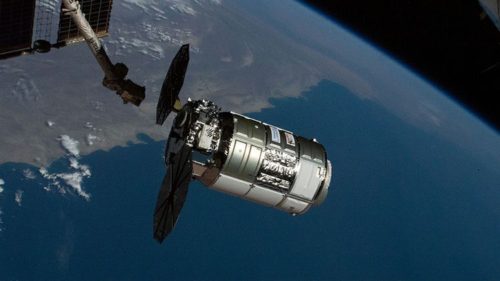
The Cygnus is carrying nearly 4 tons of disposable materials. Before the vessel is de-orbited for a destructive reentry in the atmosphere, it will spend about three days in orbit to carry out the secondary phase of the mission. This will included deployment of
… five CubeSats via two separate CubeSat deployers, Slingshot and Nanoracks. This Cubesat deployment includes Dhabisat, the second CubeSat developed by Khalifa University in Abu Dhabi, United Arab Emirates. Dhabisat was developed as part of Khalifa’s Space Systems and Technology Concentration, a joint program developed in collaboration with UAE-based satellite operator Al Yah Satellite Communications Company (Yahsat) and Northrop Grumman.
Northrop Grumman’s NG-15 Cygnus departs from the ISS. Credits: Northrop Grumman
The NG-15 Cygnus spacecraft was launched on Feb. 20 aboard Northrop Grumman’s Antares rocket, carrying nearly 8,000 pounds of scientific research, supplies and equipment to the astronauts living on the station. The vehicle has been berthed with the orbiting laboratory since Feb. 22.
The Minotaur I is a four-staged solid fuel space launch vehicle, featuring two decommissioned Minuteman rocket motors, Northrop Grumman-manufactured Orion 50XL and Orion 38 solid rocket motors, and the company’s state-of-the-art avionics. The vehicle is capable of launching payloads of up to 1,278 pounds (or 580 kilograms) into low Earth orbit.
“This was our second launch of a Minotaur rocket for the NRO from Wallops in the past 12 months,” said Rich Straka, vice president, launch vehicles, Northrop Grumman. “Northrop Grumman is able to repurpose retired Peacekeeper and Minuteman propulsion, integrating them with company built solid rocket motors along with new subsystems for our Minotaur family of launch vehicles, allowing us to provide reliable, cost-effective and responsive access to space for our customers.”
The NROL-111 launch was the 12th Minotaur I flight and 6th from NASA’s Wallops Flight Facility. The Minotaur family of launch vehicles is comprised of multiple configurations, tailored to meet unique mission requirements. The Minotaur fleet has now completed 28 missions from ranges in Alaska, California, Florida and Virginia with 100 percent success. Northrop Grumman’s Minotaur rockets are manufactured at facilities in Chandler, Arizona; Vandenberg, California; and Clearfield and Magna, Utah.
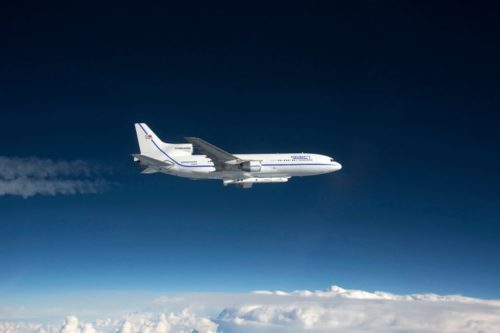
** June 12: Northrop Grumman Pegasus XL puts military smallsat into orbit: Northrop Grumman successfully air launched a Pegasus XL rocket with the Tactically Responsive Launch-2 (TacRL-2) payload for the U.S. Space Force (USSF) . The L-1011 aircraft with the Pegasus attached below it flew out of the Vandenberg Space Force Base and launched the rocket over the Pacific Ocean.
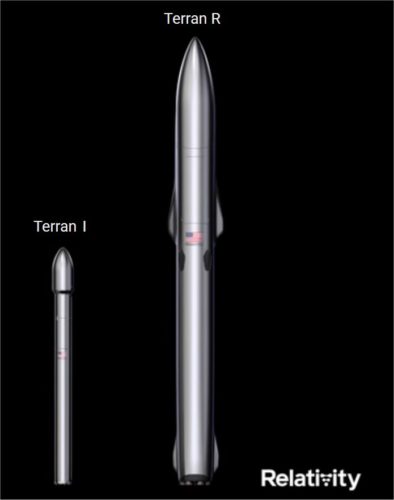
** June.8: Relativity Space reveals design of fully reusable Terran-R rocket and announces latest funding round raised $650M to help pay for the rocket’s development:
As a two-stage, 216-foot-tall rocket with a 16-foot diameter, and a 5-meter payload fairing, Terran R will be entirely reusable and capable of launching 20,000kg to low Earth orbit (LEO). Created in Relativity’s Factory of the Future, by the same printers as Terran 1, Terran R has unique aeronautical features and complex structures. The company’s proprietary 3D printing process utilizes software-driven manufacturing, exotic materials and unique design geometries that are not possible in traditional manufacturing, driving unprecedented innovation and disruption in the industry.
Other than mentioning the use of 3D printed high-temperature metals, there are no details given on how they plan to tackle the difficult challenge of designing a reusable upper stage that avoids paying a large penalty in payload capability. In fact, the 20,000 kg payload to LEO beats the SpaceX Falcon 9, which expends the upper stage except for the fairings.
The goal is to fly the Terran R in 2024:
Terran R will be outfitted with seven 3D-printed Aeon R rocket engines capable of 302,000 lb. thrust each, while its upper stage houses one Aeon Vac engine. Starting in 2024, Terran R will launch from Launch Complex 16, the company’s site at Cape Canaveral, where Terran 1 is also set to launch this year. Combined with the ability to launch 20X more payload than Terran 1, Terran R provides both government and commercial customers affordable access to space, in LEO and beyond. With satellite technology advancements, demand for bandwidth soaring and satellite constellations representing the largest part of the growing market, Terran R was developed to accommodate the growing demand for large constellation launch services, and the company’s growing pipeline of commercial interest. As a testament to its commercial viability, Relativity recently signed its first anchor customer launch contract for its Terran R vehicle.
*** Progress on Terran 1 launch pad.
We are picking up stellar momentum here at Relativity as we work towards launch, including the completion of the maiden lift of our Strongback at Cape Canaveral! This exciting milestone involves a series of wins, from electrical utilities being brought to our launch site and commissioned, to activating our hydraulic lift system, as well as fabricating and installing the pad deck and launch table. To learn more and stay up-to-date as we prepare to launch, sign up for our newsletter here: https://www.relativityspace.com/updates
** Astra aims for very low cost expendable rockets to compete for the smallsat launch market. The Astra business case is opposite to that of Relativity Space. Astra will avoid 3-D printing and reusability and instead use the simplest manufacturing systems possible to build throwaway rockets as cheaply as possible. Chris Kemp, Astra;s founder, Chairman, and CEO, lays out the company’s strategy in this interview: Astra CEO Chris Kemp previews Rocket 4.0, daily launches, and a smarter planet – NASASpaceFlight.com
*** Astra acquires company making electric-propulsion spacecraft engines. Apollo Fusion electric thrusters will enable Astra to offer upper stage to customers needing to reach higher orbits than available from Astra’s two-stage Rocket-3 vehicle.
Today I wanted to do a comparison of some key players in the small sat launch industry. With a handful of new launchers getting hardware out on the launch pad, launching and even some getting to orbit, I think now’s a good time to give you a rundown on some of these exciting new rockets and compare them to the Falcon 1 to see if the industry has caught up to what SpaceX was doing 12 years ago!
TIMESTAMPS: 00:00 – Intro 03:45 – What is a Small Sat Launcher? 06:45– Rockets too cool to not mention 10:15 – Rocket Lab’s Electron 13:20 – Virgin Orbit’s LauncherOne 16:30 – Astra’s Rocket 19:10 – Firefly’s Alpha 21:00 – ABL’s RS1 22:30 – Relativity’s Terran-1 24:30 – Comparison 28:30 – Conclusion
** JAXA space agency sponsors test of a detonation propulsion system on a suborbital rocket:
The Japan Aerospace Exploration Agency (JAXA) launched the sounding rocket “S520-31” from the Uchinoura Space Center in Kimotsuki Town at 5:30 am on the 27th. For the first time in outer space, we have demonstrated a technology called a “detonation engine” that converts a shock wave generated by the reaction of methane and oxygen into thrust. Capsules recording the state of the experiment were collected at sea.
The California-based rocket startup Launcher said Wednesday it has raised $11.7 million in a Series-A round of funding, well above its $7 million goal, as it seeks to accelerate development of its first orbital vehicle.
In an interview, Launcher founder Max Haot said the company remains on track to debut the small satellite “Launcher Light” rocket in 2024. However, to meet this goal, the company needs to grow significantly now.
…
[Launcher founder Max ] Haot said the company will probably need to reach about 150 employees by the time of its first orbital flight. He hopes to do so with a total budget of $50 million, supported by an additional round of funding expected to be complete by early next year. Reaching orbit with a budget of $50 million would be about half that expended by Rocket Lab, and still less than other small launch competitors.
** Launcher developing orbital transfer vehicle that can operate from its own rocket as well as other launch systems. Named Orbiter, the tug will carry a payload of up to 150 kg and will deploy up to 90 CubeSats. It can also carry larger smallsats that use standard deployers. Orbiter can also host payloads, supplying them with power, communications, etc. The tug is powered by ethylene and nitrous oxide propellants. The first mission is set for the fall of 2022.
Introducing Launcher Orbiter – the first orbital transfer vehicle compatible with both SpaceX Falcon 9 rideshare and a dedicated small launch vehicle (Launcher Light). Orbiter is contracted with @spacex to Fly to Sun-Synchronous Orbit in October 2022. https://t.co/tLao7wIv5Tpic.twitter.com/ixzEdafvdB
The new project by PLD Space and the European Space Agency (ESA), known as Liquid Propulsion Stage Recovery 2 (LPSR 2), is a continuation of the previous contract awarded by ESA to PLD Space in 2017. This contract is part of ESA’s Future Launchers Programme and focuses on the study of re-entry trajectories and configurations for the safe descent of stage one of MIURA 5, which will be launched from Europe’s Spaceport in French Guiana. The €1M in financial support from ESA will enable PLD to study a series of optimised trajectories, in terms of viability and of safety for recovery of an initial liquid propulsion stage, of MIURA 5 after its launch from Europe’s Spaceport, in an attempt to reduce the current distance covered by this stage from around 700 km to less than half, or even returning the booster to the launch pad.
To undertake the programme, PLD Space will conduct an exhaustive review of the ground and launch operations regulations in French Guiana, a European spaceport coordinated by the French Space Agency, CNES. The company from Elche will also study three main re-entry scenarios as part of the contract:
Propulsive braking on re-entry to reduce the horizontal distance the rocket travels from the launch pad, estimated at around 700 km.
Propulsive braking and change of trajectory to reverse and attempt to land offshore of the spaceport or attempt a landing on a platform near the launch base.
Optimised ascent for stage one in an attempt to reduce the parabolic flight of the rocket once separated from stage two.
Moreover, different technologies that might be useful for the successful re-entry of stage one of the MIURA 5 rocket will also be studied:
Propulsion: technologies and processes to control the thrust of the engines during re-entry.
Structures: manufacturing and reusability of a full-size fuel tank with its fatigue cycles.
Avionics: reusability in the MIURA 5 flight environment of the avionics developed for MIURA 1.
** Masten Space takes ol’Xodiac, vertical takeoff and landing rocket, out for a spin:
This week, we ran a tethered flight test on our VTVL rocket, Xodiac (it was a windy day in Mojave!). Why do we run these tests you might ask?
A few reasons: 👉 To train new hires and cross-train existing team members. 👉 Get into the field and practice all elements that go into an operation. 👉 Keep the team proficient and maintain exposure to the test environment before our next free flight.
P.s. We’re hiring! Come fly with us: www.masten.aero/careers/
** Update on EXOS Aerospace: Here is an interview video with John Quinn, CEO of EXOS:
At Exos our mission in life is not to build and fly Low Earth Orbit capable reusable rockets but rather, to enable other brilliant minds to change the world for the better …as two examples: First, the rapid space manufacturing of mesenchymal stem cells (or MSC’s) for regenerative medical treatments have shown phenomenal results in clinical trials after return from the International Space Station (Exos can do in months what took years on ISS). Secondly, enabling the development and deployment of reusable hypersonic technologies that will drastically reduce point-to-point travel times in the new global economy.
Pangea Aerospace on Twitter: “Pangea Aerospace has closed its €3M seed round together with @inveready, @RaphaelE2MC (E2MC Ventures), @CDTIoficial (programa #innvierte), Primo Space and @Dozeninvesthttps://t.co/iXiwW9j1Vl“
Pangea Aerospace on Twitter: “We are already additively manufacturing several test pieces to perform hot fire testing in the following months! The aerospike is 3D printed using cutting-edge copper alloys as structural material“
Pangea Aerospace on Twitter: “Our aerospike engine is: more efficient than currently used bell nozzles, low-cost, manufactured in only two pieces, uses methalox propellants, and is designed from the ground up to be reusable. And yes, we are very excited to see it finally become a reality. Stay tuned!“
** Spaceflight Inc.‘s Sherpa-LTE1 Orbital Transfer Vehicle Overview
Spaceflight Inc. VP of Engineering Philip Bracken provides an overview of the company’s Sherpa-LTE1, the industry’s first electric propulsive orbital transfer vehicle (OTV). The OTV will fly on Spaceflight’s SXRS-5 (SpaceX Transporter-2) mission no earlier than June 2021.
** Nanoracks’ 20th CubeSat Deployment Mission on The ISS – Nanoracks
Deployments of two Customer CubeSats from the Nanoracks CubeSat Deployer (NRCSD) onboard the International Space Station (ISS). This completes Nanoracks’ 40th ISS deployment mission and marks our 262nd CubeSat released from the ISS, and the 285th small satellite deployed by Nanoracks overall. Both satellites deployed (@11:10), RamSat and SOAR, each have strong educational and research-based goals. Read more https://nanoracks.com/nrcsd20-deploym… Nanoracks ISS Satellite Launch Services: https://nanoracks.com/products/iss-la…
** EPS 2: Terry Virts Talks to Eric Berger (Senior Space Editor at Ars Technica) – Astro Terry
Eric Berger is the Senior Space Editor at Ars Technica, and he also is a meteorologist who runs Space City Weather, a hype-free weather site for Houston and the Gulf Coast. His latest book, Liftoff, is about the early days of SpaceX. Today we talk about NASA’s human and robotic space programs, what the future of space will look like, and what weather threats we are facing in the 21st Century.
** Weekly Space Hangout: June 2, 2021 – Advances In Warp Drive Technology Research w/Dr. Mario Borunda – Weekly Space Hangout
This week we welcome Dr. Mario Borunda to the show. In his recent article published on EarthSky.com, Mario discusses advancements in warp drive technology research. You can read his article, “Warp Drives: Physicists Give Chances Of Faster-Than-Light Space Travel A Boost,” here: https://earthsky.org/space/warp-drive… Dr. Borunda double-majored in Physics and Mathematics earning his B.S. from the University of Texas at El Paso in 2003. He received his Ph.D. in Physics from Texas A&M University in 2008. He spent three years as a postdoc and nine months as a research associate at Harvard University. In September 2012 he became a faculty member of the physics department at Oklahoma State University. Dr. Borunda has also been a visiting researcher at Harvard University. …
Richard Branson flew to space aboard SpaceShipTwo on Virgin Galactic’s Unity 22, and Jeff Bezos flew to space aboard Blue Origin’s New Shepard 16. I share my thoughts on the flights, the vehicles, and how I’m currently looking at suborbital tourism and why it does or doesn’t matter.
A sampling of links to recent space policy, politics, and government (US and international) related space news and resource items that I found of interest (find previous space policy roundups here):
Stellar Decisis examines how courts in the not too distant future might handle disputes in space, using real international law to argue hypothetical but plausible cases involving future space activity. In the premiere of the pilot episode, one nation uses its nuclear arsenal to destroy an asteroid threatening Earth in the year 2050, with the unfortunate consequence of raining radioactive debris down on the far side of the Moon. A mix of governments and private companies file claims against that nation for damages suffered by lunar industry, and bring the first case to call for the Space Court.
Special Guest Justices: President Dr. Alissa Haddaji, Justice David Koplow, and Justice Chris Newman, PhD. Advocate for the Applicant: Ryan Noble Advocate for the Respondent: Jessica Noble
** Chongqing Builds Space-based Solar Power Base, EO Analytics Startups & Henan Disaster Relief Effort – Dongfang Hour – YouTube
Hello and welcome to another episode of the Dongfang Hour China Space News Roundup! A kind reminder that we cover a lot more stories every week in our Newsletter (newsletter.dongfanghour.com). This week, we discuss:
1) China officially kicks off the construction of the country’s first space-based solar power industry base in Chongqing
2) Chinese Earth observation data analytics startups participate in Henan disaster relief effort after the recent floods
3) A new series of Yaogan satellites launched on board a Long March 2C, with Tianqi-15 as secondary payload.
the significance of July 20th, 52 years ago with Apollo. We talked about www.evoloterra. com (see blog to hear the show referenced) Blue Orgin and their flight earlier in the day, suborbital companies, going to space for the wrong and right reasons and much more.
Jacques Arnould is paid to ask uncomfortable questions. As an ethicist at the French space agency CNES, Jacques puts his fingers on places that people sometimes like to ignore: such as the question: why we do what we do. Why money is spent on this mission and not on another, and above all, why we want to do spaceflight in the first place.
** Edmund Burke – What Does It Take To Get On The Test Launch Schedule At Vandenberg AFB? – CSP S02E81 – Cold Star Technologies – YouTube
What does it take to get on the test launch schedule at Vandenberg Air Force Base? How do so many organizations unnecessarily delay their time because of unexpected but avoidable issues? Edmund Burke of Space Information Labs joins host Jason Kanigan on the Cold Star Project to explain range safety compliance – happenings, trends, success, and failure. We discuss:
– The shift to Autonomous Flight Termination and Space Based Range – Brief explanation of flight termination systems – Advantages and necessity of intelligent lithium battery systems – RadTol BMS, and radiation tolerant avionics – Testing and documentation required to fly (RCC 319-19) – A decade of watching companies fall short on promises because the didn’t understand what it takes – Danger of vertical integration for startups – Important lessons learned.
Edmund Burke served as an Air Force Program Manager and Project Director for many years prior to founding Space Information Laboratories in 2004. He served as the Space Lift Range System, Range Instrumentation and Metric Track lead for both Vandenberg AFB and Cape Canaveral, FL.
In this week’s Space Café WebTalk Prof. Thomas Schildknecht, Director of Swiss Optical Ground Station and Geodynamics Observatory Zimmerwald and Vice-Director of Astronomical Institute of the University of Bern, Switzerland, talked about Sustainability beyond (our) planet protection from the perspective of an astronomer.
Human-caused climate change, global pandemics, ocean acidification and species extinctions may eventually threaten the collapse of humanity, while others argue that for political or economic reasons we should allow industrial development to continue without restrictions.
1. Tuesday, July. 27, 2021; 7 pm PDT (9 pm CDT, 10 pm EDT): We welcome back Robert Zimmerman for a comprehensive space policy discussion on multiple topics and stories.
3. Friday, July.30, 2021; 9:30-11 am PDT (11:30 am-1 pm CDT, 12:30-2 pm EDT): We welcome the CEO of Ramon Space, Avi Shabtai, to talk about commercial space, super computing and more.
4. Sunday, Aug.1, 2021; 12-1:30 pm PDT (3-4:30 pm EDT, 2-3:30 pm CDT): We welcome Dr. Jonathan McDowell, astrophysicist at the Harvard-Smithsonian Center for Astrophysics, to discuss commercial space, suborbital, astrophysics and more.
** Tuesday, July.21.2021 – Rand Simberg discussed “the significance of July 20th, 52 years ago with Apollo. We talked about www.evoloterra. com (see blog to hear the show referenced) Blue Orgin and their flight earlier in the day, suborbital companies, going to space for the wrong and right reasons and much more.”





.jpg)