ESO: No black hole found in “closest black hole” system

A new report from the European Southern Observatory (ESO):

“Closest black hole” system found to contain no black hole

New research using data from ESO’s Very Large Telescope and Very Large Telescope Interferometer has revealed that HR 6819, previously believed to be a triple system with a black hole, is in fact a system of two stars with no black hole. The scientists, a KU Leuven-ESO team, believe they have observed this binary system in a brief moment after one of the stars sucked the atmosphere off its companion, a phenomenon often referred to as “stellar vampirism”. This artist’s impression shows what the system might look like; it’s composed of an oblate star with a disc around it (a Be “vampire” star; foreground) and B-type star that has been stripped of its atmosphere (background).

In 2020 a team led by European Southern Observatory (ESO) astronomers reported the closest black hole to Earth, located just 1000 light-years away in the HR 6819 system. But the results of their study were contested by other researchers, including by an international team based at KU Leuven, Belgium. In a paper published today, these two teams have united to report that there is in fact no black hole in HR 6819, which is instead a “vampire” two-star system in a rare and short-lived stage of its evolution.

The original study on HR 6819 received significant attention from both the press and scientists. Thomas Rivinius, a Chile-based ESO astronomer and lead author on that paper, was not surprised by the astronomy community’s reception to their discovery of the black hole.

Not only is it normal, but it should be that results are scrutinised,” he says, “and a result that makes the headlines even more so.

Rivinius and his colleagues were convinced that the best explanation for the data they had, obtained with the MPG/ESO 2.2-metre telescope, was that HR 6819 was a triple system, with one star orbiting a black hole every 40 days and a second star in a much wider orbit. But a study led by Julia Bodensteiner, then a PhD student at KU Leuven, Belgium, proposed a different explanation for the same data: HR 6819 could also be a system with only two stars on a 40-day orbit and no black hole at all. This alternative scenario would require one of the stars to be “stripped”, meaning that, at an earlier time, it had lost a large fraction of its mass to the other star.

We had reached the limit of the existing data, so we had to turn to a different observational strategy to decide between the two scenarios proposed by the two teams,”

says KU Leuven researcher Abigail Frost, who led the new study published today in Astronomy & Astrophysics.

To solve the mystery, the two teams worked together to obtain new, sharper data of HR 6819 using ESO’s Very Large Telescope (VLT) and Very Large Telescope Interferometer (VLTI).

The VLTI was the only facility that would give us the decisive data we needed to distinguish between the two explanations,

says Dietrich Baade, author on both the original HR 6819 study and the new Astronomy & Astrophysics paper. Since it made no sense to ask for the same observation twice, the two teams joined forces, which allowed them to pool their resources and knowledge to find the true nature of this system.

The scenarios we were looking for were rather clear, very different and easily distinguishable with the right instrument,” says Rivinius. “We agreed that there were two sources of light in the system, so the question was whether they orbit each other closely, as in the stripped-star scenario, or are far apart from each other, as in the black hole scenario.”

To distinguish between the two proposals, the astronomers used both the VLTI’s GRAVITY instrument and the Multi Unit Spectroscopic Explorer (MUSE) instrument on ESO’s VLT.

MUSE confirmed that there was no bright companion in a wider orbit, while GRAVITY’s high spatial resolution was able to resolve two bright sources separated by only one-third of the distance between the Earth and the Sun,” says Frost. “These data proved to be the final piece of the puzzle, and allowed us to conclude that HR 6819 is a binary system with no black hole.”

Our best interpretation so far is that we caught this binary system in a moment shortly after one of the stars had sucked the atmosphere off its companion star. This is a common phenomenon in close binary systems, sometimes referred to as “stellar vampirism” in the press,” explains Bodensteiner, now a fellow at ESO in Germany and an author on the new study. “While the donor star was stripped of some of its material, the recipient star began to spin more rapidly.”

Catching such a post-interaction phase is extremely difficult as it is so short,” adds Frost. “This makes our findings for HR 6819 very exciting, as it presents a perfect candidate to study how this vampirism affects the evolution of massive stars, and in turn the formation of their associated phenomena including gravitational waves and violent supernova explosions.

The newly formed Leuven-ESO joint team now plans to monitor HR 6819 more closely using the VLTI’s GRAVITY instrument. The researchers will conduct a joint study of the system over time, to better understand its evolution, constrain its properties, and use that knowledge to learn more about other binary systems.

As for the search for black holes, the team remains optimistic.

Stellar-mass black holes remain very elusive owing to their nature,

says Rivinius.

But order-of-magnitude estimates suggest there are tens to hundreds of millions of black holes in the Milky Way alone,

Baade adds.

It is just a matter of time until astronomers discover them.

This wide-field view shows the region of the sky, in the constellation of Telescopium, where HR 6819 can be found. This view was created from images forming part of the Digitized Sky Survey 2. The two stars in HR 6819 can be viewed from the southern hemisphere on a dark, clear night without binoculars or a telescope.

Links

=== Amazon Ads ===

More Things in the Heavens:
How Infrared Astronomy Is Expanding
Our View of the Universe

===

Becoming Off-Worldly:
Learning from Astronauts to Prepare for Your Spaceflight Journey

The Space Show this week – March.1.2022

The guests and topics of discussion on The Space Show this week:

1. Tuesday, Mar. 1, 2022; 7 pm PST (9 pm CST, 10 pm EST):  We welcome back Michael Listner, Atty. for policy, legal, Ukraine and all sorts of new space news and information.

2. Hotel Mars – Wednesday, Mar. 2, 2022; 1:00 pm PST (3:00 pm CST, 4:00 pm EST): Dr. Jeffrey Foust of Space News will talk with John Batchelor and Dr. David Livingston about “Russia, Ukraine, ISS, Rogozin, NASA and more“.

3. Friday, Mar.4, 2022; 9:30-11 am PST (11:30 am-1 pm CST, 12:30-2 pm EST): Marc Bell, CEO of Terran Orbital, will talk about small satellites, space industry, etc.

4. Sunday, Mar.6, 2022; 12-1:30 pm PST (2-3:30 pm CST, 3-4:30 pm EST): James A. M. Muncy will discuss “commercial space and policy updates, Ukrainian impact on NewSpace“.

Some recent shows:

** Sunday, Feb.27.2022 – Open lines program with Dr. David Livingston covered

multiple topics with multiple callers. Space settlement, the gravity RX, human reproduction in space and the situation in Ukraine dominated the topics and calls for today.

** Friday, Feb.25.2022Dylan Taylor of Voyager Space talked about

Dylan’s recent ride to space with Blue Origin, inflation and space economics, NewSpace economy and investment risks vs. rewards, Voyager Space Holding activities, SpaceX, the ISS and private space stations plus lots more.

** Hotel Mars – Wednesday, Feb.23.2022Anatoly Zak of RussianSpaceWeb.com spoke with John Batchelor and Dr. David Livingston about “Russian space news re the ISS, Gateway model, Ukraine and more“.

** Tuesday, Feb.22.2022Dr. Angie Bukley and Karen Jones of The Aerospace Corp discussed the “value of space, LEO assets, satellite data for monitoring climate change and the space environmental impact on climate on a global basis, green rocket fuels, environmental justice, SPS and more“.

** See also:
* The Space Show Archives
* The Space Show Newsletter
* The Space Show Shop

The Space Show is a project of the One Giant Leap Foundation.

The Space Show - David Livingston
The Space Show – Dr. David Livingston

=== Amazon Ads ===

Asteroids: How Love, Fear, and Greed
Will Determine Our Future in Space

Graphene:
The Superstrong, Superthin, and Superversatile Material
That Will Revolutionize the World

Videos: “Space to Ground” & other space habitat reports – Feb.25.2022

Here is the latest episode in NASA’s Space to Ground weekly report on activities related to the International Space Station:

** Expedition 66 Northrop Grumman Cygnus Cargo Craft Arrives at Space Station – Feb. 21, 2022NASA Video

Loaded with food, fuel, and supplies, the unpiloted Northrop Grumman CRS-17 Cygnus cargo craft arrived to the International Space Station February 21 where it was installed to the nadir port of the Unity module. Dubbed the “SS Piers Sellers” for the late NASA astronaut for his contributions as a climate scientist and his assistance in assembling the International Space Station, Cygnus launched from the Wallops Flight Facility on February 19 atop an Antares rocket and will remain docked to the space station for approximately two months.

** Expedition 66 Northrop Grumman Cygnus Cargo Craft Space Station Installation – Feb. 21, 2022NASA Video

** ISS National Lab Research Overview – Northrop Grumman CRS-17ISS National Lab – YouTube

Northrop Grumman will launch a variety of critical research and supplies on its upcoming 17th Commercial Resupply Services (CRS) mission to the International Space Station (ISS). The launch, which take place at NASA’s Wallops Flight Facility in Virginia, is scheduled for no earlier than February 19 at 12:40 p.m. ET. The ISS National Laboratory is sponsoring more than 15 research and technology development payloads as part of this mission. These payloads, which represent diverse fields of study, intend to bring value to our nation through space-based research and enable a robust and sustainable market in low Earth orbit. This video highlights some of the ISS National Lab-sponsored investigations launching on Northrop Grumman CRS-17.

** Watch an astronaut degas a water bag in spaceVideoFromSpace

Prior to being added to the International Space Station’s storage system, water bags are degassed to reduce clogging.

** John Glenn’s historic 1962 spaceflight honored by space station crewVideoFromSpace

NASA astronauts aboard the International Space Station talk about John Glenn’s historic launch to become the first American to orbit Earth.

** Columbus, Kibo and a Dragon | Cosmic Kiss 360°European Space Agency, ESA on Youtube

Join ESA astronaut Matthias Maurer on a 360° fly-through of Europe’s Columbus laboratory, @JAXA | 宇宙航空研究開発機構‘s Kibo Module and the Crew Dragon capsule on the International Space Station. Matthias has been living and working on the International Space Station for around 100 days, following the launch of Crew-3 from @NASA’s Kennedy Space Center in Florida on 11 November 2021. He will spend approximately six months in orbit for his Cosmic Kiss mission. Much of this time is being spent inside the Columbus lab supporting European and international science. Columbus is ESA’s single largest contribution to the International Space Station and was also the first permanent European research facility in space. In this video you can see the different experiment racks in the module as he flies through, including NASA’s Veggie greenhouses omitting a pink light. Follow Matthias: https://bit.ly/ESACosmicKiss

** Health, food, and climate | We explore. You benefit.European Space Agency, ESA on Youtube

ESA astronaut Thomas Pesquet shows how space technologies and research onboard the International Space Station are used for the benefit of people on Earth. Thomas explains how space research is relevant to three of the United Nation’s goals: Health (SDG3), Zero hunger and food security (SDG2), and Climate action (SDG13). The Sustainable Development Goals are the world’s to-do list for people and the planet by 2030.

Learn more about the European space laboratory, the Columbus module, and four examples of how space exploration supports sustainable development in Europe and in Africa. This video is Part 2 of a 2-part series that describes how space exploration supports the sustainable development on Earth today. Here’s part 1: https://youtu.be/LItgF_o0kbc

Read more about benefits of European space exploration: http://youbenefit.spaceflight.esa.int

** The Next Big Upgrade to the Chinese Space Station? – Dongfang Hour

** ISS Live video stream – IBM/ISS HD Earth Viewing Experiment

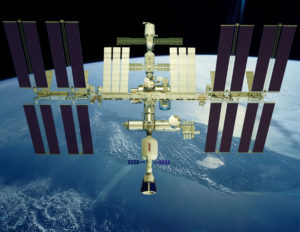
Currently, live views from the ISS are streaming from an external camera mounted on the ISS module called Node 2. Node 2 is located on the forward part of the ISS. The camera is looking forward at an angle so that the International Docking Adapter 2 (IDA2) is visible. If the Node 2 camera is not available due to operational considerations for a longer period of time, a continuous loop of recorded HDEV imagery will be displayed. The loop will have “Previously Recorded” on the image to distinguish it from the live stream from the Node 2 camera. After HDEV stopped sending any data on July 18, 2019, it was declared, on August 22, 2019, to have reached its end of life. Thank You to all who shared in experiencing and using the HDEV views of Earth from the ISS to make HDEV so much more than a Technology Demonstration Payload!

====
=== Amazon Ads ===

LEGO Ideas International Space Station Building Kit,
Adult Set for Display,
Makes a Great Birthday Present
(864 Pieces)

====

Outpost in Orbit:
A Pictorial & Verbal History of the Space Station

Rothblatt/NSS Space Settlement in Our Lifetime competition renewed for 2022

An announcement from the National Space Society (NSS):

NSS and Martine Rothblatt Renew the
Space Settlement in Our Lifetime Business Plan Competition
for 2022

Second Annual Business Plan Contest Doubles Prize Money

The National Space Society is pleased to announce that Dr. Martine Rothblatt has renewed her challenge to the space community to develop compelling business plans to enable space settlement in our lifetimes. The annual Rothblatt Space Settlement in Our Lifetime competition consists of three awards of $16,000, $10,000, and $6,000 USD for the best business plans that reflect Dr. Rothblatt’s vision for space settlement.

Dr. Rothblatt has been a pioneer in satellite communications, founding the Sirius XM radio network in 1990. She later became the chairwoman and CEO of United Therapeutics, a biotechnology company devoted to prolonging human life. Her trailblazing work in organ replacement has saved countless lives and will be a key technology in creating sustainable communities in space. Her vision for space settlement is vast, encompassing the next century of human migration into space.

“Dr. Rothblatt’s vision for space settlement explores every facet of our ultimate journey beyond Earth,” said Michelle Hanlon, the president of the National Space Society. “She foresees not just the migration of human beings to free-floating space habitats, but the preservation of individual human identities via digital ‘mindfiles’ that can be integrated into new bodies. This kind of thinking really pushes the boundaries of human creativity and innovation. We are confident that her Space Settlement in our Lifetime business plan competition will continue to push the same boundaries.”

The first Rothblatt business plan competition selected three prize winners at the NSS’s Space Settlement Summit in Beverly Hills, California in November 2021. For 2022, winners will be announced at the society’s annual International Space Development Conference in Arlington, Virginia which runs from May 27-29. One representative from each winning team will have their travel expenses covered to attend the conference.

The Space Settlement in our Lifetime competition is open to anyone, of any age, anywhere on Earth (local laws and restrictions may apply). Those wishing to enter must create a compelling business plan that will help to enable some aspect or increment of space settlement. See more at spacebizplan.nss.org. Two informative presentations by Dr. Rothblatt can be viewed there. The deadline for submissions is March 15, 2021. All business plan submissions should be made in PDF format.

“We hope to see some remarkable new business plans, just as we did in 2021,” said Rod Pyle, Editor-in-Chief of Ad Astra magazine, NSS’s official publication. “Martine is an incredible person—one of a small number I can call a true visionary—and her concepts for the future of humanity are truly inspiring. Writing about competition for Ad Astra each year fills me with a sense of hope for our future in space. Thanks again to Martine for supporting this endeavor, and I encourage anyone with a profound idea for a business that will, in some way, support the future of human communities in space to enter the competition!”

=== Amazon Ads ===

Space Mining and Manufacturing:
Off-World Resources and Revolutionary Engineering Techniques

===

The High Frontier: An Easier Way

The Space Show this week – Feb.21.2022

The guests and topics of discussion on The Space Show this week:

1. Tuesday, Feb. 22, 2022; 7 pm PST (9 pm CST, 10 pm EST): We welcome Dr. Angie Bukley and Dr. Karen Jones to discuss the value of space and how LEO assets are critical to our understanding of climate and much more.

2. Hotel Mars – Wednesday, Feb. 23, 2022; 1:00 pm PST (3:00 pm CST, 4:00 pm EST): Anatoly Zak of the Russian Space Web will update John Batchelor and Dr. David Livingston on current Russian space news in light of Ukraine.

3. Friday, Feb. 25, 2022; 9:30-11 am PST (11:30 am-1 pm CST, 12:30-2 pm EST): We welcome back Dylan Taylor of Voyager Space Holdings for a wide ranging discussion on space assets, investments, his recent ride to space with Blue Origin and much more.

4. Sunday, Feb. 27, 2022; 12-1:30 pm PST (2-3:30 pm CST, 3-4:30 pm EST): OPEN LINES. All space, science, tech and related subjects are welcome. Call using our toll free number, 1-866, 687-7223. All call welcome. We want to hear from you.

Some recent shows:

** Sunday, Feb.20.2022Dr. Abraham (Avi) Loeb discussed “his Project Galileo program designed to used telescopes to collect more scientific data regarding UAP and other aerial objects in the search for ET“.

** Friday, Feb.18.2022Greg Klerkxreturned after 18 years for a then and now look at NASA and commercial space. His famous book was titled  Lost In Space: The Fall of NASA And The Dream Of The New Space Age [Amazon commission link]. Check out his first appearance on TSS on Feb. 24, 2004.

** Hotel Mars – Wednesday, Feb.16.2022Douglas Messier of Parabolic Arc spoke with John Batchelor and Dr. David Livingston about

the recent presentation made by Elon Musk regarding Starship, plus we discussed the FAA environmental investigation into Starship launches at Boca Chica which may cause delays for SpaceX and Starship. Also talked about were the SpaceX plans to use their pads at the Cape as a backup for launching Starship if they are seriously delayed or prevented from doing so at the Boca Chica site. Doug had much to say about all of these issues and crammed in lots of good information into this one segment Hotel Mars program.

** Tuesday, Feb.15.2022 – An Open Lines program included “Ft. Worth John call re Christopher Mellon, UAP info and the Air Force, Tic Tac, Avi Loeb’s Galileo Project, the Wally Schirra Golden Oldie Space Show program, Polaris missions using Dragon, SpaceX EVA suits, Apollo training at Griffith Observatory, Space Show upcoming programming and more“.

** See also:
* The Space Show Archives
* The Space Show Newsletter
* The Space Show Shop

The Space Show is a project of the One Giant Leap Foundation.

The Space Show - David Livingston
The Space Show – Dr. David Livingston

=== Amazon Ads ===

Becoming Off-Worldly:
Learning from Astronauts to Prepare for Your Spaceflight Journey

===

Space Elevators: A History

Everyone can participate in space