Videos: “Space to Ground” & other space habitat reports – Jan.7.2023

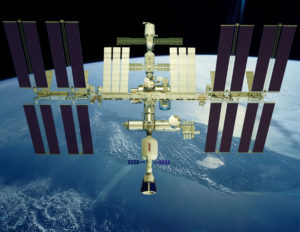
Here is the latest episode in NASA’s Space to Ground weekly report on activities related to the International Space Station:

** Science on space station in 2022 – See the best pics!VideoFromSpace

The International Space Station science experiments in 2022 are highlighted in these images. “Hundreds of scientific investigations and technology demonstrations,” were supported by the orbital outpost’s crew during the year, according to NASA.

** Webinar: NLRA 2023-5 Leveraging the ISS for Education and Workforce Development ISS National Lab – YouTube

This webinar – held on January 5, 2023 – provided information of interest to offerors for NLRA 2023-5: Leveraging the ISS National Lab for Education and Workforce Development. The webinar offered details regarding the scope of the NLRA as well as the timeline, processes, and procedures for submitting proposals.

** NASA’s Commercial Crew Program: Leading the Way in Human SpaceflightNASA’s Kennedy Space Center

For more than a decade, NASA’s groundbreaking Commercial Crew Program (CCP) has led the way toward a new era in human spaceflight, impacting the agency and industry in tremendous ways. Together with commercial partners Boeing and SpaceX, CCP is delivering on its goal to provide safe, reliable, and cost-effective human space transportation to and from the International Space Station in low-Earth orbit, enabling NASA to maximize station utilization, and highlighting the benefits of NASA’s commercial model with industry.

** What an astronaut needs to know | Flight control, space weather and debrisEuropean Space Agency, ESA on Youtube

Recently, Andreas Mogensen, now getting ready for his ‘Huginn’ mission to the ISS in 2023, stopped by ESA’s ESOC mission control centre in Darmstadt, Germany, to meet with some of the experts who keep our satellites flying.

Andreas usually works at NASA’s Johnson Space Center in Houston as an ISS ‘capcom’, and we don’t often see him in Europe. A few months back, while returning to Germany for some training at ESA’s Astronaut Centre in Cologne, we seized the opportunity to ask him if he’d like to stop over in Darmstadt for a look behind the scenes at mission control, and he immediately answered, ‘yes’!

Andreas’ studied aeronautical engineering with a focus on ‘guidance, navigation and control of spacecraft’ and we thought he’d be delighted to meet with the teams at mission control doing precisely that sort of work for our robotic missions.

We figured he’d also enjoy meeting colleagues from our Space Safety programme, especially the ones working on space debris and space weather, as these are crucial areas that influence the daily life of astronauts on the ISS.

Andreas met with Bruno Sousa and Julia Schwartz, who help keep Solar Orbiter healthy and on track on its mission to gather the closest-ever images of the Sun, observe the solar wind and our Star’s polar regions, helping unravel the mysteries of the solar cycle.

He also met with Stijn Lemmens, one of the analysts keeping tabs on the space debris situation in orbit, and Melanie Heil, a scientist helping ESA understand how space weather and our active Sun can affect missions in orbit and crucial infrastructure – like power grids – on ground.

We hope you enjoy this lively and informative day at mission control as much as Andreas and the teams at ESOC did!

** Starlab_ Flying TowardNanoracks

Starlab is Voyager’s planned free-flying, multifunctional commercial space station dedicated to conducting advanced research, fostering commercial industrial activity, and ensuring continued U.S. presence and leadership in low-Earth Orbit. Starlab will host the George Washington Carver Science Park, the first in-space science park, and meet existing demand for commercial space activities.

** Starlab- Side View Animation 4k – Nanoracks

** Starlab – Wide View Animation 4k – Nanoracks

** Living on China’s space station – Take a peek inside on New Year’s DayVideoFromSpace

See views inside and outside of the Tiangong space station captured on New Year’s Day 2023. Chinese astronauts open New Year’s presents, exercise and more.

** ISS Live video stream – IBM/ISS HD Earth Viewing Experiment

Currently, live views from the ISS are streaming from an external camera mounted on the ISS module called Node 2. Node 2 is located on the forward part of the ISS. The camera is looking forward at an angle so that the International Docking Adapter 2 (IDA2) is visible. If the Node 2 camera is not available due to operational considerations for a longer period of time, a continuous loop of recorded HDEV imagery will be displayed. The loop will have “Previously Recorded” on the image to distinguish it from the live stream from the Node 2 camera. After HDEV stopped sending any data on July 18, 2019, it was declared, on August 22, 2019, to have reached its end of life. Thank You to all who shared in experiencing and using the HDEV views of Earth from the ISS to make HDEV so much more than a Technology Demonstration Payload!

====

=== Amazon Ads ===

LEGO Ideas International Space Station Building Kit,
Adult Set for Display,
Makes a Great Birthday Present
(864 Pieces)

====

Outpost in Orbit:
A Pictorial & Verbal History of the Space Station

ESO: Stellar nursery revealed with visible and infrared survey telescope

A new report from the European Southern Observatory (ESO):

Serpent in the sky captured with ESO telescope

This image of the spectacular Sh2-54 nebula was taken in infrared light using ESO’s VISTA telescope at Paranal Observatory in Chile. The clouds of dust and gas that are normally obvious in visible light are less evident here, and in this light we can see the light of the stars behind the nebulae now piercing through. Credit: ESO/VVVX

A myriad of stars is revealed behind the faint orange glow of the Sh2-54 nebula in this new infrared image. Located in the constellation Serpens, this stunning stellar nursery has been captured in all its intricate detail using the Visible and Infrared Survey Telescope for Astronomy (VISTA) based at ESO’s Paranal Observatory in Chile.

When the ancients looked up at the night sky they saw random patterns in the stars. The Greeks, for instance, named one of these “constellations” Serpens, because of its resemblance to a snake. What they wouldn’t have been able to see is that at the tail end of this constellation there is a wealth of stunning astronomical objects. These include the Eagle, the Omega and the Sh2-54 nebulae; the last of these is revealed, in a new light, in this spectacular infrared image.

Nebulae are vast clouds of gas and dust from which stars are born. Telescopes have allowed astronomers to identify and analyse these rather faint objects in exquisite detail. The nebula shown here, located about 6000 light-years away, is officially called Sh2-54; the “Sh” refers to the US astronomer Steward Sharpless, who catalogued more than 300 nebulae in the 1950s.

As the technology used to explore the Universe progresses, so too does our understanding of these stellar nurseries. One of these advances is the ability to look beyond the light that can be detected by our eyes, such as infrared light. Just as the snake, the namesake of this nebula, evolved the ability to sense infrared light to better understand its environment, so too have we developed infrared instruments to learn more about the Universe.

Whilst visible light is easily absorbed by clouds of dust in nebulae, infrared light can pass through the thick layers of dust almost unimpeded. The image here therefore reveals a wealth of stars hidden behind the veils of dust. This is particularly useful as it allows scientists to study what happens in stellar nurseries in much greater detail, and thus learn more about how stars form.

A visible-light image of the Sh2-54 nebula, captured by the VLT Survey Telescope at ESO’s Paranal Observatory in Chile. At these wavelengths the structure of the nebula is clear and the clouds of dust and gas block the light of stars within and behind it. [See side-by-side interactive comparison of Sh2-54 in visible and infrared light] Credit: ESO

This image was captured in infrared light using the sensitive 67-million-pixel camera on ESO’s VISTA telescope at Paranal Observatory in Chile. It was taken as part of the VVVX survey — the VISTA Variables in the Via Láctea eXtended survey. This is a multi-year project that has repeatedly observed a large portion of the Milky Way at infrared wavelengths, providing key data to understand stellar evolution.

Links

=== Amazon Ads ===

More Things in the Heavens:
How Infrared Astronomy Is Expanding
Our View of the Universe

===

Celestron – NexStar 130SLT Computerized Telescope –
Compact and Portable –
Newtonian Reflector Optical Design –
SkyAlign Technology –
Computerized Hand Control –
130mm Aperture

The Space Show this week – Jan.3.2023

The guests and topics of discussion on The Space Show this week:

1. Tuesday, Jan. 3, 2023; 7 pm PST (9 pm CST, 10 pm EST): We welcome back Robert Zimmerman to start off the year with news, views, policies and more.

2. Hotel Mars – Wednesday, Jan. 4, 2023; 1:00 pm PST (3:00 pm CST, 4:00 pm EST): TBD. Check the Upcoming Show Menu at www.thespaceshow.com for  updates on scheduling.

3. Friday, Jan.6, 2023; 9:30-11 am PST (11:30 am-1 pm CST, 12:30-2 pm EST): We welcome back Lt. General Steven Kwast, USAF (RET) for commentary on space policy, the Space Force, China and what’s ahead for national security space in 2023.

4. Sunday, Jan.8, 2023; 12-1:30 pm PST (2-3:30 pm CST, 3-4:30 pm EST): We welcome back author M. G. Lord for her new book, LA Made: Blood, Sweat & Rockets.

Some recent shows:

** Friday, Dec.30.2022Thomas A. Olsonwas back with us for our annual space year in review“.

** Wednesday, Dec.28.2022Dr. Haym Benaroya and Raymond Martin discussed “their paper about using lunar lava tubes for habitats. Dr. Benaroya was the thesis advisor for Raymond and this published paper was his Master’s Thesis in engineering“.

** Tuesday, Dec.27, 2022Dr. Thomas Spilkerof Orbital Assembly was back with us for a detailed update re OAC, plus a great discussion on orbital and inspace construction, economics, technology, markets and such“.

** Friday, Dec.23.2022Dr. Lee Cronin spoke with David Livingston and co-host Bill Gowanabout advancements in his work to determine what life is, when it might be life, [and what] we don’t know is life“.

** Thursday, Dec. 22.2022Howard Bloom 

addressed many topics including Musk, Starship, Artemis, SLS, the Gateway, Ukraine, Putin, nuclear war, China, technology, our educational system, Pres. Biden, and much more. Don’t miss this 92 minute wide ranging discussion.

** Tuesday, Dec.20.2022Rick Fisher provided “an historical and present analysis of China and their space program with commentary spilling over into other important areas of our relationship with China“. Background articles:

** Sunday, Dec.18.2022Michael Listner reviewed

review space law, regulations and more re 2022 on this show. We also talked about congress, the election and space in the Middle East.

** See also:
* The Space Show Archives
* The Space Show Newsletter
* The Space Show Shop

The Space Show is a project of the One Giant Leap Foundation.

The Space Show - David Livingston
The Space Show – Dr. David Livingston

=== Amazon Ads ===

Escaping Gravity:
My Quest to Transform NASA and
Launch a New Space Age

===

The Space Value of Money:
Rethinking Finance Beyond Risk & Time

Night sky highlights for January and 2023

** What’s Up: January 2023 Skywatching Tips from NASA – NASA JPL

** Tonight’s Sky: January 2023 – Space Telescope Science InstituteTonight’s Sky

In January, the northern hemisphere features beautiful views of Capella, a pair of giant yellow stars; Aldebaran, a red giant star; and two star clusters—the Hyades and the Pleiades. Keep watching for the awe-inspiring space-based views of the Crab Nebula, the remains of a star that exploded as a supernova.

** What to see in the night sky: January 2023BBC Sky at Night Magazine

Pete Lawrence and Paul Abel reveal what’s coming up in the night sky this month, including Mercury, Venus and the other planets of the Solar System; Comet E3/2022 (ZTF); Orion; Sirius and the Winter Triangle asterism.

** Sky & Telescope’s Sky Tour Podcast – January 2023: January: Goodbye, Saturn (Hello, Venus):

[ Update Jan.5.2023: Here is the video version of the podcast:

]

See also

** What’s in the Night Sky January 2023 – Comet C/2022 E3 (ZTF) | Mars Occultation – Alyn Wallace

00:00 Intro
00:40 Northern Hemisphere Night Sky
03:22 Comet C/2022 E3 (ZTF)
04:52 Southern Hemisphere Night Sky
06:10 Full Moon
07:21 Lunar Occultation of Uranus
07:54 Lunar Occultations of Mars
08:46 Quadrantid Meteor Shower
11:20 #WITNS Winners

** Night Sky Notebook January 2023Peter Detterline

Start the year out right by seeing what to observe in the night sky for January 2023.

** See also these posting for January:

** Night sky highlights for all of 2023:

** 2023 Unmissable Night Sky Events! – Alyn Wallace

** More at:

=== Amazon Ads ===

2023 Guide to the Night Sky – North America Edition:
A month-by-month guide to exploring the skies above North America

==

Celestron
70mm Travel Scope
Portable Refractor Telescope
Fully-Coated Glass Optics
Ideal Telescope for Beginners
BONUS Astronomy Software Package

==

Stellaris: People of the Stars

Videos: “Space to Ground” & other space habitat reports – Dec.30.2022

The latest episode in NASA’s Space to Ground weekly report looks back on activities on the International Space Station during 2022:

2022 was another transformational year on the International Space Station. We broke some records, welcomed new space travelers, and took a major step at expanding the space fleet! Thanks to everyone around the world that makes the work done on the Space Station possible.

** Best Space Station Science Images of 2022 NASA Johnson

The International Space Station continues its scientific journey orbiting over 200 miles above the Earth’s surface. This past year, spacecraft carried crew from around the world to and from the space station, where they participated in and supported hundreds of scientific investigations and technology demonstrations. From deploying CubeSats to studying fluid dynamics in space, the orbiting lab expanded its legacy of science and discovery for the benefit of humanity. Look back at some of the best photos of breakthrough science the crew members conducted in 2022: https://go.nasa.gov/3FVGTlX

** Expedition 68 Astronaut Josh Cassada Talks with NPR’s Shortwave Podcast – Dec. 29, 2022 – NASA Video

Aboard the International Space Station, Expedition 68 Flight Engineer Josh Cassada of NASA discussed life and work aboard the orbital outpost during an in-flight event December 29 with NPR’s “Shortwave” podcast. Cassada is in the midst of a science mission aboard the microgravity laboratory. The goal of his mission is to advance scientific knowledge and demonstrate new technologies for future human and robotic exploration missions as part of NASA’s Moon and Mars exploration approach, including lunar missions through NASA’s Artemis program.

** Sierra Space’s LIFE Habitat Successfully Completes Second Ultimate Burst Pressure Test – Sierra Space

Sierra Space conducted a successful Ultimate Burst Pressure (UBP) test on a sub-scale version of the company’s LIFE™ habitat at NASA’s Marshall Space Flight Center in Huntsville, Alabama. LIFE, or Large Integrated Flexible Environment, is an inflatable habitation module developed by Sierra Space for use on Orbital Reef, the world’s first commercial space station. A full-scale LIFE habitat expands to the size of a three-story apartment building in space, where astronauts can live and work comfortably for long periods of time. The test exceeded NASA certification requirements for inflatable habitation modules and further establishes Sierra Space as the leader in commercial space station development. Sierra Space is the only active commercial space company to meet multiple successful UBP trials. https://www.sierraspace.com/newsroom/…

** Watch an inflatable habitat prototype burst in Lockheed Martin testVideoFromSpace

The inflatable habitat prototype burst at “285 psi, 6x the max operating pressure,” according to its producer Lockheed Martin. They are developing habitats for deep space exploration. Full Story: https://www.space.com/lockheed-martin…

**  Chinese space station beams down amazing views of EarthVideoFromSpace

Several cameras aboard the Chinese space station have captured new views of Earth. China recently completed the T-shaped Tiangong space station by moving the Mengtian module: https://www.space.com/china-completes…

** Work, Life Go Smoothly One Month After Shenzhou-15 Crew Enter China’s Space StationCCTV Video News Agency (Chinese govt.)

The three astronauts for China’s Shenzhou-15 spaceflight mission have been working and living in orbit one month after they arrived at the space station Tiangong, and the space station combination is operating stably.

** Shenzhou-15 Crew Conduct Blood Drawing, Test in SpaceCCTV Video News Agency (Chinese govt.)

Chinese astronauts from the Shenzhou-15 manned space mission recently underwent blood tests to monitor their health in orbit on the Chinese Space Station, according to a video released by the China Manned Space Agency (CMSA).

** ISS Live video stream – IBM/ISS HD Earth Viewing Experiment

Currently, live views from the ISS are streaming from an external camera mounted on the ISS module called Node 2. Node 2 is located on the forward part of the ISS. The camera is looking forward at an angle so that the International Docking Adapter 2 (IDA2) is visible. If the Node 2 camera is not available due to operational considerations for a longer period of time, a continuous loop of recorded HDEV imagery will be displayed. The loop will have “Previously Recorded” on the image to distinguish it from the live stream from the Node 2 camera. After HDEV stopped sending any data on July 18, 2019, it was declared, on August 22, 2019, to have reached its end of life. Thank You to all who shared in experiencing and using the HDEV views of Earth from the ISS to make HDEV so much more than a Technology Demonstration Payload!

====

=== Amazon Ads ===

LEGO Ideas International Space Station Building Kit,
Adult Set for Display,
Makes a Great Birthday Present
(864 Pieces)

====

Outpost in Orbit:
A Pictorial & Verbal History of the Space Station
Everyone can participate in space