1. Monday, Dec.14, 2020; 7 pm PDT (9 pm CDT, 10 pm EDT: No program today.
2. Tuesday, Dec. 15, 2020; 7 pm PDT (9 pm CDT, 10 pm EDT): We welcome back Bob Zimmerman for a 2020 space roundup, a look at 2021 and more. See his website, www.behindtheblack.com.
3. Wednesday, Dec. 16, 2020: Hotel Mars TBA pre-recorded. See upcoming show menu on the home page for program details.
4. Thursday, Dec. 17, 2020; 7-8:30 pm PDT (9-10:30 pm CDT, 10-11:30 pm EDT): No program today.
6. Sunday, Dec.20, 2020; 12-1:30 pm PDT (3-4:30 pm EDT, 2-3:30 pm CDT): We welcome back Kim Holder to debut the new MOONWARDS game. John Jossy is co-hosting this program. Visit and play the Moonwards demo posted on our blog. Give it a try. Call us and share your experience with us. The demo will be posted on our blog in advance of this program. Visit Moonwards at www.moonwards.com. [See also Moonwards juuuust about has a demo – Moonwards.]
Some recent shows:
** Sunday, Dec.13.2020 – Dr. David Livingston led an Open Lines program with discussion on a wide range of topics with callers.
A sampling of links to recent space policy, politics, and government (US and international) related space news and resource items that I found of interest (find previous space policy roundups here):
** Casey Dreier: Are Changes Coming to NASA/US Space Policy – Weekly Space Hangout: December 9, 2020
We are pleased to once again welcome Casey Dreier from the Planetary Society to the WSH. Casey will update us (as much as possible) about Space Policy changes that may occur once the new American Presidential administration takes office on January 20, 2021. As Chief Advocate, Casey is the public face of The Planetary Society’s efforts to advance planetary exploration, planetary defense, and the search for life. He educates and empowers the organization’s members to take political action. He writes, teaches, and speaks to The Society’s members, the public, and policymakers to impress upon them the importance, relevancy, and excitement of space exploration. Casey is committed to demystifying the politics and policy process behind space exploration for all audiences. He is a trusted source for journalists and has been featured in many publications, including The New York Times, The Washington Post, The Atlantic, Scientific American, Vox, and The Verge, to name a few. He also has appeared as an expert on BBC News and both seasons of National Geographic’s MARS series as a “MARS Big Thinker”. As Senior Space Policy Adviser Casey helps lead the strategic planning of The Society’s policy and advocacy efforts. He works closely with The Society’s leadership, its Board of Directors, and other policy experts to craft the organizational positions and goals regarding the future of space exploration. He provides trusted analysis of the budgetary, political, and policy decisions relating to space, pursues original research, and works collaboratively to generate policy ideas and guidance for the U.S. space program.
The Australian Space Automation, Artificial Intelligence and Robotics Control Complex (SpAARC) in Perth is opening, and Dr. Ben Kaebe is its Technical Interface Manager. What will SpAARC do, and how will it help space startups? Join host Jason Kanigan on the Cold Star Project to find out. Jason asks Dr. Kaebe:
-how he ended up in Australia, having been born in Germany
-the vision for the complex and its user base
-the process and partners of developing SpAARC
-what Earth-based and space applications the facility will assist with
-what capabilities will be available first, and how the complex plans to grow.
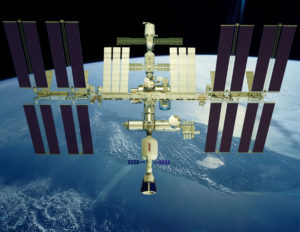
Here is the latest episode in NASA’s Space to Ground weekly report on activities related to the International Space Station:
** Expedition 64 SpaceX Corporate Event – December 4, 2020 – NASA
Aboard the International Space Station, Expedition 64 crewmembers Michael Hopkins and Shannon Walker of NASA discussed their flight to the complex last month on the SpaceX Crew Dragon “Resilience” and the progress of their mission during a question-and-answer session Dec. 4 with SpaceX President and Chief Operating Officer Gwynne Shotwell. Hopkins and Walker rode “Resilience” to orbit atop a SpaceX Falcon 9 rocket from the Kennedy Space Center, Florida along with Crew Dragon crewmates Victor Glover of NASA and Soichi Noguchi of the Japan Aerospace Exploration Agency (JAXA) and docked to the complex the next day for the start of a planned six-month mission.
** Expedition 64 Education In flight Nettleton STEAM – December 10, 2020 – NASA
Aboard the International Space Station, Expedition 64 Flight Engineers Kate Rubins and Shannon Walker of NASA discussed life and research aboard the orbital complex during an in-flight education event Dec. 10 with students from Jonesboro, Arkansas who provided their questions in advance to maintain proper social distancing. Rubins arrived at the station aboard a Russian Soyuz spacecraft in October, followed a month later by Walker, who flew to the station aboard the SpaceX Crew Dragon “Resilience”. The event also featured introductory remarks from former President Bill Clinton and Arkansas Gov. Asa Hutchinson.
**CRS-21 #NASASocial Science and Station Q&A – NASA KSC
[On Dec. 4th] a live #NASASocial show about the 21st resupply mission launching to the International Space Station this weekend! Representatives from NASA’s ISS Program Research Office, Nanoracks and The Effect of Microgravity on Human Brain Organoids experiment will be joining us to talk about the science going up on this mission, how the orbiting laboratory is continuously evolving and more about how the station is now welcoming commercial partners such as the Nanoracks Bishop Airlock aboard the SpaceX Dragon capsule.
** Watch SpaceX’s Cargo Dragon approach space station in stunning time-lapse – Space.com
SpaceX’s upgraded Cargo Dragon spacecraft captured footage of its approach to the International Space Station on Dec. 7, 2020. — SpaceX’s 1st upgraded Dragon cargo ship docks itself at space station with science, goodies and new airlock: https://www.space.com/spacex-cargo-dr…
A sampling of recent articles, press releases, etc. related to student and amateur CubeSat / SmallSat projects and programs (find previous smallsat roundups here):
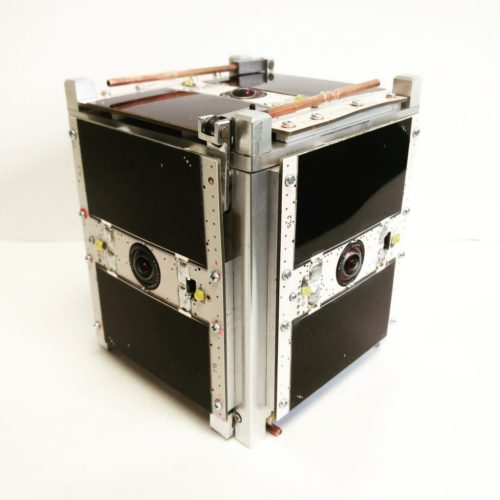
For the last five years, students at the BYU College of Engineering have been dreaming up, designing and building two tiny satellites. And after a two-year delay in the launch of NASA’s ELaNa 20 mission, the cube-like modules are finally ready to head to space.
The “CubeSats” have cameras attached to each of their six sides and are designed to take photos of other satellites, giving NASA a cheap method of visually examining the exteriors of spacecraft.
“The idea is you carry up one of these sort of selfie cameras,” said David Long, an engineering professor at BYU, “and when you needed to get a picture of your spacecraft — it is very inexpensive; it’s disposable — you kind of toss it out the window, conceptually, you know, you just deploy it, and it takes pictures of your main spacecraft. And then it just drifts off into space.”
[On Dec.2], the U.S. Department of Education announced the five finalists in CTE Mission: CubeSat, a national challenge to build technical skills for careers in space and beyond. Finalists will each receive $5,000 and in-kind prizes that they may use to build CubeSat (cube satellite) prototypes in the second phase of the challenge.
…
Congratulations to the finalists:
Anderson Clark Magnet High School (La Crescenta, California) is studying whether local encampments are in high-risk wildfire areas, with the goal of helping the local fire department save lives of people without housing.
Freeport High School (Freeport, New York) is measuring Earth’s surface temperature to study the differences in heat absorption and retention between urban and rural areas.
Mooresville High School (Mooresville, North Carolina) is measuring the effect of their town’s population growth on air quality, land use, and temperature.
Opelika High School (Opelika, Alabama) is collaborating with Columbus High School and Northside High School (Columbus, Georgia). The team plans to collect performance data for a new type of core material used in NASA-grade fluxgate magnetometers, which are used to study Earth’s changing magnetic field.
Princeton High School (Princeton, New Jersey) is collaborating with Montgomery High School (Skillman, New Jersey). The team wants to optimize space missions by examining topics such as atmospheric pressure density or habitable planetary environments.
The finalists will now begin work on the second phase of the program:
During Phase 2, which runs from January to May 2021, the finalists will have access to expert mentorship and additional virtual resources as they build CubeSat prototypes and plan flight events to launch their prototypes. The Department understands that due to current conditions, schools will need flexibility to safely collaborate when building and launching prototypes.
The prizes include development kits and expert mentorship donated to the Department from Arduino, Blue Origin, Chevron, EnduroSat, LEGO Education, Magnitude.io, MIT Media Lab Space Exploration Initiative, and XinaBox.
Inside the small probe, named DeMi, was a deformable mirror payload that Cahoy and her students designed, along with a miniature telescope and laser test source. DeMi’s mirror corrects the positioning of either the test laser or a star seen by the telescope. On future missions, these mirrors could be used to produce sharper images of distant stars and exoplanets. Showing the mirror can operate successfully in space is also proof that “nanosatellites” like DeMi can serve as nimble, affordable technology stepping-stones in the search for Earth-like planets beyond our solar system.
Maya-1, the country’s first cube satellite, has completed its mission and flew back to the Earth’s atmosphere after two years.
“Initially, the satellite was expected to stay in orbit for less than a year only, but it had stayed in orbit for about two years and four months,” said Adrian Salces, one of the Filipino graduate students who developed Maya-1, as it returned last Nov. 23.
Maya-1, along with Bhutan-1 of Bhutan and UiTMSAT-1 of Malaysia, are produced under the auspices of the second generation of the Joint Global Multi-Nation BIRDS Satellite Project or the BIRDS-2 Project of the Kyushu Institute of Technology (Kyutech) in Japan.
Maya-1, a 1U cube satellite (CubeSat) in Japan, was deployed through the Japanese Experimental Module Small Satellite Orbital Deployer (J-SSOD) in the “Kibo” module – the same module used to deploy Diwata-1.
The CubeSat is under the Development of Scientific Earth Observation Microsatellite (PHL-Microsat) program, a research program jointly implemented by the University of the Philippines-Diliman (UPD) and the Advanced Science and Technology Institute of the Department of Science and Technology (DoST-ASTI) in partnership with Kyutech in Japan.
Once the University’s CAPE-3 satellite arrives in space, a spring-loaded mechanism will eject it 225 miles above the Earth’s surface. The small satellite – about 10 centimeters square – will circle the globe about every 90 minutes at 17,000 miles per hour.
Along the way, the satellite will dredge the atmosphere for radiation levels with two instruments – a plastic prototype chip about the size of a pencil eraser and a small Geiger counter.
** AMSAT news on student and amateur CubeSat/smallsat projects:
Made In Space is building a satellite that can 3D print itself in space. If successful, their satellite could revolutionize how we design future spacecraft.
An announcement in my email from the DreamUp education program:
Thirty-Five DreamUp Student Experiments Launch on SpaceX-21
CAPE CANAVERAL, Florida – December 6, 2020 – DreamUp, the leader in space-based educational offerings, is proud to announce the launch of thirty-five student-designed experiments to the International Space Station on today’s SpaceX Falcon 9 CRS-21 rocket launch. These educational payloads, built by students from middle school to university around the world, represent their unprecedented perseverance as they continued to prepare their experiments for flight in unusually challenging circumstances due to COVID-19.
The student payloads launched in SpaceX’s Cargo Dragon alongside thousands of pounds of NASA cargo, supplies, more than 250 science and research investigations, as well as the NanoracksBishop Airlock, the first permanent, commercial addition to the International Space Station infrastructure. The Cargo Dragon is scheduled to dock to the Space Station tomorrow, Monday, December 7, 2020.
Notably, “E. Coli Consuming Carbon Dioxide to Combat Climate Change (E. coli C5)” will be the first payload launched to the International Space Station from Kuwait. Designed by a team of students from the American School of Kuwait who won Orbital Space’s “Experiments in Space” competition, this Mixstix experiment will investigate how a genetically modified strain of E. Coli bacteria that uses atmospheric carbon dioxide as a food source will behave in the microgravity environment of the Space Station.
The Tulsa Regional STEM Alliance, supported by Flight Night, solicited Mixstix experiment proposals from students throughout Oklahoma in honor of the 50th anniversary of the Apollo 11 Moon Landing. After participating in a two-phased selection process, six students from three teams were selected as winners. The three teams come from Jenks Southeast Elementary and Summit Christian Academy.
Twenty-eight Mixstix experiments from NCESSE’s Student Spaceflight Experiments Program (SSEP) Mission 14 and three Mixstix from the Ramon Foundation’s Spacelab program represent long-enduring partnerships that reach students in a broad range of schools across Brazil, Canada, Israel, and the United States and inspire countless more.
“It is fitting that this notable launch for commercial space will be carrying such a large and diverse array of student investigations, and I am particularly excited to for the launch of the very first Kuwaiti experiment on the International Space Station!” said Allen Herbert, Interim CEO of DreamUp. “Student-designed microgravity research has the power to excite and engage not only young learners, but their parents, schools, and broader communities, and to equip them to pursue the challenges that humanity will face in the future. DreamUp is proud to support students as they pursue cutting-edge research on the most advanced commercial space platforms, and we congratulate them all on their persistence and tenacity in a challenging time.”
These launch opportunities were made possible via our partnership with Nanoracks and its Space Act Agreement with NASA.
For additional media inquiries, please email us at info@dreamup.org, and for continued updates, be sure to follow @DreamUp_Space on Twitter and Instagram.
About DreamUp: Based in Washington, DC, DreamUp is the first company bringing space into the classroom and the classroom into space. Uniquely positioned to inspire kids globally and engage them through scientific discoveries in space, DreamUp aims to foster an educational community where space-based research and projects will be available to all learners of all ages. DreamUp has a proven track record with more than 400 student research payloads from around the world launched on SpaceX and Northrop Grumman rockets to the International Space Station via a partnership with Nanoracks and its Space Act Agreement with NASA. For more information, visit https://www.dreamup.org/.