Here is a new selection of videos, articles, and news items about space habitats (govt and commercial), living in space, and space settlement.
=== Current space inhabitants
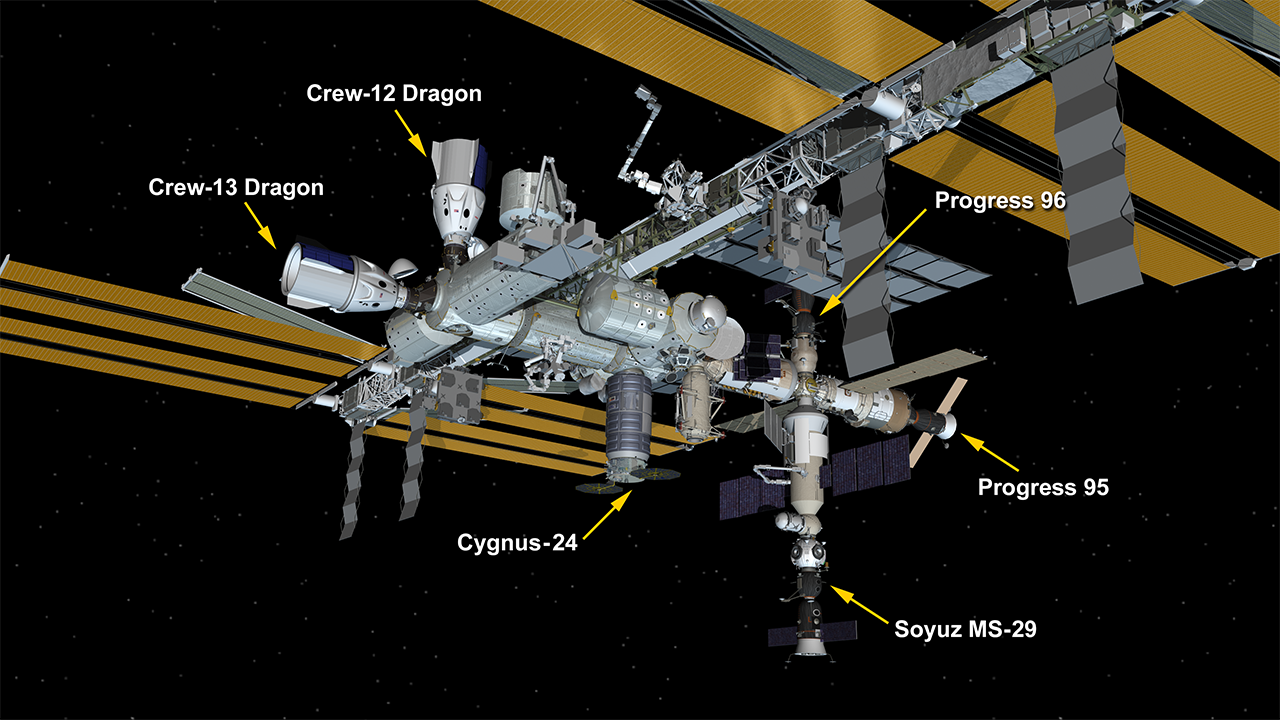
ISS – 7 occupants:
- US :
- SpaceX Crew 13: Jessica Watkins, Luke Delaney
- Soyuz-29: Anil Menon
- Russia:
- Crew-13: Sergey Teteryatnikov
- Soyuz-29: Pyotr Dubrov, Anna Kikina
- Canada: Joshua Kutryk (Crew 13)
Crew change:
From Oct 1st to Oct. 7th, there were 11 people on the ISS after Crew-13 arrived. Then SpaceX Crew-12 – Jessica Meir, Jack Hathaway, Andrei Fedyaev (Russia) and Sophie Adenot (Europe) – let the station on Oct. 7th in a Dragon and landed in the Pacific Ocean off the coast of Los Angles on Oct. 8th.
- NASA’s SpaceX Crew-12 Dragon Splashes Down at 11:34 a.m. EDT | NASA – Oct.8.2026
- NASA’s SpaceX Crew-12 Undocks in Dragon for Ride Home | NASA – Oct.7.2026
- Expedition 75 Welcomes Crew-13 and Preps for Crew-12 Departure | NASA – Oct.5.2026
China Tiangong station – Crew of 3:
- Zhu Yangzhu
- Zhang Zhiyuan
- Lai Ka-ying
=== International Space Station & NASA
** Crew-13 arrives at the ISS
— NASA’s SpaceX Crew-13 docks with the International Space Station in record-breaking time | VideoFromSpace – Oct.1.2026
A SpaceX Crew Dragon capsule carrying the Crew-13 crew docked with the International Space Station 7 hours and 55 minutes after launch, a new U.S. record.
Crew-13 is NASA astronauts Jessica Watkins (commander) and Luke Delaney (pilot), joined by Canadian Space Agency astronaut Joshua Kutryk and Roscosmos cosmonaut Sergey Teteryatnikov as mission specialists.
The quickest docking to the ISS was made by Russia’s Soyuz MS-17 spacecraft in 2020 at 3 hours and 3 minutes
— NASA’s SpaceX Crew-13 enters space station after docking | VideoFromSpace – Oct.1.2026
A SpaceX Crew Dragon capsule carrying the Crew-13 crew docked with the International Space Station 7 hours 55 minutes after launch, a new U.S. record.
Crew-13 is NASA astronauts Jessica Watkins (commander) and Luke Delaney (pilot), joined by Canadian Space Agency astronaut Joshua Kutryk and Roscosmos cosmonaut Sergey Teteryatnikov as mission specialists.
The ISS crew welcomed them aboard a few hours after docking.
** NASA’s SpaceX Crew-12 undocks from International Space Station | VideoFromSpace – Oct.7.2026
NASA’s SpaceX Crew-12 astronauts undocked from the International Space Station and begin their journey home on Oct. 7, 2026.
NASA astronauts Jessica Meir and Jack Hathaway, ESA (European Space Agency) astronaut Sophie Adenot, and Roscosmos cosmonaut Andrey Fedyaev departed the space station aboard their SpaceX Dragon spacecraft following their nearly 8 month mission in orbit.
** Astronaut Discusses Life in Space with St. Jude Children’s Research Hospital– September 28, 2026 | NASA Video
Aboard the International Space Station, Expedition 75 flight engineer Anil Menon of NASA, discussed life and work aboard the orbital outpost during an in-flight interview Sept. 28 with St. Jude’s Hospital in Memphis. Menon is in the midst of a long-duration mission living and working aboard the microgravity laboratory to advance scientific knowledge and demonstrate new technologies for future human and robotic exploration flights as part of NASA’s Moon and Mars exploration approach, including lunar missions through NASA’s Artemis program.
** Beyond the airlock: Sophie Adenot’s three spacewalks | European Space Agency, ESA
For ESA astronaut Sophie Adenot, her first steps into space were only the beginning.
In less than 15 days, she performed three extravehicular activities, or EVAs, spending 19 hours and 42 minutes outside the International Space Station.
Across three demanding spacewalks, Sophie and her crewmates replaced critical Station hardware, installed a new communications antenna, carried out maintenance, and prepared experiments for future work, all while adapting to the challenges of working in the extreme environment of space.
From her very first spacewalk to leading her third as EV1, Sophie demonstrated what it takes to work beyond Earth: technical skill, perseverance, adaptability, and trust in the teams supporting you.
Last image of Sophie by @Sen.
=== Commercial space habitats
** Axiom Space
— Axiom expands in-orbit computation services: Axiom Space, Kepler Ready Orbital Computing for Quantum Era | Axiom – Oct.6.2026.
Axiom Space today provided an update on its orbital compute strategy, highlighting progress on its Axiom Resilient Compute (ARC) platform, a step toward a distributed model for space-based workload orchestration, AI/ML processing, and post-quantum secure communications.
Axiom Space currently operates two ARCs on orbit, launched earlier this year as part of Kepler Communications’ optical data relay satellite constellation and developed with granted funds from the Texas Space Commission. The company has confirmed ARC-to-ARC and ARC-to-ground communications and separately completed a ground demonstration in which a post-quantum cryptography (PQC) encrypted workload was successfully migrated, early proof of securing compute at the edge of the network, in space or on Earth.
“Satellite sensor and operations systems generate more data than communication systems can transmit to ground stations during an orbit,” said Dr. Jonathan Cirtain, CEO and President of Axiom Space. “The capacity to generate space-based data will only increase, and the solution isn’t just more bandwidth, it’s less dependence on bandwidth in the first place, by securely processing data close to where it’s captured. That’s the problem ARC exists to solve.”
—
Axiom Space is building the infrastructure that government and commercial customers need for advanced space-based capabilities, including orbital compute. At #IAC2026 we announced progress on Axiom Resilient Compute alongside @KeplerComms.
“Satellite sensor and operations systems generate more data than communication systems can transmit to ground stations during an orbit. The capacity to generate space-based data will only increase, and the solution isn’t just more bandwidth; it’s less dependence on bandwidth in the first place, by securely processing data close to where it’s captured. That’s the problem ARC exists to solve.” – Dr. Jonathan Cirtain, CEO and President, Axiom Space
Read more: https://t.co/T15gZn2wuf
— Axiom Space (@Axiom_Space) October 9, 2026
— Axiom contracts Redwire for solar panels for the first two Axiom space station modules: Redwire Awarded Follow-On Contract to Provide Roll-Out Solar Array Wings for Axiom Space’s Second Space Station Module | Axiom – Oct.5.2026
Redwire Corporation (NYSE: RDW), a global leader in space and defense technology solutions, today announced it has been awarded a contract by Axiom Space, a leader in next-generation space infrastructure, to develop and deliver two Roll-Out Solar Array (ROSA) wings for Axiom Station’s second space station module.
As previously announced, Redwire is also building the ROSA wings for AxiomSpace’s first space station module.
“We are excited and grateful for the opportunity to provide Axiom Space with additional ROSAs,” said Mike Gold, President of Redwire Space. “The unparalleled track record of ROSA supporting the International Space Station (ISS) in low-Earth orbit (LEO) make it the ideal system to provide the robust power needed to support Axiom Space’s global customers and pioneering commercial space station, Axiom Station. At Redwire, we’re committed to leveraging our proven, heritage systems such as ROSA – with its 100-percent success rate in a wide variety of space environments from LEO, to GEO, and beyond – to be a part of Axiom Space’s mission to revolutionize both space and life on Earth via microgravity research, development, and manufacturing.”
Axiom Station will provide a permanent commercial platform in LEO where nations around the world can conduct microgravity research, develop and eventually manufacture commercial products to return to Earth, and access space uninterrupted, through human spaceflight missions.
— ESA and Axiom sign MOU for future cooperation and utilization of Axiom’s space station: Axiom Space, European Space Agency Sign Memorandum of Understanding to Expand Europe’s Access to Low-Earth Orbit | Axiom – Sept.10.2026
The MoU emphasizes the importance of international collaboration and commercial innovation in space and seeks to broaden cooperation for sustained European access to low-Earth orbit (LEO), enabling an evolving space ecosystem.
“The path to a sustainable human presence in space runs through international collaboration — reliable supply chains, shared innovation, and partners who bring real capability,” said Dr. Jonathan Cirtain, CEO and President of Axiom Space. “Europe’s contributions to microgravity science and deep space technology make ESA exactly that kind of partner. This MoU strengthens our work together, and we look forward to ESA and its member states joining us as customers for future astronaut missions.”
Together, the two organizations will explore cooperation on the development of space infrastructure, research, and commercial activities in LEO, including the potential for future astronaut missions onboard the International Space Station (ISS) and Axiom Station and the use of European Cargo Return service and potentially a European Crew Vehicle as part of the transportation system to support operations of the Axiom Station.
** Gravitics
— Gravitics raising funding via a reverse takeover of shell company: Gravitics is working out details for a $125M reverse takeover deal | GeekWire – Sept.18.2026
Gravitics was founded in 2021 by CEO Colin Doughan, chief architect Gary Hudson and chief marketing officer Michael DeRosa. Over the past five years, it has secured some high-profile contracts for the design and manufacture of orbital carriers and space station modules.
Although Gravitics hasn’t yet put any spacecraft in orbit, several projects are underway. In 2024, the company won a $125 million contract from Axiom Space to provide a pressurized module for Axiom’s yet-to-be-launched space station. Last month, NASA said it would issue an award of up to $225,000 to support Gravitics’ work on a hangar facility for orbital cargo vehicles.
** Max Space
— Max Space receives NASA funding to support development of expandable habitats for lunar activities: Max Space Selected for NASA Funding to Advance Expandable Lunar Habitat Human Certification | Max Space – June.28.2026
Max Space, Inc., a U.S.-headquartered space infrastructure company developing next-generation expandable habitats, today announced it has been selected for NASA funding through the agency’s Announcement of Collaboration Opportunity (ACO) program. The work will accelerate testing of Max Space’s expandable habitat technology for future human lunar surface applications.
The award comes as NASA and the United States shift from returning astronauts to the Moon to building the infrastructure required to stay there. Artemis and NASA’s Moon to Mars architecture point toward a future defined by sustained lunar operations, surface logistics, power, mobility, science, and habitation. In that future, pressurized volume is not a luxury. It is the place where astronauts live, work, recover, conduct science, manage operations, and build the first enduring foothold beyond Earth.
“America’s next great space milestone will not be a footprint. It will be permanence,” said Saleem Miyan, Co-founder and CEO of Max Space. “NASA’s lunar strategy makes clear that the Moon is becoming an infrastructure mission. Habitats are central to that mission, and this ACO award advancesone of the hardest and most important capabilities required: large, safe, affordable volume that can launch compact and expand where it is needed.”
Max Space was created to solve a fundamental constraint in human exploration: conventional rigid structures do not scale efficiently to the volume astronauts need for long-duration life and work. The company’s expandable architecture is designed to launch compact, reduce mass and packaging burden, and deploy into large pressurized environments on orbit, on the Moon, and eventually on Mars
** Starlab – Voyager Technologies
— Voyager sponsors institute to a science park at Ohio State University that is “devoted to in-space research and manufacturing as well as lunar research“: VISTA Turns Launch Capacity to Space Capability | Voyager Technologies – Oct.7.2026
Launch isn’t the limiting factor for on-orbit research anymore. Reusable rockets have cut launch costs 96% since 1960. What the space economy needs now is the commercial pipeline to utilize it. The Voyager Institute of Science, Technology, and Advancement (VISTA) is purpose-built to meet that challenge.
Read the full story to see how VISTA is enabling a real pathway to orbit at https://t.co/lAnlYQwjfh
$VOYG #AcceleratingtheAdvantage #MissionReady
— Voyager Technologies (@voyagertech_) October 7, 2026
— Voyager to manage cancer research project on ISS for Symphony Biosciences: Voyager Awarded Cancer Research Mission Management Contract | Voyager Technologies – Oct.6.2026
Voyager Technologies (NYSE: VOYG) signed a contract with the Center for the Advancement of Science in Space to manage Symphony Biosciences’ biopolymer cancer implant experiment aboard the International Space Station (ISS). The contract underscores the continued demand for access to low-Earth orbit for biopharmaceutical research.
“Our mission management service exists to clear the obstacles between breakthrough research and low-Earth orbit,” said Scott Rodriguez, vice president, Government Programs, Voyager. “Microgravity provides a cancer research environment where tumor cells form complex, three-dimensional structures that are obscured in Earth cultures, and our role is to make sure nothing stands between companies like Symphony Biosciences and unlocking better ways to fight cancer and improve life on Earth.”
Under the contract, Voyager will adapt Symphony Biosciences’ sample hardware to station equipment, ensure the clearing of NASA safety reviews and manage integration and stowage for launch. From the Voyager mission operations room, mission managers will oversee on-orbit operations like incubation and fluorescence reading, including assisting astronauts in running the experiment. When the study concludes, Voyager will return all samples and data, as well as provide post-flight and close-out reporting.
The research focuses on testing SymphNode, a device designed to restore the body’s immune response under immunosuppressive conditions, recruiting and activating a patient’s T cells to fight their cancer. The study aboard the ISS is looking to replicate the in vitro studies done on Earth with human T cells and tumor cells to assess the efficacy of immune cells that were trained in SymphNode.
— Voyager raises more funding: Voyager Technologies, Inc. Completes $402.5 Million Convertible Senior Notes Offering | Voyager Technologies – Sept.28.2026
— Voyager contracted for two commercial biotech missions on the ISS: Commercial Demand for Microgravity Drug Discovery Accelerates as Exobiosphere and Voyager Add Two Missions to the ISS | Voyager Technologies – Sept.22.2026
Voyager Technologies (NYSE: VOYG) and Exobiosphere today announced two additional research campaigns aboard the International Space Station, expanding an agreement that is turning commercial biotech research in microgravity into a recurring, schedulable service rather than a one-off opportunity.
Exobiosphere’s Orbital High-Throughput Screening in Microgravity (OHTS) platform, a mid-deck-locker-class system for automated drug screening, is scheduled for installation aboard the ISS in April 2027. These two new campaigns follow in quick succession: the first launching on an ISS Program Commercial Resupply Services mission in June 2027, the second in the August–September 2027 timeframe. The two customers span different institutions and different scientific objectives, all running on the same platform and the same station. Voyager Europe will be responsible for mission management under the companies’ existing master services agreement.
“Every one of these missions matters to the researchers behind it, and together they tell us something important about where this industry is heading,” said Matt Magaña, president of Space, Defense and National Security, Voyager. “When multiple organizations with unrelated science cases book time on the same orbital platform inside a single year, that is a healthy market behaving as it should. Commercial research in low-Earth orbit is becoming something customers plan around, and we intend to make that access routine.”
** VAST
— VAST and ESA sign cooperation MOU: The European Space Agency and Vast Build on Existing Mission Collaborations and Strengthen Cooperation for Post-ISS Era | VAST – Oct.6.2026
During the 77th International Astronautical Congress, the European Space Agency (ESA) and Vast, a company developing next-generation space infrastructure, signed a Memorandum of Understanding (MoU) regarding collaboration between the two parties and development of a framework to work together ahead of the upcoming end of service of the International Space Station (ISS).
This MoU replaces the previous MoU that ESA and Vast signed at ILA Berlin in June 2024 and broadens their cooperation in human spaceflight, science, technology, and commercialization. It runs for an initial three years, starting with a joint feasibility study of research and utilization opportunities for Europe on Haven space stations, intended to produce a shared roadmap for future cooperation.
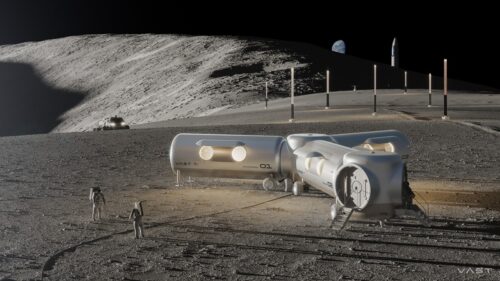
— Vast adds lunar habitation program: Vast Establishes Lunar Programs Division, Applying Haven Flight Heritage to Power, Communications, and Habitats on the Moon | Vast Space – Sept.23.2026
Vast, the company building next-generation space infrastructure, today announced that it has established a Lunar Programs division. Leveraging its commercial space station and satellite development heritage, Vast Lunar Programs is dedicated to helping advance NASA’s vision for a permanently crewed Moon Base.
Vast’s Haven‑1 is targeted to be the world’s first commercial space station, with launch anticipated in 2027, and is currently in final integration in the clean room at Vast headquarters in Long Beach, California. By building upon the technologies, systems, and operational experience developed through the Haven‑1 program, Vast is developing a scalable path toward lunar infrastructure, scientific discovery, and long‑term human exploration.
In the coming years, NASA plans to ramp up lunar activity, working with American industry to continuously deliver payloads to the lunar surface and to lunar orbit. Through its experience building large, crew‑rated space infrastructure, life support systems, thermal control systems, avionics, power systems, and habitats, Vast is positioning itself to rapidly meet the demands of NASA’s Moon Base program.
“Vast has the manufacturing capability, flight heritage, and technical expertise needed to help build humanity’s first lunar outpost,” said Max Haot, CEO of Vast. “By vertically integrating the engineering, manufacturing, and testing of habitats and infrastructure, Vast can move with the speed, efficiency, and safety that this national imperative demands.”
Consistent with Vast’s stepping‑stone approach, Vast proposes a hardware-driven roadmap aligned with NASA’s vision for a phased, iterative Moon Base designed to build capability over time….
— Vast updates: Crewed Missions | VAST Youtube
Astronauts Thomas Pesquet (France), Aleš Svoboda (Czech Republic), and Adrianos Golemis (Greece) are part of Vast’s first private astronaut mission to the International Space Station. Launching no earlier than summer 2027, the four-person crew will spend two weeks aboard the station conducting science research. This will be NASA’s sixth commercial private astronaut mission.
Vast is building next-generation space infrastructure, including Haven-1, targeted to be the world’s first commercial space station when it launches in 2027. The first astronaut for that mission, Arnaud Prost of France, was announced in June 2026. To learn more about Vast, head to https://www.vastspace.com.
— ESA to send Greek astronaut to the ISS via commercial private astronaut mission arranged by Vast: European Space Agency Signs Agreement with Vast for Historic First Greek Astronaut Mission as Part of the Sixth Private Astronaut Mission to the International Space Station in Partnership with NASA | VAST
At the International Space Summit in Paris, France, the Prime Minister of the Hellenic Republic, Kyriakos Mitsotakis, joined the President of the French Republic, Emmanuel Macron, on stage to announce that the European Space Agency (ESA), on behalf of Greece, has signed an agreement with Vast for the Vast-PAM-1 mission to the International Space Station in partnership with NASA. The mission is expected to be Greece’s first crewed mission to space, sending the first Greek citizen to orbit.
Subject to Multilateral Crew Operations Panel (MCOP) review and approval, Dr. Adrianos Golemis, who has worked as a flight surgeon for ESA, will serve as Mission Specialist. The MCOP’s decisions are reached through a consensus among representatives from all five space station partners: NASA, ESA, Roscosmos, the Japan Aerospace Exploration Agency, and the Canadian Space Agency. Pending approval, Golemis will become the first Greek astronaut to conduct a mission on the International Space Station.
— A description of the human-centric design approach to their habitats: Designing Haven-1: Vast’s Human-in-the-Loop Approach | VAST – Aug.7.2026
Human-centric design sits at the heart of how Vast builds next-generation space stations for America and its allies, starting with Haven-1, set to become the world’s first commercial space station when it launches in 2027. Throughout Haven-1’s design and its ongoing integration, Vast’s Astronaut Advisors have worked side by side with our industrial design and engineering teams to make sure every crew-facing system is safe, intuitive, and built for the realities of microgravity. Collectively, those advisors have spent more than 1,000 days living and working in space, and that experience shapes decisions down to the smallest detail.
Human-in-the-loop evaluations are an important engineering practice used across the aerospace industry and throughout NASA’s human spaceflight programs to test flight-representative hardware, software, and procedures with real people, ensuring designs are built around human capabilities and limitations.
At Vast, we’re conducting human-in-the-loop evaluations with high-fidelity, full-scale models of all the systems that the crew will interact with on Haven-1. This hardware-rich, iterative approach to space station design reduces technical risk and improves crew safety, health, and productivity on orbit.
“When you’ve lived and worked in space, you understand that microgravity changes everything: the way you move, the way you eat, even the way you sleep,” said Megan McArthur, former NASA astronaut and a Vast Astronaut Advisor who has spent 213 days in space. “Crew well-being and comfort are closely tied to safety, efficiency, and productivity. The fact that Vast is able to build the spacecraft, test the systems with spaceflight-experienced crew, and train the astronauts all under one roof makes me confident that we are well on track for human spaceflight in 2027.”
** More commercial space station news, articles, etc:
- NASA Seeks US Industry Plans for Commercial Space Stations | NASA – Oct.9.2026
- Commercial Low Earth Orbit (LEO) Destination Contract (CLDC) Request for Proposal | SAM.gov
- NASA issues long-awaited call to industry for private space stations | Ars Technica – Oct.9.2026
- NASA releases its space station requirements; opens bidding for the contract to build one or more | Behind The Black/Robert Zimmerman – Oct.9.2026
=== Chinese space habitats
** Shenzhou-23 Crew Conducts Science, Health Checks Aboard Tiangong Space Station | CCTV Video News Agency – Sept.20.2026
The China Manned Space Agency on September 20 released its weekly update on the Shenzhou-23 mission, reporting that the crew has continued scientific research, platform maintenance and health monitoring aboard the Tiangong space station.
** China articles, reports, news, etc:
- China Space Plans: Station Touted as “Global Research Platform,” Moon and Mars Projects in Full Swing | Leonard David – Oct.9.2026
- China’s On-orbit Kitchen Detailed | Leonard David – Sept.11.2026
==================
Check out the
The Lurio Report
for news and analysis of key developments in NewSpace
The latest issue:
Starship and The Industry Turning Point
Vol. 21, No. 2, Sept.28, 2026
Space Frontier Foundation Award for NewSpace Journalism
==================
=== Space habitat designs, technologies, etc
** The Space Show Presents Jules Ross on space station design, artificial gravity & microgravity | The Space Show – Sept. 13, 2026, Sunday.
The Space Show Presents Jules Ross with co-host John Jossy,
Quick Summary: The Sunday Space Show featured Jules Ross, founder of Jules Space Technology, along with cohost John Jossy, discussing the company’s development of Space Station EO, a commercial LEO platform designed to provide artificial gravity and microgravity environments. Jules explained the station’s design, focusing on human-friendly features like immersive rooms, private quarters, and a closed-loop shower system. He detailed the power generation concept using the station’s rotational energy and addressed questions about radiation shielding, assembly, and economic models. The conversation also covered the challenges of transportation to and from the station, with Jules advocating for space planes over traditional capsules. Other participants, including John Jossy, Manuel Cuba, Joe Carroll, and Marshall Martin, asked technical questions about the station’s mechanics, power system, and market viability. The discussion touched on the broader space industry, including the potential retirement of Falcon 9 and Dragon, and the need for frequent, safe access to space to enable new markets.
** The Space Show Presents Dale Skran Discussing the NSS Orbital Space Settlement Design Project | The Space Show – Aug.7, 2026, Friday.
This was a Space Show program featured Dale Skran, Senior Vice President and Chief Operating Officer of the National Space Society, discussing the NSS Orbital Space Settlement Design Project. John Jossy acted as the co-host for this program. Dale explained how the project uses the International Telecommunications Union (ITU) standardization methodology to design the first orbital space settlement, with a focus on a rotating 1G settlement accommodating approximately 1,000 people in the Earth-Moon system. The project has a five-year timeline and involves creating recommendations that would allow someone skilled in the art to build the settlement, with plans for a workshop in October 2026 in Florida. The discussion covered key technical questions including population size, mental health considerations, agricultural systems, and the need for pets, as well as economic models, location options, and regulatory aspects under the Outer Space Treaty. Participants raised questions about collaboration with commercial LEO destinations, building methods, and the project’s potential impact on space industry development.
** George Tyson, CEO of Orbital Construction Pioneers | The Space Show, Tuesday, 7-28-26
The Space Show featured George Tyson, CEO of Orbital Construction Pioneers, discussing his company’s concept for building large orbital structures using additive manufacturing with bio-based materials, primarily plant-based epoxies and fillers like hemp. He detailed the “First Step” project, which aims to create a rotating disk-shaped space station called Station 520, with initial construction relying on materials grown and processed in orbit. Tyson explained the current research phase, focusing on material testing and 3D printing technology, and mentioned partnerships such as with Exo Scientific for life support systems. The conversation covered technical aspects like structural design, launch costs, regulatory considerations, and the long-term goal of establishing an Earth-independent space economy. Tyson also introduced the Interplanetary Regen Network (IRN), a proposed consortium to collaborate on space development. The discussion included questions from co-host John Jossy and other participants about feasibility, timelines, and potential applications of the technology.
=== Lunar habitation
** NASA Moon Base: The First Six Months | NASA
No aim is too high. No journey is too far. No challenge is too tough.
Since NASA announced plans for a Moon Base in March 2026, work has been moving quickly to turn an ambitious vision into reality. From identifying commercial partners to sending humans around the Moon for the first time in decades, we are advancing the missions, technologies, and capabilities that will help build humanity’s first lunar outpost.
We’re going back to the Moon. This time, to stay.
Learn more about the Moon Base: https://nasa.gov/moonbase
** The Moon Base | Houston, We Have a Podcast/NASA
From Earth orbit to the Moon and Mars, explore the world of human spaceflight with NASA each week on the official podcast of the Johnson Space Center in Houston, Texas. Listen to in-depth conversations with the astronauts, scientists and engineers who make it possible.
On episode 436, NASA’s Moon Base program manager Carlos García-Galán discusses how NASA is building humanity’s first Moon Base and establishing a long-term human presence on the lunar surface. This episode was recorded August 14, 2026.
Find transcript here.
** What Will It Take to Build NASA’s Permanent Moon Base? | Full Panel | Johns Hopkins University on Youtube
As humanity moves towards establishing a permanent presence on the moon, SpaceNews and the Johns Hopkins University Bloomberg Center in Washington, D.C., brought together leaders from NASA, the commercial space sector, and the Johns Hopkins Applied Physics Lab to discuss how they’re approaching the spaceflight, engineering, and human challenges that lie ahead.
Featured Speakers:
Shatel Bhakta, principal systems engineer for moon base, NASA
Wes Fuhrman, lunar/cislunar technologist, Johns Hopkins University Applied Physics Laboratory
Jaret Matthews, founder & CEO, Astrolab
Farah Zuberi, director of spacecraft mission management, Firefly Aerospace
More about the Discovery Series: https://washingtondc.jhu.edu/upcoming…
** Can NASA Jump Start a Moon Base? – Intrepid Museum Astro Live | NASASpaceflight.com – Aug.16.2026
More than fifty years after humans first set foot on the Moon, NASA is preparing for an even greater challenge: staying there. As the Artemis campaign returns astronauts to the Moon, NASA is building on decades of experience living and working in space to develop the technologies, operations, and infrastructure needed to support longer and more complex missions on the lunar surface.
At NASA’s Marshall Space Flight Center, teams that have supported astronauts aboard the International Space Station for 25 years are applying that experience to a new era of lunar exploration. From integrating payloads and supporting Artemis missions to developing new technologies and exploring concepts for lunar habitats, their work is helping lay the groundwork for humans to live, work, and conduct science on the Moon.
Join us for a conversation with Taylor Goodwin from NASA’s Human Exploration Development and Operations (HEDO) Office as we explore what it will take to establish a sustained human presence on the Moon, how lessons learned aboard the International Space Station are shaping Artemis, and the steps that could one day turn a Moon base from concept into reality.
** The Questions We Need To Answer, The Solutions We Must Find for Moon To Mars | Scott Manley
Last month I spent a few hours talking with scientists at Science Systems and Applications Inc. about their work, both their internal projects within SSAI and their support for NASA projects and the broader Moon to Mars Architecture.
We talk about exploring the moon using spacecraft that were designed to study the earth. Evidence for water on the moon and proposals to study the flows of water around the surface. Space weather hazards. Asteroid impacts and impacting asteroids and why Mars needs a weather forecast if we’re really going to explore it.
Interviewees:
Oreste Reale – Chief Corporate Scientist
Ryan Ihnacik
Nick Gorkavyi
Guiallme Gronoff
Gal Sarid
Sponsored by SSAI
https://www.ssaihq.com/scientific-res…
0:00 Intro
0:24 Chief Corporate Scientist Oreste Reale
5:11 Ryan Ihnacik: Moon To Mars
14:30 Nick Gorkavyi: DSCOVR Lunar Minerals
19:28 Guillaume Gronoff: Lunar Water Cycle
22:48 Nick Gorkavyi: Rivers on the Moon?
27:36 Nick Gorkavyi: Cheylabinsk
30:27 Gal Sarid: DART Mission
37:06 Guillaume Gronoff: Space Weather
43:02 Oreste Reale: Mars Weather Forecasting
52:34 Is Moon To Mars The Right Choice?
** Lunar settlement articles, reports, etc:
- Bridging the silicon gap for autonomous lunar manufacturing | Space Settlement Progress – Sept.25.2026
- A 1,000°C Lunar Microreactor Could Power the Next Era of Moon Bases | Universe Today – Sept.28.2026
- The Lunar Economy Could Be Worth $566B by 2050. First, We Have to Build It. | Payload – Sept.21.2026
- Interlune raises $5M for initiatives that go beyond mining the moon | GeekWire – Sept.15.2026
- NASA Calls for Proposals to Accelerate Lunar Surface Technologies | NASA – Sept.8.2026
- Wary of Artemis IV timeline, NASA is changing lunar spacesuit design | Ars Technica – Sept.2.2026
- New Report Focuses on a Future Lunar Economy | Leonard David – Aug.27.2026
=== Mars habitation
** Mars settlement articles, reports, etc:
- MIT Research Could Lead to Refueling Depots on Mars | Universe Today – Sept.20.2026
- Manufacturing in the Cosmos: In-Situ Resource Utilization on Mars | The Mars Society- Aug.26.2026
=== General space settlement issues & topics
** The Next Steps to Becoming a Space-Faring Civilization – Richard Campbell – NDC Sydney 2026 | NDC Conferences
What will it take for humanity to become a space-faring civilization?
Join Richard Campbell as he talks about the near-term technologies that are moving this idea closer to reality. The first problem is getting up there – and improvements in rocket design have substantially lowered the cost of access to space. Then the question – what do we do up there? And how do we stay? And is that even possible in the long term? Why bother being a space-faring civilization?
=== Other space habitat and settlement news and articles:
- ISS:
- Cygnus XL Cargo Spacecraft Released from Station by Canadarm2 | NASA – Oct.9.2026
- NASA’s SpaceX 35th Commercial Resupply Mission Overview | NASA – Oct.7.2026
- Experts float ISS among contenders for Nobel Peace Prize | Orlando Sentinel – Oct.5.2026
- NASA ‘troubleshooting’ transporter for space station’s robotic arm [Updated] | Ars Technica – Sept.28.2026
- NASA, Northrop Grumman Complete Cygnus XL Space Station Reboost | NASA – Sept.25.2026
- Cargo Mission and Crew-13 Updates; Station Research, Maintenance Continue | NASA – Sept.16.2026
- Research for Space Manufacturing, Crew Health Begins Week Aboard Station | NASA – Sept.14.2026
- Crew Works Exercise Research and Lab Maintenance on Light Duty Day | NASA – Sept.11.2026
- Station Crew Cleans Up, Relaxes After Busy Month of Spacewalks | NASA – Sept.2.2026
- Third spacewalk completed for Sophie Adenot | ESA – Sept.2.2026
- ESA, NASA Astronauts Complete Navigation and Science Spacewalk Outside Station | NASA – Sept.1.2026
- NASA, Northrop Grumman Complete Cygnus XL Space Station Reboost | NASA – Aug.27.2026
- Soyuz MS-28 departs the ISS, three spacewalks install upgrades to solar arrays and antennae | NASASpaceFlight.com – Aug.26.2026
- ISS Access:
- Resources:
- ISS in Real Time – “Explore 25 years onboard the International Space Station. This multimedia project replays every day of the past 25 years onboard and consists entirely of historical mission material.”
- ISS Archaeology | Boldly Going Where No Archaeologists Have Gone Before
- Amateur Radio on ISS (ARISS)
- China:
- Europe
- Italy Explores Building an Artificial Gravity Research Platform in Orbit | European Spaceflight – Oct.9,2026
- Beyond the airlock – Sophie Adenot’s three spacewalks | ESA – Oct.2.2026
- ESA to pursue crew transport and space stations as European launchers come online | NASASpaceFlight.com – Oct.3.2026
- ESA Selects Airbus and OHB to Lead European Space Station Studies | European Spaceflight – Sept.30.2026
- Italy to Spend Over $5 Billion to Send Two Astronauts to the Moon | European Spaceflight – Sept23.2026
- ESA Awards The Exploration Company a €760M Space Station Cargo Contract | European Spaceflight – Sept.10.2026
- Russia:
- Habitat technologies:
- Settlement technologies:
- In-space industry:
- General settlement topics:
- Resources:
=== Earth views from ISS
** Live Video from the International Space Station (Official NASA Stream) | NASA
Watch live video from the International Space Station, including inside views when the crew aboard the space station is on duty. Views of Earth are also streamed from an external camera located outside of the space station. During periods of signal loss due to handover between communications satellites, a blue screen is displayed.
The space station orbits Earth about 250 miles (425 kilometers) above the surface. An international partnership of five space agencies from 15 countries operates the station, and it has been continuously occupied since November 2000. It’s a microgravity laboratory where science, research, and human innovation make way for new technologies and research breakthroughs not possible on Earth. More: https://go.nasa.gov/3CkVtC8
Did you know you can spot the station without a telescope? It looks like a fast-moving star, but you have to know when to look up. Sign up for text messages or email alerts to let you know when (and where) to spot the station and wave to the crew: https://spotthestation.nasa.gov
====

=== Amazon Associate Ads ===
====