More views of Saturn’s rings from the Cassini Finale

A wonderful view of Saturn as seen by Cassini about a month before the probe’s mission ended by entering the planet’s atmosphere:

The Grace of Saturn

Saturn’s graceful lanes of orbiting ice — its iconic rings — wind their way around the planet to pass beyond the horizon in this view from NASA’s Cassini spacecraft.  And diminutive Pandora, scarcely larger than a pixel here, can be seen orbiting just beyond the F ring in this image.

Also in this image is the gap between Saturn’s cloud tops and its innermost D ring through which Cassini would pass 22 times before ending its mission in spectacular fashion in Sept. 15, 2017.  Scientists scoured images of this region, particularly those taken at the high phase (spacecraft-ring-Sun) angles, looking for material that might pose a hazard to the spacecraft.

This view looks toward the sunlit side of the rings from about 19 degrees above the ringplane. The image was taken in green light with the Cassini spacecraft wide-angle camera on Aug. 12, 2017. Pandora was brightened by a factor of 2 to increase its visibility.

The view was obtained at a distance to Saturn of approximately 581,000 miles (935,000 kilometers) from Saturn. Image scale is 35 miles (56 kilometers) per pixel. The distance to Pandora was 691,000 miles (1.1 million kilometers) for a scale of 41 miles (66 kilometers) per pixel.

The Cassini spacecraft ended its mission on Sept. 15, 2017.

The Cassini mission is a cooperative project of NASA, ESA (the European Space Agency) and the Italian Space Agency. The Jet Propulsion Laboratory, a division of the California Institute of Technology in Pasadena, manages the mission for NASA’s Science Mission Directorate, Washington. The Cassini orbiter and its two onboard cameras were designed, developed and assembled at JPL. The imaging operations center is based at the Space Science Institute in Boulder, Colorado.

For more information about the Cassini-Huygens mission visit https://saturn.jpl.nasa.gov and https://www.nasa.gov/cassini. The Cassini imaging team homepage is at http://ciclops.org.

Credit: NASA/JPL-Caltech/Space Science Institute

===

See also Cassini: The Grand Finale: Fresh Findings From Cassini – NASA JPL

Cassini obtained the images in this mosaic on May 28, 2017, looking over the horizon just after its sixth pass through the gap between Saturn and its rings as part of the mission’s Grand Finale.

In this view, Saturn looms in the foreground on the left, adorned by ring shadows.  To the right, the rings emerge from behind the planet’s hazy limb, stretching outward from Cassini’s perspective. The view is of the rings’ unilluminated face, where sunlight filters through from the other side. The part of the planet seen here is in the southern hemisphere.

A wider, uncropped version of the mosaic (Fig. B), which shows more of the rings, is also available.

For another mosaic showing the view from between Saturn and the rings, see  Inside-Out Rings: View From Beneath. A previously released movie sequence showed Cassini’s changing view, gazing out upon the rings as the spacecraft passed through the ring plane from north to south (see Cassini’s ‘Inside-Out’ Rings Movie).

====

The Space Show this week – Oct.23.2017

The guests and topics of discussion on The Space Show this week:

1. Monday, Oct.23, 2017: 2-3:30 pm PDT (5-6:30 pm EDT, 4-5:30 pm CDT): We welcome KIRA BLACKWELL of NASA iTech. [“NASA iTech is a unique initiative to find innovative ideas that address critical problems here on Earth that also hold great potential to solve critical technology challenges in future space exploration.”]

2. Tuesday, Oct. 24 2017: 7-8:30 pm PDT, 10-11:30 pm EDT, 9-10:30 pm CDT: We welcome back PADDY NEWMANN of Newmann Space in Australia. [“The Neumann Drive is a revolutionary, patented solar-electric ion drive. It uses a pulsed cathodic arc technology, paired with a solid fuel rod, which generates more specific impulse than NASA’s HIPEP thruster. “]

3. Wednesday, Oct. 25, 2017: Hotel Mars. See Upcoming Show Menu and the website newsletter for details. Hotel Mars is pre-recorded by John Batchelor. It is archived on The Space Show site after John posts it on his website.

4. Friday, Oct. 27, 2017; 9:30 am -11 am PDT, (12:30 -2 pm EDT; 11:30 am -1 pm CDT): We welcome DR. JAMES SCHWARTZ to discuss his work regarding the development of space as compared to the development of the American frontier. See the blog for the URL for Dr. Schwartz’s paper on the subject.

5. Sunday, Oct. 29, 2017: 12-1:30 pm OPEN LINES. All space, STEM, STEAM, and first time callers welcome. You can talk about the issues and topics you want to talk about.

See also:
* The Space Show on Vimeo – webinar videos
* The Space Show’s Blog – summaries of interviews.
* The Space Show Classroom Blog – tutorial programs

The Space Show is a project of the One Giant Leap Foundation.

The Space Show - David Livingston
David Livingston

Videos: TMRO Orbit 10.39 – Colonizing our solar system in one lifetime

The latest TMRO.tv live webcast episode is now available in the archive: Colonizing our solar system in one lifetime – Orbit 10.39 – TMRO

We are joined by John Amabile author of, “Changing the Worlds” to talk about his plan to colonize the solar system in one lifetime. More than just colonization, also terraforming plants like Venus and Mars.

Launches and space news topics covered:

Atlas V Launches NROL-52
Huge Lunar Lavatube Found
Blue Origin Test Fires Largest Methane Rocket Engine
A New Round of Results From Cassini

TMRO is viewer supported:

TMRO:Space is a crowd funded show. If you like this episode consider contributing to help us to continue to improve. Head over to http://www.patreon.com/tmro for information plus our all new goals and reward levels.

A couple of recent TMRO short video reports:

** SpacePod: 2 EVA’s in 5 days

US Astronauts at the International Space Station recently conducted 2 spacewalks within 5 days to perform repairs on the stations robotic arm and do several other maintenance tasks.

** SpacePod: We Found Some of the Missing Universe

Computer modeling we do of our Universe suggested that half of the visible matter in the Universe was “missing”, we couldn’t account for the discrepancy between what’s observed in our Universe and what’s modeled in computers using the laws of physics our Universe is governed by. Does that mean that our physics is incorrect, or were we just looking in all the wrong places? Turns out, we were looking in the wrong places.


====

Videos: “Space to Ground” ISS report – Oct.20.2017

Here is the latest Space to Ground report from NASA on activities related to the International Space Station:

** A podcast with ISS crewmembers in a talk about photography from space:

“Houston We Have a Podcast” streamed live on NASA TV and Facebook Live on October 13, 2017. Hosts Gary Jordan and Megan Sumner talk about astronaut photography with Expedition 53 crewmembers Randy “Komrade” Bresnik, Paolo Nespoli, Joe Acaba, and Mark “Sabot” Vande Hei. The crewmembers answer questions submitted on Facebook Live.

** There have been three spacewalks this month at the station including one today:

… Expedition 53 Commander Randy Bresnik and Flight Engineer Joe Acaba of NASA conducted a spacewalk Oct. 20 to continue upgrades to and maintenance of station hardware. It was the third spacewalk in two weeks for Expedition 53 crewmembers outside the Quest airlock. During the excursion, Bresnik and Acaba replaced a failed camera light on the new Latching End Effector “hand” on the Canadarm2 robotic arm, installed a new high definition camera on the starboard truss of the complex, replaced a fuse on the Dextre Special Dexterous Manipulator attachment for the arm and removed thermal blankets from two spare electrical routing units for future robotic replacement work, if required. It was the fifth spacewalk in Bresnik’s career and the third for Acaba.


====

Videos: An Apollo tribute + Fidget spinners in micro-g + Igniting rockets + Virtually roving Mars

Some videos of interest:

** Via The Chiles Files comes this beautifully made tribute by Christian Stangl to the Apollo program combining thousands of photos with animations along with a nice soundtrack:

** Fun with fidget spinners in weightlessness on the ISS:

** How Rockets Are Ignited – Things Kerbal Space Program Doesn’t Teach – Another fun rocket tutorial with Scott Manley of the Kerbal Space Program

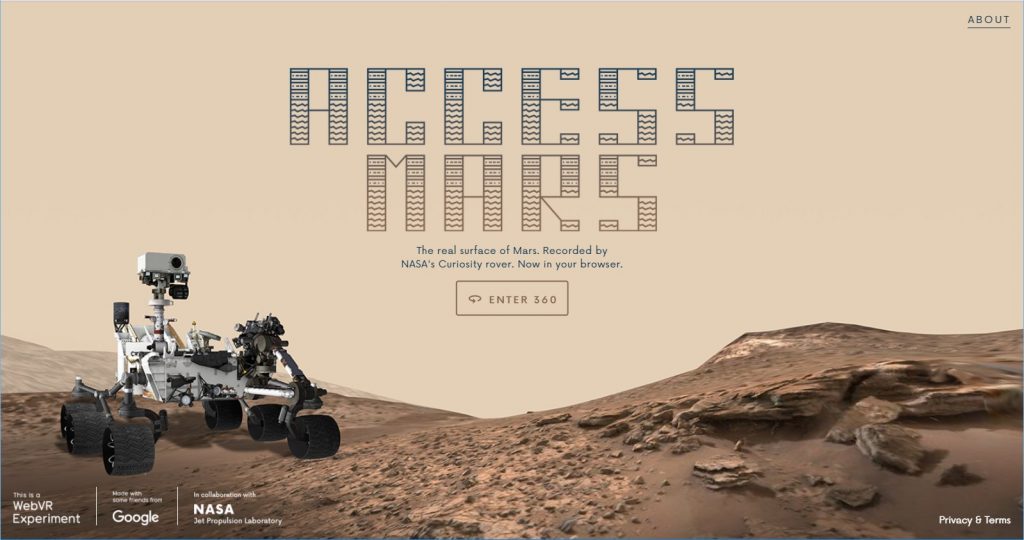
** Check out NASA JPL’s Access Mars: A WebVR Experiment to travel Mars in Virtual Reality created in collaboration with Google:

====

Everyone can participate in space