NextBigFuture.com hosts the latest Carnival of Space.
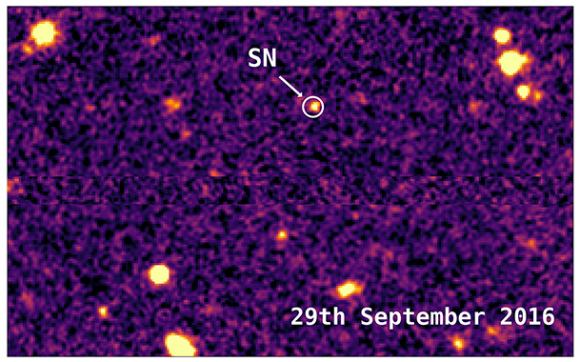
NextBigFuture.com hosts the latest Carnival of Space.
The latest episode of TMRO.tv Space is now available: Space: Why we need to humanize space exploration – Orbit 11.11
This week Lisa chats to Dr Niamh Shaw about her new theatre show ‘Diary of a Martian Beekeeper’ and why we need to include the humanities in space exploration.
News topics and launches covered:
News:
Microbe That Could Survive On Enceladus
Lightfoot to retire as Bridenstine nomination stalled
S-2 Is Single and Ready to Mingle…With Our SMBH
International interest for Lunar Gateway grows
Launches:
Long March 2 Launches LKW-4
===
And here is the previous week’s episode: Searching for Skylab updates – Orbit 11.10 – TMRO
This week Jared gets an update from Dwight Steven-Boniecki about the upcoming documentary “Searching for Skylab”, including some exclusive sneak peaks from the film!
News topics and Launches covered:
News:
Interstellar donuts
World’s First Air Breathing Electric Thruster Tested
Schrödinger in Space
Launches:
SpaceX Launches Hispasat 30W-6
Soyuz Launches O3b Satellites
TMRO is viewer supported:
TMRO shows are crowd funded. If you like this episode consider contributing to help us to continue to improve. Head over to http://www.patreon.com/tmro for per-episode contribution or http://www.makersupport.com/tmro for monthly contributions and reward information.
====
A new documentary movie about pioneering space artist Chesley Bonestell will debut May 1st at the Newport Beach Film Festival.
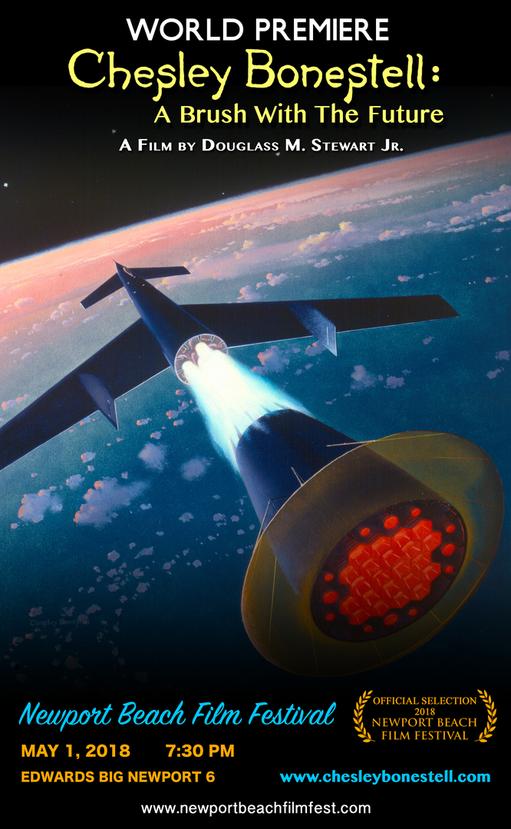
The film is titled Chesley Bonestell: A Brush With The Future:
Behind every architect and builder is an artist who takes designs and ideas, morphing them into beautiful images for everyone to understand. Chesley Bonestell was this artist, yet very few know his name. He worked on the Golden Gate Bridge and the Chrysler Building, as a matte artist on famous movies like Citizen Kane, and his mesmerizing paintings of planets and star systems helped jumpstart America’s space program. His iconic “Saturn As Seen From Titan”, became known as “the painting that launched a thousand careers.” Discover the power of the forgotten man whose art inspired Americans to conquer “The Final Frontier”.
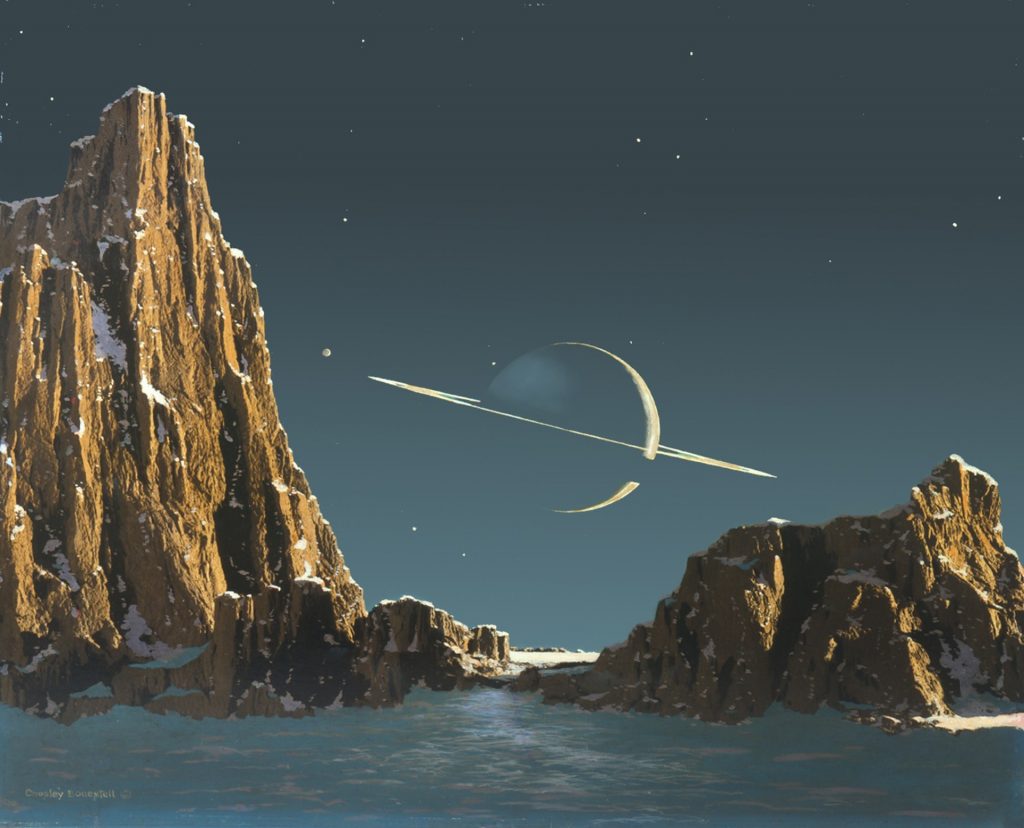
Note that back in 2013 the AIAA Houston Section‘s Horizons Newsletter posted hi-res reproductions of the famous and influential series of articles on spaceflight by Wernher von Braun in Colliers Magazine in 1952-54, which included many illustrations by Bonestell. I wrote about this in these postings:
=====
The latest report from ESO (European Southern Observatory):
SPHERE Reveals Fascinating Zoo of Discs Around Young Stars
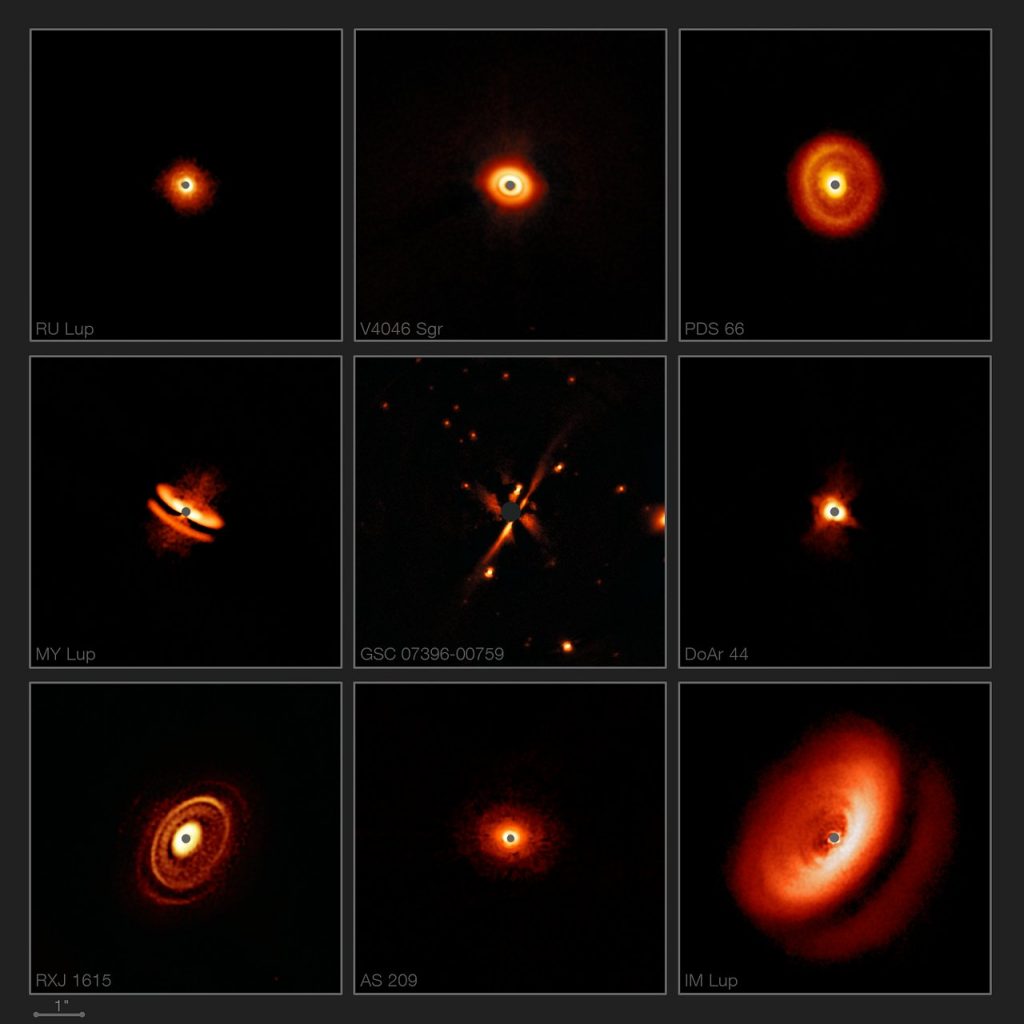
The SPHERE instrument on ESO’s Very Large Telescope (VLT) in Chile allows astronomers to suppress the brilliant light of nearby stars in order to obtain a better view of the regions surrounding them. This collection of new SPHERE images is just a sample of the wide variety of dusty discs being found around young stars.
These discs are wildly different in size and shape — some contain bright rings, some dark rings, and some even resemble hamburgers. They also differ dramatically in appearance depending on their orientation in the sky — from circular face-on discs to narrow discs seen almost edge-on.
SPHERE’s primary task is to discover and study giant exoplanets orbiting nearby stars using direct imaging. But the instrument is also one of the best tools in existence to obtain images of the discs around young stars — regions where planets may be forming. Studying such discs is critical to investigating the link between disc properties and the formation and presence of planets.
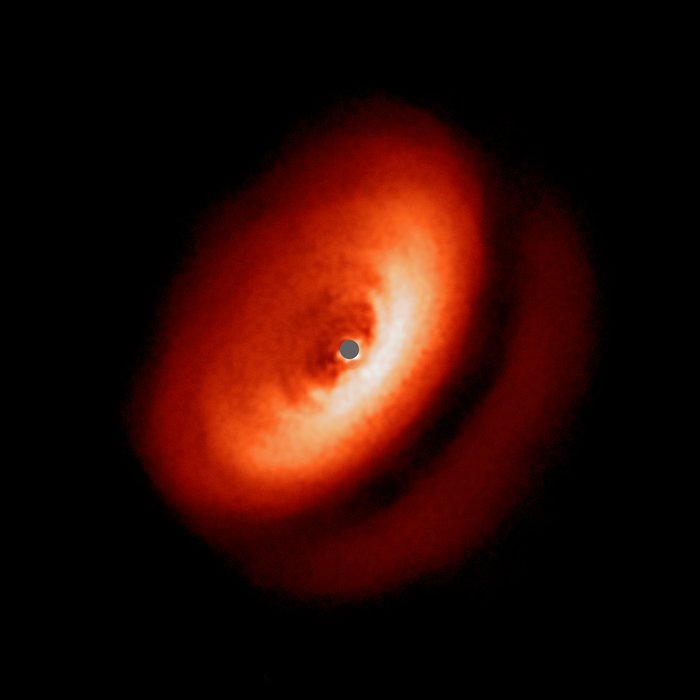
These images also show what our own Solar System may have looked like in the early stages of its formation, more than four billion years ago.
Most of the images presented were obtained as part of the DARTTS-S (Discs ARound T Tauri Stars with SPHERE) survey. The distances of the targets ranged from 230 to 550 light-years away from Earth. For comparison, the Milky Way is roughly 100 000 light-years across, so these stars are, relatively speaking, very close to Earth. But even at this distance, it is very challenging to obtain good images of the faint reflected light from discs, since they are outshone by the dazzling light of their parent stars.
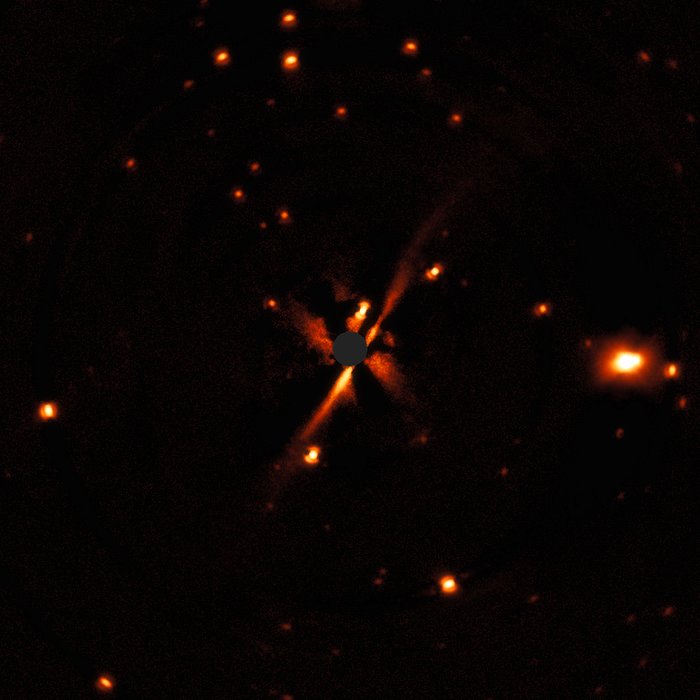
Astronomers have used SPHERE to obtain many other impressive images, as well as for other studies including the interaction of a planet with a disc, the orbital motions within a system, and the time evolution of a disc.
The new results from SPHERE, along with data from other telescopes such as ALMA, are revolutionising astronomers’ understanding of the environments around young stars and the complex mechanisms of planetary formation.
====
The annual Yuri’s Night – World Space Party happens this week in honor of the first human – Yuri Gagarin – to go into space on April 12, 1961.
Yuri’s Night is the World Space Party. We hope to see you dream, explore, and celebrate with us at the hundreds of YN events held around the world each April.
“Circling the Earth in my orbital spaceship I marveled at the beauty of our planet. People of the world, let us safeguard and enhance this beauty — not destroy it!” — Yuri Gagarin, 1st human in space.
Find a party near you at yurisnight.net/events/
Here is a message from the National Space Society about the global event:
The National Space Society has teamed with Yuri’s Night!
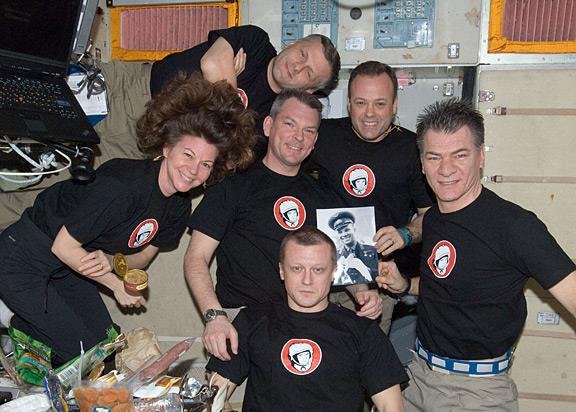
The National Space Society invites you to celebrate Yuri’s Night in your local area. Yuri’s Night is a global celebration of humanity’s past, present, and future in space. Yuri’s Night parties and events are held around the world every April in commemoration of Yuri Gagarin becoming the first human to venture into space on April 12, 1961, and the inaugural launch of the first Space Shuttle on April 12, 1981.
Yuri’s Night events combine space-themed partying with education and outreach. These events can range from an all-night mix of techno and technology at a NASA Center, to a movie showing and stargazing at your local college, to a gathering of friends at a bar or barbecue.
In 2011, the 50th anniversary of human spaceflight, over 100,000 people attended 567 officially-recognized events in 75 countries on all 7 continents, while tens of thousands more watched the 12-hour live Yuri’s Night Global Webcast and participated online in the virtual world of Second Life.
The list of North American events this year can be accessed at https://yurisnight.net/events/#north_america
Yuri’s Night would like to thank the National Space Society for helping make Yuri’s Night in Los Angeles on April 7 the best event ever in the long history of Los Angeles Yuri’s Nights. The massive dance under the space shuttle Endeavour was truly awesome. (For details see www.la.yurisnight.net.)
This is just the beginning! On April 13 the Yuri’s Night celebration will rock the Space Coast in Florida with a dance under the Space Shuttle Atlantis. Help the National Space Society make this party one for the history books.
For more information and to get tickets see www.la.yurisnight.net/spacecoast.
Chantelle Baier
Director, National Space Society
Event Coordinator, Yuri’s Night