We are joined live by Jeff Foust, senior editor at SpaceNews.com to talk about what the incoming President-elect’s space policy is shaping up to be. We wanted to talk space policy as any new incoming president can have huge changes on the direction NASA takes.
Space news topics:
* A Failed Solar Panel Likely Blocked Beagle 2 * International Lunar Station is taking shape * Supermoon this Nov 14th * SPHERE Reveals Protoplanetary Discs
TMRO is viewer supported:
TMRO Space Pods are crowd funded shows. If you like this episode consider contributing to help us to continue to improve. Head over to http://www.patreon.com/spacepod for information, goals and reward levels. Don’t forget to check out our weekly live show campaign as well over at http://www.patreon.com/tmro
===
Here are a couple of recent TMRO Space Pod short video reports:
I recently posted an item about the Urban Aero‘s Cormorant/AirMule vertical-take off and landing (VTOL) ducted fan autonomous vehicle. Here is a video just released of a test flight:
Urban Aeronautics is pleased to announce that on November 3, 2016 its Cormorant Unmanned Air vehicle (UAV) prototype has performed its first autonomous pattern flight including low flight over uneven terrain.
The Cubes in Space is a program to provide opportunities for students age 11 to 18 to design and build experiments that will be launched into space and near-space:
Cubes in Space™ is the only program in the world to provide students (ages 11-18) with a free opportunity to design experiments to be launched into space on a NASA rocket or balloon!
This is a Science, Technology, Engineering, Arts and Mathematics (STEAM) based global education program, enabling kids to learn about space exploration utilizing innovative problem-solving inquiry-based learning methods. By participating in this program, students and educators are provided with engaging content and activities in preparation for the design and development of an experiment to be integrated into a small cube.
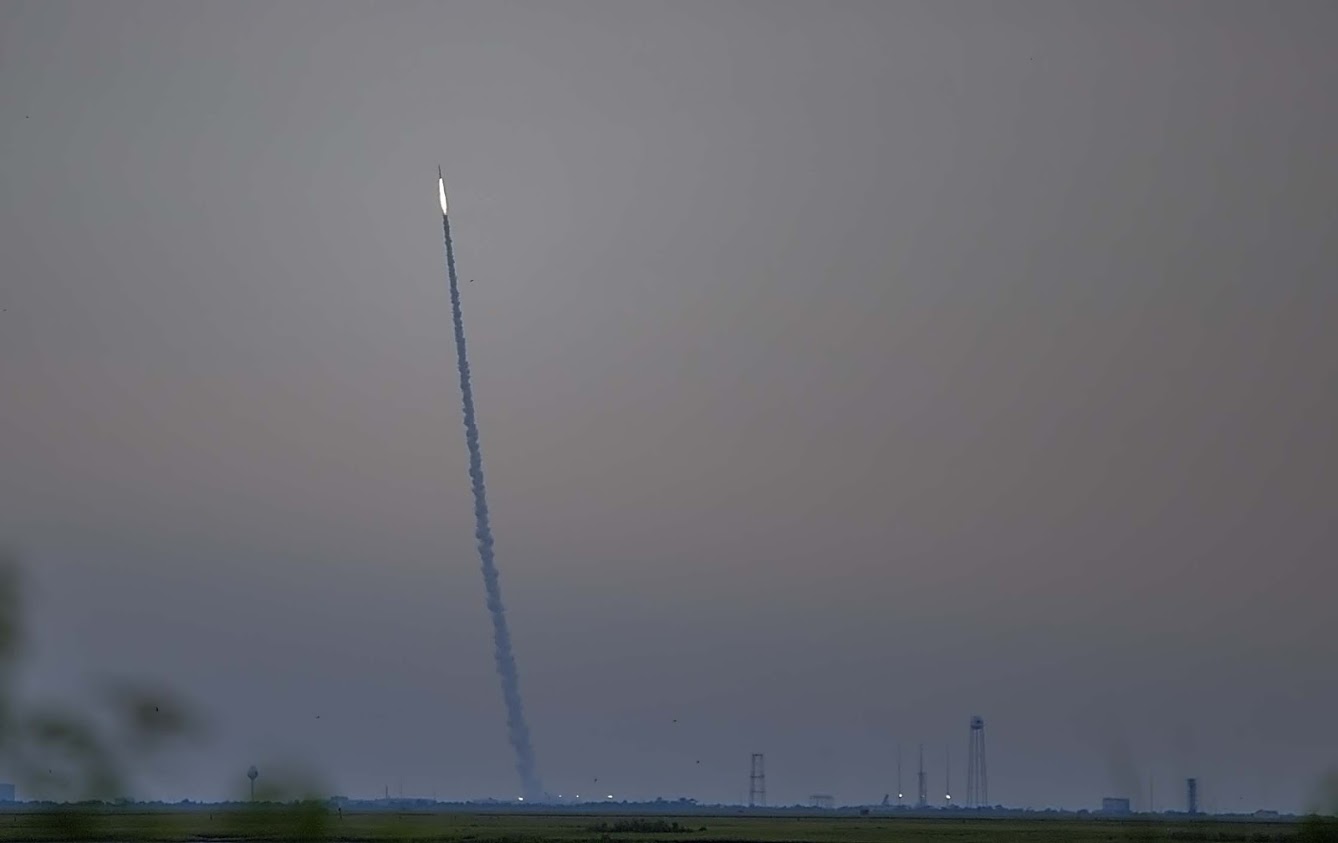
This year, successful experiments/cubes will be launched into space via sounding rocket from NASA Wallops Flight Facility on Wallops Island, Virginia in late June 2017 or on a high altitude balloon launched from the NASA Columbia Scientific Balloon Facility at Fort Sumner, New Mexico in August 2017.
Since we first began the Cubes in Space program in 2014, we have had over 5000 participants from 37 countries, and counting! Come and join us!
The program is sponsored by education organization idoodlelearning in partnership with NASA.
idoodlelearning is proud to partner with the Colorado Space Grant Consortium with support from NASA’s Science Mission Directorate and Sounding Rocket Program Offices to bring Cubes in Space™ to this new generation of future inventors, scientists, engineers, artists and innovators.
idoodlelearning is excited to be working with NASA’s Balloon Program Office, to bring high altitude balloon opportunities to students around the world.
The Hyperloop One company appears to be moving along quickly towards an operating Hyperloop demonstration system in 2017 in Nevada. Here is a promotional video:
The journey is 99 miles (159.4 km) long and normally takes about two hours by car but H1 promises it would take a mere 12 minutes in the hyperloop.
This video shows how the system could be devised to combine automated urban transportation vehicles with the Hyperloop for door to door travel services: