3. Wednesday, May 16, 2018: Hotel Mars. See Upcoming Show Menu and the website newsletter for details. Hotel Mars is pre-recorded by John Batchelor. It is archived on The Space Show site after John posts it on his website.
5. Sunday, May 20, 2018: 12-1:30 pm PDT; 2-3:30 pm CDT; 3-4:30 pm EDT. Welcome to our OPEN LINES program. All callers welcome, especially first time callers. Space and Science topics welcome.
Tim Ellis, CEO of Relativity [Space], joins us to talk about his orbital launch company that is using automation and 3D printing to revolutionize how rockets are built.
Launch and space news topics:
Launches: Long March 4C Launches Gaofen-5 SpaceX Launches Bangabandhu Satellite-1 on Maiden Block 5
News: GEDI to Launch Late 2018 Robonaut 2 has returned to Earth for repairs The Sun is Chillin’
TMRO is viewer supported:
TMRO shows are crowd funded. If you like this episode consider contributing to help us to continue to improve. Head over to http://www.patreon.com/tmro for funding levels, goals and all of our different rewards!
===
See also the recent TMRO: Science program –
Dr. Helena Braga joins us live to talk solid state electrolyte batteries, their advantages over Lithium Ion and realities of entering the marketplace.
Last Friday evening (May 11th), CubeSats from Costa Rico, Kenya, and Turkey were deployed into low earth orbits from the Japanese Kibo module on the International Space Station. This video shows a recording of the live webcast of the event. The Irazu (Costa Rica) and 1KUNS-PF(Kenya) satellites can be seen being shot into orbit (with a spring loaded deployer) at around the 35:00 point and UBAKUSAT (Turkey) at around 45:00.
For more about the backgrounds of the three small satellite projects, see
Irazu – Costa Rica – Costa Rica Institute of Technology (TEC), Central American Association of Aeronautics and Space (ACAE) , Kyushu Institute of Technology (Kyutech).
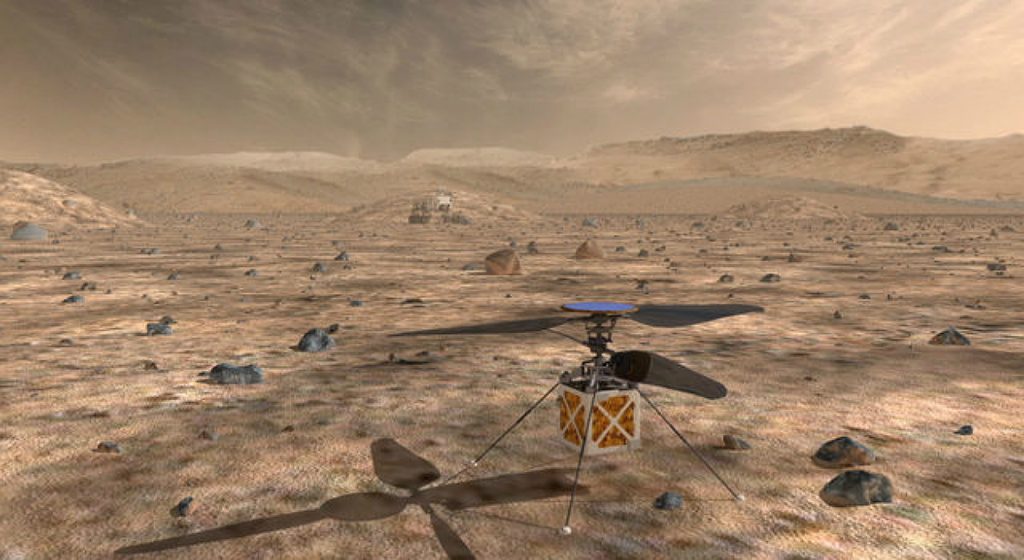
The Mars Helicopter, a small, autonomous rotorcraft, will travel with the agency’s Mars 2020 rover mission, currently scheduled to launch in July 2020, to demonstrate the viability and potential of heavier-than-air vehicles on the Red Planet.
“NASA has a proud history of firsts,” said NASA Administrator Jim Bridenstine. “The idea of a helicopter flying the skies of another planet is thrilling. The Mars Helicopter holds much promise for our future science, discovery, and exploration missions to Mars.”
U.S. Rep. John Culberson of Texas echoed Bridenstine’s appreciation of the impact of American firsts on the future of exploration and discovery.
“It’s fitting that the United States of America is the first nation in history to fly the first heavier-than-air craft on another world,” Culberson said. “This exciting and visionary achievement will inspire young people all over the United States to become scientists and engineers, paving the way for even greater discoveries in the future.”
Started in August 2013 as a technology development project at NASA’s Jet Propulsion Laboratory (JPL), the Mars Helicopter had to prove that big things could come in small packages. The result of the team’s four years of design, testing and redesign weighs in at little under four pounds (1.8 kilograms). Its fuselage is about the size of a softball, and its twin, counter-rotating blades will bite into the thin Martian atmosphere at almost 3,000 rpm – about 10 times the rate of a helicopter on Earth.
“Exploring the Red Planet with NASA’s Mars Helicopter exemplifies a successful marriage of science and technology innovation and is a unique opportunity to advance Mars exploration for the future,” said Thomas Zurbuchen, Associate Administrator for NASA’s Science Mission Directorate at the agency headquarters in Washington. “After the Wright Brothers proved 117 years ago that powered, sustained, and controlled flight was possible here on Earth, another group of American pioneers may prove the same can be done on another world.”
The helicopter also contains built-in capabilities needed for operation at Mars, including solar cells to charge its lithium-ion batteries, and a heating mechanism to keep it warm through the cold Martian nights. But before the helicopter can fly at Mars it has to get there. It will do so attached to the belly pan of the Mars 2020 rover.
“The altitude record for a helicopter flying here on Earth is about 40,000 feet. The atmosphere of Mars is only one percent that of Earth, so when our helicopter is on the Martian surface, it’s already at the Earth equivalent of 100,000 feet up,” said Mimi Aung, Mars Helicopter project manager at JPL. “To make it fly at that low atmospheric density, we had to scrutinize everything, make it as light as possible while being as strong and as powerful as it can possibly be.”
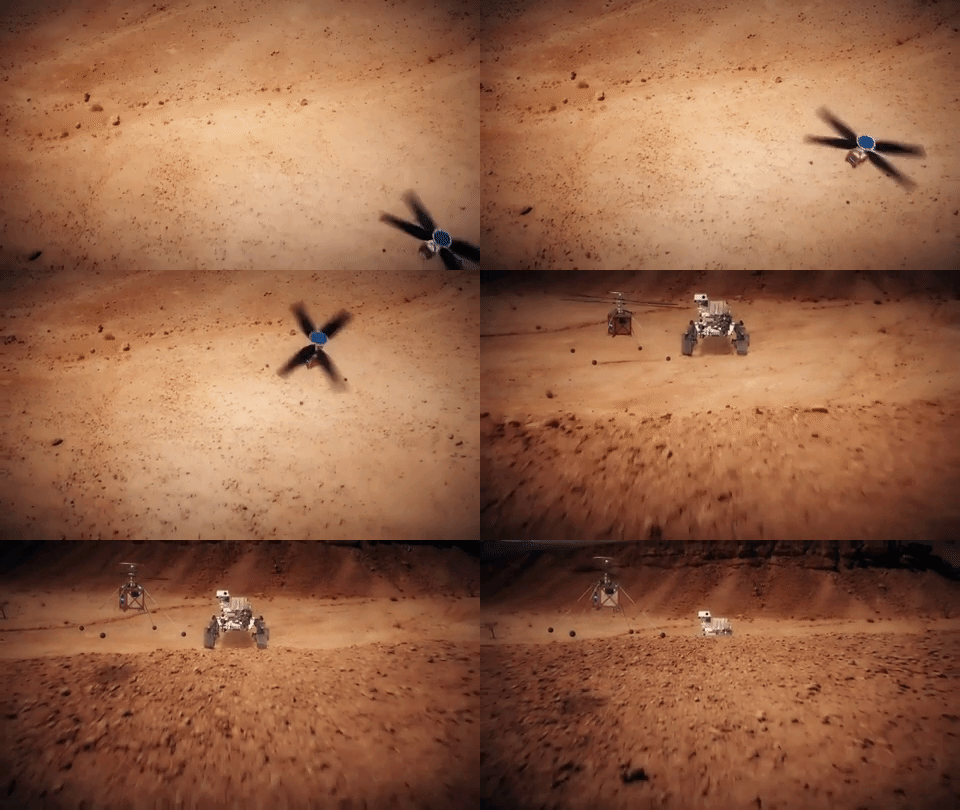
Once the rover is on the planet’s surface, a suitable location will be found to deploy the helicopter down from the vehicle and place it onto the ground. The rover then will be driven away from the helicopter to a safe distance from which it will relay commands. After its batteries are charged and a myriad of tests are performed, controllers on Earth will command the Mars Helicopter to take its first autonomous flight into history.
NASA’s Mars Helicopter, a small, autonomous rotorcraft, will travel with the agency’s Mars 2020 rover, currently scheduled to launch in July 2020, to demonstrate the viability and potential of heavier-than-air vehicles on the Red Planet. Credits: NASA/JPL-Caltech
“We don’t have a pilot and Earth will be several light minutes away, so there is no way to joystick this mission in real time,” said Aung. “Instead, we have an autonomous capability that will be able to receive and interpret commands from the ground, and then fly the mission on its own.”
The full 30-day flight test campaign will include up to five flights of incrementally farther flight distances, up to a few hundred meters, and longer durations as long as 90 seconds, over a period. On its first flight, the helicopter will make a short vertical climb to 10 feet (3 meters), where it will hover for about 30 seconds.
As a technology demonstration, the Mars Helicopter is considered a high-risk, high-reward project. If it does not work, the Mars 2020 mission will not be impacted. If it does work, helicopters may have a real future as low-flying scouts and aerial vehicles to access locations not reachable by ground travel.
“The ability to see clearly what lies beyond the next hill is crucial for future explorers,” said Zurbuchen. “We already have great views of Mars from the surface as well as from orbit. With the added dimension of a bird’s-eye view from a ‘marscopter,’ we can only imagine what future missions will achieve.”
Mars 2020 will launch on a United Launch Alliance (ULA) Atlas V rocket from Space Launch Complex 41 at Cape Canaveral Air Force Station in Florida, and is expected to reach Mars in February 2021.
Animation of Mars helicopter and Mars 2020 rover. Credits: NASA/JPL-CalTech
The rover will conduct geological assessments of its landing site on Mars, determine the habitability of the environment, search for signs of ancient Martian life, and assess natural resources and hazards for future human explorers. Scientists will use the instruments aboard the rover to identify and collect samples of rock and soil, encase them in sealed tubes, and leave them on the planet’s surface for potential return to Earth on a future Mars mission.
The Mars 2020 Project at JPL in Pasadena, California, manages rover development for the Science Mission Directorate at NASA Headquarters in Washington. NASA’s Launch Services Program, based at the agency’s Kennedy Space Center in Florida, is responsible for launch management.
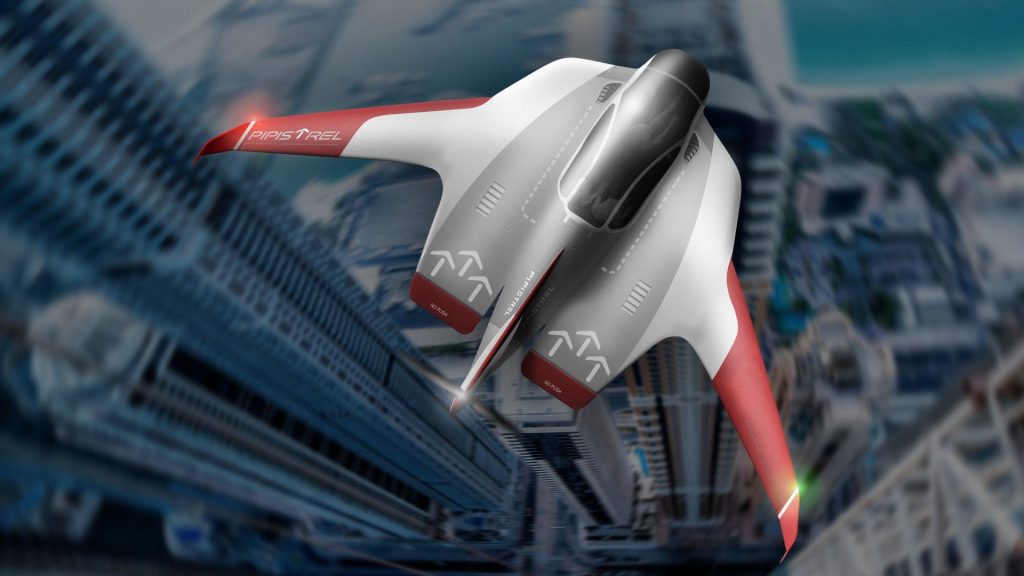
Uber Elevate is Uber’s program to support development of electric powered flying taxis that take off and land vertically. The second Uber Elevate Summit was held this week in Los Angeles and companies from around the world presented the status and plans for the vehicles. Infrastructure, regulatory issues, battery technology, electric power supply, and other issues surrounding such services were discussed.
Here are videos of the presentations on the first day. See the schedule for a list of the session.
Here is a video from Uber showing a generic version of the service they would like to provide to urban customers:
** Here is a video of the talk given by Aurora Flight Sciences Founder & CEO John Langford on how “Aurora is building the certifiable autonomous systems that will enable all of tomorrow’s intelligent aircraft – of any shape”:
** Bell Helicopter presented their concept for an air taxi, though their video shows only the interior of their design: