Here are two new videos that can give one a much better sense of just how big the big rockets that are launching, and in some cases landing, today really are:
Bonus: Enjoy more of The Everyday Astronaut‘s soundtrack to the video at top:
====
Here are two new videos that can give one a much better sense of just how big the big rockets that are launching, and in some cases landing, today really are:
Bonus: Enjoy more of The Everyday Astronaut‘s soundtrack to the video at top:
====
I’ve previously posted about the PlanetVac system for gathering a sample of the surface of celestial bodies. It was developed by Honeybee Robotics and supported financially by the Planetary Society. Here is a video report on a recent test using Masten Space Systems‘s Xodiac vertical takeoff and landing reusable rocket.
From the caption:
Taking samples of other worlds is an important step towards discovery, but it is an expensive and complex process. Honeybee Robotics and The Planetary Society
teamed up to solve this problem. This is PlanetVac.
Learn more: http://www.planetary.org/planetvac/
After a few prototypes, PlanetVac is ready to be tested in Mojave, CA on a Xodiac rocket made by Masten Space Systems. NASA selected PlanetVac to fly on a Xodiac rocket as part of its Flight Opportunities program. If this PlanetVac Xodiac test is successful, it will significantly increase its chance of being selected on a real space mission.
PlanetVac Xodiac was supported by Planetary Society members. Over 800 people joined the team by donating. Thank you to the 887 donors from 35 countries who supported PlanetVac Xodiac in 2018. Special thanks to Pendleton Ward and Dustin Roberts who provided generous matching funds to inspire the community in support of the project.
====
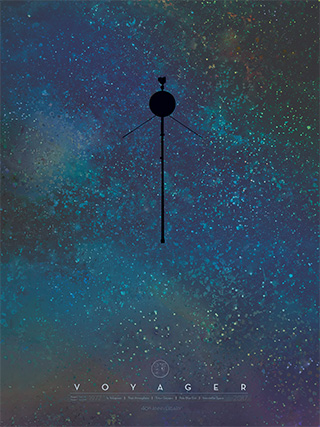
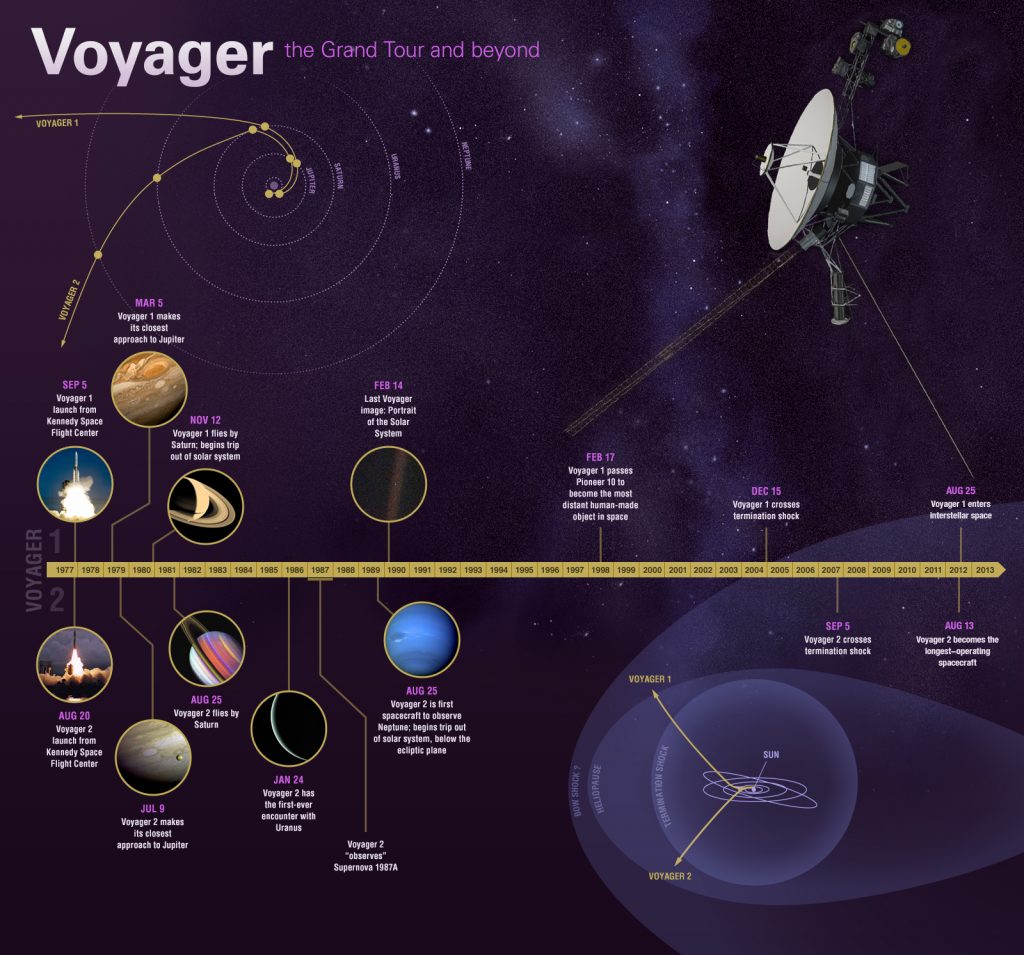
The two Voyager spacecraft were launched in 1977 and successfully visited the gas giant planets of our solar system before heading out into interstellar space. The nuclear powered vehicles are still operating and sending data back to earth.
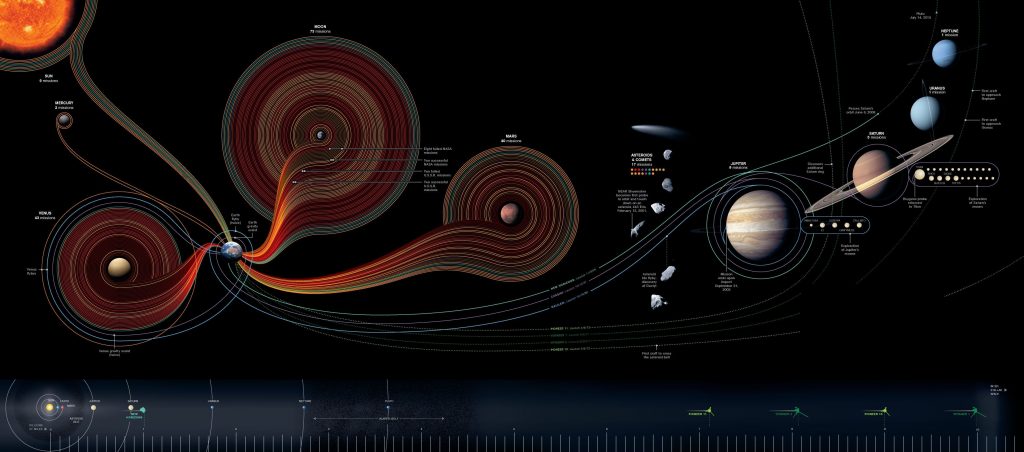
Check out these posters and infographics from NASA JPL in celebration of the Voyager missions.


Infographics:
a
====
The guests and topics of discussion on The Space Show this week:
1. Monday, June 18, 2018; 2-3:30 pm PDT (4-5:30 pm CDT, 5-6:30 pm EDT): Mark Sundahl, Atty, returns to discuss commercial space law, property rights, etc.
2. Wednesday, June 13, 2018: Hotel Mars. See Upcoming Show Menu and the website newsletter for details. Hotel Mars is pre-recorded by John Batchelor. It is archived on The Space Show site after John posts it on his website.
3. Thursday, June 21, 2018: 7-8:30 pm PDT; 9-10:30 pm CDT; 10-11:30 pm EDT: We welcome back Dr. Haym Benarova for this special program.
4. Friday, June 22 2018; 9:30 am -11 am PDT, (12:30 -2 pm EDT; 11:30 am -1 pm CDT): We welcome back Dr. John Brandenburg for his latest science fiction book, Morningstar Rising UFO Armageddon.
5. Sunday, June 24, 2018: 12-1:30 pm PDT; 2-3:30 pm CDT; 3-4:30 pm EDT. Dennis Wingo returns to do a special interview with me about commercial and NewSpace history.
See also:
* The Space Show on Vimeo – webinar videos
* The Space Show’s Blog – summaries of interviews.
* The Space Show Classroom Blog – tutorial programs
The Space Show is a project of the One Giant Leap Foundation.

I recently posted about Joe Barnard adding thrust vector control and other advanced features to model rockets. The goal is to model not just the appearance of large rockets but how they take off and fly as well. This weekend, he successfully flew for the first time a model he built of the SpaceX Falcon Heavy, which involved separation of the two side cores and the in-flight firing start-up of the center core.
The side boosters executed a 20 degree roll program with a rate of 30dps, beginning at T+0.9. Initial pitch-over of the vehicle at launch was due to thrust inconsistencies between booster motors. Because of a low level coordinate transformation error in its flight software, the center core flew with poor stability, correcting roughly 20 degrees off axis for both pitch and yaw. Photos from the flight can be found here: https://bps.space/gallery/
Find out more about Barnard’s projects and rocket hardware at BPS.space.
====