A sampling of links to recent space policy, politics, and government (US and international) related space news and resource items that I found of interest:
** The Space Show – Fri, 02/08/2019 – Mark Whittington discussed recent “space news, space policy, lunar return, launches and rocketry, Apollo history, SpaceX, Blue Origin, Elon Musk, Starship, BFR and much more”.
Listen to Michal Anne Rogondino discuss user experience design for the Space and Missile Systems Center (SMC). Michal Anne explains design thinking and how it is being utilized to create a user experience for DoD space applications. The CEO of Rocket Communications talks about the workarounds of designing for a secret environment without having a secret clearance (it is possible) and working for the government in general. The stakes are high as there cannot be any ambiguity around an icon or a simple alarm. Bringing the user experience to the space domain is different and there are challenges with automation and autonomy that demand the creation of new rules and guidelines. In parallel is a need for creating baseline and guidelines that are common which allows everything to be designed in a common way. Space systems are complex and there will be an advantage to giving airmen or operators the tools and time to focus on what is important, their mission.
1. Monday, Feb. 11, 2019: 2-3:30 pm PST (4-5:30 pm CST, 5-6:30 pm EST): No show for today as we begin to transition to the end of regularly scheduled Monday programs.
2. Tuesday, Feb. 12, 2019: 7-8:30 pm PST (9-10:30 pm CST, 10-11:30 pm EST): We welcome back Matt Bille to discuss the use of small satellites for whale science, tracking and conservation.
3. Wednesday, Feb. 13 2019: Hotel Mars. See Upcoming Show Menu and the website newsletter for details. Hotel Mars is pre-recorded by John Batchelor. It is archived on The Space Show site after John posts it on his website.
5. Sunday, Feb. 17 2019: 12-1:30 pm PST (3-4:30 pm EST, 2-3:30 pm CST): No show today as part of the Washington Birthday National Holiday weekend.
Some recent programs:
** Fri, 02/08/2019 – Mark Whittington discussed recent “space news, space policy, lunar return, launches and rocketry, Apollo history, SpaceX, Blue Origin, Elon Musk, Starship, BFR and much more”.
** Tue, 02/05/2019 – Robert Zimmerman spoke about “record launch activity, FH, F9, heavy lift, Geo satellite market, cubesat constellations, NASA, commercial crew, space politics, and more”.
** Sun, 02/03/2019 – Wide range of topics discusses with callers including military space, Chinese space program, lunar development, and more
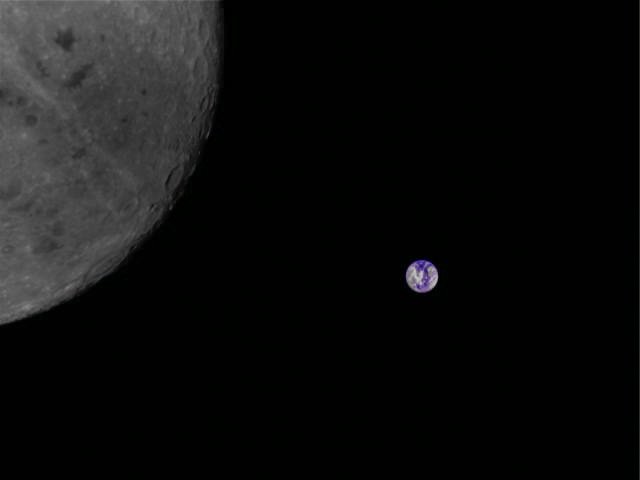
This image shows the far side of the Moon, as well as our own planet Earth. It was taken with a camera linked to an amateur radio transceiver on board the Chinese DSLWP-B / Longjiang-2 satellite (call sign BJ1SN), currently in orbit around the Moon, and transmitted back to Earth where it was received with the Dwingeloo Telescope.
Earth as seen from lunar orbit via a camera on the Chinese DSLWP-B / Longjiang-2 satellite and a transceiver built by a team at Harbin Institute of Technology. Credits Dwingeloo Radio Telescope.
This image represents the culmination of several observing sessions spread over the past few months where we used the Dwingeloo telescope in collaboration with the Chinese team from Harbin University of Technology, who build the radio transceiver on board Longjiang-2, and radio amateurs spread across the globe. … The transceiver on board Longjiang-2 was designed to allow radio amateurs to downlink telemetry and relay messages through a satellite in lunar orbit, as well as command it to take and downlink images. In that it has succeeded, as many radio amateurs have received telemetry and image data. Being able to use the Dwingeloo telescope to help with this has been a lot of fun.
Note that the Dwingeloo Radio Telescope in the Netherlands is the “largest radio telescope in the world for amateurs”.
A new Villanova College of Engineering student organization has formed this year—the CubeSat Club. Dr. Alan Johnston, associate teaching professor of Electrical and Computer Engineering, is the faculty advisor working alongside the Radio Amateur Satellite Corporation, a not-for-profit group that has been building and launching ham radio satellites for fifty years. Dr. Johnston volunteers with AMSAT as the vice president for education outreach. The CubeSat Club is aimed at introducing students to CubeSats and satellite technology…
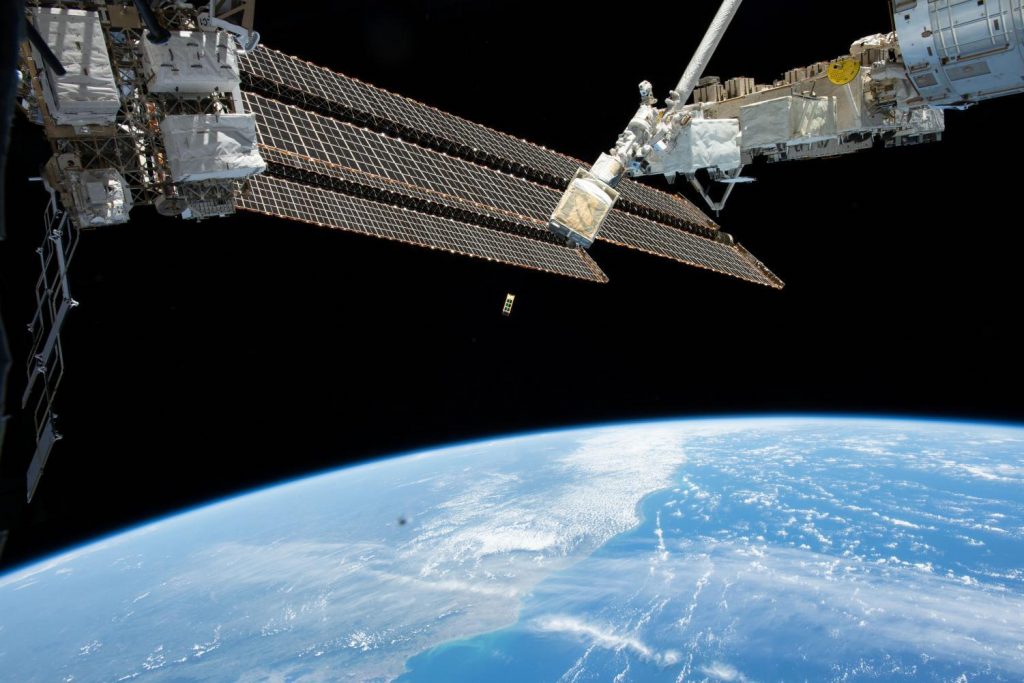
Five university undergraduate students were finally able to see the 10-by-10-by-30 centimeter satellite launch into the great beyond after two and a half years working on the UNITE CubeSat project.
The launch of USI’s UNITE CubeSat from the ISS. Credits: NASA and NanoRacks.
The five active members on the Undergraduate Nano Ionospheric Temperature Explorer (UNITE) CubeSat team, Wyatt Helms, Ryan Loehrlein, Zack Snyder, Sujan Kaphle and Nathan Kalsch, watched the satellite deploy from the International Space Station on campus Jan. 31.
“It was a really great feeling because after working on this project for two plus years, finally seeing something that you put so much time and effort into being deployed from the space station I mean, you don’t hear any sound but you just imagine this little ‘boop’ as it’s being shot out,” Helms, the team lead, said.
The CubeSat will be deployed for 15 months and has three main missions: conducting space weather measurements, measuring exterior and interior temperatures of the spacecraft for comparison with a thermal model and tracking orbital decay of the spacecraft in the lower ionosphere where other methods are in error.
…
[Project advisor Assistant Professor of Physics Eric Greenwood] said that the grant required the project to be student led. The professors were not allowed to build the components of the CubeSat or be hands-on.
“It’s very exciting to have something that I was involved in that’s up in space,” Greenwood said. “The pride I feel for our students is tremendous.”
MarconISSta – A project by researchers and students at the Technische Universität Berlin that put a spectrum analyzer payload on the International Space Station in 2018 to “monitor parts of the frequency spectrum in VHF, UHF, L and S band in order to analyze current use and availability of bands for satellite communication”.
A sampling of items related to traveling to and through space:
** Virgin Galactic pilots Mark ‘Forger’ Stucky and CJ Sturckow received Commercial Astronaut Wings from the FAA for flying to space on SpaceShipTwo:
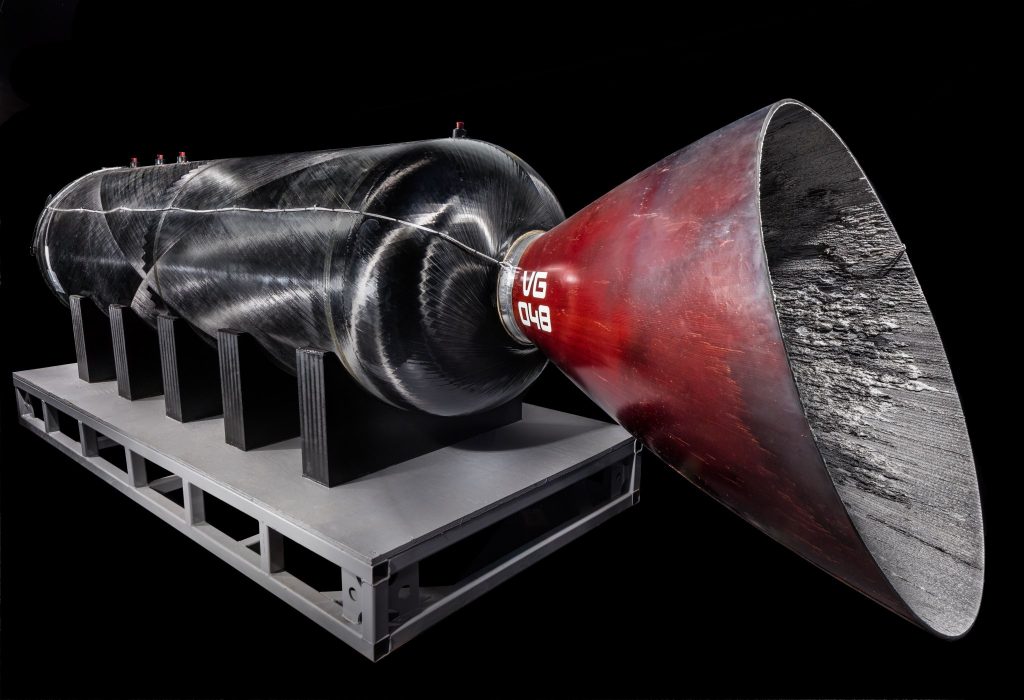
The SpaceShipTwo motor from the flight was also given some special recognition:
The rocket motor which powered SpaceShipTwo to space for the first time on December 13th last year, has been donated to the @Smithsonian@AirandSpace as an exhibit in their new Commercial Space Flight Gallery 😍 pic.twitter.com/0PMZPLHf6n
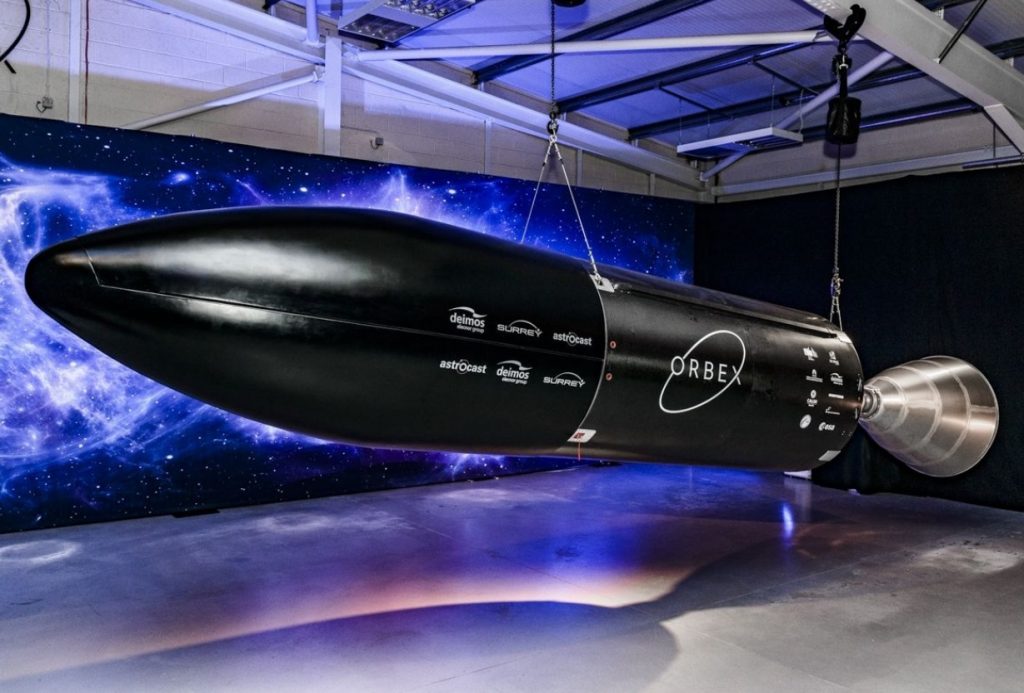
completed engineering prototype of the Stage 2 rocket (the stage that will transit into orbital flight after launch) [that] is made from a specially-formulated lightweight carbon fibre and aluminium composite and includes the world’s largest 3-D printed rocket engine.
Orbex upperstage engineering prototype “#Prime, the completed stage 2 rocket and the world’s most efficient #smallsat launcher. It includes the world’s largest 3D printed rocket engine and designed to run on bio-propane, a #clean, #renewable energy source”.
** PLD Space of Spain also makes progress in development of a smallsat launcher with a reusable first stage booster:
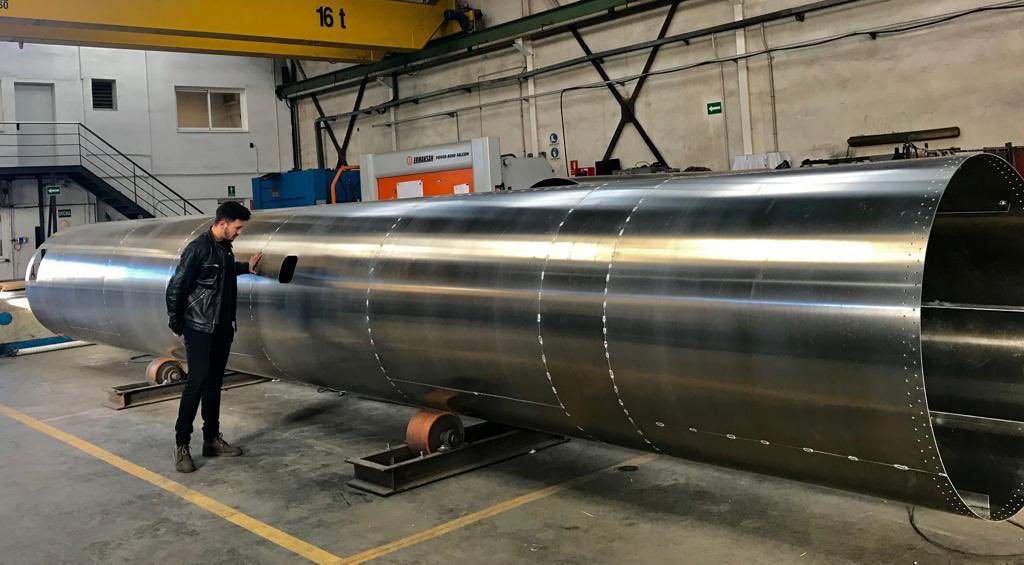
As we promised. #MIURA5 Liquid Porpulsion Stage Recovery (LPSR) reusable booster demonstrator is under manufacturing. First stage of the launch vehicle will be integrated in 1month for a full-scale test in April. One of our major milestones this year. Exciting test to come. pic.twitter.com/b6Tw0dyORq
Propellant loading underway to begin with #TEPREL-B flight qualification engine tests. Our first flight engine version. #Propulsion team is ready. Upgraded Teruel facilities also ready to support the test. #GoMIURA#GoPLDpic.twitter.com/TbpXDUripu
While most engineered structures operate at a fraction of their material’s tensile strength—how far they can be pulled without breaking—most biological structures, such as tendons, operate near their max. That’s because biological structures are constantly breaking themselves down and rebuilding, which allows for continual repair.
Space elevators won’t require such a strong cable if the cable also continually renews itself, Sun and Popescu reason. This feat could be achieved, they suggest, by developing a cable that’s constantly serviced by autonomous robots. Rather than waiting for breaks in the cable, these robots can dynamically break down and rebuild the cable to make sure it’s always in good working order. This cable would be segmented so that if a break occurred, it wouldn’t extend beyond a small site, note the researchers, who recently reported their solution on the pre-print website arXiv.
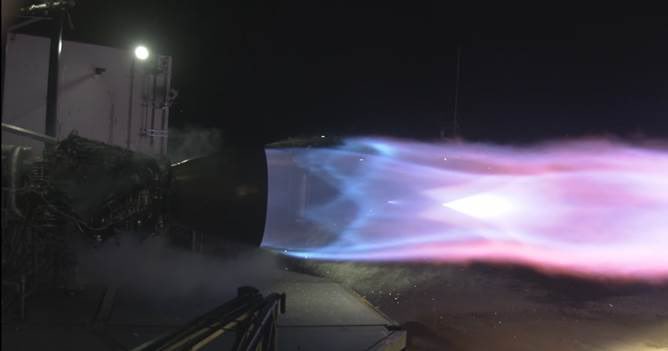
Design requires at least 170 metric tons of force. Engine reached 172 mT & 257 bar chamber pressure with warm propellant, which means 10% to 20% more with deep cryo.
January saw a slight uptick in sunspot activity, but the overall activity remains comparable to mid-2008, when the last prolonged solar minimum began. If you go to my October 2018 update, you can see the graph when it included data going back to 2000 and see the entire last minimum.
That last minimum started in the last half of 2007, and lasted until mid-2009, a full two years. If you look at the red line prediction of the solar science community, it appears that they are expecting this coming minimum to last far longer, almost forever. I expect this is not really true, but that they have simply not agreed on a prediction for the next cycle. Some in that solar science community have hypothesized that we are about to enter a grand minimum, with no sunspots for decades and thus no solar maximum. Others do not agree.
** Mark Showalter, New Horizons Hazard team lead and SETI Institute Senior Scientist, discusses “the spacecraft’s flyby of Ultima Thule, what it’s like working on the Hazards team, and even the naming of some of Pluto’s surface features” with SETI Institute chief Bill Diamond:
This animation depicts a shape model of Ultima Thule created by the New Horizons science team based on its analysis of all the pre-flyby images sent to Earth so far. The first half of the movie mimics the view from the New Horizons spacecraft as it approached Ultima Thule and has the “snowman” shape that was so frequently mentioned in the days surrounding the New Year’s 2019 flyby.
The movie then rotates to a side-view that illustrates what New Horizons might have seen had its cameras been pointing toward Ultima Thule only a few minutes after closest approach. While that wasn’t the case, mission scientists have been able to piece together a model of this side-view, which has been at least partially confirmed by a set of crescent images of Ultima Thule (link). There is still considerable uncertainty in the sizes of “Ultima” (the larger section, or lobe) and “Thule” (the smaller) in the vertical dimension, but it’s now clear that Ultima looks more like a pancake than a sphere, and that Thule is also very non-spherical.
NASA’s Curiosity Mars Rover has already descended from Vera Rubin Ridge, a region of Mount Sharp that it has been exploring for more than a year. But before it left, the rover took a 360-degree panorama of the area depicting its last drill hole on the ridge (at a location called “Rock Hall”), a new region it will spent the next year exploring (the clay unit) and its last view of Gale Crater’s floor until it starts ascending in elevation again.
At high resolution there does not appear to be much difference between the darker and lighter areas. The lighter areas in general seem less rough and at a slightly lower elevation, but both areas are dominated by ridges and dunes trending southwest-to-northeast.
Why is this slightly higher region darker? Let’s assume that this darker material was a lava flow overlaying the surface. Over eons wind erosion, trending southwest-to-northwest, roughly eroded both it and the lower layers around it, leaving behind this rough corroded terrain. The different make-up of the darker material allows it to erode in a rougher manner.
While possibly correct, I would not bet much money on this guess. It is not clear it is lava. It is not clear that it is a flow. It does not explain why there are two areas of different darkness. And it certainly not clear what the make-up of any of this stuff is.
This is simply another cool mystery on the Martian surface.
Martian southern highlands region showing contrast between lighter and darker tinted areas.
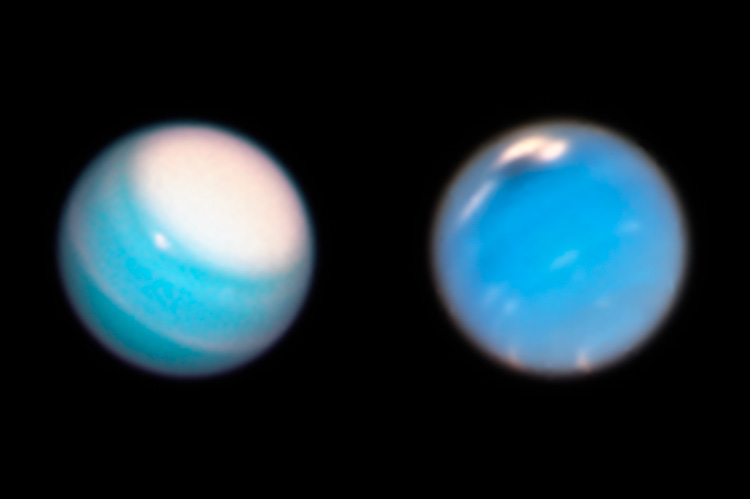
NASA’s Hubble Space Telescope has snapped the latest weather pictures of our solar system’s frigid outer planets, and UC Berkeley astronomers have jumped in to interpret them.
Giant polar cap dominates Uranus; dark tempest is raging on Neptune.
The new images, taken as part of a yearly monitoring program, show that a dark storm has appeared in Neptune’s northern hemisphere, the fourth seen on the planet since 1993, all of which appear and fade within a few years. UC Berkeley undergraduate student Andrew Hsu, who led a study of the latest images with associate research astronomer Michael Wong, estimates that the dark spots appear every four to six years at different latitudes and disappear after about two years.
It’s unclear how the storms form, Hsu said, but like Jupiter’s Great Red Spot, the dark vortices swirl in an anti-cyclonic direction and seem to dredge up material from deeper levels in the ice giant’s atmosphere. The latest storm was captured by Hubble in September 2018 and is roughly 6,800 miles across.
…
The new snapshot of Uranus gives a fresh look at a long-lived storm circling around the north-pole region of Uranus, a planet that is usually thought of as featureless and boring.
Why did the dinosaurs die? They didn’t have a space program! The upcoming DART mission will test our best thinking about how we may someday deflect a Near Earth Object that is speeding toward fiery Armageddon on Earth. Nancy Chabot of the JHU Applied Physics Lab is the mission’s Coordination Lead.
** Science news is included in the latest TMRO.tv space news report: SpaceX Engine Tests, ISRO Spaceflight, Lunar Craters and SpaceIL