Outside the International Space Station, Expedition 51 Commander Peggy Whitson and Flight Engineer Jack Fischer of NASA conducted a spacewalk May 12 to replace an avionics box responsible for routing power and data commands to experiments on the orbital outpost. In addition to that work, the two spacewalkers installed a data cable for the Alpha Magnetic Spectrometer and a new high definition camera on the station’s truss. The spacewalk was the 200th in support of space station assembly and maintenance since 1998, the ninth for Whitson, who vaulted into third place on the all-time list for most spacewalking hours, and the first for Fischer.
Images taken by the Cassini spacecraft as it flew between the surface of Saturn and the innermost ring have now been released. The video below starts with the sequence of images of Saturn’s surface and then shows an animation of where the spacecraft was moving and the view that it had of the planet.
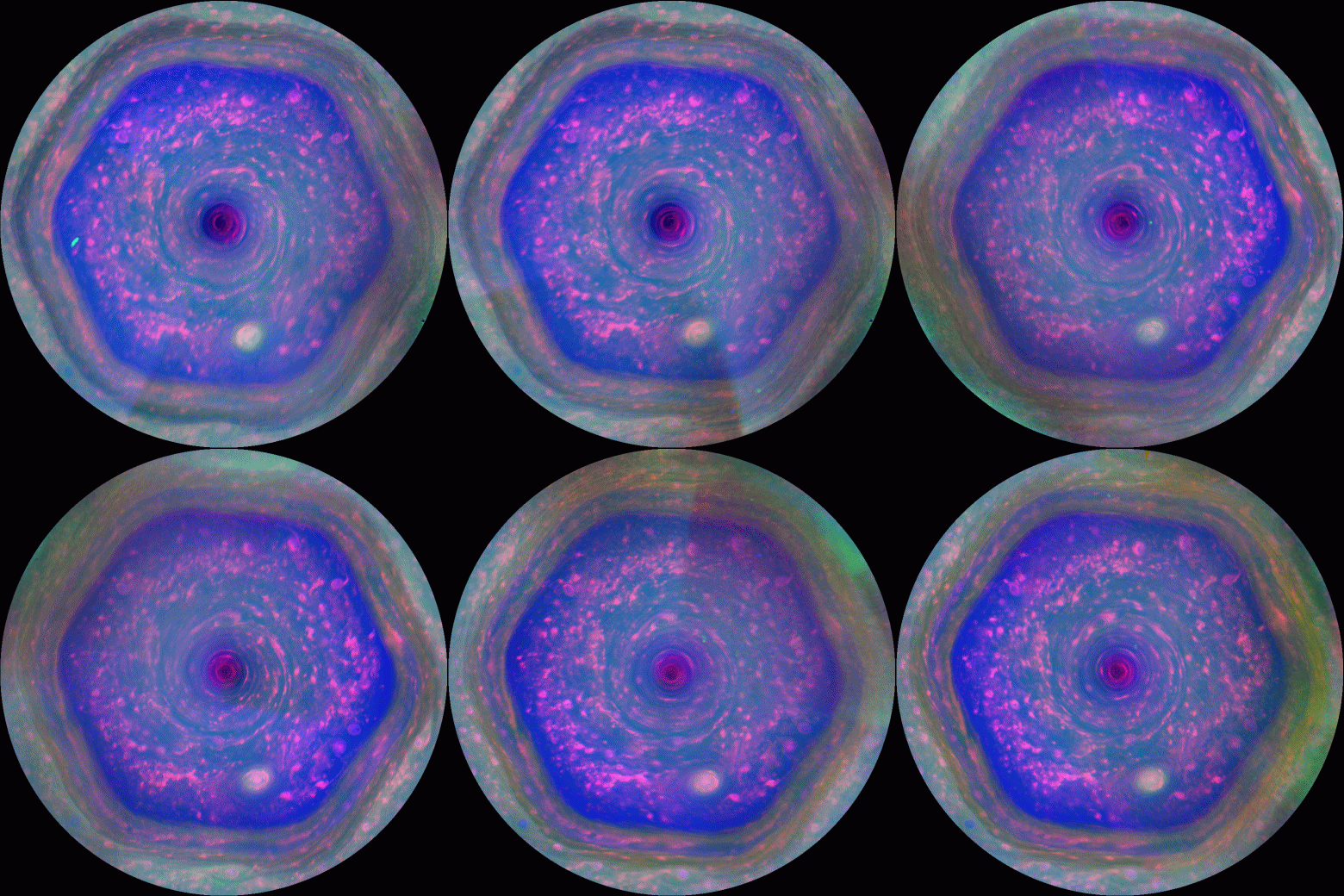
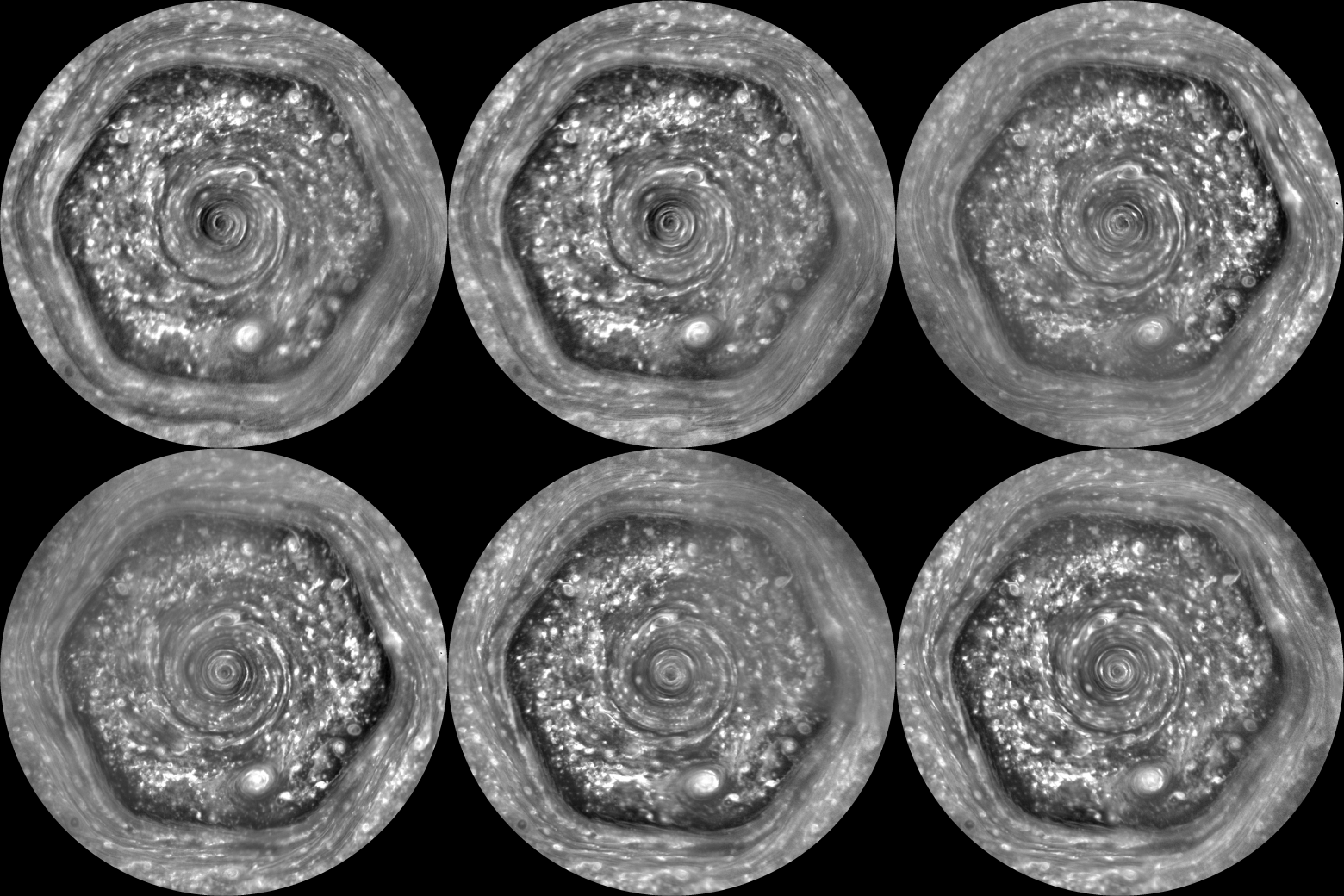
As NASA’s Cassini spacecraft made its first-ever dive through the gap between Saturn and its rings on April 26, 2017, one of its imaging cameras took a series of rapid-fire images that were used to make this movie sequence. The video begins with a view of the vortex at Saturn’s north pole, then heads past the outer boundary of the planet’s hexagon-shaped jet stream and continues further southward. Credits: NASA/JPL-Caltech/Space Science Institute/Hampton University See movie sequence
A new movie sequence of images from NASA’s Cassini spacecraft shows the view as the spacecraft swooped over Saturn during the first of its Grand Finale dives between the planet and its rings on April 26.
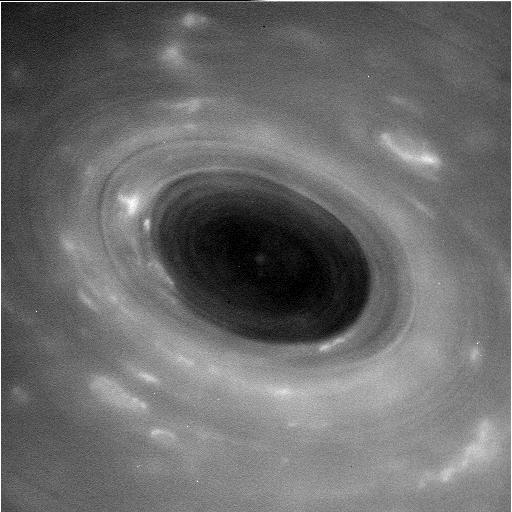
The movie comprises one hour of observations as the spacecraft moved southward over Saturn. It begins with a view of the swirling vortex at the planet’s north pole, then heads past the outer boundary of the hexagon-shaped jet stream and beyond.
“I was surprised to see so many sharp edges along the hexagon’s outer boundary and the eye-wall of the polar vortex,” said Kunio Sayanagi, an associate of the Cassini imaging team based at Hampton University in Virginia, who helped produce the new movie. “Something must be keeping different latitudes from mixing to maintain those edges,” he said.
Toward the end of the movie, the camera frame rotates as the spacecraft reorients to point its large, saucer-shaped antenna in the direction of the spacecraft’s motion. The antenna was used as a protective shield during the crossing of Saturn’s ring plane.
As the movie frames were captured, the Cassini spacecraft’s altitude above the clouds dropped from 45,000 to 4,200 miles (72,400 to 6,700 kilometers). As this occurred, the smallest resolvable features in the atmosphere changed from 5.4 miles (8.7 kilometers) per pixel to 0.5 mile (810 meters) per pixel.
“The images from the first pass were great, but we were conservative with the camera settings. We plan to make updates to our observations for a similar opportunity on June 28 that we think will result in even better views,” said Andrew Ingersoll, a member of the Cassini imaging team based at Caltech in Pasadena, California.
The Cassini-Huygens mission is a cooperative project of NASA, ESA (European Space Agency) and the Italian Space Agency. NASA’s Jet Propulsion Laboratory in Pasadena, California, manages the mission for the agency’s Science Mission Directorate in Washington. JPL is a division of the Caltech in Pasadena. The Cassini imaging operations center is based at Space Science Institute in Boulder, Colorado.
NASA’s Cassini spacecraft is back in contact with Earth after its successful first-ever dive through the narrow gap between the planet Saturn and its rings on April 26, 2017. The spacecraft is in the process of beaming back science and engineering data collected during its passage, via NASA’s Deep Space Network Goldstone Complex in California’s Mojave Desert. The DSN acquired Cassini’s signal at 11:56 p.m. PDT on April 26, 2017 (2:56 a.m. EDT on April 27) and data began flowing at 12:01 a.m. PDT (3:01 a.m. EDT) on April 27.
“In the grandest tradition of exploration, NASA’s Cassini spacecraft has once again blazed a trail, showing us new wonders and demonstrating where our curiosity can take us if we dare,”
said Jim Green, director of the Planetary Science Division at NASA Headquarters in Washington.
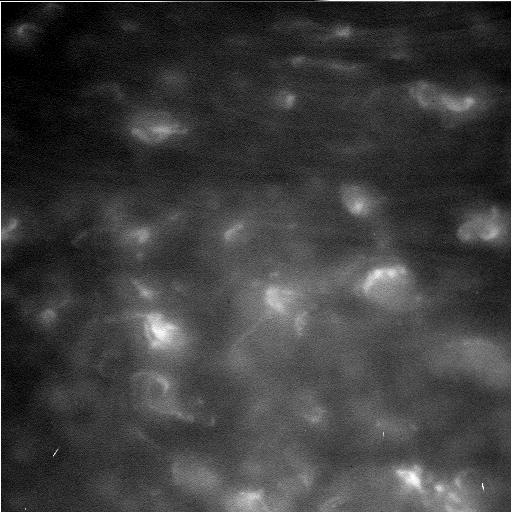
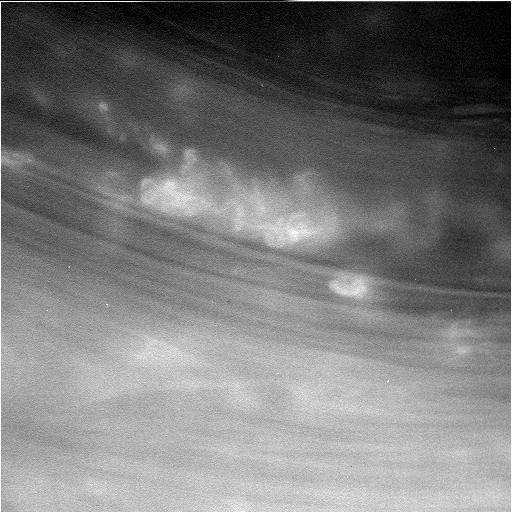
This unprocessed image shows features in Saturn’s atmosphere from closer than ever before. The view was captured by NASA’s Cassini spacecraft during its first Grand Finale dive past the planet on April 26, 2017. Credits: NASA/JPL-Caltech/Space Science Institute
As it dove through the gap, Cassini came within about 1,900 miles (3,000 kilometers) of Saturn’s cloud tops (where the air pressure is 1 bar — comparable to the atmospheric pressure of Earth at sea level) and within about 200 miles (300 kilometers) of the innermost visible edge of the rings.
While mission managers were confident Cassini would pass through the gap successfully, they took extra precautions with this first dive, as the region had never been explored.
“No spacecraft has ever been this close to Saturn before. We could only rely on predictions, based on our experience with Saturn’s other rings, of what we thought this gap between the rings and Saturn would be like,” said Cassini Project Manager Earl Maize of NASA’s Jet Propulsion Laboratory in Pasadena, California. “I am delighted to report that Cassini shot through the gap just as we planned and has come out the other side in excellent shape.”
The gap between the rings and the top of Saturn’s atmosphere is about 1,500 miles (2,000 kilometers) wide. The best models for the region suggested that if there were ring particles in the area where Cassini crossed the ring plane, they would be tiny, on the scale of smoke particles. The spacecraft zipped through this region at speeds of about 77,000 mph (124,000 kph) relative to the planet, so small particles hitting a sensitive area could potentially have disabled the spacecraft.
This unprocessed image shows features in Saturn’s atmosphere from closer than ever before. The view was captured by NASA’s Cassini spacecraft during its first Grand Finale dive past the planet on April 26, 2017. Credits: NASA/JPL-Caltech/Space Science Institute
As a protective measure, the spacecraft used its large, dish-shaped high-gain antenna (13 feet or 4 meters across) as a shield, orienting it in the direction of oncoming ring particles. This meant that the spacecraft was out of contact with Earth during the ring-plane crossing, which took place at 2 a.m. PDT (5 a.m. EDT) on April 26. Cassini was programmed to collect science data while close to the planet and turn toward Earth to make contact about 20 hours after the crossing.
Cassini’s next dive through the gap is scheduled for May 2.
This unprocessed image shows features in Saturn’s atmosphere from closer than ever before. The view was captured by NASA’s Cassini spacecraft during its first Grand Finale dive past the planet on April 26, 2017. Credits: NASA/JPL-Caltech/Space Science Institute
Launched in 1997, Cassini arrived at Saturn in 2004. Following its last close flyby of the large moon Titan on April 21 PDT (April 22 EDT), Cassini began what mission planners are calling its “Grand Finale.” During this final chapter, Cassini loops Saturn approximately once per week, making a total of 22 dives between the rings and the planet. Data from this first dive will help engineers understand if and how they will need to protect the spacecraft on its future ring-plane crossings. The spacecraft is on a trajectory that will eventually plunge into Saturn’s atmosphere — and end Cassini’s mission — on Sept. 15, 2017.
More information about Cassini’s Grand Finale, including images and video, is available at:
The Cassini-Huygens mission is a cooperative project of NASA, ESA (European Space Agency) and the Italian Space Agency. JPL, a division of Caltech in Pasadena, California, manages the mission for NASA’s Science Mission Directorate. JPL designed, developed and assembled the Cassini orbiter.
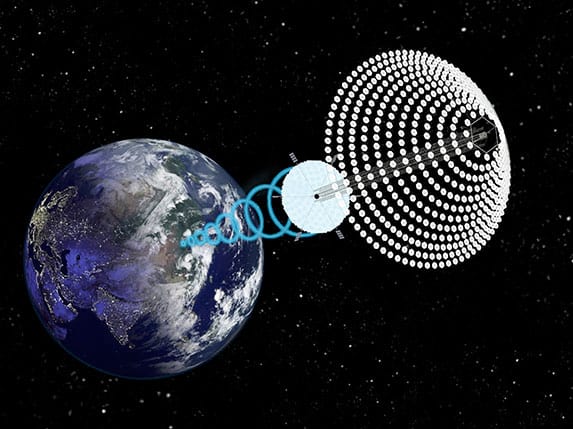
“Space solar power is the concept of harvesting solar energy in space, 24-7 and delivering it safely and economically via wireless power transmission to markets on Earth. This exciting new student competition will encourage the involvement of young engineers and scientists in this important field of energy and space research,”
The purpose of this new annual competition is to engender new, meaningful and credible student research projects in the broad field of Space Solar Power, and to support the presentation of the best of the various projects by students in an international forum.
“The projects proposed and the breadth of students participating is tremendously gratifying,”
said George Dietrich, President of SPACE Canada and sponsor of the competition.
During 2017, the first year of this new competition, 16 projects were proposed from 5 different countries (including China, the US, Japan, the Netherlands, and India) and involving some 14 academic institutions, 8 faculty advisors and 49 graduate and undergraduate students. From the submitted proposals, 7 have been selected as semi-finalists and have been invited to present (with support from SPACE Canada) at the upcoming NSS International Space Development Conference®, ISDC® 2017 (May 25-29) in St. Louis, Missouri USA during the Space Solar Power Track. NSS invites the public to attend this conference to view the presentations and see who wins.
The semi-finalist teams include students from the following institutions: Dalian University of Technology (China), Delft University of Technology (The Netherlands), Hampton University (USA), Harbin Institute of Technology (China), Hosei University (Japan), Indiana University (USA), Kitawato University (Japan), Princeton University (USA), Purdue University / Indianapolis (USA), Shizuoka University (Japan), The Graduate University of Advanced Studies (Japan), Tokai University (Japan), Tokyo University of Science (Japan), University of Colorado / Boulder (USA), and the University of Maryland (Baltimore County and College Park Campuses, USA).
Following their presentations at the ISDC 2017® Conference, winning teams will be invited (with travel support) to present technical papers summarizing their research at the Space Power Symposium at the 68th International Astronautical Congress (IAC 2017) during 25-29 September in Adelaide, Australia.
About SPACE Canada: SPACE Canada is a non-profit, non-governmental organization based in Canada; the purpose of which is promotion of international dialogue on, and understanding of the topic of Space Solar Power. To learn more, visit the SPACE Canada Website (www.spacecanada.org) .
About the National Space Society (NSS): NSS is an independent nonprofit educational membership organization dedicated to the creation of a spacefaring civilization. NSS is widely acknowledged as the preeminent citizen’s voice on space, with over 50 chapters in the United States and around the world. The Society publishes Ad Astra magazine, an award-winning periodical chronicling the most important developments in space. NSS thanks their ISDC 2016 Galaxy Sponsor, the Puerto Rico Science, Technology and Research Trust. To learn more, visit www.nss.org.
This interactive video from NASA JPL allows you to scan Saturn and the rings as the Cassini spacecraft makes one of its dives between the two before the Grand Finale in September.
Dive between Saturn and its rings with NASA’s Cassini spacecraft in the final chapter of its mission. In this 360-degree video, you are traveling along with the spacecraft at tens of thousands of miles per hour as it makes one of 22 planned dives through this unexplored gap. The first dive of Cassini’s Grand Finale takes place on April 26, 2017, with additional dives about once a week.
Key Dates
April 22: Titan 126 Flyby at 6:08 a.m. UTC (11:08 p.m. PDT on April 21)
April 23: First Grand Finale Orbit Begins at 3:46 a.m. UTC (8:46 p.m. PDT on April 22)
April 26: First Ringplane Crossing at 9 a.m. UTC (2 a.m. PDT)
May 24: Northern Summer Solstice Begins
Sept. 15: Cassini’s Final Entry into Saturn’s Atmosphere begins at 10:44 a.m. UTC (3:44 a.m. PDT). Spacecraft loss of signal comes one minute later at 10:45 a.m. UTC (3:45 a.m. PDT).
Sept. 15: Final signal received on Earth at 12:08 p.m. UTC (5:08 a.m. PDT)
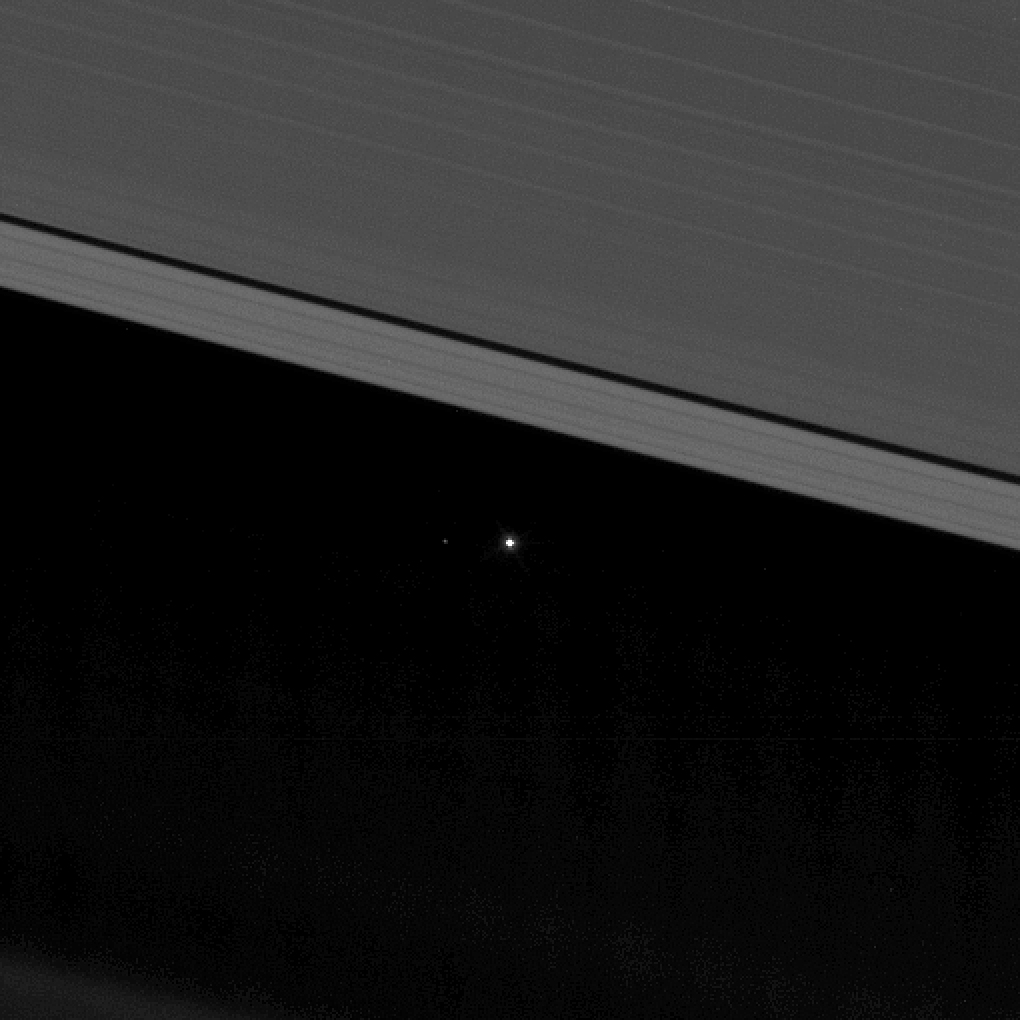
This cropped, zoomed-in version of the image makes it easier to see Earth’s moon — a smaller, fainter dot to the left of our planet’s bright dot. Credits: NASA/JPL-Caltech/Space Science Institute Full image and caption