All posts by TopSpacer

A blue sand dune on Mars

Mars has lots of weird and wonderful features on its surface. For example, here is one highlighted by NASA last week:

Once in a Blue Dune

Sand dunes often accumulate in the floors of craters. In this region of Lyot Crater, NASA’s Mars Reconnaissance Orbiter (MRO) shows a field of classic barchan dunes on Jan. 24, 2018.

Just to the south of the group of barchan dunes is one large dune with a more complex structure. This particular dune, appearing like turquoise blue in enhanced color, is made of finer material and/or has a different composition than the surrounding.

The map is projected above at a scale of 25 centimeters (9.8 inches) per pixel. [The original image scale is 34.7 centimeters (13.7 inches) per pixel (with 1 x 1 binning); objects on the order of 104 centimeters (40.9 inches) across are resolved.] North is up.

This is a stereo pair with ESP_053406_2295.

The University of Arizona, Tucson, operates HiRISE, which was built by Ball Aerospace & Technologies Corp., Boulder, Colorado. NASA’s Jet Propulsion Laboratory, a division of Caltech in Pasadena, California, manages the Mars Reconnaissance Orbiter Project for NASA’s Science Mission Directorate, Washington.

Image Credit: NASA/JPL-Caltech/Univ. of Arizon
Image download options

The Space Show this week – June.25.2018

The guests and topics of discussion on The Space Show this week:

1. Monday, June 25, 2018; 2-3:30 pm PDT (4-5:30 pm CDT, 5-6:30 pm EDT): We welcome Dr. John Cramer to the program to discuss multiple topics in physics and much more.

2. Tuesday, June 26, 2018: 7-8:30 pm PDT; 9-10:30 pm CDT; 10-11:30 pm EDT: We welcome back Dr. Ajay Kothari to discuss his latest return to the Moon plan and program.

3. Wednesday, June 27, 2018: Hotel Mars.  Dr. William Farrand What Happened to Opportunity?

Hotel Mars is pre-recorded by John Batchelor. It is archived on The Space Show site after John posts it on his website.

4. Friday, June 29, 2018; 9:30 am -11 am PDT, (12:30 -2 pm EDT; 11:30 am -1 pm CDT): We welcome back Dr. Anita Sengupta to discuss the Cold Atom Lab, Hyperloop and more.

5. Sunday, July 1, 2018: 12-1:30 pm PDT; 2-3:30 pm CDT; 3-4:30 pm EDT. OPEN LINES. First time callers welcome, all space, science, STEM and STEAM calls welcome. We want to hear from you. What’s on your mind?

See also:
* The Space Show on Vimeo – webinar videos
* The Space Show’s Blog – summaries of interviews.
* The Space Show Classroom Blog – tutorial programs

The Space Show is a project of the One Giant Leap Foundation.

The Space Show - David Livingston
David Livingston


Video: TMRO Orbit 11.25 – The evolution of galaxies with Dr. Charles Liu

The latest episode of TMRO Space is now available on line: The evolution of galaxies with Dr. Charles Liu – Orbit 11.25 – TMRO

Dr. Charles Liu joins us to talk about the observable evolution of galaxies, quasar hunting and has some inspiring words about science communication.

Launch and news topics covered:

Launches:

  • Russia Launches GLONASS-M Satellite

Space News:

  • Einstein you genius
  • B-b-b-blackhole and the jets
  • The EU is taking down the trash

TMRO.tv is viewer supported:

TMRO shows are crowd funded. If you like this episode consider contributing to help us to continue to improve. Head over to http://www.patreon.com/tmro for funding levels, goals and all of our different rewards!

====

Rocket Lab to launch an Electron with 5 payloads including Irvine CubeSat built by high schoolers

This evening US time and Saturday afternoon New Zealand time, Rocket Lab will attempt to launch the third Electron rocket into orbit.

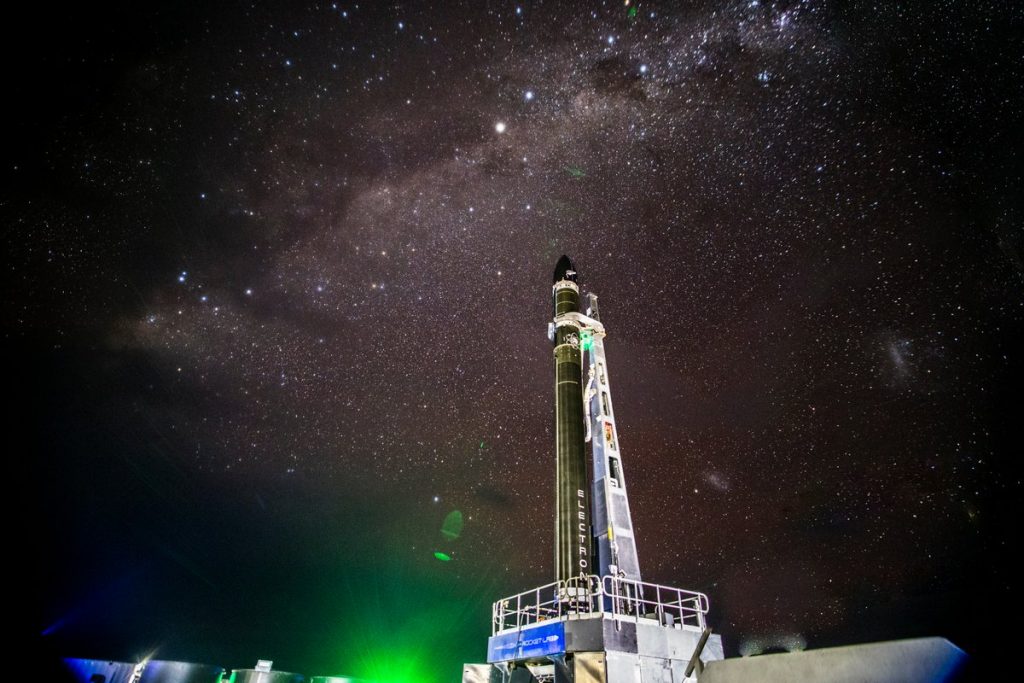
The Electron on the pad at Mahia. (Photo credits Kieran_Fanning)

The rocket is to lift off from the Mahia Peninsula on the east coast of New Zealand‘s North Island. You can watch the launch via the rocketlabusa.com/live-stream webcast.

The vehicle is carrying four payloads for commercial companies plus the Irvine CubeSat built by high school students in Irvine, California.

The Irvine CubeSat Program is a revolutionary STEM initiative based in Irvine, California. With over 100 members from six public high schools, the program collectively strives to assemble, test, and launch a solar powered CubeSat. It aims to inspire the next generation of innovative thinkers, creators, programmers, and explorers.

Here is a video about the program:

The company’s press kit (pdf) has lots of information about the mission. See also Rocket Lab set for first operational Electron launch with five payload elements – NASASpaceFlight.com.

====


Videos: “Space to Ground” ISS report – June.22.2018 + A music video for Scott Tingle

Here is the latest Space to Ground report from NASA on this week’s activities related to the International Space Station:

Here is a music video from NASA astronaut Scott Tingle’s son who

wrote, produced, and sent to him in space the song “To Touch the Stars” in honor of his family’s journey to reach his dreams.

Tingle played guitar at a professional level in a band as a young man. He returned to earth  on June 3rd after 6 months on the ISS.

Here is a NASA video about eating in space:

Astronauts on the International Space Station get food that’s carefully chosen for its nutritional value and specially prepared and packaged to be easily accessible to them in a weightless world on orbit. Could the same food feed the needs of people stuck on planet Earth? We conducted an experiment to find out how well two regular people could get by eating only astronaut food for a full week—a week that included a holiday weekend feast, just to up the difficulty factor. Could they resist the lure of their favorite foods? Take a look at how they fared…

How to navigate in space by the stars: Deep Space Navigation: Tool Tested as Emergency Navigation Device | NASA

A tool that has helped guide sailors across oceans for centuries is now being tested aboard the International Space Station as a potential emergency navigation tool for guiding future spacecraft across the cosmos. The Sextant Navigation investigation tests use of a hand-held sextant aboard the space station. 

Sextants have a telescope-like optical sight to take precise angle measurements between pairs of stars from land or sea, enabling navigation without computer assistance. NASA’s Gemini missions conducted the first sextant sightings from a spacecraft, and designers built a sextant into Apollo vehicles as a navigation backup in the event the crew lost communications from their spacecraft. Jim Lovell demonstrated on Apollo 8 that sextant navigation could return a space vehicle home. Astronauts conducted additional sextant experiments on Skylab.

====