1. Tuesday, Sept. 7, 2021; 7 pm PDT (9 pm CDT, 10 pm EDT): We welcome back Chris Blackerby of Astroscale for important updates on their orbital debris mitigation project.
2. Wednesday, Sept. 8, 2021: Hotel Mars TBA pre-recorded. See upcoming show menu on the home page for program details.
3. Friday, Sept.10, 2021; 9:30-11 am PDT (11:30 am-1 pm CDT, 12:30-2 pm EDT): We welcome back Dr. Namrata Goswami for a look at our space and national space security efforts in Asia post Afghanistan.
4. Sunday, Sept.12, 2021; 12-1:30 pm PDT (3-4:30 pm EDT, 2-3:30 pm CDT): We welcome back John Bucknell for part 2 of his discussion around his new company focusing on SSP.
Artemis [program] and why our guest deeply opposes the program. Also, asteroid mining, resource minding the asteroids compared to the Moon, Tic-tac and ET matters, global society history and nefarious forces opposing the U.S. experiment and more.
** Friday, Sept.3.2021 – Roman Chiporukha talked about “High end space, earth and ocean adventures, space missions, marketing, educational outreach, educating the general public about space, STEM goals“.
Here is the latest episode in NASA’s Space to Ground weekly report on activities related to the International Space Station:
** Cosmonauts spacewalk outside Nauka module in these amazing views – VideoFromSpace
Cosmonauts Oleg Novitsky and Pyotr Dubrov’s conduct a spacewalk outside the Nauka Multipurpose Laboratory Module on Sept. 3, 2021.
** Animation Depicts First Russian Spacewalk to Outfit the New Nauka Module – NASA Video
The animation depicts the work to be conducted by Expedition 65 cosmonauts Oleg Novitskiy and Pyotr Dubrov of Roscosmos during the first pair of up to eleven spacewalks that will outfit the new Russian Nauka Multipurpose Laboratory Module that was launched from the Baikonur Cosmodrome on July 21 and docked to the International Space Station July 29. The first two spacewalks involve the connection of power, ethernet and telemetry cables between Nauka, the Zvezda Service Module and Pressurized Mating Adapter 1 that links the U.S. and Russian segments of the orbital complex.
** Space Station Crew Talks with Gateway Habitation and Logistics Outpost Team – NASA Video
** Expedition 65 – SpaceX CRS 23 Rendezvous and Docking – NASA Video
SpaceX Cargo Dragon docks with the International Space Station with science experiments and supplies.
Water is life, on Earth and in space. Dutch ESA astronaut André Kuipers recounts his experience living in space for 204 days, and his time looking back on the blue face of ‘Planet Aqua’, comparing notes with divers about what is going on beneath the waves. He goes on to explore how space technology is being used for water management, from orbital tracking of water quality and pollution to spacecraft-grade recycling systems deployed down on the ground, as well as ambitious efforts to identify marine plastic litter using satellites. Produced for SIWI World Water Week with the support of the Netherlands Ministry of Foreign Affairs.
** Enter the airlock with Thomas Pesquet (in French with English subtitles available) – European Space Agency, ESA
ESA astronaut Thomas Pesquet gives a tour of the International Space Station’s airlock – the module used to prepare for and carry out spacewalks. In this video, Thomas provides an overview of the EMU spacesuit used for US spacewalks and its different components. The spacesuits can be adjusted depending on an astronaut’s size, but the gloves are customised to ensure each astronaut has maximum mobility in their hands and fingers. Thomas shows the cameras and lighting systems that allow astronauts to continue work when over the side of Earth not lit by the sun, the visors they put down during periods of harsh light and the cooling garments worn under the suits that keep their bodies at the right temperature. He also explains the equipment lock and the crew lock, where astronauts breathe in a controlled way to rid their blood of nitrogen and adjust to the lower pressure of space.
ESA astronaut Thomas Pesquet takes you on a tour of the International Space Station like no other. Filmed with a 360 camera, the Space Station 360 series lets you explore for yourself alongside Thomas’s explanation – this is the Node 2 module. Node 2 is a European-built connecting module also known as Harmony that acts as an internal passageway and utility hub. Its exterior also serves as a work platform for the station’s robotic arm, Canadarm2, and has docking ports for spacecraft. In this video, Thomas shows the different modules that Node 2 connects: Europe’s Columbus Laboratory, the US lab Destiny and the Japanese Kibo Laboratory. He also shows workspaces and sleeping cabins where astronauts can have some personal space and sleep with their sleeping bags attached to the wall.
** What’s Up: September 2021 Skywatching Tips from NASA – NASA JPL
What are some skywatching highlights in September 2021? Mercury provides a challenging target to spot in the fading light after sunset at the beginning of the month. Enjoy spotting two “fast” stars all month long: speedy Arcturus and fast-spinning Altair. Additional information about topics covered in this episode of What’s Up, along with still images from the video, and the video transcript, are available at https://solarsystem.nasa.gov/whats-up….
In September, Pegasus becomes increasingly prominent in the southeastern sky, allowing stargazers to locate globular star clusters and a nearby double star, Alpha Capricorni. Keep watching for space-based views of densely packed, spherical collections of ancient stars in visible and X-ray light.
A sampling of links to recent space policy, politics, and government (US and international) related space news and resource items that I found of interest (find previous space policy roundups here):
** 2021 Space Symposium | NASA Administrator Bill Nelson – NASA Video
NASA Administrator Bill Nelson speaks on our return to the Moon with Artemis, upcoming milestones for our science missions, the value of NASA in our everyday life, and more. Learn how NASA innovations improve daily life, and how our unique mission provides benefits in big and small ways: to create jobs, jumpstart businesses, and grow the economy.
** What The Next Space Station May Look Like – CNBC
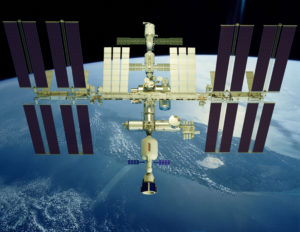
The International Space Station will likely be retired within the decade. NASA hopes to save money by having commercial companies build the next space outpost. Some companies including Sierra Space and Axiom Space are already working on a commercial space station. But the question is, will these stations be ready in time?
** Turbulent Week for US/China Space Relations, 1 km-long Space Station Project, 2 Launches in the Week – Dongfang Hour – YouTube
Hello and welcome to another episode of the Dongfang Hour China Space News Roundup! A kind reminder that we cover many more stories every week in our Newsletter (newsletter.dongfanghour.com). This week, we discuss:
00:00 Introduction 01:06 Turbulent week in US-China space relations 09:00 2 launches in a week 15:08 China’s Natural Science Foundation publishes the “Guidelines for the 14th Five-Year Plan first batch of projects”, hints at research on a 1-km long super space station
**The Space Show – Friday, Aug.27.2021 – Charles Precourt of Northrup Grumman discussed “Artemis, SLS, solid rocket boosters (SRBs), SRB propellant, lunar return timelines, human lunar lander, Gateway, Gateway lunar orbits, plus much more“.
Engineering teams have completed the James Webb Space Telescope’s long-spanning comprehensive testing regimen at Northrop Grumman’s facilities. Webb’s many tests and checkpoints were designed to ensure that the world’s most complex space science observatory will operate as designed once in space. Now that observatory testing has concluded, shipment operations have begun. This includes all the necessary steps to prepare Webb for a safe journey through the Panama Canal to its launch location in Kourou, French Guiana, on the northeastern coast of South America.
NISAR will provide maps of developing crop area on a global basis every two weeks. Observations will be uninterrupted by weather and provide up-to-date information on the large-scale trends that affect international food security. The NASA–ISRO Synthetic Aperture Radar (NISAR) mission, a collaboration between the National Aeronautics and Space Administration (NASA) and the Indian Space Research Organization (ISRO), will provide all-weather, day/night imaging of nearly the entire land and ice masses of the Earth repeated 4-6 times per month. NISAR’s orbiting radars will image and track subtle movement of the Earth’s land and its sea ice, and even provide information about what is happening below the surface. NISAR will also provide information on crop area and forest biomass over time and with enough detail to reveal changes on field scales.
On this Constellations Podcast learn how a Hollywood visual effects company is now helping satellite operations to visualize data. Listen to Tim McBride, President of Zoic Labs, describe how his company is using their experience in visual effects to bring sense to the complex and massive amounts of data coming from satellites. Mr. McBride shares how Zoic Labs has grown from their first project of mapping the world with the National Geospatial-Intelligence Agency to helping the U.S. Space Force and Air Force Research Laboratory see things in a different light.
During this week’s Space Café, SpaceWatch.Global publisher, Torsten Kriening caught up with California-based Danica Remy to discuss all things asteroids. With a career in social justice movements and “fabulous innovation”, Danica serves as President of the B612 Foundation, which leads private sector efforts in research, analysis and systems design to protect Earth from asteroids. Danica also co-founded the international program, Asteroid Day, which takes place each year on 30 June. The initiative is supported by a raft of rockstars (and rockstar scientists!), as well as governments, international space agencies and satellite companies. In 2016, it was sanctioned by the United Nations as an official day to increase global awareness and education of asteroids.
Asteroids are all around us, but have people forgotten the threat they pose to Earth since Armageddon hit our screens over 23 years ago? Or is an asteroid impact the existential crisis always lurking in the back of our minds? This week, Danica and Torsten discuss what measures the “new space revolution” is implementing to save our planet from a Hollywood doomsday scenario and how Asteroid Day is raising awareness of this issue. …
1. Tuesday, Aug. 31, 2021; 7 pm PDT (9 pm CDT, 10 pm EDT): We welcome back Dr. David Brin, sci-fi author, scientist and policy aficionado. He questions returning to the Moon!
2. Wednesday, Sept. 1, 2021: Hotel Mars TBA pre-recorded. See upcoming show menu on the home page for program details.
3. Friday, Sept. 3, 2021; 9:30-11 am PDT (11:30 am-1 pm CDT, 12:30-2 pm EDT): We welcome Roman Chiporukha of SpaceVIP for space tourism and space adventure travel.
4. Sunday, Sept. 5, 2021; 12-1:30 pm PDT (3-4:30 pm EDT, 2-3:30 pm CDT): No show today due to the U.S. Labor Day Holiday Weekend