Videos: Cassini and the wonders of Saturn + An overview of the Voyager mission

A video of highlights of the many discoveries and marvelous images made by the Cassini mission to the Saturn system:

Checkout the Cassini: The Grand Finale: Cassini’s ‘Inside-Out’ Rings Movie:

This movie sequence of images from NASA’s Cassini spacecraft offers a unique perspective on Saturn’s ring system. Cassini captured the images from within the gap between the planet and its rings, looking outward as the spacecraft made one of its final dives through the gap as part of the mission’s Grand Finale. Using its wide-angle camera, Cassini took the 21 images in the sequence over a span of about four minutes during its dive through the gap on Aug. 20, 2017. The images have an original size of 512 x 512 pixels; the smaller image size allowed for more images to be taken over the short span of time. [Full caption]
A talk by Alan Cummings, Senior Research Scientist at Caltech and Voyager team member since 1973, about the two Voyager spacecraft and their travels out into interstellar space:

From the caption:

In 1977, NASA’s twin Voyager spacecraft embarked on an incredible journey to the outer planets and beyond. After delivering stunning images of Jupiter, Saturn, Uranus and Neptune, the probes sailed on to study the boundary of our heliosphere, the bubble that encompasses our sun, planets and solar wind. Voyager 1 crossed that frontier in August 2012, becoming the first human-made object in interstellar space, while Voyager 2 is expected to enter the space between the stars in the coming years. This live public talk at NASA’s Jet Propulsion Laboratory in Pasadena, California, revisits highlights of the last 40 years and discuss what may lie ahead for the intrepid Voyagers.

Kickstarter: Commemorative pin for Apollo 11 to hold lunar meteorite “moon dust”

Check out the Kickstarter for The World’s First Enamel Pin Made With Authentic MOON DUST by B. Smith & Co

Our vision for “Projects of Earth” is to develop an affordable high quality commemorative enamel pin and handcrafted meteorite pen set featuring authentic moon dust, celebrating the upcoming 50th anniversary of mankind’s greatest technological achievement: putting a man on the moon.

This soft enamel pin will be made using only the highest quality components available. No cheap zinc alloys, imitation platings, or butterfly clutches… Our production samples are just in and they are absolutely beautiful!

Style: Soft enamel lapel pin 

Size: 1.5″ x 1.25″ (38 mm x 35 mm) 

Material: Die struck solid brass, Nickel plating in Gold or Silver 

Enamel: 8 pantone colors, hand painted 

Back side: Die struck texture with deluxe brass clutch 

Weight: approximately 0.5 oz. 

Optional upgrade: Moon Dust, including display box and etched stainless steel certificate of authenticity card

B.Smith & CO. previously developed The METEORITE Pen.

The Moon dust comes via a meteorite identified as originating on the Moon:

Both the pin and the pen have optional MOON DUST upgrades, making them among the most unique and special items you will ever own. 

Our moon dust comes from the legendary Lunar Meteorite Northwest Africa (NWA) 5000. NWA 5000 was discovered in Southern Morocco in 2007 and with a near perfect 24.8 out of 25 rating it is, to date, the largest and finest lunar highlands specimen in existence. We’ve acquired our supply directly from NWA 5000’s original owner and it is of course guaranteed 100% authentic. Lunar meteorite is considered to be one of the rarest materials in the entire world, far more rare than gold, platinum, or diamond.

This ultra-fine “moon dust” was produced as the main mass of the meteorite was sliced using a special sterilized diamond blade saw, preventing the introduction of any terrestrial contaminants. It is in fact so pure that this exact dust is used by Washington University in St. Louis as their laboratory calibration sample. 

Videos: “Space to Ground” ISS report for Aug.25.2017

The latest Space to Ground video report from NASA on activities related to the International Space Station :

A couple more of the fun “SpeedyTime” short videos about various aspects of the station and living there:


====

Video: ISS astronaut dons spacesuit created from paintings by children with cancer

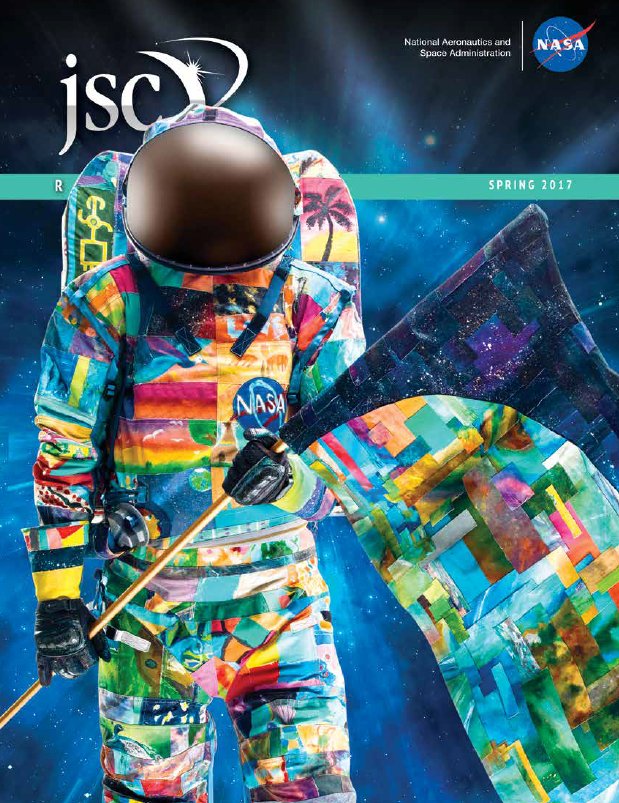
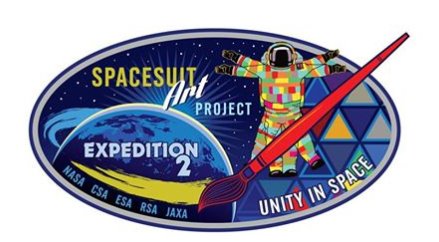
The Spacesuit Art Project gives children battling cancer an opportunity to express themselves in art and then see that art taken to space. As described in a recent issue of the NASA JSC Roundup newsletter (pdf):

Using simple paintbrushes and paint, pediatric cancer patients employed whorls of color to form creations that would make anyone smile. These mini masterpieces, painted on fabric canvas, were later stitched together into intricate, flamboyant spacesuits that any superhero (or astronaut) would be proud to don. But what became evident throughout the process to create these stunning works is that the real superheroes embodying Hope, Courage and Unity—the names of the spacesuits—were the children all along.

The program was “initiated by the MD Anderson Cancer Center Arts in Medicine Program in collaboration with NASA Johnson Space Center, spacesuit manufacturer ILC Dover, retired astronaut Nicole Stott and later with the agency’s international partners”.

An artistic spacesuit was delivered to the International Space Station on a recent cargo flight of the SpaceX Dragon. And on Wednesday, ISS  astronaut Jack Fischer wore the beautiful suit during a live downlink with some of the participants in the project: Colorful spacesuit painted by children with cancer worn by astronaut in space | collectSPACE.

Expedition 52 flight engineer Jack Fischer donned “Unity,” a patchwork costume spacesuit decorated by children with cancer in the U.S., Russia, Germany, Japan, and Canada — the same countries that operate the space station. The multicolor garment, a product of the Spacesuit Art Project, was pieced together by ILC Dover, the same company that furnishes the softgoods for NASA’s real spacesuits. 
…
“It is tricky to get into, but it is worth it, kind of like the real suit,” said Fischer during a live downlink with the project’s organizers and some of the children who contributed to the design. “The real suit, you have the reward of getting to go outside and seeing an amazing view. [With] this suit, you have the reward of the opportunity – or rather the honor, to represent the bravest kids in the world who actually put it together.”

Here is a video of the downlink event:

Here’s an earlier video about the project:

Everyone can participate in space