The company Rocket Lab plans to launch an Electron rocket from the Mahia Peninsula on the east coast of New Zealand’s North Island during a two week long launch window that opens on June 23rd. This will be the company’s third launch and, they hope, the second one to successfully put payloads into orbit. Here is a NZ TV news report on the company:
New Zealand has entered the space race. In just a few days, the Kiwis will launch their first commercial rocket, taking satellites into orbit. @MarkWBurrows#9Newspic.twitter.com/n1jB05fuuG
JPL Science System Engineer Kim Steadman joins us to talk about some past, present and future missions that JPL has sent to Mars and beyond. We touch on Spirit, Opportunity, Curiosity, the upcoming Mars 2020 and the different personalities each rover has. We sprinkle a little Juno and Cassini in there for good measure as well.
Space News: Opportunity LOS SpaceX is planning even more facilities at KSC Axiom Space Announces Private Astronaut Expeditions
TMRO is viewer supported:
TMRO shows are crowd funded. If you like this episode consider contributing to help us to continue to improve. Head over to http://www.patreon.com/tmro for funding levels, goals and all of our different rewards!
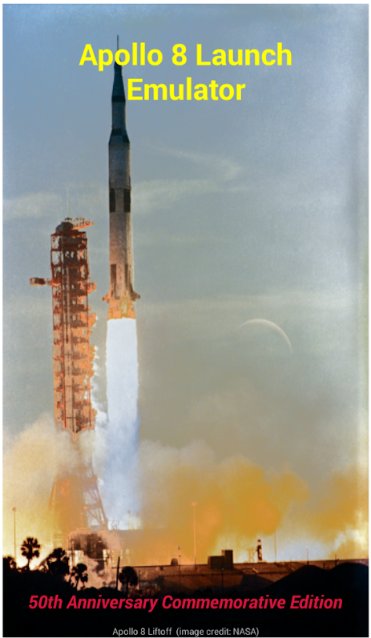
December 21st of this year will mark the 50th anniversary of the launch of the Apollo 8 mission to the Moon. Astronauts Frank Borman, James Lovell, and William Anders became the first humans to leave Earth and orbit another celestial body. The mission was extremely risky. The Saturn V rocket had only launched twice before and never with a crew and on the previous launch there were engine shutdowns on the second stage (longer firing of the remaining engines saved the mission). Although there was no lunar lander on Apollo 8 , many key technologies and operations needed for a successful lunar landing mission were demonstrated for the first time such as translunar injection, command module navigation, communications, and midcourse corrections.
And all these tasks were performed with computer technology that was far less powerful than what runs a $10 wristwatch today. To get an appreciation for the state of the art in advanced compact computers in 1968, check out the free Apollo 8 Launch Emulator for Android created by astronomer Rick Boozer.
operate a realistic replica of the Apollo 8 spacecraft’s guidance computer”.
This app is not a traditional game (no winning or losing involved). It is also not an entire mission simulation. So, if you are looking for either of those, then don’t download this app.
Instead, it is a commemoration of the launch of humankind’s first trip to another world by way of an emulation of a realistic Apollo Guidance Computer (or AGC) and DiSplay KeYboard interface (called DSKY).
You can re-enact the launch of the powerful Saturn V rocket that sent the Apollo 8 spacecraft with its crew on the way to the Moon on December 21, 1968. The animation you will see will not be of a flying rocket, but the mission critical true-to-life data displayed as it would have been shown in real-time to the astronauts as they ascended from the launch pad to Earth parking orbit.
To add to the enjoyment of the experience, the app supplies optional English explanations of the data shown. Not only that, you will be continually informed of major events that occur at each mission critical point between launch and Earth orbit at the appropriate time.
As a bonus, you will be able to type in a small subset of the actual commands that the astronauts entered into the AGC via the DSKY and see relevant results.
If, as in my case, you don’t have an Android device, you can run the app on a PC or Mac computer by downloading the free NOX virtual Android device creator at www.bignox.com.
SPACEPORT AMERICA, N.M. (PRWEB) JUNE 13, 2018: Student rocketeers from around the globe will gather at Spaceport America June 21-23 for the Second Annual Spaceport America Cup, the world’s largest Intercollegiate Rocket Engineering Competition for student rocketry teams. The public in invited to meet the team and see their projects on June 19 in nearby Las Cruces, NM. Spaceport America is located between the cities of Las Cruces and Truth or Consequences, New Mexico.
More than 130 teams from US and international colleges and universities – including Canada, Egypt, Great Britain, India, Mexico, Poland, Turkey, Switzerland, as well as 31 of the 50 US States, plus the District of Columbia, and four of 13 Canadian provinces and territories – are registered. The competition will be challenging for the participants and exciting for spectators, as students will be launching solid, liquid, and hybrid rockets to target altitudes of 10,000 and 30,000 feet.
Tuesday, June 19 – 8 am – 5 pm: Free admission. Come interact with students and view their projects at the Las Cruces Convention Center, 680 E University Ave, Las Cruces, NM 88001
Thursday-Saturday, June 21 – 23: Gates are open 8 am – 4 pm, dependent on weather conditions. Watch as rockets soar thru the sky and mingle with students in the spectator area. A three-day pass for adults is $20, with a one-day pass available for $10. For children in grades K-12, a three-day pass is $10; a one-day pass is $5.
About Spaceport America: Spaceport America is the first purpose-built commercial spaceport in the world. The FAA-licensed launch complex, situated on 18,000 acres adjacent to the U.S. Army White Sands Missile Range in southern New Mexico, has a rocket-friendly environment of 6,000 square miles of restricted airspace, low population density, a 12,000-foot spaceway, and 340 days of sunshine and low humidity. Some of the most respected companies in the commercial space industry are customers at Spaceport America: Virgin Galactic, United Launch Alliance, Boeing, UP Aerospace, EnergeticX, Pipeline2Space and EXOS Aerospace. Visit http://spaceportamerica.com for more information.
Spaceport America is #NewMexicoTRUE.
Follow Spaceport America on
Twitter: @Spaceport_NM
Facebook: @SpaceportNM
Instagram: @spaceport.america
About Las Cruces: Nestled in southern New Mexico’s Mesilla Valley between the Rio Grande River and Organ Mountains, Las Cruces is quickly becoming a popular southwestern destination, and is now emphasizing its close connections to space travel, including the First Annual Space Festival in April 2018, and a full-size replica of Virgin Galactic SpaceShipTwo on display near City Hall. Las Cruces blends a unique variety of such special events, attractions, culture and historical sites, as well as superb weather, with 350 days of sunshine per year. For more information on all Las Cruces has to offer, contact Visit Las Cruces at (575) 541-2150 or http://www.visitlascruces.com.