Category Archives: Rockets

Video: TMRO 8.14 – Sea Dragon

The latest TMRO.tv live show is now available in the archive: Sea Dragon – TMRO

VAXHeadroom (Emory Stagmer) joins us in-studio to talk about the old Saturn V competitor: Sea Dragon. Capable of lofting 1 million LBS to Low Earth Orbit, this 1/2 submarine 1/2 rocket system would dwarf anything humans have ever built to date. What is it and how did it work? Check out this live episode of TMRO to get an idea!


Copenhagen Suborbitals engine test – watch live

Copenhagen Suborbitals is inviting people to watch an upcoming rocket engine test in person or via the web: Come and see our next rocket engine test.

On Saturday May 2nd we’ll testfire several rocket engines between 12.00 and 16.00.

The plan is to test the first engine at approx. 13:00 after that two or three engines more with about one hour in between.

We invite you to watch the test live at our facility. You can buy tickets here. 

The webcast will be on the Copenhagen Suborbitals YouTube channel.

Here is a video of a recent firing test:

Open source space exploration

Lloyd Droppers of Project Earendel writes about various aspects of open source rocket and spacecraft development and about its benefits: Op-ed | Open Source Technology: A New Direction for Space – SpaceNews –

Open source software and hardware are rapidly decreasing the cost required to get systems up and running. A great example of this is NASA’s PhoneSat bus, which used commercial off-the-shelf parts and the Android operating system and reportedly cost only $3,500 to produce. With the use of open source software to design components and open source hardware to test components, the price of system development has the potential to be accessible to many hobbyists and small businesses.

The most important open source documentation in aerospace is probably the Defense Technical Information Center and the NASA Technical Reports Server. While not traditionally thought of as open source, many of the older technical reports (roughly pre-1980) have detailed documentation including drawings, test plans and results sufficient to duplicate the devices and test results, and are in the public domain. NASA also has released a variety of open source software packages on topics ranging from orbit determination to robot vision.


Hybrid rocket test at Indian university + 15th NASA Student Launch Competition

A couple of university rocket items:

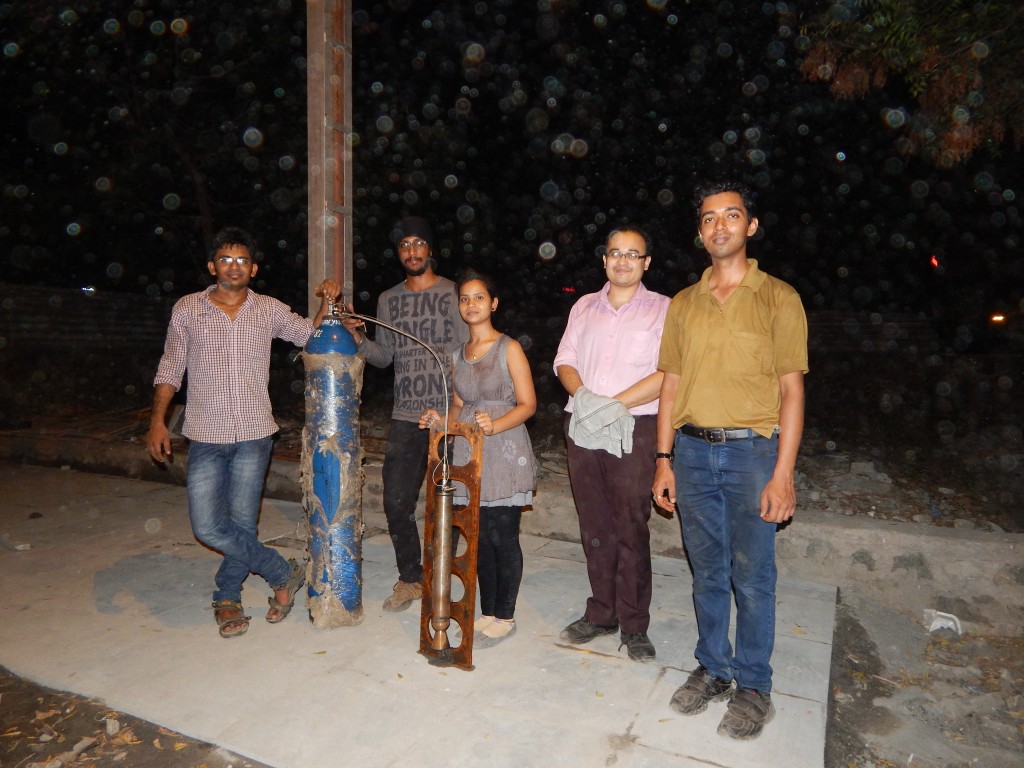
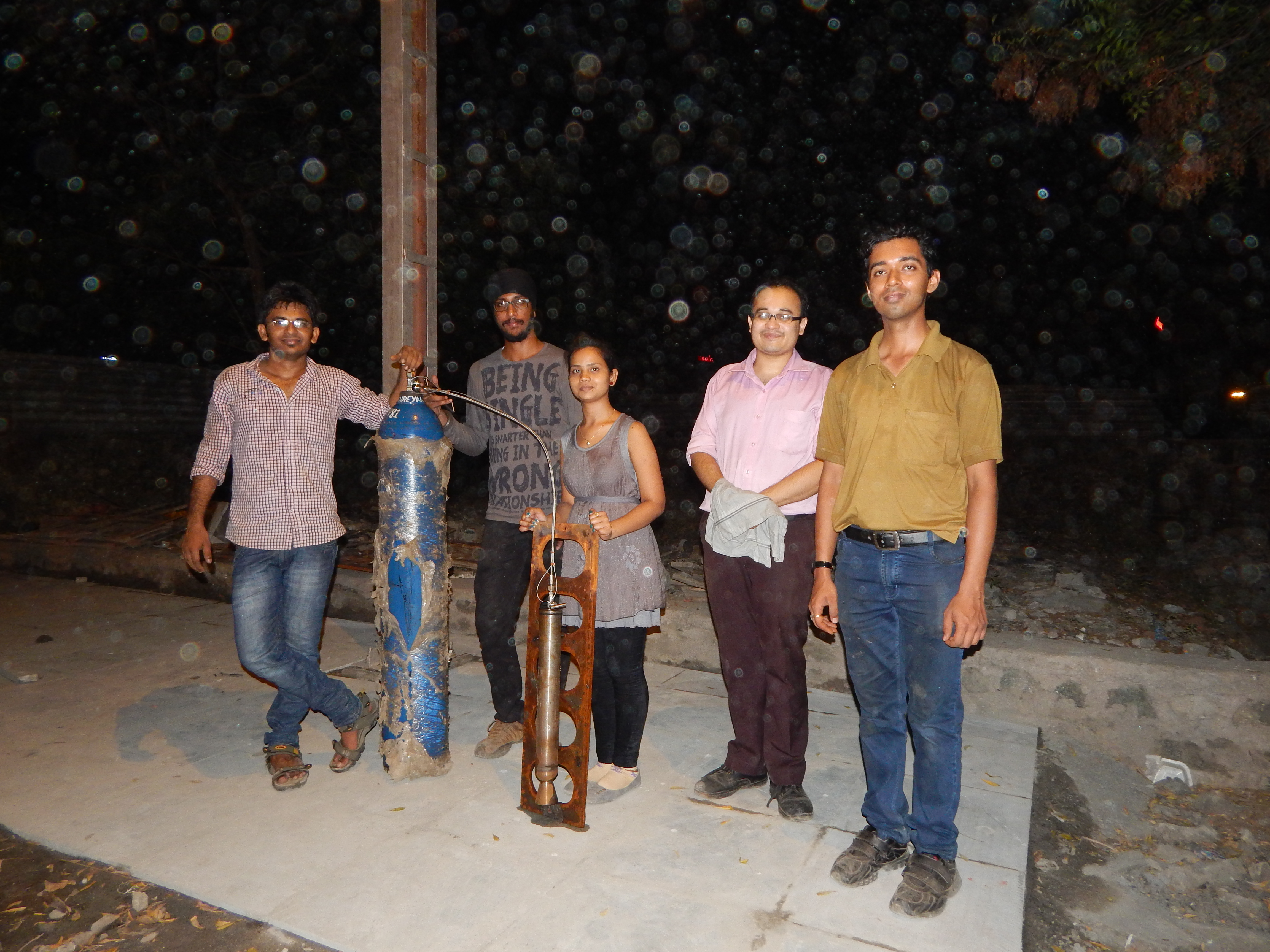
** Aerospace Engineering Department Research – Sounding Rocket Systems – Rajesh Muneshwar,  head of Aerospace Engineering Department at the International School of Professional Studies in India tells me his student group has built and test fired their first hybrid rocket motor. This is the first non-government Indian hybrid as well. It is a prototype for a motor that will power the upper stage of their planned 45 km Gyan darshan Rocket.
DSCN0954

10408656_847447802007359_5681048160843474833_n

See a video of a test. (I worry about the student being a little too close to the test…)

** NASA Hosts Student Rocket Fair, Helps Students Launch High-Power Rockets

vandy_team_[2]University students prepare their rocket for launch at NASA’s
2012-2013 Student Launch challenge near NASA’s Marshall
Space Flight Center in Huntsville, Alabama. 
Image Credit: NASA/MSFC/Fred Deaton

 More than 30 high school, college and university teams will launch student-built rockets during the 15th annual NASA Student Launch event April 10-11 near NASA’s Marshall Space Flight Center in Huntsville, Alabama.

Middle school and high school teams will launch their rockets to an altitude of one mile, deploy onboard science experiments and land safely using a system of recovery parachutes. University and college teams will participate in either the Mini-Mars Ascent Vehicle (Mini-MAV) or the Maxi-Mars Ascent Vehicle (Maxi-MAV) divisions. Mini-MAV teams must use a robotic system to autonomously load a payload into their rocket, launch to half a mile and eject the payload during descent. Maxi-MAV teams, competing for a share of $50,000 in prize money, will attempt to meet more autonomy requirements before also launching to a half mile.

All launches will take place at Bragg Farms in Toney, Alabama. Maxi-MAV launches begin at 10 a.m. CDT and will run until approximately 5 p.m. on April 10. Mini MAV and middle and high school launches begin at 7:30 a.m. and run until completed April 11. In the event of rain, the event will move to April 12.

From 11 a.m. to 1 p.m., April 9, students will participate in a Rocket Fair at Marshall’s Activities Building 4316, where they will give technical presentations to, and get valuable feedback from, engineers and team members from NASA and Student Launch corporate sponsor Orbital ATK.

….

Student Launch is open to public viewing and will be aired live on NASA Television and Marshall’s Ustream and Twitter accounts, at:

For more information on Student Launch, visit: www.nasa.gov/education/studentlaunch

Continue…
Space Access ’15 Conference

The annual Space Access Society conference has long been my favorite space event. Hope to see you at this year’s gathering in Phoenix:

Space Access ’15 Conference April 30th – May 2nd
at the Radisson Hotel Phoenix North

Space Access Society‘s next annual conference on the business, technology, and politics of radically cheaper access to space will feature a cross-section of the growing cheap access community, talking about what’s going on now and what will be happening next, in a fast-paced intensive informal atmosphere, single-track throughout so you don’t have to miss anything.

Confirmed launch-project & space-hardware presenters so far: Altius Space Machines, CubeCab, DARPA ALASA, Exos Aerospace, Frontier Astronautics, Masten Space Systems, Moon Express, Tethers Unlimited, XCOR Aerospace, XL Space Systems, plus sessions on what you’ll need to know to start your own space venture (rocket development safety, 3d printing hype & reality, complex-systems mission-assurance, government regulations, investment climate, NASA Ames and JSC commercial cooperation opportunities), reports on high-end student & amateur projects, talks by famous space writers/bloggers (Jeff Foust, Clark Lindsey, Doug Messier, Rand Simberg, Henry Spencer), and multiple sessions plus a special guest program segment about now that cheap orbital access is near, how do we start affordably taking the next big steps outwards to the Moon, Mars, and beyond?

Space Access conferences have been described as “Hackers” for rocket people, with better content than others costing many times more, two-and-a-half days of total immersion in making the future happen. This year’s edition, SA’15, is just a month away – register for the conference, get those airline tickets booked while they’re still cheap, reserve your room while our hotel still hasn’t filled up, and be there!

For the latest full conference info & agenda, see our SA’15 Info page.