Category Archives: Rockets

Project Karman: UCB undergrad team aims to launch rocket past 100 kilometers

Project Karman is an undergraduate student led initiative at UC Berkeley to design, build, and launch a rocket that exceeds 100 kilomters in altitude. They currently have a crowdfunding campaign underway, which has raised $13,725 so far towards a goal of $25,000 with 16 days left:  UC Berkeley | PROJECT KARMAN: 1 Launch, 10 Months, 100 Kilometers to Space!

The group is also challenging students at other schools to compete with them to reach the Karman Line: PROJECT KARMAN goes global

Tonight, we officially challenged colleges across the globe to join us in the Intercollegiate Space Race of the 21st Century, competing to see who can truly be the first college team to reach space with its own rocket. Through the UN-backed World Space Week Association, we were able to broadcast this challenge internationally! See their Facebook post here: https://www.facebook.com/pg/WorldSpaceWeek/posts/?ref=page_internal. To see more details regarding the formal rules of the competition, visit berkeleyse.org/spacerace.

A video about Project Karman:

And here is a profile of one of the students – Autumn Kleinman – working on the project: Rocket Ambitions: San Clemente Native Works on Suborbital Craft with UC Berkeley club | San Clemente Times.

The group estimates the final cost of the Eureka-1 rocket project to be about $250k. They hope to reach this figure with additional crowd-funding, grants, and sponsorships.

The goal is for Eureka-1 to be reusable and to fly many times:

While the technical know-how to send payloads to space has existed for over 60 years, the requisite technology has remained incredibly expensive, failure-prone, and dangerous to use.

Recent advances in materials science coupled with proprietary cost-saving technologies have allowed Space Enterprise at Berkeley to entirely eliminate the turbo pump, the single most expensive and delicate element of modern rocket engines.

This innovation has allowed us to reduce the typical $2.8 million price tag of a suborbital launch to less than $150,000. In addition, in-development recovery systems will allow for a fly-land-fly turnaround for Eureka-1. With full implementation of this system, Eureka could fly multiple times per week, with only a short refurbishment and refueling period between launches. This would reduce total launch cost to less than $10,000.

A couple of other videos from Project Karman:


Videos: SpaceX Falcon 9 launches 10 satellites & booster lands on droneship

A SpaceX Falcon 9 rocket launched ten Iridium NEXT satellites on Monday from Vandenberg AFB on the California coast. The first stage booster landed on a floating platform at sea, becoming the 17th successful landing either at sea or on land.

A video of the liftoff and first few minutes of the launch:

This shows scenes of the booster landing at about 1:30:

Here is a video showing some of the satellites being deployed from the upper stage of the rocket:

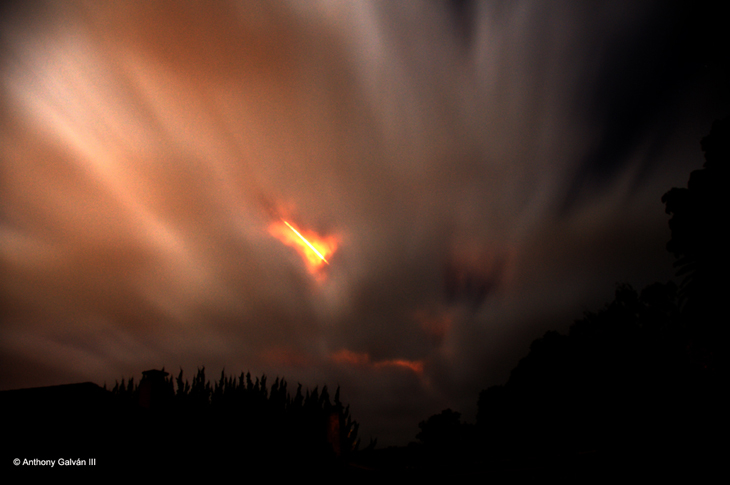
Here is a photo of the launch taken by Anthony Galván III :

The view through heavy cloud cover 50 miles for the launch site provided a dramatic effect of the booster engine’s flames illuminating the clouds from the launch site and a small opening to see the rocket for a few seconds.


This video was taken from about 100 miles from Vandenberg but is still quite impressive, especially when the booster separates from the upper stage and fires its booster to return to earth at around 2:40 :

Here is the full SpaceX webcast:


====

Video: TMRO Orbit 10.36 – SpaceX IAC-2017 Round Table

The latest episode of TMRO.tv focused on the recent presentation by Elon Musk on SpaceX‘s next-generation space transportation system (see post here) :

Tim Dodd the Everyday Astronaut joins Jared and Mike to talk about the SpaceX IAC 2017 presentation. What does this mean for the aerospace industry and can SpaceX pull it all off? Segment starts at 24:12

Prior to the SpaceX discussion, they showed several recent rocket launches:

  • 1:54 – Atlas V Launches NROL-42
  • 4:09 – Proton Launches AsiaSat-9
  • 6:22 – Long March 2C Launches 3 Yaogan-30 Satellites
  • 8:20 – Ariane 5 Launches 2 ComSats

Some recent space news:

  • 10:48 – Surprise! Rosetta Team Finds Image Hidden in Telemetry Data
  • 13:53 – Lockheed Martin presents updated Mars Base Proposal
  • 19:31 – Giant Ice Blades on Pluto Form Like Those on Earth

TMRO is viewer supported:

TMRO:Space is a crowd funded show. If you like this episode consider contributing to help us to continue to improve. Head over to http://www.patreon.com/tmro for information plus our all new goals and reward levels

==

A couple of recent TMRO short reports:

====

Video: SpaceX plans to build a huge new rocket vehicle for low cost space travel

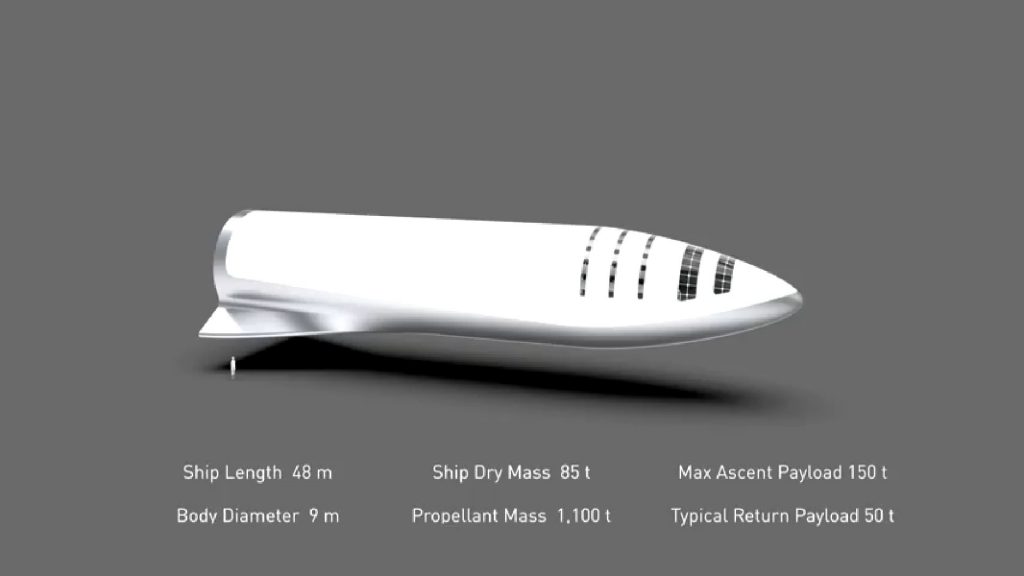
Elon Musk gave a talk today at the International Astronautical Congress (IAC 2017) in Adelaide, Australia in which he described the design of a new SpaceX rocket system, informally called the BFR (e.g. “Big Freaking Rocket”). The company will soon start building the BFR with the goal of uncrewed flights to Mars by 2022 and crewed flights in 2024. The system can also be used to launch satellites, take crews and cargo to the International Space Station, and carry out missions to the lunar surface. He even talked about using it for 30 minute passenger flights between any two points on earth.

Here is Elon’s talk, which he titled, “Making Life Multiplanetary“:

An artist’s view of a BFR spaceship module on the Moon:

Here is a video showing how the vehicle could be used for point-to-point commercial transport on earth.

“Fly to most places on Earth in under 30 mins and anywhere in under 60. Cost per seat should be about the same as full fare economy in an aircraft. Forgot to mention that.” – Elon Musk

A brief clip showing a Mars base enabled by the BFR growing into a city:

SpaceX has credibility for such aspirations because the company has proven it can do things that were not considered feasible by many in the space industry even just a few years ago. Here, for example, is a compilation of clips showing the 16 successful landings so far of the SpaceX Falcon 9 first stage boosters:

Update: Astronomer Scott Manley of the Kerbal Space Program rocket simulator gives his view of the BFR:

And here is the Everyday Astronaut‘s take on the plan:

====

Video: Atlas V launches spysat from Vandenberg

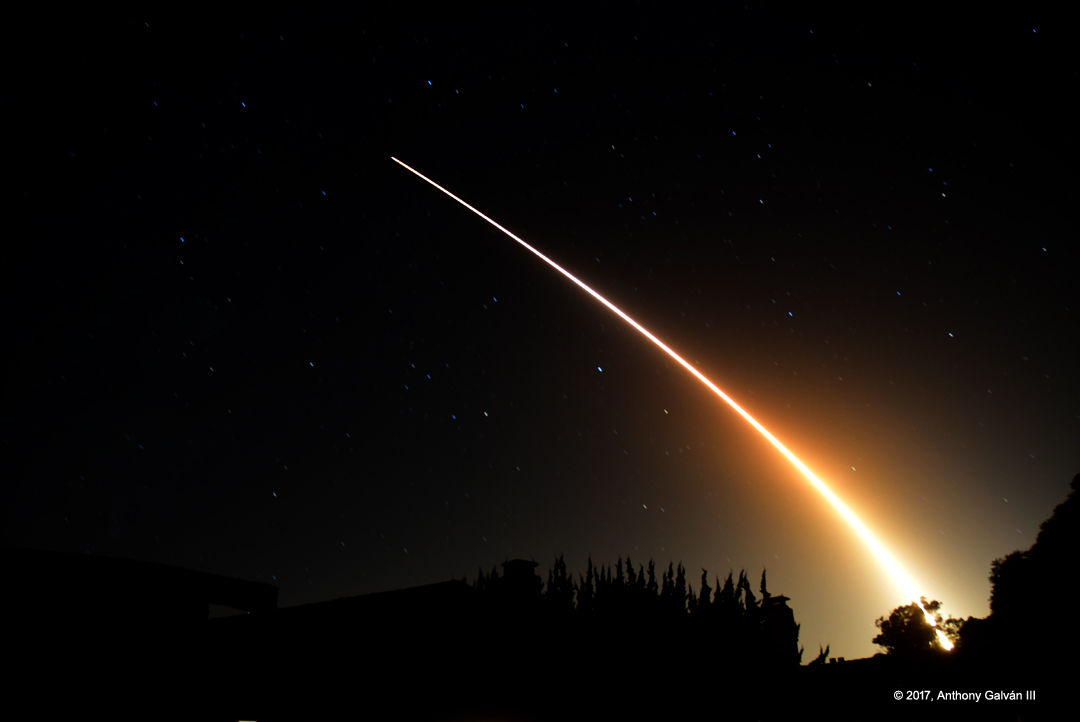
Early Sunday morning, United Launch Alliance sent the US spysat NROL-42 into orbit with an Atlas V rocket blasting off from Vandenberg AFB in California. Here is a nice photo taken during the launch by Anthony Galván III:

Atlas V launch from Vandenberg AFB, California, 9/23/17 @22:55 hr. NROL-42 mission Image made from Goleta, California, 50 miles SE of the launch site.

Here is a ULA video with highlights of the preparations for the mission and of the launch:


====