All posts by TopSpacer

Space transport roundup – June.24.2019

The Falcon Heavy mission and the Soyuz return are the focus points of today’s roundup:

** SpaceX:

*** The countdown is proceeding for the Falcon Heavy liftoff tonight for the complex STP-2 mission. The four hour launch window opens at 11:30 pm EDT (0330 GMT on 25th). The weather forecast shows an 80% chance of acceptable conditions for launch during the window.

The SpaceX webcast will begin about 20 minutes before the liftoff time. NASA TV coverage will start at 11:00 pm EDT.

Updates to check as the window approaches:

The mission events time line is given in the SpaceX Press Kit (pdf). SpaceX will attempt to recover all 3 boosters:

Falcon Heavy’s side boosters for the STP-2 mission previously supported the Arabsat-6A mission in April 2019. Following booster separation, Falcon Heavy’s two side boosters will attempt to land at SpaceX’s Landing Zones 1 and 2 (LZ-1 and LZ-2) at Cape Canaveral Air Force Station in Florida. Falcon Heavy’s center core will attempt to land on the “Of Course I Still Love You” droneship, which will be stationed in the Atlantic Ocean.

There is also a ship sent to capture in a net and/or drag from the sea the two fairing halves of the nosecone.

Liftoff through final deployment will span over 3.5 hours and include 3 in-orbit firings of the second stage engine.

The STP-2 mission will use a SpaceX Falcon Heavy launch vehicle to perform 20 commanded deployment actions and place 24 separate spacecraft in three different orbits. The spacecraft include the Air Force Research Laboratory Demonstration and Science Experiments (DSX) satellite; the NOAA-sponsored Constellation Observing System for Meteorology, Ionosphere, and Climate (COSMIC-2) constellation; four NASA experiments; and many other missions.

After about 7 hours, the second stage will be “passivated”, which includes dumping any remaining fuel to avoid any chance the stage would explode and increase debris in low earth orbit. Eventually the stage will de-orbit into the atmosphere.

Some photos of the FH on the pad:

More about the mission:

The Planetary Society is closely following the launch since it includes the deployment of the LightSail-2 mission inside  Georgia Tech’s Prox-1 smallsat:

Here’s a video update from the Cape by Chris Gebhardt of NASASpaceflight.com:

** A Soyuz capsule is set to return with three ISS Expedition 59 crew members today: Departing Trio Aboard Soyuz Crew Ship Awaiting Undocking – Space Station

At 4:15 p.m. EDT, the hatch closed between the Soyuz spacecraft and the International Space Station in preparation for undocking. NASA Flight Engineer Anne McClain, Expedition 59/Soyuz Commander Oleg Konenenko of the Russian space agency Roscosmos, and David Saint-Jacques of the Canadian Space Agency are scheduled to undock their Soyuz at 7:25 p.m.

The landing is set for just over 40 minutes before the FH liftoff window opens:

Their landing in Kazakhstan is targeted for approximately 10:48 p.m. and will conclude a more than six month mission conducting science and maintenance aboard the space station, in which they circled the globe 3,264 times, covering 86.4 million miles.

The latest on the undocking and return:

====

The Space Barons: Elon Musk, Jeff Bezos,
and the Quest to Colonize the Cosmos

“Cookies in Space”: Chocolate chip cookies to be first food baked in new ISS oven

DoubleTree by Hilton, Zero G Kitchen, and NanoRacks have partnered together to help introduce oven baking to the International Space Station, starting with chocolate chip cookies:

Cookies in Space:
DoubleTree Chocolate Chip Cookie to be First Food Baked in Space,
Sending Hilton Hospitality into Orbit

DoubleTree by Hilton to partner with Zero G Kitchen and NanoRacks to bring
its signature warm welcome to the International Space Station in historic scientific experiment

MCLEAN, Va.–(BUSINESS WIRE)–DoubleTree by Hilton will take its iconic warm welcome to new heights when its famous chocolate chip Cookie becomes the first food baked in space inside a prototype oven designed to make long-duration space travel more hospitable.

Later this year, DoubleTree by Hilton will make aerospace history when a batch of DoubleTree Cookie dough is launched along with the prototype oven in a rocket bound for the International Space Station (ISS) as part of a landmark microgravity experiment. Working in partnership with Zero G Kitchen, which creates appliances for microgravity use in long-duration space flights, and NanoRacks, a leading provider of commercial access to space, Hilton will be the first hospitality company to participate in research aboard the space station.

That’s only fitting for a hotel brand that at the height of the Space Race announced plans for a hotel on the moon, said senior vice president and global brand head, DoubleTree by Hilton, Shawn McAteer.

“Hilton has long been an industry innovator, and as we celebrate our 100th year, we’re excited to send our hospitality into orbit,” McAteer said. “The simple gesture of a warm cookie welcome is a favorite of DoubleTree guests around the world, and now we are sharing that moment of hospitality as part of this experiment aboard the International Space Station.”

Ian and Jordana Fichtenbaum, the husband and wife team at Zero G Kitchen responsible for the space oven concept, said the DoubleTree Cookie was their first thought when they began imagining the creation of an oven to make space travel more comfortable.

“Opening up the frontier of space means making it relatable to people’s everyday lives, and what could be more relatable than a freshly baked cookie?” said Ian Fichtenbaum, co-chef and co-founder, Zero G Kitchen. “When we first concepted the oven, we naturally thought of DoubleTree by Hilton and its signature Cookie. It is the perfect treat to bring a warm welcome to space.”

DoubleTree by Hilton is committed to inspiring the next generation of travelers to pursue careers in hospitality, so the brand will also partner with Scholastic to develop an educational program related to hospitality in space for 50,000 middle school classrooms across the United States. This supports Hilton’s Open Doors Pledge, the company’s commitment to connecting, preparing or employing at least one million young people by 2019 by helping them to reach their full potential. The program and accompanying curriculum, which includes a lesson and activity sheet, will focus on better understanding the challenges of living and working in space, and encourage students to think creatively about what innovations need to occur to ensure long-duration space travel is comfortable and hospitable.

To accompany these efforts, DoubleTree by Hilton and Scholastic will launch a student contest this fall asking U.S. middle school students to submit their own innovative proposal for making life in space more hospitable. Prizes will include a cash award, iPad and, for teachers, a complimentary stay at any DoubleTree by Hilton location. Full contest details and submission guidelines are available at www.scholastic.com/openingdoorsinspace.

Learn more about the launch and technology behind the oven by visiting www.cookiesinspace.com or www.newsroom.hilton.com/cookiesinspace.

About DoubleTree by Hilton: DoubleTree by Hilton is a fast-growing, global portfolio of more than 560 upscale hotels with more than 130,000 rooms across six continents. Over the past 50 years, DoubleTree by Hilton has maintained its philosophy that it’s the little things that make a big difference, from welcoming guests with its signature, warm DoubleTree Cookie, to serving the local community. Thanks to the dedication of its Team Members, DoubleTree by Hilton ensures the absolute best experiences for guests and continues to be a symbol of comfort through contemporary accommodations and amenities, including unique food and beverage experiences, state-of-the-art fitness offerings, and meetings and event spaces. Hilton Honors members who book directly through preferred Hilton channels have access to instant benefits. To make reservations, travelers may visit doubletree.com. Connect with DoubleTree by Hilton on Facebook, Twitter, and Instagram. Learn about the latest brand news at newsroom.hilton.com/doubletree.

About Hilton: Hilton (NYSE: HLT) is a leading global hospitality company with a portfolio of 17 world-class brands comprising more than 5,700 properties with more than 923,000 rooms, in 113 countries and territories. Dedicated to fulfilling its mission to be the world’s most hospitable company, Hilton earned a spot on the 2018 world’s best workplaces list, and has welcomed more than 3 billion guests in its 100-year history. Through the award-winning guest loyalty program Hilton Honors, more than 89 million members who book directly with Hilton can earn Points for hotel stays and experiences money can’t buy, plus enjoy instant benefits, including digital check-in with room selection, Digital Key, and Connected Room. Visit newsroom.hilton.com for more information.

About Zero G Kitchen LLC: Based in New York City, Zero G Kitchen was founded with a goal of building a kitchen in space, piece-by-piece, and offering its use to a variety of food researchers, educators and companies with an interest in the future of food and household appliances in space. Funded by its founders, Ian and Jordana Fichtenbaum, it is leading the way with its first appliance, a small oven.

About NanoRacks: NanoRacks LLC, an XO Markets company, is the world’s leading commercial space station company. NanoRacks believes commercial space utilization will enable innovation through in-space manufacturing of pharmaceuticals, fiber optics – and more, allow for transformational Earth observation, and make space a key player in finding the solution to Earth’s problems.

Today, the company offers low-cost, high-quality solutions to the most pressing needs for satellite deployment, basic and educational research, and more –in over 30 nations worldwide. Since 2009, Texas-based NanoRacks has truly created new markets and ushered in a new era of in-space-services, dedicated to making space just another place to do business.

About Scholastic: To learn more about Scholastic, visit our media room at: mediaroom.scholastic.com.

====

Outpost in Orbit:
A Pictorial & Verbal History of the Space Station

Space policy roundup – June.24.2019

A sampling of links to recent space policy, politics, and government (US and international) related space news and resource items that I found of interest:

Webcasts:

** The Space Show – Fri, 06/21/2019 –  Dr. Bruce Cordell talked about “Lunar return space policy in the context of trends based on Maslow Window opening opportunities plus more”.

** June 20, 2019 Zimmerman/Batchelor podcast | Behind The Black

** Space Policy Edition: The Soviet Moonshot (with Asif Siddiqi) | The Planetary Society

  • Asif Siddiqi -Professor of History, Fordham University
  • Brendan Curry – Chief of Washington D.C. Operations, The Planetary Society
  • Casey Dreier – Chief Advocate & Senior Space Policy Adviser, The Planetary Society
  • Mat Kaplan – Planetary Radio Host and Producer


The Space Show this week – June.24.2019

The guests and topics of discussion on The Space Show this week:

1. Monday, June 24, 2019; 2-3:30 pm PDT (4-5:30 pm CDT, 5-6:30 pm EDT): No show for today. Monday is for special and timely programs only.

2. Tuesday, June 25, 2019; 7-8:30 pm PDT (9-10:30 pm CDT, 10-11:30 pm EDT): We welcome back Dr. Anita Sengupta to discuss her new work regarding electric vertical takeoff and landing (eVTOL) vehicles, aka flying cars, for urban aerial mobility.

3. Wednesday, June 26, 2019; Hotel Mars: David Livingston and John Batchelor will talk with Alan Boyle about “Stratolaunch, , what will happen to it?” Hotel Mars is pre-recorded by the John Batchelor Show. It is archived on The Space Show site after John posts it on his website.

4. Friday, June 28, 2019; 9:30-11 am PDT (11:30 am-1 pm CDT, 12:30-2 pm EDT): We welcome noted author Charles Fishman to discuss his new book, One Giant Leap: The Impossible Mission That Flew Us to the Moon.

5. Sunday, June 30, 2019; 12-1:30 pm PDT (3-4:30 pm EDT, 2-3:30 pm CDT): We welcome Nancy Atkinson to discuss her brand new book, Eight Years to the Moon: The History of the Apollo Missions.

Some recent shows:

** Fri, 06/21/2019 –  Dr. Bruce Cordell talked about “Lunar return space policy in the context of trends based on Maslow Window opening opportunities plus more”.

** Tue, 06/18/2019 – Robert Godwin talked “about his latest book, Manned Lunar Landing and Return, plus the untold story of Dr. Conrad Lau in developing Lunar Orbital Rendezvous (LOR”.

** Mars Hotel with John Batchelor & Dr. David Livingston – Wed, 06/19/2019: Dr. Robert Zubrin interviewed about “his new book, The Case for Space: How the Revolution in Spaceflight Opens Up a Future of Limitless Possibility, plus how best to do space plus lots more”.
** Fri, 06/14/2019 – James A. M. Muncy talked about “draft regulations for commercial space transportation and launches, rules, regulations, and much more”.

See also:
* The Space Show on Vimeo – webinar videos
* The Space Show’s Blog – summaries of interviews.
* The Space Show Classroom Blog – tutorial programs

The Space Show is a project of the One Giant Leap Foundation.

The Space Show - David Livingston
The Space Show – David Livingston


Student and amateur CubeSat news roundup – June.23.2019

A sampling of recent articles, press releases, etc. related to student and amateur CubeSat / SmallSat projects and programs:

TechDemoSat-1 sail deployed May 2019
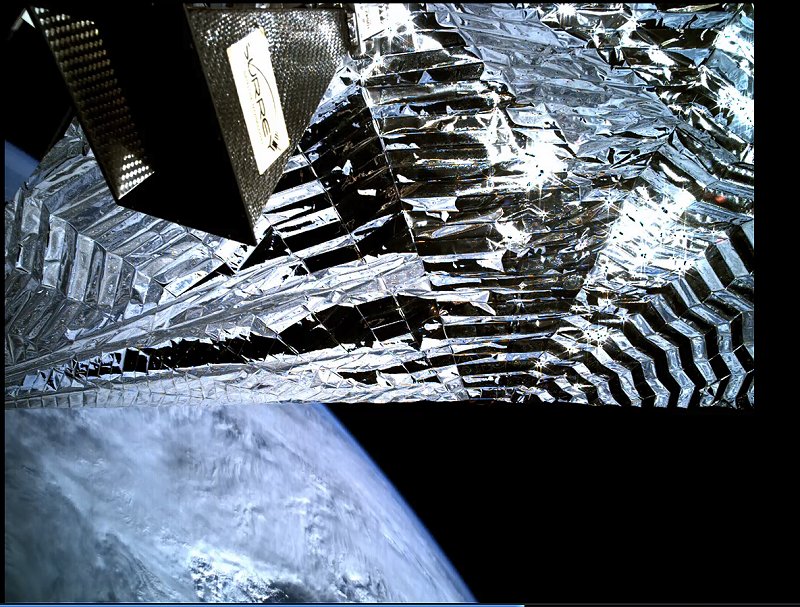
TechDemoSat-1 drag sail deployed May 2019. The sail, developed at Cranfield University, will reduce the time for the satellite to de-orbit.

** Cranfield University team’s Icarus-1 drag sail successfully deployed on Surrey Satellite’s TechDemoSat-1 smallsat in orbit back in May: TechDemoSat-1 on-board camera captures drag sail deployment | SSTL

TechDemoSat-1, a 150 kg in-orbit technology demonstration small satellite mission, validated 8 innovative UK spacecraft instruments and software payloads and also acquired ocean wind speed datasets using GNSS reflectometry.

The deployed sail measures approximately 6.7 m2 and is designed to significantly increase the spacecraft’s rate of orbital decay, in compliance with current Space Debris Mitigation best practice and guidelines. 

Stephen Hobbs, Head of Cranfield University’s Space Group, commented “At Cranfield we are delighted to see our Icarus de-orbit technology demonstrated successfully in orbit – again.  With the Icarus sails now deployed on both TechDemoSat-1 and Carbonite-1, SSTL and Cranfield have demonstrated clear leadership in this technology.  We hope to see many more satellites following TechDemoSat-1’s example to keep space clear of debris.  It’s been great to work with SSTL on this mission.”

The Icarus-1 drag sail consists of a thin aluminium frame fitted around one of the external panels of the spacecraft in which four trapezoidal Kapton sails and booms are stowed and restrained by a cord.  Deployment is achieved by activating cord-cutter actuators, allowing the stored energy in the spring hinges to unfold the booms and the sail. 

TechDemoSat-1
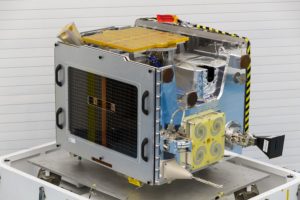
TechDemoSat-1 built by Surrey Satellite Systems, Ltd.

** The Planetary Society’s LightSail-2 to launch on the SpaceX Falcon Heavy STP-2 mission. The sail follows several previous solar sail projects (Japan’s IKAROS 2010 was the first to demonstrate sunlight driven propulsion) and aims to be the first of the Society’s sails to demonstrate net thrust. The sail will be released from the Georgia Tech Prox-1 carrier satellite (see below) about a week after the launch.

Follow progress with the mission at:

LightSail-2 in orbit
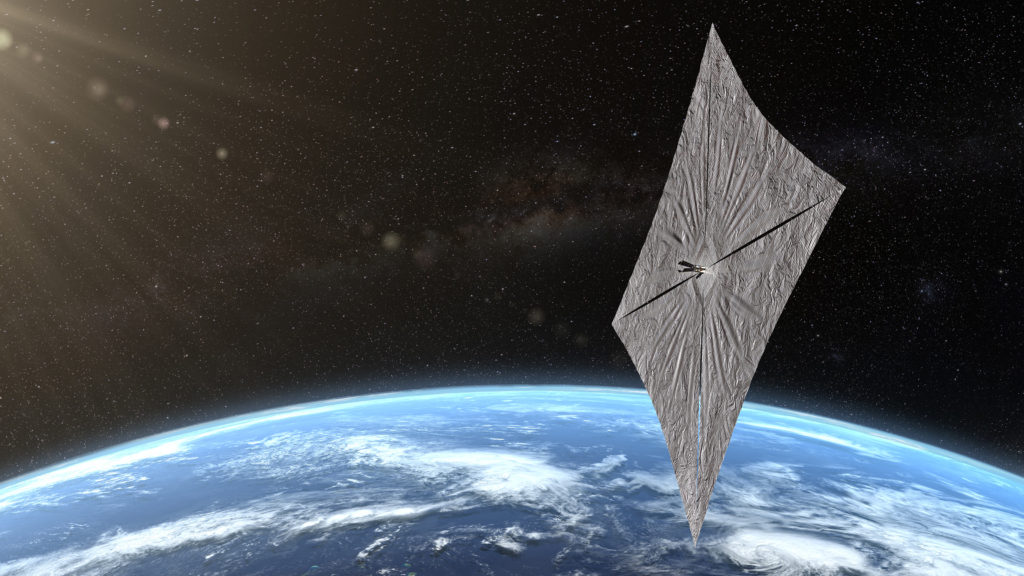
Artist’s depiction of LightSail-2 in orbit.

Resources:

LightSail-2 teleconference (transcript (pdf)) with

  • Bill Nye, CEO of The Planetary Society
  • Bruce Betts, Chief Scientist and LightSail 2 Program Manager
  • David Spencer, LightSail 2 Project Manager and Associate Professor at Purdue University
  • Jennifer Vaughn, COO of The Planetary Society

** Georgia Tech’s Prox-1 smallsat was built by students and will be student-operated as well. The goal of the mission is to

… demonstrate proximity operations for space situational awareness, through the use of a low thrust propulsion system for orbital maneuvering, and visible and infrared imaging for reconnaissance. The Prox-1 mission is directly applicable to Air Force Space Command’s priority to develop and maintain complete knowledge of assets in the on-orbit environment.

Prox-1 will conduct rendezvous and proximity operations with an on-orbit “objective”: the expended launch vehicle that delivers Prox-1 to orbit. Through multiple circumnavigations of the objective while acquiring visible and infrared images, a three-dimensional model of the objective will be developed and material properties will be established. The orbit of the objective will be determined, and a time-history of the objective attitude will be acquired. As an extended mission goal, Prox-1 will conduct proximity operations with additional objects in the near-space environment. The primary mission duration is three months.

This animation is somewhat dated but shows the primary operational tasks of the mission:

See also The Future Is Small – Georgia Tech’s Research News – 2015

** Northwestern Univ. & Univ. of Illinois students work to get SpaceICE CubeSat ready for space after the project missed the first launch opportunity.

we are sending freeze-casting to Low Earth Orbit! At Northwestern, we are designing the experiment and payload, while UIUC (CubeSat Project) is building the satellite. This project is funded by NASA’s Office of Education through the Undergraduate Student Instrument Project. Our anticipated launch date is late 2018.

Once in orbit, we’ll collect image and temperature data while freezing aqueous suspensions of silver coated glass beads and salt water solutions. Whereas we were limited to freezing very quickly during our parabolic flight work, the CubeSat platform will allow us to test a range of freezing velocities.

Here is a history of the SpaceICE CubeSat project: Despite launch delay, NU undergrads plow ahead with redesign for NASA freeze-casting experiments | Medill Reports Chicago

Young scientists are racing to deliver by October a satellite payload of instruments to test freeze-casting — technology that could free space explorers from expensive, time-consuming deliveries of supplies from Earth.

The team of Northwestern University undergraduates building the innards for a small satellite called a “CubeSat” missed the launch window last year but are getting ready for another try.

“The sample container failed,” explains Kristen Scotti, a graduate student and mentor for SpaceICE, the initiative creating the CubeSat instrumentation to test freeze-casting for eventual manufacturing needs in space. Essentially, the glass containers for three sample suspensions were cracking, and anything less than airtight would jeopardize the freeze-casting process, dependent upon controlled temperatures and accurate readings.

** Several university teams win grants for Phase 1 of National Geospatial-Intelligence Agency’s MagQuest, “a $1.2 million global open innovation challenge to advance how we measure Earth’s magnetic field” – NGA announces 10 winners in MagQuest Phase 1; launches $1 million Phase 2 – GeoSpatialWorld.net

MagQuest is designed to attract new ideas to increase the efficiency, reliability, and sustainability of geomagnetic data collection. With this open innovation challenge, NGA is inspiring solvers to apply their expertise to a wide range of potential solution areas. “From seafloor observatories to satellites, the breadth of ideas that emerged from Phase 1 of MagQuest is impressive and energizing,” said Richard Salman, Director of NGA’s Office of Geomatics. “We look forward to seeing the novel thinking and new technologies solvers will bring to Phase 2 of the challenge.” 

** Nepal and Sri Lanka now have their first satellites in orbit. The BIRDS 3 CubeSats were built in collaboration with Japan’s Kyushu Institute of Technology, whose BIRDS project is intended to help non-spacefaring developing countries get into orbit. (See posting here.) The Birds-3 satellites were deployed from the ISS into orbit last week. ISS crew member Nick Hague posted images of the deployments:

Yesterday I monitored the deployment of 4 small satellites (CubeSats), as they were ejected outside of the JEM laboratory on @Space_Station. The first set of CubeSats deployed were from Nepal, Sri Lanka & Japan, & the last CubeSat was from Singapore. https://t.co/3YIvo0P40B pic.twitter.com/DAKvl2mskj

— Nick Hague (@AstroHague) June 18, 2019

This video shows the Birds-3 deployment at around the 15:15 point:

Singapore’s Spooqf-1 cubesat is deployed at around 20:15. The Spooqf-1 is a project of “a multi-disciplinary group at the Centre for Quantum Technologies in Singapore […] located on the National University of Singapore campus”. The “Quantum Nanosatellite” is testing entangled photon encryption communication technologies. SpooQy-1: Singapore’s experimental quantum CubeSat and its Kibo launch | SpaceTech Asia.

** AMSAT news on student and amateur CubeSat/smallsat projects: ANS-174 AMSAT News Service Special Bulletin

  • Candidates for the AMSAT Board of Directors Announced
  • Help Celebrate AMSAT’s 50th Anniversary – Take W3ZM on the Road!
  • Lightsail-2 Scheduled for Launch June 24 – Beacon on 437.025 MHz
  • NASA Lightsail-2 PR and TV Coverage
  • Listening to Lightsail-2 Co-passengers
  • AMSAT President Joe Spier Speaks With SIP Interns
  • Upcoming Satellite Operations
  • ARISS News
  • How to Support AMSAT
  • Shorts From All Over

General CubeSat/SmallSat info:

====

LEGO Ideas NASA Apollo Saturn V 21309
Outer Space Model Rocket for Kids and Adults, Science Building Kit
(1900 pieces)