Space Calendar for May 26 – June 1, 2014

The latest issue of the Space Calendar from Space Age Publishing is now available: May 26 – June 1, 2014 / Vol 33, No 21 / Hawai`i Island, USA –

The first item is about the status of the Chinese lander and rover on the Moon:
China-Lunar-Exploration-Program[1]

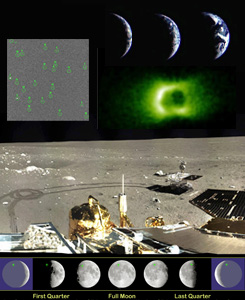
The only nation active on the surface of the Moon, China, maintains successful operations of its Chang’e-3 Lander and Yutu Rover now in Lunar Night 6. Although Yutu has incurred mechanical issues, it continues to respond to ground control teams well past its 3-month given lifetime. Chang’e-3 Lander with Lunar Ultraviolet Telescope and Extreme Ultraviolet Camera, is also expected to perform past its December 14, one-year / thirteen-Lunar Day lifetime.

The spacecraft hibernate / awake cycle is determined by astronomical factors (estimated here by SPC / ILOA), mechanical functions and performance, and ground control teams at the Very Long Baseline Interferometry center in Shanghai and observation stations in Xinjiang, Kunming and Beijing. Chang’e-4 (the twin of Chang’e-3) is being reconfigured due to the mission success; it may launch with different instruments to a new location or be combined with a future mission.

Preparing for Phase 3, the Chang’e-5 sample return mission test satellite is scheduled to launch this June to attempt a Lunar Orbit Transfer and return to Earth. (Image Credit: ILOA, SPC, CNSA, Chinese Academy of Sciences, D. Davis)

See the Change’3/Yutu timetable here.
Continue for more Space Calendar news…

Video: Microgravity science and commercialization

In this recent SETI Institute seminar video,  Ioana Cozmuta of NASA Ames gives an overview of microgravity science and discusses research in biotech, materials processing, and other areas that offer an excellent potential for generating commercial products: Microgravity, the future of innovation – SETI Institute http://youtu.be/kT9pEFE9pBA

Sci-Tech: LPP focus fusion project crowd-funds final phase of research

I’ve occasionally blogged about the focus fusion project at Lawrenceville Plasma Physics. With very modest funding they have made solid progress with experiments that seek to demonstrate that their approach can produce aneutronic fusion power in a relatively small system.

To support the completion of the project, they have opened a crowd-funding campaign : FOCUS FUSION: emPOWERtheWORLD – Indiegogo

We need to raise $200,000 to fund the purchase of new electrodes for the final phase of research, to prove that Focus Fusion works.  And with your help, we can make this incredible breakthrough a reality!

Here is the video for the campaign:

“The Moon as Art” – pick the most artistic LRO image

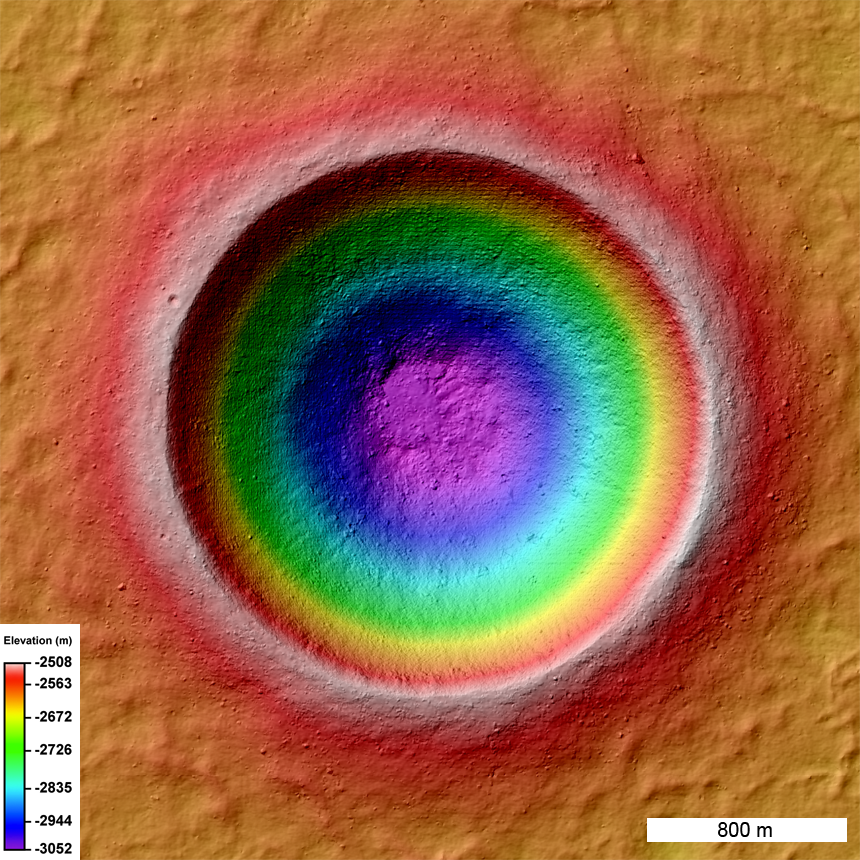
The Lunar Reconnaissance Orbiter project has opened the The Moon as Art poll. Visitors can choose which of five images created by the project are the most aesthetically pleasing.

To celebrate its 5th Anniversary, the Lunar Reconnaissance Orbiter mission presents Moon As Art !The images in the collection were created using data gathered by LRO over the first 4.5 years of operations. These top 5 images are presented to you, the public, to decide which will be the cover of the Moon As Art collection. Voting is open from May 23 — June 6th. The winner will be announced with the release of the full collection on June 18, 2014, the 5th anniversary of LRO launch.

linne_shade_scaleb[1]

Sunday webinar on artificial gravity via rotation with tethers

On Sunday May 25th,  The Space Show will present a special video webinar program on the topic of using rotation to provide artificial gravity. Joe Carroll will discuss his ideas on using tethers for such rotating systems.

WEBINAR: The Sunday, May 25, 2014 program from 1-3 PM PDT, (4-6 PM EDT, 3-5 PM CDT): This is our first WEBINAR for 2014. Our guest of honor is Joe Carroll and I will be assisted on the panel with Dr. John Jurist and Dr. Jim Logan. Joe is updating us on his partial gravity work which was the topic of an earlier webinar in May 2011. You can listen to the audio only for this show as you would any Space Show program. If you want to see the live webinar, go to our private UStream Space Show channel, www.ustream.tv/channel/the-space-show. Note that this show will archive audio and video simultaneously. The video of our webinar will be on our private Space Show Vimeo channel. Watch for details.

Joe Carroll has worked since 1981 on advanced space transportation, mostly involving long tethers. He led the development of the Small Expendable Deployment System (SEDS), which demonstrated controlled deorbit without rockets in 1993 and also flew successfully on SEDS-2 in 1994, and TiPS in 1996. He also developed the deployer and wire for the Plasma Motor Generator (PMG), which demonstrated electrodynamic thrust in orbit.  He has also worked on unmanned and manned reentry vehicle concepts for NASA and several startups. His main current work is on electrodynamic tethers.

Here is a paper by Carroll : Design Concepts for a Manned Artificial Gravity Research Facility, by Joseph A Carroll, Tether Applications, Inc., USA (pdf).

[ Update: Some additional material has been made available for the show:

]

Here are articles from Robert Walker who examines Carroll’s tether concept. Walker includes several animations showing how a crew capsule and its spent upper stage could be tethered together to provide a spin gravity system at low cost:

Here, for example, is an animation of a Soyuz spacecraft that is tethered to its upper stage.

For lunar gravity level:

Joe Caroll suggests a 600 meter tether. The final stage weighs a third of the weight of the Soyuz. This puts the centre of gravity of the assembly 150 meters away from the Soyuz, and 450 meters away from the final stage. 

This lets you generate artificial lunar gravity with spin rate of 1 rpm.

At that rotation rate the Soyuz has delta v of 15.6 m/sec, the final stage travels at three times that speed, and the speed of the Soyuz relative to the final stage is four times that, 62.4 m/sec.

Everyone can participate in space