The arrival of a European cargo module is a highlight of activities over the past week on the International Space Station: Space to Ground: Hello Georges: 8/15/14
The arrival of a European cargo module is a highlight of activities over the past week on the International Space Station: Space to Ground: Hello Georges: 8/15/14
In a recent post I discussed Helion Energy, a spin-off company from John Slough‘s plasma physics group at the University of Washington, that is developing a nuclear fusion power system. They are aiming to have a commercial 50MW reactor in six years.
Today comes word that they have raised $1.5M from Mithril Capital Management and Y Combinator venture capital firms: More Valley investors are funding nuclear energy tech — Tech News and Analysis.
They apparently need a few tens of millions to get to a reactor but this is a start. Interesting that VC firms are willing to take a risk on such a project.
Rosetta returns more great pictures of the comet t 67P/Churyumov-Gerasimenko:
* CometWatch – 12 August | Rosetta – ESA’s comet chaser
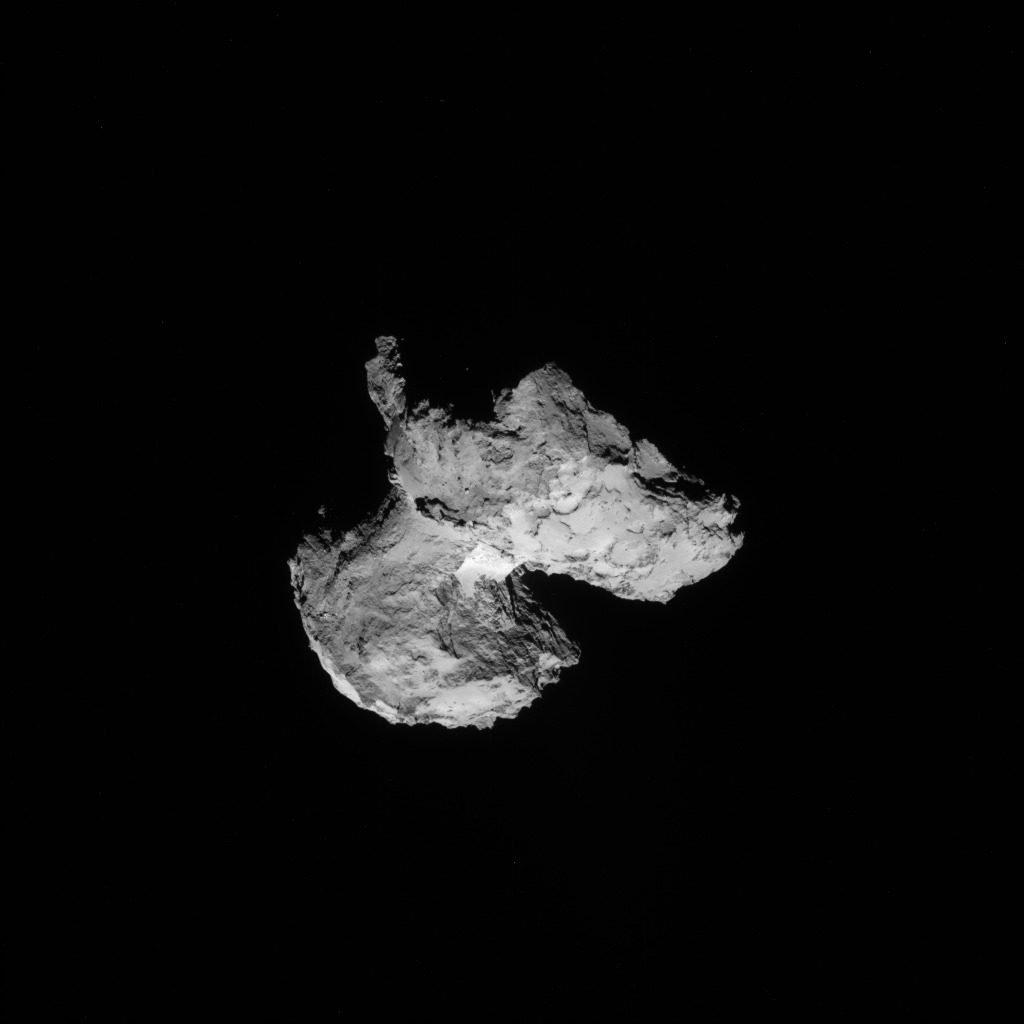
Full-frame NAVCAM image taken on 12 August 2014 from a distance of about
103 km from comet 67P/Churyumov-Gerasimenko. Credits: ESA/Rosetta/NAVCAM
* CometWatch – 13 August | Rosetta – ESA’s comet chaser
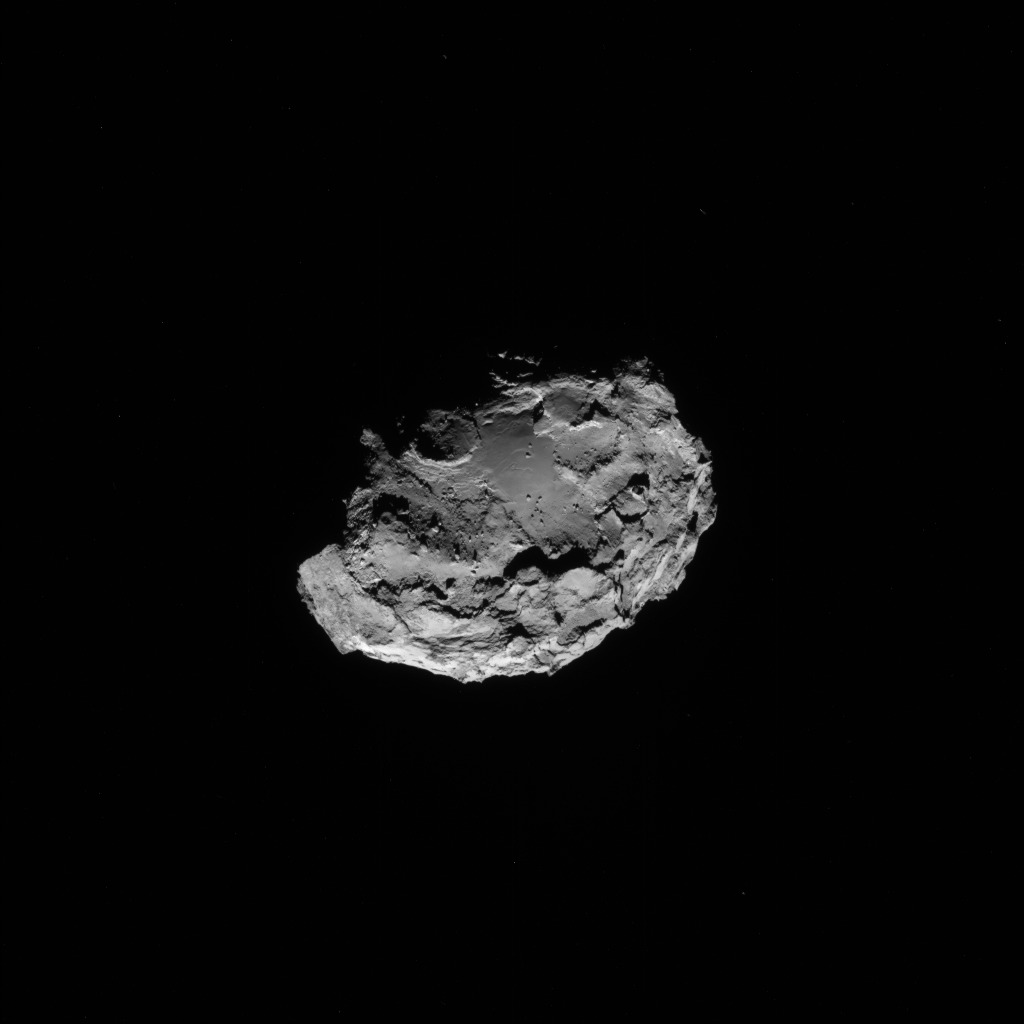
Full-frame NAVCAM image taken on 13 August 2014 from a distance
of about 115 km from comet 67P/Churyumov-Gerasimenko.
Credits: ESA/Rosetta/NAVCAM
* Comet 67P/C-G in 3D | Rosetta – ESA’s comet chaser
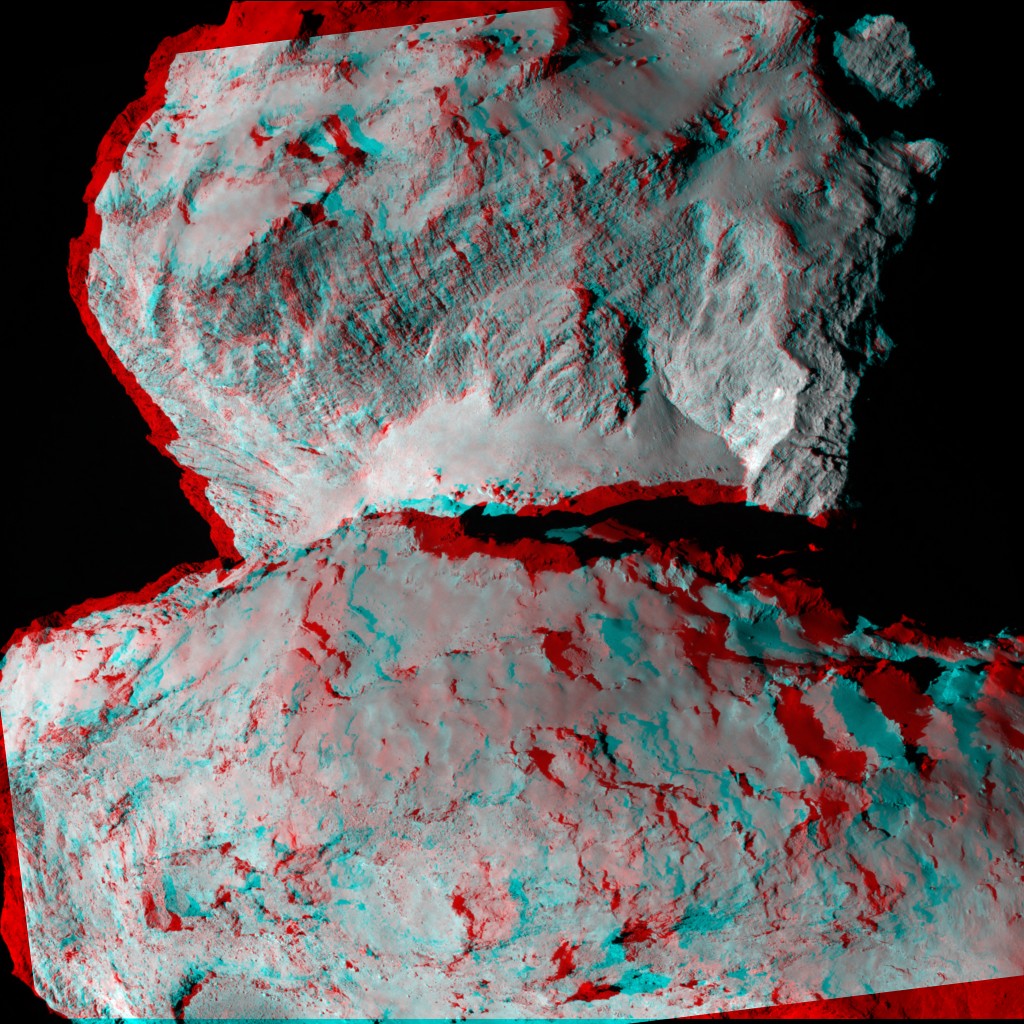
Credits: ESA/Rosetta/MPS for OSIRIS Team
MPS/UPD/LAM/IAA/SSO/INTA/UPM/DASP/IDA
The Cassini spacecraft orbiting Saturn has returned images showing clouds moving over the surface of the Moon Titan:
Cassini Tracks Clouds Developing Over a Titan Sea

Cassini scientists noted a decrease in clouds everywhere on Titan
after a large storm in 2010, and expected clouds to return sooner,
based on computer models of Titan’s atmosphere.
NASA’s Cassini spacecraft recently captured images of clouds moving across the northern hydrocarbon seas of Saturn’s moon Titan. This renewed weather activity, considered overdue by researchers, could finally signal the onset of summer storms that atmospheric models have long predicted.
A movie showing the clouds’ movement is available at: www.jpl.nasa.gov/spaceimages/details.php?id=PIA18420
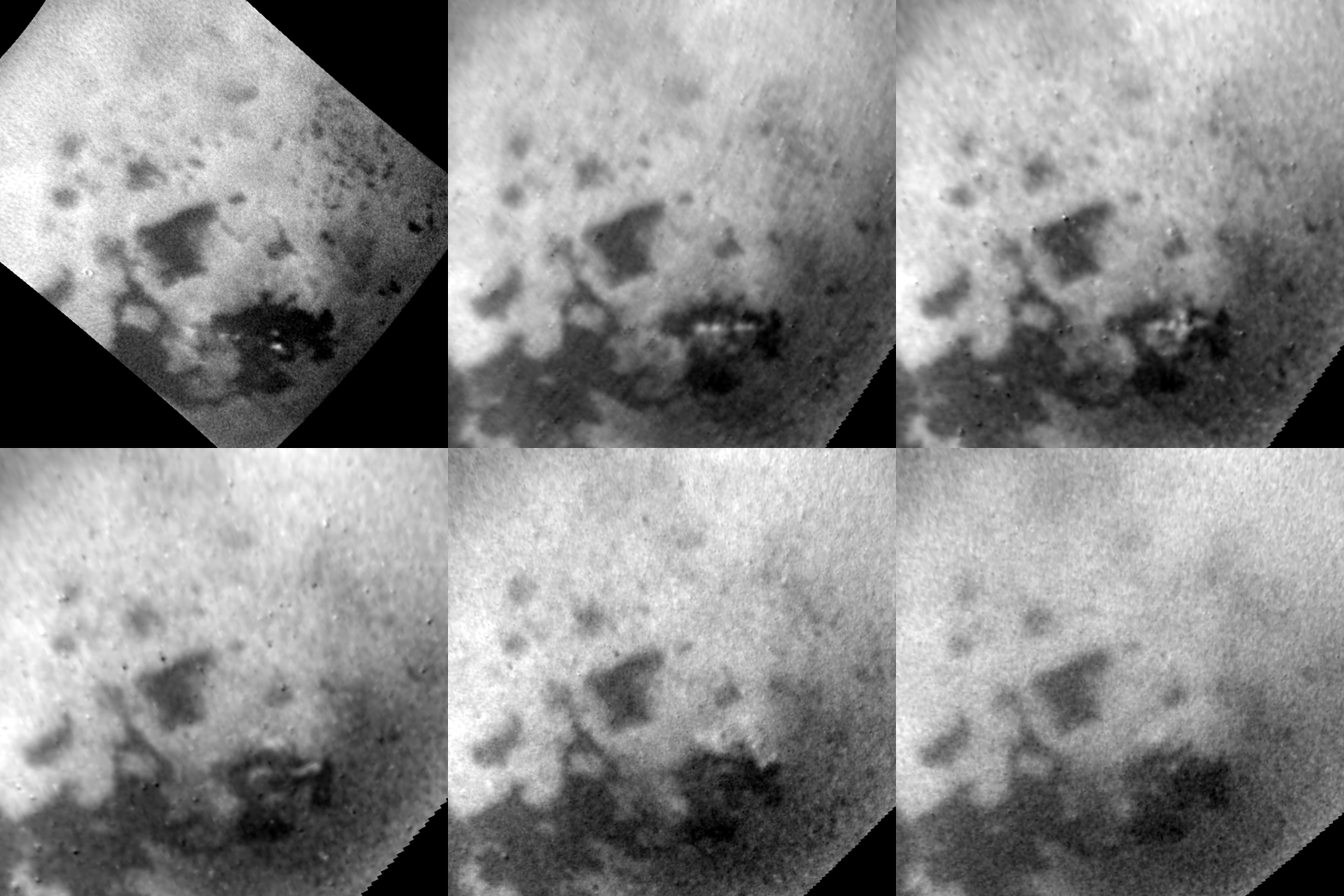
Click on the image for the full animation
The Cassini spacecraft obtained the new views in late July, as it receded from Titan after a close flyby. Cassini tracked the system of clouds developing and dissipating over the large methane sea known as Ligeia Mare for more than two days. Measurements of cloud motions indicate wind speeds of around 7 to 10 mph (3 to 4.5 meters per second).
For several years after Cassini’s 2004 arrival in the Saturn system, scientists frequently observed cloud activity near Titan’s south pole, which was experiencing late summer at the time. Clouds continued to be observed as spring came to Titan’s northern hemisphere. But since a huge storm swept across the icy moon’s low latitudes in late 2010, only a few small clouds have been observed anywhere on the icy moon. The lack of cloud activity has surprised researchers, as computer simulations of Titan’s atmospheric circulation predicted that clouds would increase in the north as summer approached, bringing increasingly warm temperatures to the atmosphere there.
“We’re eager to find out if the clouds’ appearance signals the beginning of summer weather patterns, or if it is an isolated occurrence,” said Elizabeth Turtle, a Cassini imaging team associate at the Johns Hopkins University Applied Physics Lab in Laurel, Maryland. “Also, how are the clouds related to the seas? Did Cassini just happen catch them over the seas, or do they form there preferentially?”
A year on Titan lasts about 30 Earth years, with each season lasting about seven years. Observing seasonal changes on Titan will continue to be a major goal for the Cassini mission as summer comes to Titan’s north and the southern latitudes fall into winter darkness.
The Cassini-Huygens mission is a cooperative project of NASA, the European Space Agency and the Italian Space Agency. The Jet Propulsion Laboratory (JPL) in Pasadena, California, manages the mission for NASA’s Science Mission Directorate in Washington. The Cassini orbiter and its two onboard cameras were designed, developed and assembled at JPL. The imaging team consists of scientists from the United States, England, France and Germany. The imaging team is based at the Space Science Institute in Boulder, Colorado.
More information about Cassini is available at the following sites:
Here’s an overview of the MakerSpaces movement: Makerspaces: A Revolution in Sustainable Production – CustomMade.
Some additional resources: