Satellite images: Fight drought in Ethiopia + Help earthquake victims + Reveal ancient Kazakh earthworks

A small sampling of the use of satellite earth observation imagery:

* Satellites help fight drought in Ethiopia – UNICEF Connect

Ethiopia is currently in one of its periodic droughts. Satellites are

One of the most affected areas in the country is the Afar Region in the Great Rift Valley where daily temperatures can exceed 44 degrees Celsius and there is less than 300mm of rain annually.

Most of the Afar region’s population of 1.5 million people survive mainly on herding (92 percent), and the animals need water. Water the existing wells aren’t providing.

This is where satellites come in. UNICEF analyzes information the satellites provide on ground vegetation, topology and morphology, combined with hydro-geological information on the region, and pinpoints the best place to drill wells.

Ethiopia-satellite-1[1]
UNICEF Ethiopia/ 2015/Tesfaye – Launching the mini-village water scheme project north of Samera in Ethiopia

Just 84 km north of Afar’s capital of Samera, UNICEF put its remote sensing satellite plan into action. The government identified the district of Elidar as a priority location—shepherds head there due to water shortages elsewhere.

Currently, people rely on expensive commercial trucks to haul in water because most of the water found by digging wells is very salty. Deep underground, however, lies fresh water, and the UNICEF-directed remote sensing investigations have found just the right places to drill boreholes down between 250 and 300 metres.

Three boreholes will be drilled by end December 2015. These wells will provide more than 100,000 people with access to safe water. A contract has been awarded to a private drilling contractor at a cost of 9 million birr (US$ 433,264), and UNICEF will supervise the works with the local water bureau.

* Radar satellites to provide faster response to earthquake victims

Compare and contrast: A better way to use satellite images to save lives after tremors – The Economist

Sang-Ho Yun and his team at the Jet Propulsion Laboratory have developed techniques to use satellite radar images automaticalluy to locate the specific areas that were shifted up or down the most by a large earthquake. Such information could be used by first responders to go to the places with the worst damage.

They recently tested the approach with radar taken of Nepal taken shortly after the magnitude 7.8 earthquake happened in April. They found that their analysis of the images matched well with independent determinations of regional damage by teams from the UN, the US Geological Survey, and the US National Geospatial-Intelligence Agency.

* Mysterious 8000 year old earthworks in Kazakhstan spotted by satellites

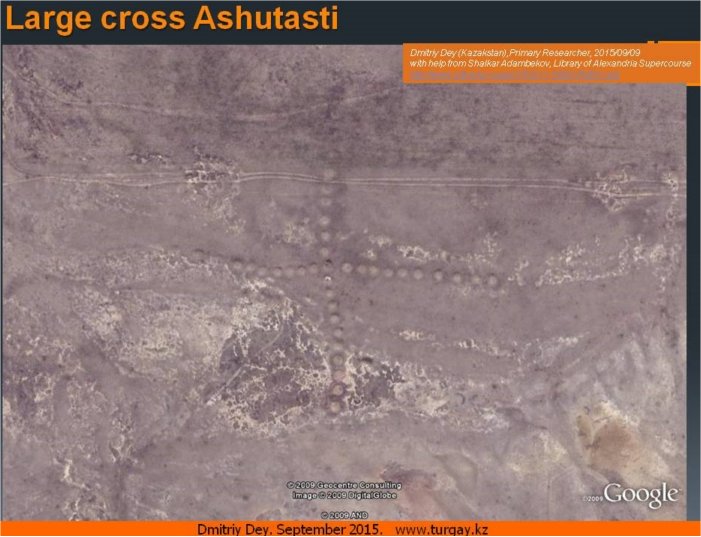
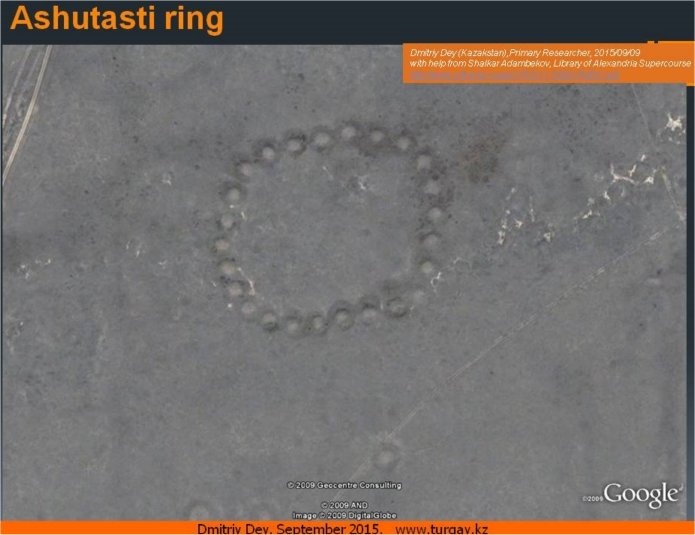
Using satellite images available through Google Earth, the amateur Kazakh archaeologist Dmitriy Dey in 2007 spotted unusual structures in the Turgay Trough region of Kazakhstan. The structures, visible only from high altitudes, were subsequently found to have been created in Neolithic times about 8000 years ago. He has now found over 260 such structures. Some excavations in the region have found some artifacts but what group built the structures and why remains unknown.

30KAZAKHSTAN1-facebookJumbo-v3[1]Credits DigitalGlobe via NASA

TurgayTriadialSwastika-DmitryDey

LargeCrossAshutasti-DmitryDey

AshutastiRing-DmitryDey

The Space Show this week – Nov.16.15

The guests and topics of discussion on The Space Show this week:

1. Monday, Nov. 16. 2015: 2-3:30 PM PST (5-6:30 PM EST; 4-5:30 PM CST): We welcome WAYNE ELEAZER to the show to discuss his recent Space Review postings.

2. Tuesday, Nov. 17, 2015:,7-8:30 PM PST (10-11:30 PM EST, 9-10:30 PM CST): We welcome back DOUG MESSIER of Parabolic Arc for news and updates.

3. Friday, Nov. 20, 2015; 9:30 -11 AM PST (12:30-2 PM EST; 11:30-1 PM CST) We welcome DR. JIM LOGAN, DAN ADAMO & DR. JOHN JURIST for a roundtable discussion on HSF in general & specifically to Mars, the Moon and more, plus many other topics.

4. Sunday, Nov. 22, 2015: 12-1:30 PM PST (3-4:30 PM EST, 2-3:30 PM CST): We welcome DAVID LOVE from the UK and author of Kepler And The Universe: How One Man Revolutionized Astronomy.

See also:
/– The Space Show on Vimeo – webinar videos
/– The Space Show’s Blog – summaries of interviews.
/– The Space Show Classroom Blog – tutorial programs

The Space Show is a project of the One Giant Leap Foundation.

Video: TMRO.tv 8.33 – “What upcoming space tech are you most excited about?”

The latest episode of the TMRO.tv program is now available: What upcoming space tech are you most excited about? – TMRO

On this weeks show we ask you and our team, “What upcoming space tech are you most excited about?” 

Space news topics discussed:

* Air Force declares failure on Super Strypi test launch
* Intelligence-gathering satellite launched by China
* Arab and Indian satellites fly aboard Ariane 5
* UP Aerospace Successfully Launches From Spaceport America
* Crew Dragon Propulsion System Completes Development Testing
* NASA delays cargo award again, eliminates Boeing from contention
* Radio bug to keep new Iridium satellites grounded until April
* Blue Origin Plans Test Flight This Year, Commercial Research Missions 2016

TMRO.tv relies on viewer support:

TMRO Live is a crowd funded show. If you like this episode consider contributing to help us to continue to improve. Head over tohttp://www.patreon.com/tmro for information, goals and reward levels. Don’t forget to check out our Space Pod campaign as well over athttp://www.patreon.com/spacepod

Journey to Space exhibition and 3D film at the California Science Center

The California Science Center in Los Angeles has recently opened a new exhibition called Journey to Space and it is paired with the the film, Journey to Space 3D:

journey-to-space-the-exhibition[1]

Designed with the help of astronauts and space scientists, Journey to Space: The Exhibition allows visitors to experience some of the most fascinating and challenging aspects of living and working in space and learn how we are preparing for bolder and more distant missions. Additionally, Journey to Space 3D provides an inspiring look back at the remarkable achievements of NASA’s Space Shuttle program and concludes with a fascinating showcase of the exciting plans that are underway for the next chapter of space exploration: Mars. 

This video shows some highlights of the exhibition:

journey-to-space-the-exhibition[1]

Here is a trailer about the film, which is narrated by Patrick Stewart:

Music video: “Beyond the Terra” – Chris Hadfield

Here is a new music video from Canadian astronaut Chris Hadfield (of ISS and Space Oddity fame) taken from his new album Space Sessions: Songs From A Tin Can. (Another music video from the album is available here.)

Everyone can participate in space