Video: TMRO 9.08 – The Path to Mars

The latest episode of TMRO.tv is now available on line: The Path to Mars – #PathToMars – TMRO

Now that we have completed a #YearInSpace the crew of TMRO asks: What is our Path to Mars from here?

Space news topics covered:

* SpaceX Finally launches SES-9
* #YearInSpace
* Methane snow has been found on Pluto
* China to launch new space lab later this year
* Asteroid 2013TX68 to make close pass on March 8th
* NASA slips schedule of Asteroid Redirect Mission

TMRO is viewer supported:

TMRO Live Shows are crowd funded. If you like this episode consider contributing to help us to continue to improve. Head over to http://www.patreon.com/tmro for information, goals and reward levels. Don’t forget to check out our SpacePod campaign as well over at http://www.patreon.com/spacepod
Video: Review of SETI projects and the $100M Breakthrough Listen Initiative

In this SETI Institute seminar, Dr. Andrew Siemion, Director of the Berkeley SETI Research Center (BSRC) at the University of California, Berkeley, gives an excellent review of SETI projects past, present, and future and includes an

overview of the Breakthrough Listen Initiative, 100-million-dollar, 10-year search for extraterrestrial intelligence. Dr. Siemion will also discuss other SETI efforts ongoing at the BSRC, including the successful citizen science project SETI@Home, as well as a concerted effort to undertake panchromatic observations of the mysterious Kepler star KIC 8462852

Video: TMRO Space Pod – Amateur radio on the International Space Station

Below is a TMRO.tv Space Pod short report on students communicating with crew members on the Int. Space Station via its amateur radio station: Amateur Radio on the International Space Station – Space Pod 3/2/16 – TMRO

Students all over the world are talking to the space station using amateur radio. TMRO correspondent Lisa Stojanovski discusses how schools can get involved, and how an Australian, Tony Hutchinson, is helping it all happen.

See the recent posting here on astronaut Sunita Williams’ comments about the ISS ham radio station. As mention there, you can check the ARISS Amateur Radio on the International Space Station) website for info on how to arrange for your local school to have a ham radio session with the ISS.

TMRO is viewer supported:

TMRO Space Pods are crowd funded shows. If you like this episode consider contributing to help us to continue to improve. Head over to http://www.patreon.com/spacepod for information, goals and reward levels. Don’t forget to check out our weekly live show campaign as well over at http://www.patreon.com/tmro

Video: ‘Space to Ground’ report on the ISS – March.4.16

Here is the latest of NASA’s weekly Space to Ground reports on recent activities related to the Int. Space Station:

Sci-Tech: DARPA selects electric-rotor design for vertical take-off and landing X-Plane

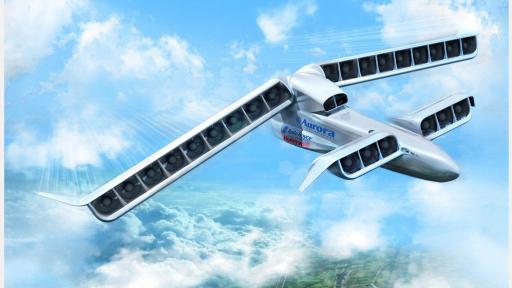
Aurora Flight Sciences has beaten several much bigger companies for a DARPA contract to build a vertical take off and landing demonstration vehicle that has much higher performance that helicopters or tiltrotor designs like the Osprey now in operation: DARPA Selects Aurora to Build VTOL X-Plane Technology Demonstrator

b0b7478e-e539-4c70-b657-172fa07b97b4[1]

Aurora’s LightningStrike has an unusual design with 24 electric ducted-fans distributed along the wing and canard and driven by an on-board generator.

The technology demonstrator was designed in close collaboration with Aurora’s team members, Rolls-Royce PLC and Honeywell International Inc. The Aurora-led team intends to deliver a number of aviation milestones with the demonstration aircraft, including being the first aircraft designed to demonstrate:

  • Distributed hybrid-electric propulsion ducted fans
  • An innovative synchronous electric-drive system
  • Both tilt-wing- and tilt-canard-based propulsion for vertical takeoff and landing
  • High efficiency in both hover and high-speed forward flight

The aircraft design features a Rolls-Royce AE 1107C turboshaft engine that would power three Honeywell generators, and 24 ducted fans distributed on both the wings and canards. The aircraft’s electric distributed propulsion (EDP) system would consist of highly integrated, distributed ducted fans that, combined with the synchronous electric drive system, would enable the design’s potentially revolutionary hover efficiency and high-speed forward flight.

This video animation illustrates how the Lightning Strike will operate:

Everyone can participate in space