Video: TMRO 9.36 – Vector Space Systems

Here is the latest TMRO.tv weekly show: Vector Space Systems – TMRO

This week we interview Jim Cantrell, CEO of Vector Space Systems. Jim is a well known entrepreneur and expert in space systems and has 30 years of experience in the aerospace and high technology industries. Jim was part of the SpaceX founding team and served as the company’s first Vice President of Business Development. Jim founded two other successful aerospace and automotive engineering companies and has held CEO positions in aerospace and biometric software companies. Jim also played key roles in the development of Skybox Imaging (now Terra Bella) and has had developmental roles in numerous venture funded space efforts including Rocket Lab, Planet, Black Sky and Spaceflight.

Space news topics discussed on the show:

H-2A launches Himawari 9
China launches Long March 5
Atlas V called on once again to deliver ISS cargo in March
The ISS prepares for battery swap via EVA
Galactic merger exposes supermassive black hole
Proton Medium to launch first Satellite Rescue Mission

TMRO is viewer supported:

TMRO Space Pods are crowd funded shows. If you like this episode consider contributing to help us to continue to improve. Head over to http://www.patreon.com/spacepod for information, goals and reward levels. Don’t forget to check out our weekly live show campaign as well over at http://www.patreon.com/tmro
Video: “The history of the Martian South Polar Cap”

UC Santa Cruz grad student Carver Bierson gives an interesting SETI Institute talk about how the southern polar cap of Mars came to consist of multiple alternating layers of water ice and frozen CO2. He also addresses the question of whether the storehouse of earth’s nuclear weapons could be used to melt the ice cap and provide a dense atmosphere for terraformers living there.

Videos: First episode of Nat. Geo. Mars mini-series + A backstory short film

The National Geographic Channel‘s Mars mini-series directed by Ron Howard debuts on TV on November 14th. However, the first episode is now available for online streaming for free: Novo Mundo – MARS Video – National Geographic Channel.

We watched the episode last night and it was quite good. (Recommend watching it on a big screen.) The program is structured as a high production value fictional drama of a Mars mission in 2033, interspersed with documentary segments about what is happening in 2016 to make a Mars mission feasible and affordable. There is an emphasis in particular on what SpaceX is doing but they also include inputs from NASA and a variety of other sources.

Here is a nicely made short film that gives a backstory to two of the characters – Hana & Joon Seung – in the Mars series:

The ham radio station on the ISS plays a role in the story: A Guide to Ham Radio – MARS Article – National Geographic Channel.

====

Video: “Space to Ground” ISS report – Nov.4.2016

Here is the latest NASA “Space to Ground” weekly report on activities related to the International Space Station:

Here is a video of the latest Soyuz to leave the ISS with three crew-members:

And this video shows the Soyuz parachuting to a landing in Kazakhstan:

====

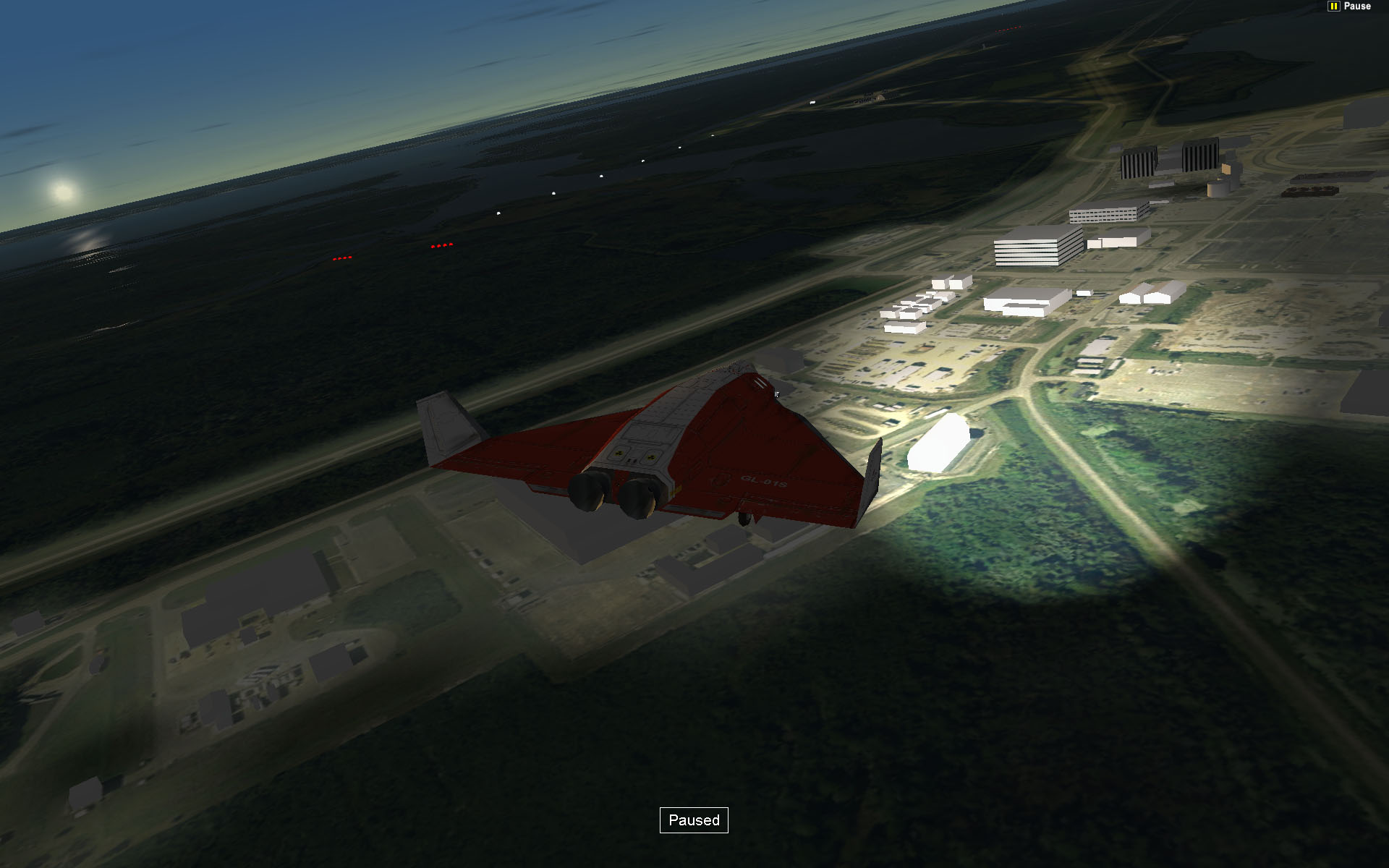
The Orbiter 2016 Space Flight Simulator

An updated version of the free spaceflight sim Orbiter is now available: Orbiter 2016 Space Flight Simulator

Explore the solar system on your PC! Fed up with space games that insult your intelligence and violate every law of physics? Orbiter is a simulator that gives you an idea what space flight really feels like – today and in the not so distant future. And best of all: you can download it for free!

florida9_new1

Here is a positive review of the update: Orbiter 2016 and other space flight simulators – Bruce Irving/The Space Review

Although it is fun and challenging in many ways, Orbiter 2016 truly is a space flight simulation, or what some might now call a “sandbox game.” In its level of detail and learning curve, it is something like Microsoft Flight Simulator or X-Plane, where the “game” is mainly the challenge of learning to fly, or of mastering advanced skills such as instrument approaches. Orbiter too supports atmospheric flight, but with the major addition of space flight with accurate orbital mechanics.

There is plenty to learn and do, but there are no requirements, characters, weapons, or scores, only the unforgiving rules of Newtonian physics, a wide range of tools and techniques to master, and the full solar system to explore. Learning to launch a spacecraft to orbit, dock with the ISS, land on the Moon, or navigate to Mars: all of this, and more, is possible in Orbiter.

You can choose from a variety of built-in spacecraft and scenarios, download and fly add-on spacecraft and scenarios, or even design and fly your own spacecraft, although doing so requires some external tools.

Irving also has good things to say about these two spaceflight sims:


=====

Everyone can participate in space