The Space Show this week – Mar.28.2023

The guests and topics of discussion on The Space Show this week:

1. Tuesday, Mar. 28, 2023; 7 pm PST (9 pm CST, 10 pm EST): We welcome back Retired USAF Lt.Col. Peter Garretson on SSP (Space Solar Power), security, and much more.

2. Hotel Mars – Wednesday, Mar. 29, 2023; 1:00 pm PST (3:00 pm CST, 4:00 pm EST): TBD. Check the Upcoming Show Menu at www.thespaceshow.com for  updates on scheduling.

3. Friday, Mar.31, 2023; 9:30-11 am PST (11:30 am-1 pm CST, 12:30-2 pm EST): We welcome Duncan Farrah on his recent paper regarding black holes and Dark Energy. There will be a link to the paper on the blog for this program.

4. Sunday, Apr.2, 2023; 12-1:30 pm PST (2-3:30 pm CST, 3-4:30 pm EST): We welcome you to another Open Lines program. We look forward to your call at 1-866-687-7223.

Some recent shows:

** Sunday, Mar.26.2023 – Dr. George Sowers discussed

commercial space development, Cis Lunar development, in space propulsion and fuels, space settlement and much more. We also talked about space resources and the corresponding program at the Colorado School of Minds.

** Friday, Mar.24.2023Sebastien Jean talked about “data storage and chip usage in space with his company of Phison Electric“.

** Hotel Mars – Wednesday, Mar.22.2023Dr. Jeffrey Foust spoke with John Batchelor and Dr. David Livingston about “the readiness and launch license for the upcoming Starship by SpaceX demo flight“.

** Tuesday, Mar.21.2023Robert Zimmerman talked about “SpaceX and Starship plus FAA launch license delay, Blue Origin, ULA, U.S. launchers, 3 D printing, ice on Mars, Boca Chica launch site, Bloomberg’s article on Musk and the Administration plus much more“.

**** Sunday, Mar.19.2023Chris Carberry of Explore Mars  discussed

in detail the upcoming H2M event later in May. See www.exploremars.org for details. Not only did we discuss the event but multiple issues relating to humans getting to Mars.

** Friday, Mar.17.2023Dr. Chris Impey, professor in astronomy at the Univ of Arizona,  spoke about

timelines to Mars, settlement and humans in space. For the second half we talked about his upcoming new exoplanet book plus exoplanet research and discovery.

** Hotel MarsWednesday, Mar.15.2023 Dr. Harold C. Connolly Jr. talked with John Batchelor and David Livingston about

the finding of more than 20 amino acids in the sample returns from Ryugu. We talked about both Ryugu and Bennu being from the earliest part of our solar system in the far out part of the Ort Cloud. Dr. Connolly explained the significance of the amino acids but also he talked organics and what they mean. He said Ryugu was a pristine example of the early solar system. In terms of exposing the samples to Earth’s atmosphere, he said there was negative impact and for Bennu and other sample nitrogen would be used as a type of preservative.

** Tuesday, May.14.2023Richard Easton talked about

the Vanguard rocket which turned 65 years old, early navy and army satellites, the Explorer 1 and America’s first satellite, alternative histories had the U.S. been the first to space, not the USSR and much more. In addition, Richard talked about GPS, a subject close to him since his Dad is considered the inventor of GPS. Also, early Naval Research Lab history was discussed as applied to space.


** See also:
* The Space Show Archives
* The Space Show Newsletter
* The Space Show Shop

The Space Show is a project of the One Giant Leap Foundation.
The Space Show - David Livingston
The Space Show – Dr. David Livingston

=== Amazon Ads ===

Escaping Gravity:
My Quest to Transform NASA and
Launch a New Space Age

===

The Space Value of Money:
Rethinking Finance Beyond Risk & Time
Videos: “Space to Ground” & other space habitat reports – Mar.26.2023

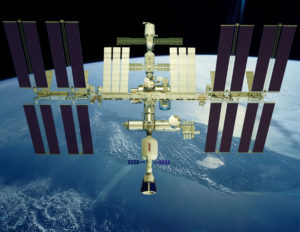
Here is the latest episode in NASA’s Space to Ground weekly report on activities related to the International Space Station:

** Expedition 68 Astronaut Steve Bowen Talks with NPR’s “All Things Considered” – March 20, 2023 – NASA Video

Aboard the International Space Station, Expedition 68 Flight Engineer Stephen Bowen of NASA discussed life and work aboard the orbital outpost during an in-flight interview March 20 with WGBH Boston’s “All Things Considered” program. Bowen is in the midst of a long-duration mission living and working aboard the microgravity laboratory to advance scientific knowledge and demonstrate new technologies for future human and robotic exploration missions. Such research benefits people on Earth and lays the groundwork for future human exploration through the agency’s Artemis missions, which will send astronauts to the Moon to prepare for future expeditions to Mars.

** Expedition 68 Astronaut Sultan Alneyadi Answers Dubai Student, Public Questions – March 21, 2023 – NASA Video

Aboard the International Space Station, Expedition 68 flight engineer Sultan Alneyadi of UAE (United Arab Emirates) discussed living and working in space during an in-flight interview March 21 with Emirati media. Alneyadi launched on March 2 on the SpaceX Crew Dragon “Endeavour” as part of Crew-6 which is a science mission living and working aboard the microgravity laboratory to advance scientific knowledge and demonstrate new technologies for future human and robotic exploration missions.

** LIFE Habitat | Sierra Space Successfully Completes Month Long Creep TestSierra Space

Sierra Space has successfully performed a month-long Accelerated Systematic Creep (ASC) test on LIFE – the first milestone in its 2023 testing campaign.

Engineers loaded a one-third-scale version of the inflatable habitat with a sustained amount of pressure over an extended period until it failed.

The campaign demonstrated that the LIFE habitat pressure shell design has a predicted life of far greater than 60 years – or 525,600 hours – based on Sierra Space’s 15-year on-orbit life requirement and the applied 4x safety factor.

The next series of one-third-scale LIFE certification tests will focus on inserting hard structures into the pressure shell and correlating the results to previous tests. Sierra Space anticipates moving toward full-scale LIFE habitat tests later this year.

Thanks to a recently signed Space Act Agreement with NASA, Sierra Space will expand its collaborative environment with Marshall Space Flight Center (MSFC), in Huntsville, Ala., to continue critical work on LIFE. Alabama is the seventh location across the nation where Sierra Space operates facilities, joining Colorado, Florida, North Carolina, Texas, Wisconsin and Washington, D.C.

Press Release: https://www.sierraspace.com/newsroom/…

** Live Video from the International Space Station (Official NASA Stream) – NASA

Watch live video from the International Space Station, including inside views when the crew aboard the space station is on duty. Views of Earth are also streamed from an external camera located outside of the space station. During periods of signal loss due to handover between communications satellites, a blue screen is displayed.

The space station orbits Earth about 250 miles (425 kilometers) above the surface. An international partnership of five space agencies from 15 countries operates the station, and it has been continuously occupied since November 2000. It’s a microgravity laboratory where science, research, and human innovation make way for new technologies and research breakthroughs not possible on Earth. More: https://go.nasa.gov/3CkVtC8

Did you know you can spot the station without a telescope? It looks like a fast-moving star, but you have to know when to look up. Sign up for text messages or email alerts to let you know when (and where) to spot the station and wave to the crew: https://spotthestation.nasa.gov

** See also:

====

=== Amazon Ads ===

LEGO Ideas International Space Station Building Kit,
Adult Set for Display,
Makes a Great Birthday Present
(864 Pieces)

====

Outpost in Orbit:
A Pictorial & Verbal History of the Space Station

The Space Show this week – Mar.21.2023

The guests and topics of discussion on The Space Show this week:

1. Tuesday, Mar. 21, 2023; 7 pm PST (9 pm CST, 10 pm EST): We welcome back Robert Zimmerman for news and policy information updates.

2. Hotel Mars – Wednesday, Mar. 22, 2023; 1:00 pm PST (3:00 pm CST, 4:00 pm EST): Dr. Jeffrey Foust of Space News will give an update on the SpaceX Starship project to John Batchelor and Dr. David Livingston.

3. Friday, Mar.24, 2023; 9:30-11 am PST (11:30 am-1 pm CST, 12:30-2 pm EST): We welcome Sebastien Jean of Phison to discuss the role solid-state drives (SSDs) are playing in space missions. Don’t miss this one!

4. Sunday, Mar.26, 2023; 12-1:30 pm PST (2-3:30 pm CST, 3-4:30 pm EST): We welcome back Dr. George Sowers for commercial space and more updates. George is a professor at the Colorado School of Mines.

Some recent shows:

** Sunday, Mar.19.2023Chris Carberry of Explore Mars  discussed

in detail the upcoming H2M event later in May. See www.exploremars.org for details. Not only did we discuss the event but multiple issues relating to humans getting to Mars.

** Friday, Mar.17.2023Dr. Chris Impey, professor in astronomy at the Univ of Arizona,  spoke about

timelines to Mars, settlement and humans in space. For the second half we talked about his upcoming new exoplanet book plus exoplanet research and discovery.

** Hotel MarsWednesday, Mar.15.2023 Dr. Harold C. Connolly Jr. talked with John Batchelor and David Livingston about

the finding of more than 20 amino acids in the sample returns from Ryugu. We talked about both Ryugu and Bennu being from the earliest part of our solar system in the far out part of the Ort Cloud. Dr. Connolly explained the significance of the amino acids but also he talked organics and what they mean. He said Ryugu was a pristine example of the early solar system. In terms of exposing the samples to Earth’s atmosphere, he said there was negative impact and for Bennu and other sample nitrogen would be used as a type of preservative.

** Tuesday, May.14.2023Richard Easton talked about

the Vanguard rocket which turned 65 years old, early navy and army satellites, the Explorer 1 and America’s first satellite, alternative histories had the U.S. been the first to space, not the USSR and much more. In addition, Richard talked about GPS, a subject close to him since his Dad is considered the inventor of GPS. Also, early Naval Research Lab history was discussed as applied to space.

**  Sunday, Mar.12.2023Open Lines program dedicated to

…the memory of Space Show guest and friend, Dr. Bill Rowe. We talked about Space Show costs, possible deletion of the toll free line, our call in 702 number experiment, naysayers, space development and settlement, bank failure and startup space ventures or capital hungry space ventures.

** Friday, Mar.10.2023 – Fabian Alefeld discussed “space manufacturing, additive manufacturing (3D printing), materials, advances, uses and much more“.

** Hotel Mars – Wednesday, Mar.8.2023 –  Dr. Haym Benaroya of Rutgers University spoke with John Batchelor and Dr. David Livingston about

the Moon and on to Mars. […] Note the focus on was new technologies to clean lunar regolith, possible Mars dust and soil as well. Also the use of new types of nuclear reactors for power on both the Moon and Mars. John asked our guest about drones on Mars given the success of Ingenuity.

** Tuesday, Mar.7.2023Dr. Alan Hale gave a “comprehensive discussion on comets, discovering comets, sky surveys, comet mythology, and more“.

** Tuesday, Mar.7.2023Dr. Heinrich Pas spoke

… about his new book, [The One: How An ancient Idea Holds The Future Of Physics [Amazon commission link]]. We zeroed in on quantum physics, consciousness and much much more. Several excellent phone calls and emails.

** See also:
* The Space Show Archives
* The Space Show Newsletter
* The Space Show Shop

The Space Show is a project of the One Giant Leap Foundation.

The Space Show - David Livingston
The Space Show – Dr. David Livingston

=== Amazon Ads ===

Escaping Gravity:
My Quest to Transform NASA and
Launch a New Space Age

===

The Space Value of Money:
Rethinking Finance Beyond Risk & Time

ESO: DART asteroid impact debris analyzed with VLT

The latest report from the European Southern Observatory (ESO):

First results from ESO telescopes
on the aftermath of DART’s asteroid impact

This series of images, taken with the MUSE instrument on ESO’s Very Large Telescope, shows the evolution of the cloud of debris that was ejected when NASA’s DART spacecraft collided with the asteroid Dimorphos. The first image was taken on 26 September 2022, just before the impact, and the last one was taken almost one month later on 25 October. Over this period several structures developed: clumps, spirals, and a long tail of dust pushed away by the Sun’s radiation. The white arrow in each panel marks the direction of the Sun. Dimorphos orbits a larger asteroid called Didymos. The white horizontal bar corresponds to 500 kilometres, but the asteroids are only 1 kilometre apart, so they can’t be discerned in these images. The background streaks seen here are due to the apparent movement of the background stars during the observations while the telescope was tracking the asteroid pair.

Using ESO’s Very Large Telescope (VLT), two teams of astronomers have observed the aftermath of the collision between NASA’s Double Asteroid Redirection Test (DART) spacecraft and the asteroid Dimorphos. The controlled impact was a test of planetary defence, but also gave astronomers a unique opportunity to learn more about the asteroid’s composition from the expelled material.

On 26 September 2022 the DART spacecraft collided with the asteroid Dimorphos in a controlled test of our asteroid deflection capabilities. The impact took place 11 million kilometres away from Earth, close enough to be observed in detail with many telescopes. All four 8.2-metre telescopes of ESO’s VLT in Chile observed the aftermath of the impact, and the first results of these VLT observations have now been published in two papers.

”Asteroids are some of the most basic relics of what all the planets and moons in our Solar System were created from,”

says Brian Murphy, a PhD student at the University of Edinburgh in the UK and co-author of one of the studies. Studying the cloud of material ejected after DART’s impact can therefore tell us about how our Solar System formed.

“Impacts between asteroids happen naturally, but you never know it in advance,”

continues Cyrielle Opitom, an astronomer also at the University of Edinburgh and lead author of one of the articles.

“DART is a really great opportunity to study a controlled impact, almost as in a laboratory.”

Opitom and her team followed the evolution of the cloud of debris for a month with the Multi Unit Spectroscopic Explorer (MUSE) instrument at ESO’s VLT. They found that the ejected cloud was bluer than the asteroid itself was before the impact, indicating that the cloud could be made of very fine particles. In the hours and days that followed the impact other structures developed: clumps, spirals and a long tail pushed away by the Sun’s radiation. The spirals and tail were redder than the initial cloud, and so could be made of larger particles.

MUSE allowed Opitom’s team to break up the light from the cloud into a rainbow-like pattern and look for the chemical fingerprints of different gases. In particular, they searched for oxygen and water coming from ice exposed by the impact. But they found nothing.

”Asteroids are not expected to contain significant amounts of ice, so detecting any trace of water would have been a real surprise,”

explains Opitom. They also looked for traces of the propellant of the DART spacecraft, but found none.

”We knew it was a long shot,” she says, “as the amount of gas that would be left in the tanks from the propulsion system would not be huge. Furthermore, some of it would have travelled too far to detect it with MUSE by the time we started observing.”

Another team, led by Stefano Bagnulo, an astronomer at the Armagh Observatory and Planetarium in the UK, studied how the DART impact altered the surface of the asteroid.

“When we observe the objects in our Solar System, we are looking at the sunlight that is scattered by their surface or by their atmosphere, which becomes partially polarised,” 

explains Bagnulo. This means that light waves oscillate along a preferred direction rather than randomly.

“Tracking how the polarisation changes with the orientation of the asteroid relative to us and the Sun reveals the structure and composition of its surface.”

Bagnulo and his colleagues used the FOcal Reducer/low dispersion Spectrograph 2 (FORS2) instrument at the VLT to monitor the asteroid, and found that the level of polarisation suddenly dropped after the impact. At the same time, the overall brightness of the system increased. One possible explanation is that the impact exposed more pristine material from the interior of the asteroid.

”Maybe the material excavated by the impact was intrinsically brighter and less polarising than the material on the surface, because it was never exposed to solar wind and solar radiation,”

says Bagnulo.

Another possibility is that the impact destroyed particles on the surface, thus ejecting much smaller ones into the cloud of debris.

”We know that under certain circumstances, smaller fragments are more efficient at reflecting light and less efficient at polarising it,”

explains Zuri Gray, a PhD student also at the Armagh Observatory and Planetarium.

The studies by the teams led by Bagnulo and Opitom show the potential of the VLT when its different instruments work together. In fact, in addition to MUSE and FORS2, the aftermath of the impact was observed with two other VLT instruments, and analysis of these data is ongoing.

“This research took advantage of a unique opportunity when NASA impacted an asteroid,” concludes Opitom, “so it cannot be repeated by any future facility. This makes the data obtained with the VLT around the time of impact extremely precious when it comes to better understanding the nature of asteroids.”

This artist’s illustration shows the ejection of a cloud of debris after NASA’s DART spacecraft collided with the asteroid Dimorphos. The image was created with the help of the close-up photographs of Dimorphos that the DRACO camera on the DART spacecraft took right before the impact. The DART spacecraft collided with Dimorphos at a speed of over 6 kilometres per second (about 22 000 kilometres per hour). After the impact several telescopes observed the evolution of the cloud of debris, including ESO’s Very Large Telescope.

Links

=== Amazon Ads ===

Asteroids: How Love, Fear, and Greed
Will Determine Our Future in Space

===

Celestron – NexStar 130SLT Computerized Telescope –
Compact and Portable –
Newtonian Reflector Optical Design –
SkyAlign Technology –
Computerized Hand Control –
130mm Aperture

Videos: “Space to Ground” & other space habitat reports – Mar.17.2023

Here is the latest episode in NASA’s Space to Ground weekly report on activities related to the International Space Station:

** Expedition 68 SpaceX Dragon CRS-27 Cargo Ship Space Station Docking – March 16, 2023 – NASA Video

Loaded with scientific experiments and supplies, the unpiloted SpaceX CRS-27 cargo ship automatically docked to the International Space Station’s forward port of the Harmony module March 16. The SpaceX resupply craft launched from the Kennedy Space Center, Florida March 14 with several tons of experiments and hardware on board and will remain on orbit for a month-long visit.

** Homecoming | Down to Earth – S2:E8 NASA Johnson

In the final episode featuring astronaut Victor Glover and his daughter, Corinne, they discuss the excitement of returning to Earth from an extended mission on the International Space Station.

** China Wants to Expand its Space Station – Dongfang Hour

A 4th Space Station module? In this episode, we uncover China’s plans to expand the Tiangong Space Station, combining the past and current statements from space industry officials, hints in space station animations, and known characteristics of the current space station models.

** ISS Live video stream – IBM/ISS HD Earth Viewing Experiment

Currently, live views from the ISS are streaming from an external camera mounted on the ISS module called Node 2. Node 2 is located on the forward part of the ISS. The camera is looking forward at an angle so that the International Docking Adapter 2 (IDA2) is visible. If the Node 2 camera is not available due to operational considerations for a longer period of time, a continuous loop of recorded HDEV imagery will be displayed. The loop will have “Previously Recorded” on the image to distinguish it from the live stream from the Node 2 camera. After HDEV stopped sending any data on July 18, 2019, it was declared, on August 22, 2019, to have reached its end of life. Thank You to all who shared in experiencing and using the HDEV views of Earth from the ISS to make HDEV so much more than a Technology Demonstration Payload!

====

=== Amazon Ads ===

LEGO Ideas International Space Station Building Kit,
Adult Set for Display,
Makes a Great Birthday Present
(864 Pieces)

====

Outpost in Orbit:
A Pictorial & Verbal History of the Space Station

Everyone can participate in space