Student and amateur CubeSat news roundup – June.2.2019

A sampling of recent articles, press releases, etc. related to student and amateur CubeSat / SmallSat projects and programs:

[ Update: A satellite developed by China’s AMSAT group and the Beijing Institute of Technology ( BIT ) is set to launch this month on a Chinese commercial rocket:

From ARRL:

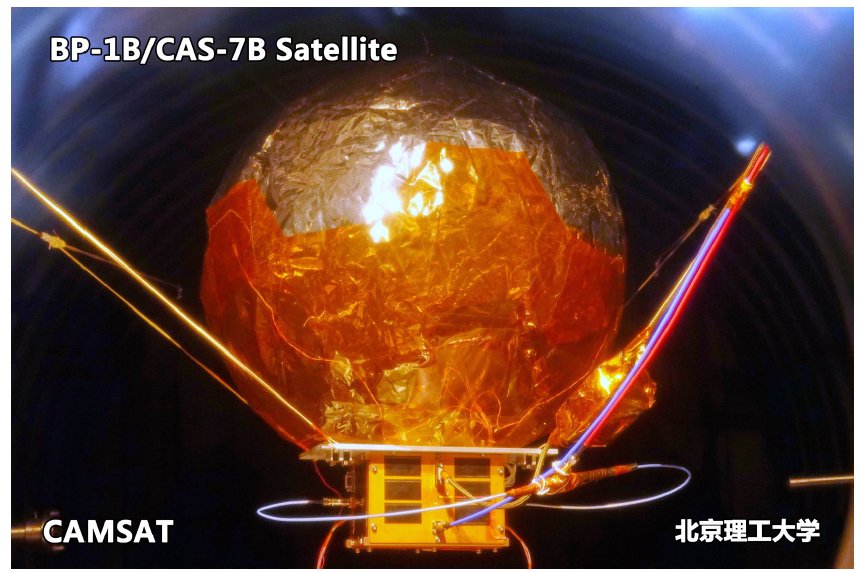
… the CAS-7B satellite, also designated as BP-1B, a short-lived spacecraft that will carry an Amateur Radio payload. An unusual feature of the spacecraft is its “sail ball” passive stabilization system. The 1.5-U CubeSat is attached to a 500-millimeter flexible film ball — or sail — that will offer passive “pneumatic resistance” stabilization. CAS-7B is expected to remain in orbit for up to 1 month.

The spacecraft will carry an Amateur Radio transponder and educational mission. CAMSAT is working with Beijing Institute of Technology (BIT), a top aerospace school, which is providing launch support in launch of the satellite. BIT faculty and students are participating in the development and testing of the satellite, and, with CAMSAT’s help, the university has established an Amateur Radio club (call sign BI1LG). CAMSAT said many students are now members, “learning Amateur Radio satellite communication and experience[ing] endless fun.”
CAMSAT BP-1B/CAS-7B
The CAMSAT BP-1B/CAS-7B cubesat duringa thermal vacuum test with the “sail ball” deployed.

]

**  Dubai university ground station to allow students to communicate with, monitor and control SmallSats in orbit: Amity University in Dubai opens satellite ground station on campus – SatellitePro ME

The next phase of this project involves the construction of a 4U (40 cm3) CubeSat in accordance with the UAE’s Environment Vision 2030.

Amity University, Dubai has launched a satellite ground station on their campus, which will allow students to track satellites, predict weather patterns and pollution levels, as reported by Khaleej Times.

The station at Amity University is aimed at garnering the participation of students studying aerospace, electrical, electronics, computer science or nanotechnology engineering.

Commenting on the initiative, Dr Vajhat Hussain, CEO of Amity University Dubai, as quoted by the English daily, said: “The main goal of the ground station is to give students the opportunity to perform the following operations – telemetry data visualisation and storage, antenna control and positioning system, radio communication using very high frequency (VHF) and satellite data analysis. Through this initiative, students will not only learn how to read and analyse such data but also get the support they need for research projects.”

** California high school offers CubeSat program for students: Lab launches engineering students’ lofty dreams | Simi Valley Acorn

Creating satellites to explore space is no longer just for adults.

At Grace Brethren High School, a group of about 20 students have made it their mission to launch a small satellite into orbit by 2020.

Known as CubeSat, the device contains a payload that can be monitored from the ground and is equipped with small yet strong LED lights that will send satellite-operating information to the mission operations center at the Grace Brethren Space Lab, said Annabelle Hynes, an 18-year-old graduate who worked on the project.

“Being the only girl involved in the spacecraft class and working on CubeSat has been an interesting experience, and we’ve gotten to do a lot of really exciting, hands-on things with this project,” Annabelle said.

“We’re still figuring out the basics, but . . . the plan is to track the satellite from the school and communicate with it. It will be open to other organizations so they can use the data we collect.”

** University College Dublin student team building EIRSAT-1, Ireland’s first satellite: Celtic New Space: Scotland’s Clyde Space To Provide CubeSat Platform For Ireland’s EIRSAT-1 – SpaceWatch.Global

EIRSAT-1 will be fully designed, assembled, tested and operated in Ireland by staff and students at UCD. This is primarily a technology demonstration and science mission with three payloads, a gamma-ray detector, a materials science experiment and a novel spacecraft control algorithm. It will also demonstrate a low-profile UHF/VHF Antenna Deployment Mechanism. Clyde Space are providing UCD with its full set of CubeSat avionics, including a flight proven onboard computer, an attitude determination and control system and its high-performance power system products.

** Australian university team develops antenna for system to allow continuous ground contact with SmallSats in low earth orbit: New antenna system enables 24/7 connectivity to space – The Lighthouse/Macquarie University

Led by Professor Karu Esselle of the School of Engineering, the team has developed an antenna system with a steerable beam which will enable scientific data downloading from spacecrafts to labs on earth 24 hours a day.

As the first move towards rapidly growing space systems, the low-profile antenna system was designed for US company Audacy who launched the world’s first entirely Ka-band CubeSat (a type of miniaturised satellite that can be used for a variety of space applications including earth imaging, astronomy, science experiments, climate monitoring and surveillance) called Audacy Zero into space via a SpaceX Falcon 9 Rocket in December 2018.

Audacy, a company spun off Stanford University and based in California, is developing the world’s first commercial inter-satellite data relay network. Audacy Zero was the first iteration of a radio that will enable Audacy customers’ spacecraft to connect to this network.

“Data from your CubeSat will travel through the relay system down to earth to the internet and cloud,” explains Prof Esselle.

“Without such a space relay network, a CubeSat can be seen from a fixed ground station only for a few minutes per day and that is often not enough to download all the data collected by the CubeSat.

See also:

** AMSAT news on student and amateur CubeSat/smallsat projects: ANS-153 AMSAT News Service Special Bulletin

  • Dollar-for-Dollar Match on your ARISS Donation Thru June 17, 2019
  • Call for Nominations – AMSAT Board of Directors
  • AMSAT Field Day on the Satellites
  • Lightsail-2 Scheduled for Launch June 22 – Beacon on 437.025 MHz
  • AMSAT-EA FossaSat-1 Receives IARU Coordination
  • QO-100 meets HAM RADIO 2019 in Friedrichshafen
  • ARISS SSTV Planned Over Russia for Moscow Aviation Institute
  • Upcoming Satellite Operations
  • Send Your Name (and callsign) to Mars
  • RS-10 Downlink Provides Unique Troubleshooting Solution
  • Satellite Shorts From All Over

General CubeSat/SmallSat info:

====

The Case for Space:
How the Revolution in Spaceflight Opens Up
a Future of Limitless Possibility

Videos: “Space to Ground” ISS report – June.1.2019

The latest episode of NASA’s Space To Ground weekly report on activities related to the International Space Station:

** Three commercial teams were chosen by NASA’s Artemis lunar program to send landers and rovers to the Moon:

** Time-lapse Earth Flyover from NASA astronaut on the ISS:

This time-lapse video taken by NASA astronaut Nick Hague squeezes a 30-minute International Space Station trip over a cloudy Earth into 60 seconds, covering the Pacific to the Atlantic.

** A NASA video promoting the Artemis lunar program with the help of commercial and international partners:

====

Moon Rush: The New Space Race

Videos: Night sky highlights for June 2019

A preview of the June night sky from NASA JPL: What’s Up: June 2019 Skywatching Tips from NASA | NASA Solar System Exploration

What’s up in the June sky? Jupiter is at its biggest and brightest, Mercury and Mars appear ultra-close and how you can observe the Moon’s tilted orbit.

** Another view from the Hubble Space Telescope Science Institute:

** And here the view of the Northern Hemisphere from Alyn Wallace:

====

Telescopes and Binoculars at Amazon

Space policy roundup – May.30.2019

A sampling of links to recent space policy, politics, and government (US and international) related space news and resource items that I found of interest:

Webcasts:

** Episode T+122: National Security SpaceX Lawsuit – Main Engine Cut Off

NSSL, LSA, OMG! Last week, SpaceX filed a lawsuit against the US Air Force over the Launch Service Agreement development contracts. We’re mere months away from bids being due for the National Security Space Launch Phase 2 launch contracts, so I figured now would be a good time to take a step back to explain what these programs are, why they matter, and why SpaceX is filing this lawsuit at this moment in time.

** May 28, 2019 Zimmerman/Batchelor podcast | Behind The Black

** The Space Show – Tue, 05/28/2019 – James Donovan talked about his new book, Shoot for the Moon: The Space Race and the Extraordinary Voyage of Apollo 11, and about “space policy, returning to the Moon, lessons learned, space and humanity plus more”.

** Sharing a Passion for Mars at the Humans to Mars Summit | The Planetary Society

This year’s Humans to Mars Summit in Washington D.C., once again ended with a panel of Martian all-stars talking about their hopes for a future that includes the Red Planet. Planetary Radio host Mat Kaplan leads the inspiring and entertaining discussion. Emily Lakdawalla shows us the beautiful, sunlit clouds of Mars, while this week’s What’s Up segment gives Mat the job of singing the answer to our latest space trivia quiz.

====

Moon Rush: The New Space Race

Space transport roundup – Mar.29.2019

A sampling of recent articles, videos, and images dealing with space transport:

** Boeing successfully tests integrated propulsion system for the Starliner crew vehicle. This comes after the system suffered a leak of the highly toxic propellant during a test in 2018. Boeing Completes Starliner Hot Fire Test – Commercial Crew Program

Boeing’s CST-100 Starliner propulsion system was put to the test on Thursday at NASA’s White Sands Test Facility in New Mexico in support of NASA’s Commercial Crew Program. Teams ran multiple tests on Starliner’s in-space maneuvering system and the spacecraft’s launch abort system, which are key elements on the path to restore America’s capability to fly astronauts to the International Space Station on American rockets and spacecraft from U.S. soil.

The test used a flight-like Starliner service module with a full propulsion system comprising of fuel and helium tanks, reaction control system and orbital maneuvering and attitude control thrusters, launch abort engines and all necessary fuel lines and avionics.

** Rocket Lab making progress on the launch pad at Wallops Island, Virginia:

**ESA’s Expander-cycle Technology Integrated Demonstrator (ETID) project tests new technologies for next-gen upper-stage rocket engines: ‘Intelligent’ thrust for Europe’s future launchers – ESA

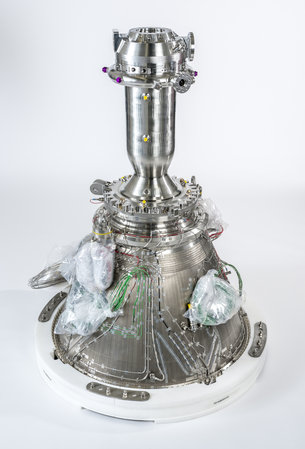
ESA has recently completed hot-firing tests that prove technologies in a move towards ‘intelligent’ engines to power the upper stages of next-generation launchers.

The Expander-cycle Technology Integrated Demonstrator, or ETID, is a full-scale integrated demonstrator for an upper-stage rocket engine.

Yesterday ESA, industrial partners and representatives of participating Member States met at DLR Lampoldshausen, Germany, to review the results of ETID’s extremely successful nine-month test campaign on the P3.2 test bench.

In total, four configurations of ETID with three new combustion chamber geometries and designs were tested.

Two different injector heads, including a fully 3D-printed version were also tested, as well

ETID - Expander-cycle Technology Integrated Demonstrator
ETID – Expander-cycle Technology Integrated Demonstrator

** ULA’s Vulcan and Northrop-Grumman’s OmegA rockets make some progress towards first flights in 2021: Two National Security Space Launch Rockets Moving Forward – Air Force Magazine

** Virgin Orbit flies a fully fueled LauncherOne rocket beneath their 747 carrier:

** Virgin Orbit works with NASA on 3D printing of propulsion system components: Exploring 3-D Printing Alongside NASA Marshall Space Flight Center | Virgin Orbit

** SpaceX:

** The chain of Starlink satellites launched last week by a Falcon 9 was easy to see from the ground when passing overhead:

*** The video of the deployment of the Starlink sats showed them slowly separating in clumps rather than scattering individually like dandelion seeds, which I think many viewers had expected. Here is an animation showing what was actually happening.

*** The brightness of the Starlinks set off a Twitter ado over what impact 1200 to 15000 such satellites will have on astronomy:

*** Initial broadband Internet services could begin with just 360 Starlinks: SpaceX wants to offer Starlink internet to consumers after just six launches – Teslarati.

*** Another view of the Starlink launch via the team at www.USLaunchReport.com:

*** The recovered Starlinks booster has returned to Port Canaveral:

*** The nosecone fairings from the were recovered as well and may be used again in a future launch:

*** Still no official explanation for the explosion during the Crew Dragon test but the investigation is making progress according to NASA officials:

From Space News:

More than a month after a Crew Dragon spacecraft was destroyed in a test of its propulsion system, NASA and SpaceX investigators are still working to determine the cause of the accident and its implications for upcoming test flights.

In a May 28 presentation to the NASA Advisory Council’s human exploration and operations committee, Kathy Lueders, manager of the commercial crew program at NASA, offered few updates on the progress of the investigation into the April 20 incident at a SpaceX pad at Cape Canaveral Air Force Station in Florida.

In that incident, SpaceX was testing both the Draco thrusters and larger SuperDraco abort thrusters in preparation for an in-flight abort test of the capsule that, at the time, was scheduled for the end of June. “An anomaly occurred during activation of the SuperDraco system,” she said, but offered no details on what caused that anomaly.

*** Work on the Starhopper and Starship orbital demonstrator vehicles at Boca Chica Beach, Texas and Cocoa, Florida appears to be making good progress. Observers are on the lookout at Boca Chica for the arrival of the Raptor engine that will power the Starhopper’s low altitude flights, the first of which is currently set for Monday of next week.

From NSF:

Meanwhile, SpaceX techs have begun to accelerate testing operations ahead of a crucial series of flights involving the Starhopper suborbital vehicle.

The Hopper last flew on April 5th, 2019, when it successfully performed a three foot hop test at the launch site while under power from a single Raptor flight-ready engine. During this test, the vehicle was held down by a group of tethers attached to each of the three landing legs.

Those tethers will not be present during upcoming hop tests, as confirmed by Musk on Twitter on April 26th.

He also stated in the same thread that the Hopper would use a single Raptor engine like before, though it would not be the same engine that was first used to propel the vehicle off the pad.

[ Update:

]

*** Elon Musk is expected to give an update on the Starship/Super Heavy project on June 20th and there appears to be an official website in preparation: SpaceX Starship website spotted ahead of Elon Musk’s June rocket update – Teslarati.

It appears that SpaceX is preparing a dedicated website for its proposed Starship point-to-point transport system, potentially capable of transporting dozens of passengers anywhere on Earth in just 30-60 minutes.

Assuming this website is actually a prelude to a SpaceX reveal (it could be completely unrelated), it seems likely that Starship.com will go live sometime around CEO Elon Musk’s planned June 20th update on Starship and Super Heavy. Much like Starlink.com went live on the day of SpaceX’s first dedicated launch, the company may be ready to tease more substantial details and fleshed-out plans for its aspirational Starship airline.

*** Tim Dodd, the Everyday Astronaut, provides a tutorial on the Raptor engine that will power the Starship and the Super Heavy booster: Is SpaceX’s Raptor engine the king of rocket engines? – Everyday Astronaut

====

The Case for Space:
How the Revolution in Spaceflight Opens Up
a Future of Limitless Possibility

Everyone can participate in space