A sampling of links to recent space policy, politics, and government (US and international) related space news and resource items that I found of interest:
Professor Bland, from Curtin’s School of Earth and Planetary Sciences, said a Curtin team of 12 staff and student engineers developed the miniaturised satellite.
“The Curtin team has managed to put all the systems required to operate the satellite, including the power, computer, steering and communications, on a single eight-layer printed circuit board, which at 10cm by 10cm by 2.5cm is about the size of a rather small sandwich,” Professor Bland said.
“Having everything on a single circuit board means there is more room for what the satellite is carrying, which in this case will be a camera that will capture beautiful images of Australia taken from orbit.”
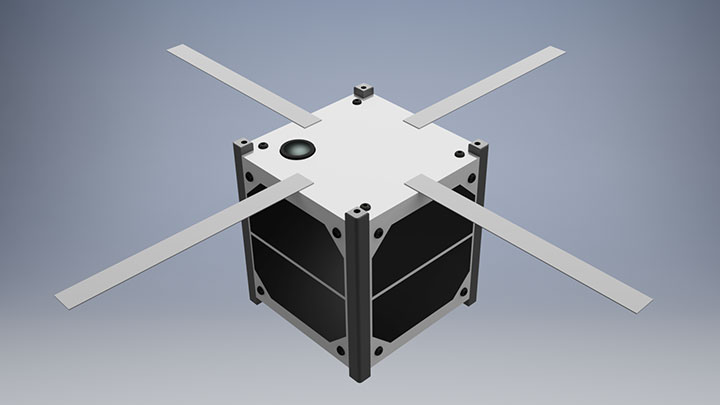
A diagram of the CubeSat in development in the Binar Cubesat Program at Curing University.
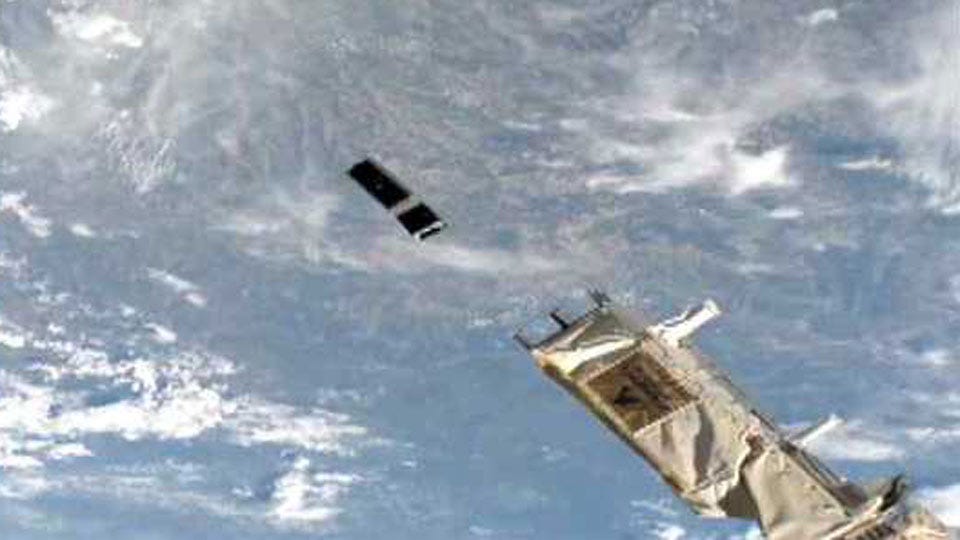
Three Virginia university satellites were deployed into nearly simultaneous orbit from the International Space Station via the NanoRacks CubeSat Deployer at 10:50 a.m. EDT this morning. The Virginia CubeSat Constellation mission is a collaborative project of the Virginia Space Grant Consortium and four of its member universities: Old Dominion University (ODU), Virginia Tech (VT), University of Virginia (UVA), and Hampton University (HU). The three nano-satellites, each about 4 inches cubed and weighing approximately 3 pounds, have been developed and instrumented (one each at ODU, VT and UVA) to obtain measurements of atmospheric properties and quantify atmospheric density with respect to orbital decay.
Deployment of three Virginia CubeSat Constellation satellites from the ISS. Photo credits: Virginia Space Grant Consortium
Data collected will ultimately contribute to the scientific knowledge base around orbital decay and will be widely shared. Ground stations at UVA, ODU and Virginia Tech will now begin making contact with their satellites. Data analysis will take place using an analytical tool being developed by students from Hampton University’s Atmospheric and Planetary Sciences Department.
“To know that all three satellites are now in orbit is extremely gratifying. Kudos to the students who have worked hard and gained immeasurable knowledge and experience from participating in this student-led mission and to the faculty who have advised them,” said Mary Sandy, Virginia Space Grant director and mission principal investigator. “Achieving Earth orbit is a huge mission milestone. These are the first student-developed satellites in orbit for all three of the universities.”
…
More than 150 undergraduate students across many disciplines at the participating universities have worked on the mission for the past three years under the guidance of faculty advisors
KRAKsat is a project focused on sending scientific satellite into space, made by students of University of Science and Technology and Jagiellonian University. Not only it is one of the first Cubesat type satellites in Poland but also the first satellite in the world which uses magnetic liquid, called ferrofluid, for orientation control.
A CubeSat from the Polish company SatRevolution was also deployed from the ISS along with KRAKsat. Find updates on the two projects at
UPDATE: The #LightSail2 mission team has opted to spend another day testing the spacecraft’s attitude control system. Sail deployment now expected no earlier than Tuesday, 9 July. The spacecraft is healthy. https://t.co/PvaKKe0iIr
— Planetary Society (@exploreplanets) July 8, 2019
1. Monday, July 8, 2019; 7-8:30 pm PDT (9-10:30 pm CDT, 10-11:30 pm EDT): No show on Monday which is now reserved for special programming.
2. Tuesday, July 9, 2019; 7-8:30 pm PDT (9-10:30 pm CDT, 10-11:30 pm EDT): We welcome back Dr. Namrata Goswami to discuss the Indian space program, China space and Moon programs, national security space, our return to the Moon and much more. Please call and talk with Dr. Goswami.
3. Wednesday, Jul 10, 2019; Hotel Mars. See Upcoming Show Menu and the website newsletter for details. Hotel Mars is pre-recorded by John Batchelor. It is archived on The Space Show site after John posts it on his website.
4. Friday, July 12 , 2019; 9:30-11 am PDT (11:30 am -1 pm CDT, 12:30-2 pm EDT): We welcome Dr. John Brandenburg, a theoretical plasma physicist, back to the show. Call in and talk with Dr. B. He wants to hear from you.
5. Sunday, July 14, 2019; 12-1:30 pm PDT (3-4:30 pm EDT, 2-3:30 pm CDT): Open Lines Discussions Calls preferred over emails. All calls and caller welcome but keep them space, science, and engineering related.
**Tue, 07/02/2019 – Dr. John Jurist talked about “space policy, the Moon, rockets, Mars, the Gateway, NASA, budgets, China and much more”.
** Mon, 07/01/2019 – Aggie Kobrin and Rod Pyle summarize ISDC 2019 and discussed “ISDC 2020 plans, NSS, space policy, Ad Astra article submission, international student participation, exceptional keynote speakers, and more”.
The latest episode of NASA’s weekly Space to Ground report on activities related to the International Space Station:
** A high-res demo of water in microgravity: Moving Water in Space – 8K Ultra HD
Water in space behaves… differently. Surface tension and capillary flow can be harnessed to move fluids in more efficient ways. What looks like fun could actually help us improve systems for moving fluids in microgravity, in things like fuel tanks for space travel. Find out more about fluid physics in space in our researcher’s guide: https://go.nasa.gov/2KShhuT Learn more about the research being conducted on Station: https://www.nasa.gov/iss-science
** Happy 4th of July from the Space Station Crew
Aboard the International Space Station, Expedition 60 Flight Engineers Nick Hague and Christina Koch of NASA honored America’s 243rd birthday by wishing Americans at home and around the world a happy 4th of July.
A sampling of links to recent space policy, politics, and government (US and international) related space news and resource items that I found of interest:
** Roundtable | NASA’s Project Artemis and their plans to settle the moon – TMRO.tv
This week we have special guest Manju Bangalore along with Cariann, Jared and Jade return for our first round table in a while to talk about NASA”s plan to colonize the moon. We dive specifically in to their Project Artemis.
When it comes to space debris, regulations may help with prevention but not the cure. Yet, how do you attempt to regulate something that nobody really owns? Listen to Chris Blackerby discuss how Astroscale has been leading the conversation in terms of policy, technology and who should pay for prevention. Chris talks about regulations that would give the ability to go up and de-orbit debris that has been rotating for years. He describes building capabilities into satellite design that would enable easy removal out of orbit. Although the probability is low, an exploration of how services throughout the world might be affected by a high impact collision is also discussed.