A sampling of links to recent space policy, politics, and government (US and international) related space news and resource items that I found of interest (find previous space policy roundups here):
1. Monday, Sept. 23, 2019; 2:00 pm PDT (4:00 pm CDT, 5:00 pm EDT): No show today as Monday is reserved for special programming.
2. Tuesday, Sept. 24 , 2019; 7-8:30 pm PDT (9-10:30 pm CDT, 10-11:30 pm EDT): Dr. Anahita Modiriasari will talk about lunar and Martian lava tubes.
3. Wednesday, Sept. 25, 2019: Pre-recorded Hotel Mars Program with John Batchelor. See Upcoming Show on The Space Show website for details.
4. Friday, Sept. 27, 2019; 9:30-11:00 am PDT (11:30 am-1:00 pm CDT, 12:30-2:00 pm EDT): We welcome back Dallas Bienhoff will discuss cislunar development and his recent SSI discussion comments.
5. Sunday, Sept. 29, 2019; 12-1:30 pm PDT (3-4:30 pm EDT, 2-3:30 pm CDT): OPEN LINES. We want to hear from you. STEM, STEAM, SPACE, SCIENCE calls welcome. First time callers welcome. Talk about what is on your mind with space.
** Mon, 09/16/2019 – Dr. Patricia Hynes “discussed the upcoming ISPCS Conference to be held in Las Cruces, NM from Oct. 9-10, 2019 with implications for commercial and exploratory space”.
A sampling of recent articles, press releases, etc. related to student and amateur CubeSat / SmallSat projects and programs (find previous smallsat roundups here):
15 CubeSats into orbit on October 21 as part of NASA Educational Launch of Nanosatellites (ELaNa) Mission 25. Some will carry Amateur Radio payloads.
TJ REVERB, developed by students at Thomas Jefferson High School in Alexandria, Virginia, will carry a 145.825 MHz APRS digipeater.
HuskySat, a University of Washington – Seattle project, will be boosted into a 500-kilometer (approximately 310-mile) orbit via the Cygnus external deployment device. HuskySat will carry a V/U linear transponder provided in cooperation with AMSAT.
The Taurus-1 (Jinniuzuo-1) CubeSat carrying an Amateur Radio FM-to-Codec-2 transponder was launched on September 12 from China’s Taiyuan Satellite Launch Center. The CubeSat was developed by Aerospace System Engineering Research Institute of Shanghai for youth education and Amateur Radio.
Professor Andrew Dempster of UNSW’s School of Electrical Engineering and Telecommunications has been developing and trialling a new type of receiver that looks for satellite navigation signals bounced from the Earth’s surface in a process called reflectometry.
…
As he explains, reflectometry looks at the GPS signals that come directly from satellites as well as where, and at what angle, the signals bounce off the earth’s surface. He and his colleagues have built four generations of receivers that are designed to look for these bounced GPS signals from satellites overhead.
“This most recent generation of our GPS receivers we have put into space aboard CubeSats,” Professor Dempster says, who is also director of the Australian Centre of Space Engineering Research.
… Over the past 5 years the team has seen over 100 members work on the project, including students, staff and volunteers. The project has produced at least 18 student theses, dozens of conference papers, launched new research areas for UNSW winning two new ARC grants, and the UNSW team alone has attracted many hours of media interest both locally and internationally.
How NASA saved two tiny Mars satellites | SPACE INTERVIEW
Mars Cube One (MarCO) lead engineer, Andy Klesh, joins us to chat how two tiny CubeSats gave us real-time data from the latest landing on Mars. We talk about what led to naming the spacecraft after the Disney characters Wall-e and Eve, and how both Wall-e and Eve lost contact with Earth just few hours before it was their time to shine.
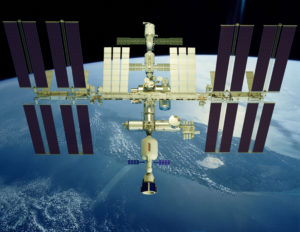
Microbes – bacteria and fungi – live everywhere, even the International Space Station. Scientists at NASA’s Johnson Space Center constantly monitor the station’s microbial community and now are testing using DNA sequencing to identify its tiny residents without returning samples to Earth – an important step to keep crews, and the places they visit, safe on future deep-space missions. Read more about space station microbiology: https://go.nasa.gov/2IbtgAL Learn more about the research being conducted on station: https://www.nasa.gov/iss-science
** T-60 Seconds with Jessica Meir
You’ve got to know a lot to earn a master’s degree in space science and a doctorate in marine biology, and that’s before you consider all you need to learn to become a NASA astronaut. As it turns out, little of that knowledge applied as astronaut Jessica Meir sat for a barrage of questions just before her launch to the International Space Station—take a look.
** SpaceCast Weekly Sept 20 2019
SpaceCast Weekly is a NASA Television broadcast from the Johnson Space Center in Houston featuring stories about NASA’s work in human spaceflight, including the International Space Station and its crews and scientific research activities, and the development of Orion and the Space Launch System, the next generation American spacecraft being built to take humans farther into space than they’ve ever gone before.
A sampling of links to recent space policy, politics, and government (US and international) related space news and resource items that I found of interest (find previous space policy roundups here):
** Want to do something big for space? Come to our Day of Action in D.C. – Planetary Society
** SETI Institute: Planetary Protection and the Origins of Life – “A discussion with Senior Astronomer Seth Shostak and Senior Researcher David Summers.”
** The Space Show – Mon, 09/16/2019 – Dr. Patricia Hynes “discussed the upcoming ISPCS Conference to be held in Las Cruces, NM from Oct. 9-10, 2019 with implications for commercial and exploratory space”.