A sampling of recent articles, press releases, etc. related to student and amateur CubeSat / SmallSat projects and programs (find previous smallsat roundups here):
** University Wurzburg UWE-4 CubeSat fires NanoFEEP electric thrusters to avoid a possible collision with a derelict Iridium satellite: Morpheus thruster propels single cubesat to lower orbit – SpaceNews
Germany’s University of Wurzburg Experimental-4 (UWE-4) cubesat avoided a potential collision in early July while lowering its altitude with Morpheus Space’s NanoFEEP electric propulsion system.
It was the first time a one-unit cubesat performed a collision-avoidance maneuver, Istvan Lorincz, Morpheus president and co-founder, told SpaceNews.
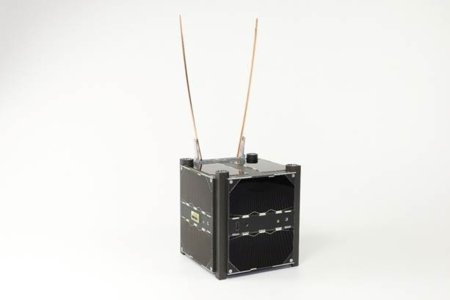
The UWE-4 mission is intended as a technology demonstration. In addition to propulsion, it is testing a new sun sensor design. The CubeSat was launched as a secondary payload on a Soyuz rocket in December 2018.
See also Successful first demonstration of orbit control on a 1U CubeSat – Lehrstuhl für Informatik VII
The 1U CubeSat, developed and built at the Chair for Robotics and Telematics, is equipped with the electric propulsion system NanoFEEP which has been developed by TU Dresden.
Several manoeuvres have been performed within 11 days between June 23rd – July 3rd 2020 such that the altitude of the CubeSat was reduced by more than 100 m, compared to an average of 21 m with natural decay. This marks the first time in CubeSat history that a 1U CubeSat changed its orbit using an on-board propulsion system.
As chance would have it, the team of UWE-4 received a conjunction data message (CDM) in the morning of July 2nd 2020 from the United Air Force’s 18th Space Control Squadron. A conjunction of UWE-4 with a non-operational Iridium satellite (ID: 34147) in the morning of July 5th 2020 with a minimum range of about 800 m was a threat to the safety of UWE-4. An analysis has shown that the altitude of UWE-4 would already be below the Iridium satellite at the time of conjunction. Thus the on-going altitude lowering manoeuvre could only improve the situation and can be considered as a collision avoidance manoeuvre. No further CDMs have been issued regarding this possible conjunction. An analysis of the orbit of the two spacecraft after July 5th 2020 results in a closest approach of more than 6000 m.
** AMSAT news on student and amateur CubeSat/smallsat projects:
ANS-201 AMSAT News Service Special Bulletin:
- AMSAT Board of Directors Election Packages Mailed July 14
- HO-107 is Back!
- First Call for Papers – Virtual 2020 AMSAT Annual Meeting and Space Symposium
- New D-STAR Reflector for AMSAT Use
- SpaceX to Launch AMSAT-EA EASAT-2 and Hades Satellites
- DARC Finds Unauthorized Transmissions in 144 MHz Satellite Band
- 1240-1300 MHz Discussed at CEPT SE-40 Meeting
- IARU Coordinates Two New Satellites
- Upcoming Satellite Operations
- Hamfests, Conventions, Maker Faires, and Other Events
- ARISS News
- Satellite Shorts from All Over
ANS-204 AMSAT News Service Special Bulletin:
- AMSAT Partners with UMaine’s WiSe-Net Lab to Develop Maine’s First Small Satellite
General CubeSat/SmallSat info:
- News, resources, etc:
- SmallSat Conference – Virtual event – Aug. 1-6, 2020.
- 2021 CubeSat Developers Workshop – April 27-29, 2021, Cal Poly San Luis Obispo, California.
- PLIX CubeSats – “A series of creative learning workshops designed to support public library patrons in learning about outer space environments and how they can be characterized with small spacecrafts. “
- SEOPS Joins SpaceX’s Falcon 9 Launch Vehicle As Part Of SpaceX SmallSat Rideshare Program – SEOPS (pdf)
- Valcor Debuts New CubeSat Propellant Tanks – Valcor
- UPES student bags internship at Phoenix Launch Systems, Las Vegas – Careers360.com
- Projects:
- Millennium Space experiment to measure speed of satellite deorbiting system – SpaceNews – “A few days into the mission, one of the satellites will autonomously deploy a 230-foot-long Terminator Tape tether provided by Tethers Unlimited. The untethered satellite will be allowed to naturally decay. Millennium will use radar to track them and collect data.”
** CubeSats Get Close: Proximity Operation with Interesting Implications – The Aerospace Corporation
One of Aerospace’s CubeSats photographed its twin satellite from 22 meters away in a demonstration of the type of technology that could enable inspection and servicing missions. Read more: CubeSats Get Close: Proximity Operation with Interesting Implications | The Aerospace Corporation
** Florian Gautier – Landing CubeSats On Asteroids – Cold Star Project S02E50
University of Kansas Doctoral candidate (Physics and Astronomy) Florian Gautier is on the Cold Star Project to discuss several of the research projects he’s been involved in. With host Jason Kanigan, Florian describes his aerospace engineering and astrophysics education journey from Europe to North America and opportunities to work on:
– Student CubeSat project at ISAE-SUPAERO to develop 12U cubesats for missions like ATISE
– Land3U project, simulation of CubeSat landing on asteroids, sponsored by ESA Drop Your Thesis! 2018 programme (the drop tower used is fascinating)
– AGILE, development of a new compact particle detectors suitable to be flown on a CubeSat.
I also ask Florian, who has two Masters degrees (Astronautics & Space Engineering and Astrophysics, Space Science & Planetary Science), about his future goals and where he thinks space work will take him.
** The Space Show – Weds. July.23.2020 – Dr. Pat Patterson, long time chief of the annual SmallSat Conference held at Utah State, talked about this year’s event (Aug. 1-6, 2020), which is all virtual.
** Democratizing access to outer space with Cubesats – Adeel Khan
** PLIX CubeSats Online: Week 1 Kick-off Stream – PLIX CubeSats
Welcome to Week 1 of PLIX CubeSats Online! 🛰️ In this session, we’ll be covering the PLIX CubeSats activities, a series of creative learning workshops designed to support public library patrons in learning about outer space environments and how they can be characterized with small spacecrafts. Read more about the CubeSats activity on our PLIX Activity Repository: – PLIX CubeSats
** Generating Quantum Random Numbers On a CubeSat (SpooQy-1)
CQT Online Talks – Series: Conference presentations This talk was given at CLEO. Speaker: Ayesha Reezwana, Alexander Ling Group, CQT,
NUS Abstract: We demonstrate a quantum random number generator based on entangled photon-pair statistics on-board a CubeSat orbiting in Low Earth Orbit.
=== Amazon Ad ===


 [Amazon commission link] and had “a wide ranging discussion on doing science in space as a priority over commercial, mining, resource usage and settlement”.