“FIGHT FOR SPACE” is a documentary film that asks, why haven’t we gone back to the Moon, or sent humans to Mars? Weren’t we supposed to be there in the 80s? What lead to the decline of NASA’s budget and why is it stuck in low earth orbit?
Filmed over the course of 4 years, Fight for Space is the product of thousands of Kickstarter supporters who believed that the exploration of space is worth fighting for. Over 60 interviews were conducted with astronauts, politicians, educators, historians, scientists, former NASA officials, commercial space entrepreneurs, and many other experts in the space community. It is a film like no other that tackles issues no other documentary has touched, featuring newly restored 35mm and 16mm footage from the National Archives NASA collection.
Seven teams working on technology that could someday be used to create habitats from materials on other worlds have completed the first printing segment of NASA’s 3D-Printed Habitat Challenge. NASA has awarded $100,000 to the two top-scoring teams from this stage, the Phase 2: Level 1 Compression Test Competition. Point-based awards were made to Foster + Partners | Branch Technology of Chattanooga, Tennessee, who earned $85,930, and the University of Alaska, Fairbanks, earning $14,070.
This cone was 3D-printed by the Foster + Partners | Branch Technology team for the Level 2, Phase 1 Compression Test Competition of NASA’s 3D-Printed Habitat Competition. Foster + Partners scored the most points for this stage, and was awarded $85,930. Credits: Courtesy of Foster + Stearns | Branch Technology
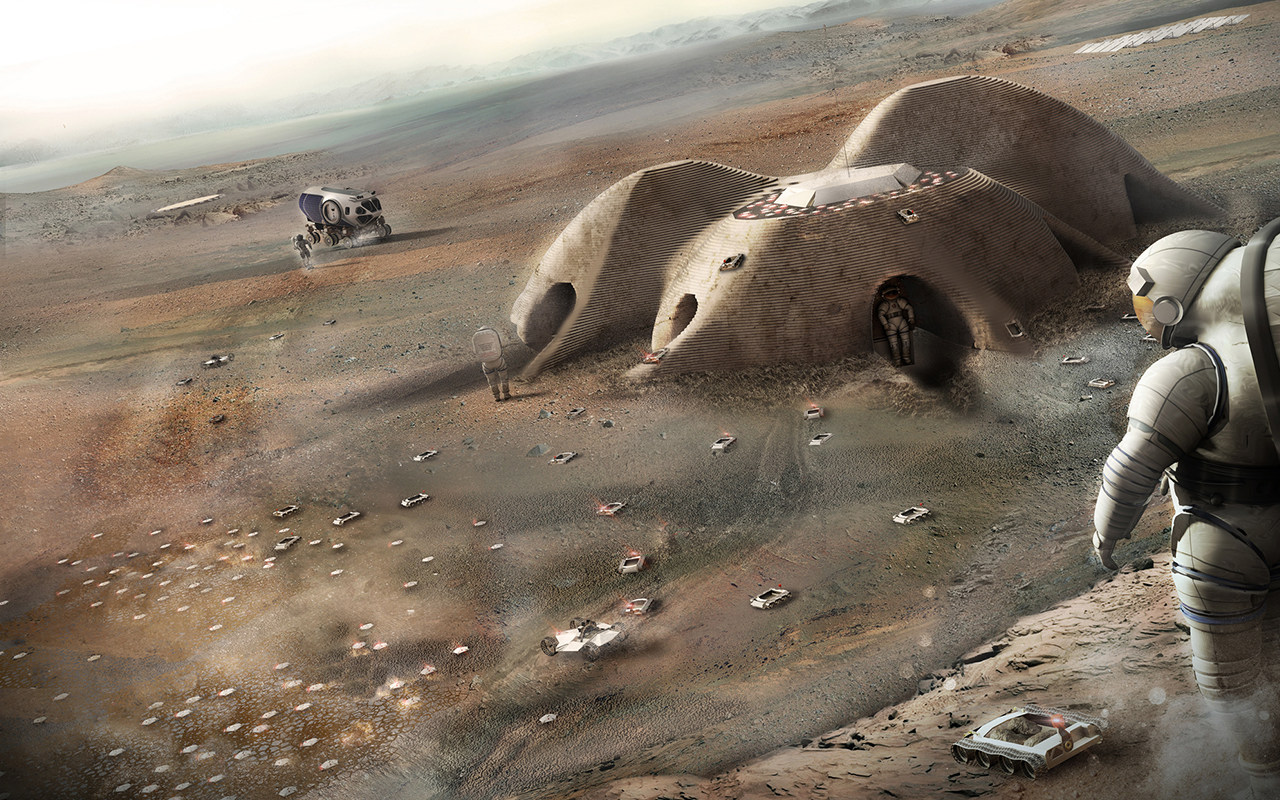
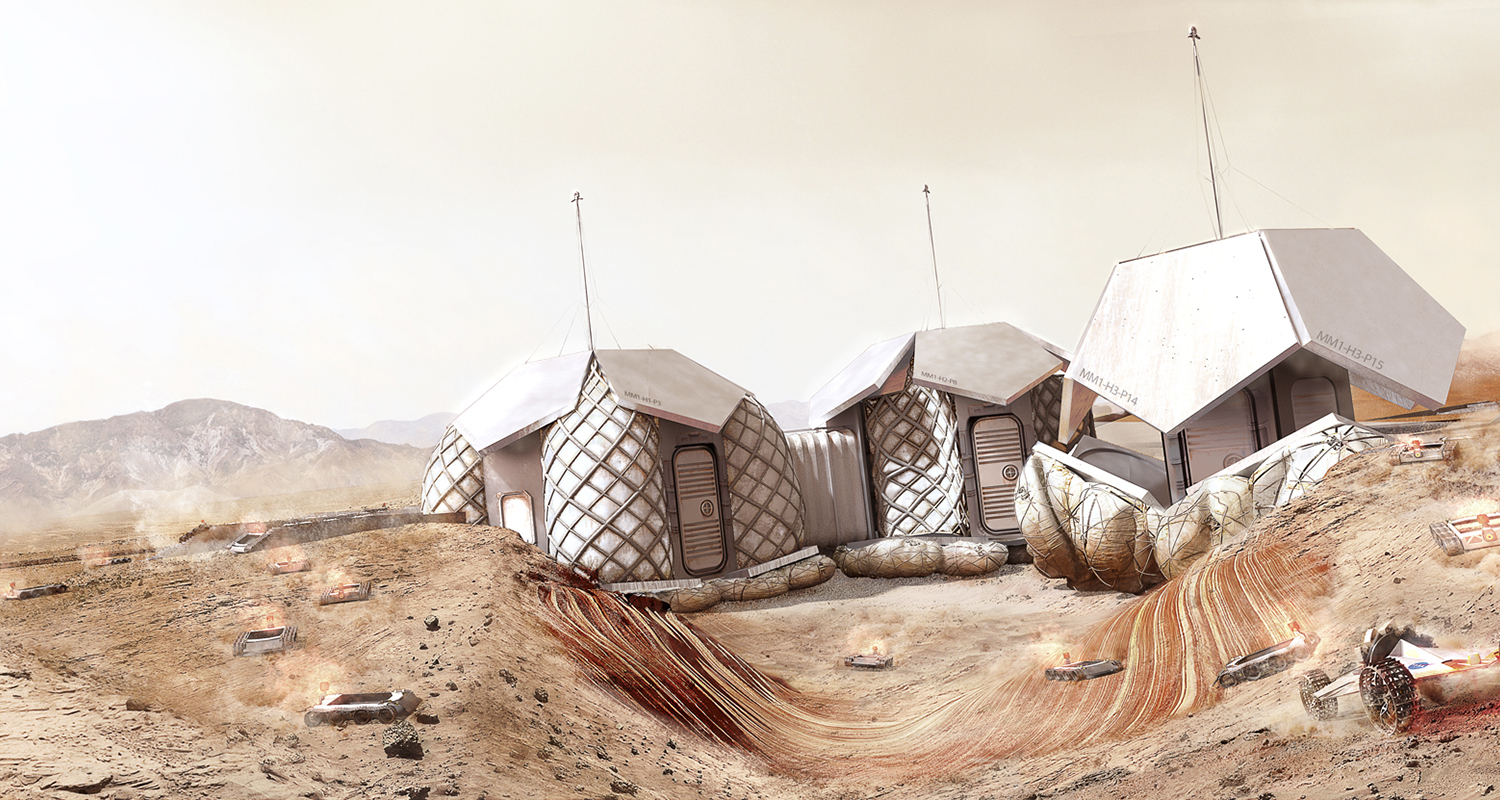
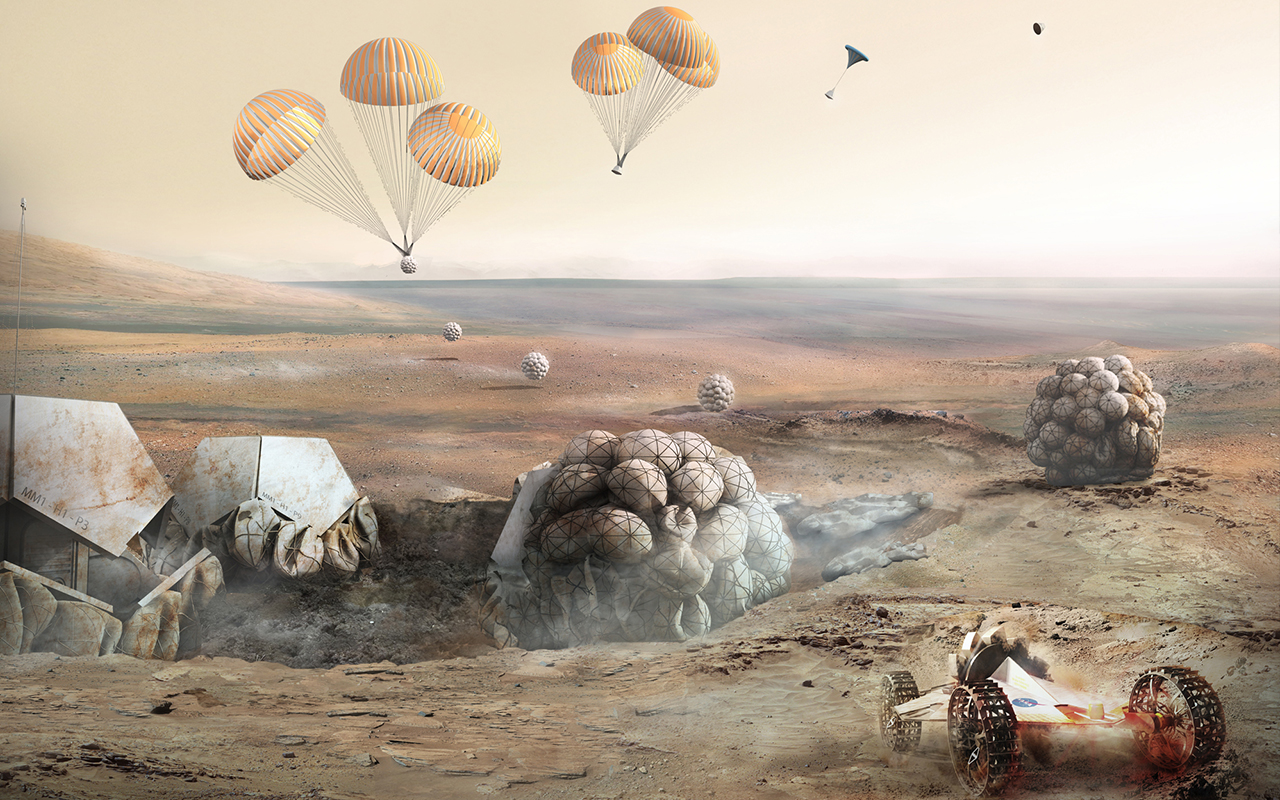
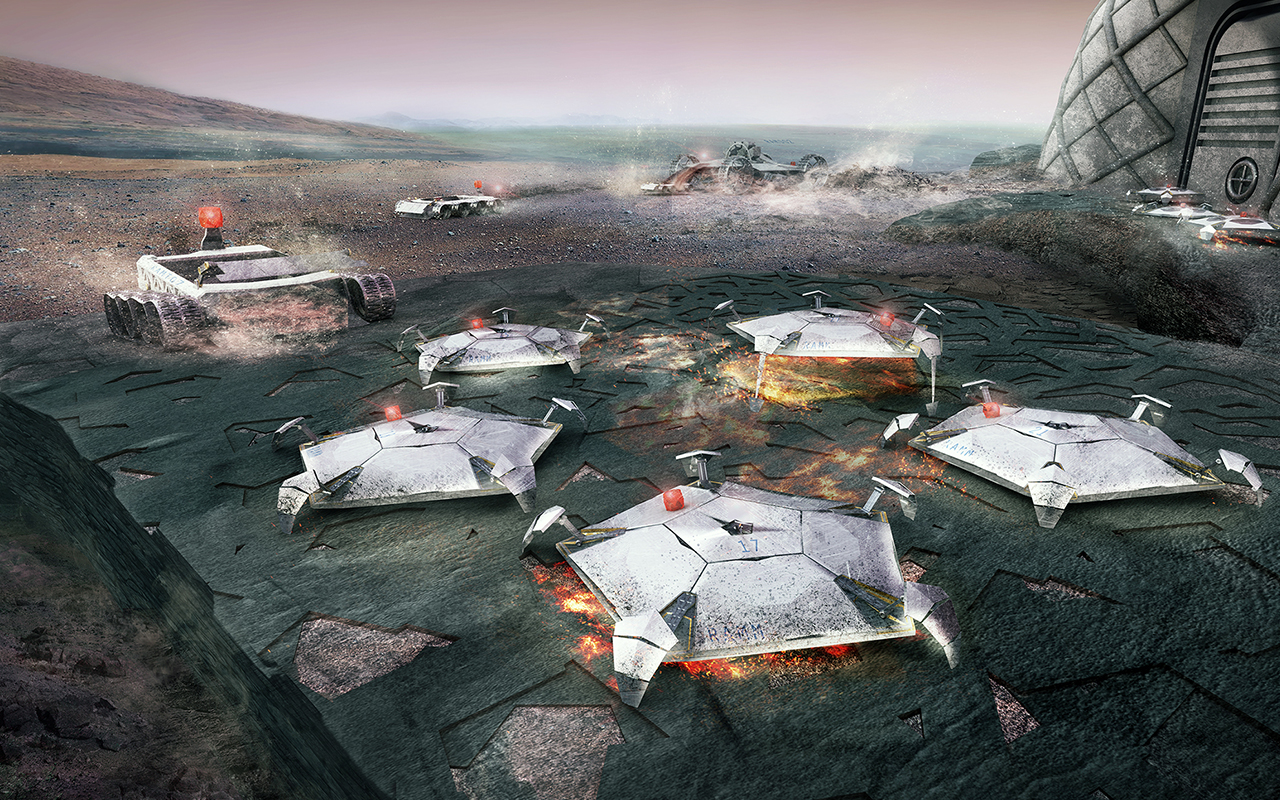
The 3D-Printed Habitat Challenge is run through a partnership with NASA’s Centennial Challenges Program and Bradley University in Peoria, Illinois. The goal of the challenge is to foster the development of technologies to manufacture a habitat using local indigenous materials with, or without, recyclable materials. The vision is that autonomous machines will someday be deployed in deep space destinations, including Mars, to construct shelters for human habitation. On Earth, these same capabilities could be used to produce affordable housing wherever it is needed or where access to conventional building materials and skills are limited.
“Seeing tangible, 3D-printed objects for this phase makes the goals of this challenge more conceivable than ever,” said Monsi Roman, program manager of Centennial Challenges. “This is the first step toward building an entire habitat structure, and the potential to use this technology to aid human exploration to new worlds is thrilling.”
The Level 1 Compression Test Competition is the first of three sub-competitions within Phase 2. For this stage, teams were tasked with developing 3D-printable materials, using a 3-D printer, and printing two samples: a truncated cone and a cylinder. Judges evaluated results from lab tests performed on the samples to determine a score.
A 3D printer created by the University of Alaska team prints a cone for their entry in the Level 2, Phase 1 Compression Test Competition of NASA’s 3D-Printed Habitat Competition. The university was awarded $14,070 for this stage of the challenge. Credits: Courtesy of University of Alaska
“Innovation is a key focus of Bradley University which is one of the many reasons we are so very proud to be a part of the 3D-Printed Habitat Challenge with NASA,” said Bradley University President Gary Roberts. “The winners of Phase 1 and this first stage of Phase 2 are to be commended for their innovation in creating a solution that will fit not only in our world but beyond. I look forward to the next phase and seeing teams work to advance critical systems needed for human space exploration like never before.”
In addition to the two teams that earned prize money, the other teams participating were: Bubble Base of Winston-Salem, North Carolina; Pennsylvania State University of University Park; CTL Group Mars of Skokie, Illinois; ROBOCON of Singapore; and Moon X Construction of Seoul, South Korea. The teams showcased a variety of approaches, ranging from traditional cement to exotic cellular structures.
Teams will now work toward the Level 2 Beam Member Competition, where they must print a beam to be tested. New teams may enter the competition if they can meet minimum requirements.
The 3D-Printed Habitat Challenge comprises three phases: Phase 1, the Design Competition, was completed in 2015. Phase 2, the Structural Member Competition, which carries a $1.1 million prize purse and focuses on the material technologies needed to create structural components. Phase 3, the On-Site Habitat Competition, and has a $1.4 million prize purse and focuses on fabrication technologies.
NASA’s Centennial Challenges Program uses competitions to draw citizen inventors from diverse backgrounds and disciplines to push technology forward for the benefit of space exploration. The Centennial Challenges Program, managed at NASA’s Marshall Space Flight Center in Huntsville, Alabama, is part of the agency’s Space Technology Mission Directorate. Bradley University has partnered with sponsors Caterpillar, Bechtel and Brick & Mortar Ventures to run the competition.
Foster + Partners California | Branch Technology has been awarded first-place in the NASA 3D-Printed Habitat Challenge, Phase 2: Level 1 Competition organized by NASA and Bradley University. The competition envisions a future where autonomous machines will help construct extra-terrestrial shelters for human habitation. This will also aid the development of technologies that advance fabrication capabilities on Earth.
While the final shelter will be a complex assembly of smaller building elements, the focus through the various stages of the challenge is to design and test individual prototypical building elements that can help demonstrate the suitability of the entire process from manufacture to construction and structural performance.
As part of this stage of the competition, teams were asked to use recycled mission materials and indigenous Martian regolith (soil) together to 3D-print a truncated cone and a cylinder, which were then subjected to compression testing to assess their suitability as structural components. Foster + Partners has been looking at the engineering geometry of the structures, while Branch Technology have brought their expertise with 3D-printing materials and methods to the project.
Developing optimized solutions that are specifically designed for the complexities of space travel, each of the proposals balances cost, weight, and structural performance against the stringent requirements of the long-term goal of extra-terrestrial habitation.
Having successfully completed Level 1, the team will now work toward the Level 2 Competition submission at the end of May, in which a beam will be printed to test spanning structures.
Lisa Tatge, Subsystem Engineer on the Spacecraft Operations Team for the Cassini Mission to Saturn joins us for an incredible interview about the Cassini mission and it’s upcoming Grand Finale.
Space news topics:
* WFIRST set for 2025 Launch, $3.2Billion Budget * Commercial Crew Q1 Progress Updates * First Detailed Images of a Star’s Accretion Disk from ALMA * French Guiana to resume launches * The Event Horizon Telescope will soon produce an image
TMRO is viewer supported:
TMRO:Space is a crowd funded show. If you like this episode consider contributing to help us to continue to improve. Head over to http://www.patreon.com/tmro for information, goals and reward levels.
Vera Mulyani, founder of Mars City Design joins hosts Chris and Karen Radcliff to talk about the future of Martian cities being designed today here on Earth.
In City News:
* Singapore tests a bus stop that’s a destination in itself * United Arab Emirates commits to building a city on Mars * Oslo’s downtown to become car-free by 2019 * Australia is testing apartments for heat stress * San Francisco’s red lanes are controversial, but working * China proposes “forest cities” to improve air quality
TMRO Cities is viewer supported as well:
TMRO Cities is a crowd funded show. If you enjoy this episode consider contributing to our Patreon campaign at https://www.patreon.com/tmro — THANK YOU to the Citizens of TMRO Space for helping to make TMRO Cities a possibility!
I quite enjoyed this history of the Ansari XPRIZE, which was won by Burt Rutan‘s team in October of 2004 after completing two flights to suborbital space by the SpaceShipOne (SS1) rocket plane within two weeks. The culmination of the $10M competition came about after many years of struggles by Peter Diamandis and his team to find sponsors, entrants, and prize money.
Martians Abroad is a refreshingly optimistic change of pace, but it makes no secret about its precedents. It’s an open homage to Robert Heinlein’s juveniles, as his novels with adolescent protagonists were called — and one of those juveniles in particular, 1963’s Podkayne of Mars. The parallels are numerous. Heinlein’s heroine goes by the nickname Poddy. Her brother’s name is Clark. And they’re both sent abroad from their Martian home.
It’s this loving, retro-futuristic vibe that helps make Martians Abroad so endearing. Harking back to a more innocent time — but without downplaying the tribulations of contemporary adolescence — Vaughn has crafted a tribute to the power of science fiction, evoking a giddy sense of wonder and adventure about space exploration, technology, and human ingenuity. And, yes, even about being young.
A “Opening the High Frontier” is about how to make spaceflight affordable to everyone. It is about the ideas and technologies that will allow us to affordably build a spacefaring civilization, to build cities on the Moon and Mars, to build Space Colonies and Satellite Solar Power Stations, and to mine the asteroids. It is about a combination of concepts, some known and some not so well known, that can be affordably built right now with existing technology, that can make this happen. It is about our path to an unlimited future, our path to Mars and the rest of the solar system, and someday, the first step on our journey to the stars. It is about Opening the High Frontier for everyone.


 )
) by
by 