** What’s Up: September 2021 Skywatching Tips from NASA – NASA JPL
What are some skywatching highlights in September 2021? Mercury provides a challenging target to spot in the fading light after sunset at the beginning of the month. Enjoy spotting two “fast” stars all month long: speedy Arcturus and fast-spinning Altair. Additional information about topics covered in this episode of What’s Up, along with still images from the video, and the video transcript, are available at https://solarsystem.nasa.gov/whats-up….
In September, Pegasus becomes increasingly prominent in the southeastern sky, allowing stargazers to locate globular star clusters and a nearby double star, Alpha Capricorni. Keep watching for space-based views of densely packed, spherical collections of ancient stars in visible and X-ray light.
A sampling of links to recent space policy, politics, and government (US and international) related space news and resource items that I found of interest (find previous space policy roundups here):
** 2021 Space Symposium | NASA Administrator Bill Nelson – NASA Video
NASA Administrator Bill Nelson speaks on our return to the Moon with Artemis, upcoming milestones for our science missions, the value of NASA in our everyday life, and more. Learn how NASA innovations improve daily life, and how our unique mission provides benefits in big and small ways: to create jobs, jumpstart businesses, and grow the economy.
** What The Next Space Station May Look Like – CNBC
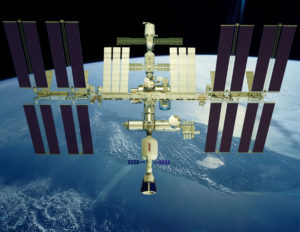
The International Space Station will likely be retired within the decade. NASA hopes to save money by having commercial companies build the next space outpost. Some companies including Sierra Space and Axiom Space are already working on a commercial space station. But the question is, will these stations be ready in time?
** Turbulent Week for US/China Space Relations, 1 km-long Space Station Project, 2 Launches in the Week – Dongfang Hour – YouTube
Hello and welcome to another episode of the Dongfang Hour China Space News Roundup! A kind reminder that we cover many more stories every week in our Newsletter (newsletter.dongfanghour.com). This week, we discuss:
00:00 Introduction 01:06 Turbulent week in US-China space relations 09:00 2 launches in a week 15:08 China’s Natural Science Foundation publishes the “Guidelines for the 14th Five-Year Plan first batch of projects”, hints at research on a 1-km long super space station
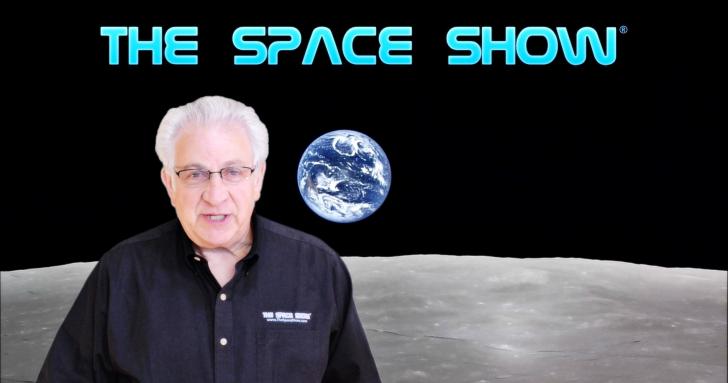
**The Space Show – Friday, Aug.27.2021 – Charles Precourt of Northrup Grumman discussed “Artemis, SLS, solid rocket boosters (SRBs), SRB propellant, lunar return timelines, human lunar lander, Gateway, Gateway lunar orbits, plus much more“.
Engineering teams have completed the James Webb Space Telescope’s long-spanning comprehensive testing regimen at Northrop Grumman’s facilities. Webb’s many tests and checkpoints were designed to ensure that the world’s most complex space science observatory will operate as designed once in space. Now that observatory testing has concluded, shipment operations have begun. This includes all the necessary steps to prepare Webb for a safe journey through the Panama Canal to its launch location in Kourou, French Guiana, on the northeastern coast of South America.
NISAR will provide maps of developing crop area on a global basis every two weeks. Observations will be uninterrupted by weather and provide up-to-date information on the large-scale trends that affect international food security. The NASA–ISRO Synthetic Aperture Radar (NISAR) mission, a collaboration between the National Aeronautics and Space Administration (NASA) and the Indian Space Research Organization (ISRO), will provide all-weather, day/night imaging of nearly the entire land and ice masses of the Earth repeated 4-6 times per month. NISAR’s orbiting radars will image and track subtle movement of the Earth’s land and its sea ice, and even provide information about what is happening below the surface. NISAR will also provide information on crop area and forest biomass over time and with enough detail to reveal changes on field scales.
On this Constellations Podcast learn how a Hollywood visual effects company is now helping satellite operations to visualize data. Listen to Tim McBride, President of Zoic Labs, describe how his company is using their experience in visual effects to bring sense to the complex and massive amounts of data coming from satellites. Mr. McBride shares how Zoic Labs has grown from their first project of mapping the world with the National Geospatial-Intelligence Agency to helping the U.S. Space Force and Air Force Research Laboratory see things in a different light.
During this week’s Space Café, SpaceWatch.Global publisher, Torsten Kriening caught up with California-based Danica Remy to discuss all things asteroids. With a career in social justice movements and “fabulous innovation”, Danica serves as President of the B612 Foundation, which leads private sector efforts in research, analysis and systems design to protect Earth from asteroids. Danica also co-founded the international program, Asteroid Day, which takes place each year on 30 June. The initiative is supported by a raft of rockstars (and rockstar scientists!), as well as governments, international space agencies and satellite companies. In 2016, it was sanctioned by the United Nations as an official day to increase global awareness and education of asteroids.
Asteroids are all around us, but have people forgotten the threat they pose to Earth since Armageddon hit our screens over 23 years ago? Or is an asteroid impact the existential crisis always lurking in the back of our minds? This week, Danica and Torsten discuss what measures the “new space revolution” is implementing to save our planet from a Hollywood doomsday scenario and how Asteroid Day is raising awareness of this issue. …
1. Tuesday, Aug. 31, 2021; 7 pm PDT (9 pm CDT, 10 pm EDT): We welcome back Dr. David Brin, sci-fi author, scientist and policy aficionado. He questions returning to the Moon!
2. Wednesday, Sept. 1, 2021: Hotel Mars TBA pre-recorded. See upcoming show menu on the home page for program details.
3. Friday, Sept. 3, 2021; 9:30-11 am PDT (11:30 am-1 pm CDT, 12:30-2 pm EDT): We welcome Roman Chiporukha of SpaceVIP for space tourism and space adventure travel.
4. Sunday, Sept. 5, 2021; 12-1:30 pm PDT (3-4:30 pm EDT, 2-3:30 pm CDT): No show today due to the U.S. Labor Day Holiday Weekend
Here is the latest episode in NASA’s Space to Ground weekly report on activities related to the International Space Station:
** International Space Station Crew Previews SpaceX CRS-23 Science – NASA
The astronauts aboard the International Space Station are ready for a big delivery of science experiments and supplies! From seeds to a robotic arm, NASA astronauts Megan McArthur and Shane Kimbrough discuss the investigations they are excited to welcome aboard station during SpaceX’s 23nd commercial resupply mission. The SpaceX CRS-23 mission is scheduled to arrive at the orbiting laboratory on August 29. Learn more about the science on this mission: https://go.nasa.gov/3lZ2Qa4
ESA astronaut Thomas Pesquet takes you on a tour of the International Space Station like no other. Filmed with a 360 camera, the Space Station 360 series lets you explore for yourself alongside Thomas’s explanation – starting with Europe’s science laboratory, Columbus. Columbus is not the Station’s largest module, but it is one of the best equipped. It is the place where European astronauts conduct most of their work on board and has an external platform that allows experiments to be exposed to the vacuum of space. In addition to science racks, Columbus offers storage space and even a new crew quarter for sleeping. Click and drag with your mouse or move your smartphone around see different angles and feel like you too are in space.
** Enter the airlock with Thomas Pesquet (in French with English subtitles available) – European Space Agency, ESA
ESA astronaut Thomas Pesquet gives a tour of the International Space Station’s airlock – the module used to prepare for and carry out spacewalks. In this video, Thomas provides an overview of the EMU spacesuit used for US spacewalks and its different components. The spacesuits can be adjusted depending on an astronaut’s size, but the gloves are customised to ensure each astronaut has maximum mobility in their hands and fingers. Thomas shows the cameras and lighting systems that allow astronauts to continue work when over the side of Earth not lit by the sun, the visors they put down during periods of harsh light and the cooling garments worn under the suits that keep their bodies at the right temperature. He also explains the equipment lock and the crew lock, where astronauts breathe in a controlled way to rid their blood of nitrogen and adjust to the lower pressure of space. Follow Thomas: http://bit.ly/ThomasPesquetBlog
** Amazing space station time-lapse shows Earth from Baja to South America – VideoFromSpace
Fly from Baja, California to the west coast of South America in this time-lapse. ESA astronaut Thomas Pesquet captured the footage from the International Space Station.
A sampling of links to recent space policy, politics, and government (US and international) related space news and resource items that I found of interest (find previous space policy roundups here):
** Workforce & Growth of Chinese Launch Companies, Shenzhou 12 Crew 2nd Spacewalk, Updates from Spacety – Dongfang Hour – YouTube
Hello and welcome to another episode of the Dongfang Hour China Space News Roundup! A kind reminder that we cover many more stories every week in our Newsletter (newsletter.dongfanghour.com). This week, we discuss:
1) The growth of Chinese launch companies measured in 2019-2020 workforce increase
2) Spacety and T4i Announce Collaboration
3) The second spacewalk (EVA) of the Shenzhou-12 crew
** A “Chinese New Shepard” by CAS Space, Round of Funding by Beijing Commercial Cargo Startup – Dongfang Hour – YouTube
Hello and welcome to another episode of the Dongfang Hour China Space News Roundup! A kind reminder that we cover many more stories every week in our Newsletter (newsletter.dongfanghour.com). Also, many of the links mentioned in the episode are available there. This week, we discuss:
1) A Chinese New Shepard? CAS Space eyes space tourism
2) Chinese startup Interspace Explore raises “tens of millions” of RMB, plans commercial cargo spacecraft in 2022
3) Guangzhou adds Satellite Internet to 14th Five-Year Plan
** The Space Show – Tuesday, Aug.17.2021 – Michael Listner discussed “the legal definition of the term astronaut and government plus non-government astronaut classifications for private sector spaceflight participants“.
the recent Russian ISS docking problem with the NAKUA module that sent the ISS spinning and tumbling until it was corrected. Anatoly talked about the possible cause, the actual impact and risks on the ISS, plus later we addressed the continued ISS leak that persists. Anatoly was asked if there was a competence problem with Russian hardware and/or management. In addition, he talked about the age of the ISS and the possibility of metal fatigue. Don’t miss all of what our guest said on these issues during our 11 minute discussion.
the Rothblatt Space Settlement In Our Lifetime Prize, https://spacebizplan.nss.org. Martine was only with us for 30 minutes but during that time, she talked about why space settlement was important, her vision for space settlement plus her vision for digitizing human consciousness in the future. This was an exciting 30 minutes as Martine painted an exciting future which is plausible as you will hear. Let us know what you think of her vision so please post your thoughts on our blog. Martine had time to respond to several listener questions a call before leaving. You can follow the tags and key words to this program for more detailed on what she had to say.
financing various types of space projects, including the most innovative, risky and often even fringe concepts. We talked about financing concepts before financing a solid project. Our guest started out by talking about NASA projects and missions during his time he was at JPL. He said most of the calls were for mission types, not specific missions, then he explained the difference and the evolutionary process from general missions to a specific mission. This was a detailed discussion which was followed by a look at the processes use by the Lockheed Martin Skunk Works. …
** The Space Show – Sunday, Aug.22.2021 – John Hunt “broke down the government unclassified UAP report delivered to the Senate last June. Lots of callers, much fun, seriousness as well so enjoy it“.
During this week’s Space Café, SpaceWatch.Global publisher Torsten Kriening sat down with Professor of Science and Technology Policy at the Graduate School of Public Policy at the University of Tokyo, Japan, Kazuto Suzuki. Having received his PhD at the University of Sussex, Professor Suzuki has worked internationally as a strategic policy analyst and advisor in space and military space policy, with research positions at the University of Tsukuba and the Fondation pour la Recherche Strategique in Paris. He has also served as an expert in the Panel of Experts for the Iranian Sanction Committee under the United Nations Security Council and contributed to the drafting of the Basic Space Law of Japan. He now serves as a member of Sub-committees of industrial policy and space security policy of the National Space Policy Commission. This week, he and Torsten discuss his home country’s place in the space race, and how as a late-starter like Germany, Japan has become a leading, spacefaring launch country whose ambitious plans for debris removal could change the fate of space for good. …