Here is the latest episode of NASA’s weekly Space to Ground report on activities related to the International Space Station:
** Kennedy’s Space Station Processing Facility Turns 25
Most International Space Station payloads are delivered to Kennedy Space Center’s Space Station Processing Facility (SSPF), which has played an integral role in spaceflight for a quarter century.
** T-60 Seconds with Andrew Morgan
You’ve got to know about a lot of different subjects to graduate from West Point, and then become a doctor, and then become an astronaut (when you have to know some of it in Russian!). But, can you think fast on your feet? NASA astronaut Andrew Morgan has fun with a rapid-fire Q-and-A on non-technical topics as he finishes up preparations to launch to the International Space Station.
** July 19: Live Apollo Anniversary Show
This July, we salute our Apollo heroes and look forward to new frontiers. Watch live and join us online, Friday, July 19 at 1 p.m. EDT for “NASA’s Giant Leaps: Past and Future” featuring Apollo astronauts, current astronauts, guest host Adam Savage and more.
A sampling of links to recent space policy, politics, and government (US and international) related space news and resource items that I found of interest:
On July 9, 2019, the Senate Subcommittee on Aviation and Space held a hearing titled, “NASA Exploration Plans: Where We’ve Been and Where We’re Going.” The purpose of this hearing was to honor the upcoming 50th anniversary of the National Aeronautics and Space Administration’s (NASA) Apollo 11 mission and the United States landing the first man on the moon. The hearing examined NASA’s plans for future human spaceflight missions. Invited witnesses were:
Dr. Christine Darden Data Analyst and Aerospace Engineer Researcher, National Aeronautics and Space Administration
Dr. Mary Lynne Dittmar President and Chief Executive Officer, Coalition for Deep Space Exploration
Homer Hickam Author, “Rocket Boys”
Gene Kranz Flight Director, Apollo 11
Eric Stallmer President, Commercial Spaceflight Federation
** The Space Show – Tue, 07/09/2019 – Dr. Namrata Goswami talked about “India’s space history & program, China space & lunar policy, US return to the Moon, deterrence as a goal, Space Force, commercial space development, international cooperation and more”.
A sampling of recent articles, videos, and images dealing with space transport:
** Russian Soyuz launches 33 satellites last wee including the primary Meteor-M No.2-2 weather satellite and 32 smallsats from a host of countries and organizations:
Drop Test of the demonstrator of the first stage of MIURA 5 orbital microlauncher. This project was part of ESA’s FLPP-LPSR programme. PLD Space successfully completed in April the first drop test with a full-scale demonstrator of the first stage of the MIURA 5 orbital rocket. As a result, we have documented assessment of all the recovery and reusable technologies that will help PLD Space to develop its recovery and reusability technology roadmap. One step closer to reusability in Europe!
With this, we have validated many operational procedures, including all recovery and reusability steps, as well as the telemetry down-links, among others. This project is part of the FLPP-LPSR program, promoted by the European Space Agency (ESA), supported by CDTI, INTA, Ejército de Tierra #FAMET#BHELTRAV and with the participation of Tecnalia.
Check out this ❄️ frosted 🚀 engine while being test fired – our liquid oxygen (LOX) cooling design is so effective that the temperature of the LOX after cooling the engine rose only to -148F while combustion inside the engine is at more than 5,300F. 3D @EOSGmbH by @3T_am_ltdpic.twitter.com/jXmN0vvPkr
An exciting morning at @RocketCrafters: A test firing of the company’s STAR-3D hybrid engine was safely aborted ~1.5 seconds post-ignition — still enough time for my cameras to capture images! I look forward to following & watching Rocket Crafters grow in the coming years. pic.twitter.com/lsLmFFGw56
Scientists from the China Academy of Launch Vehicle Technology have developed two insulating materials that can reduce propellant evaporation loss and keep rockets in flight for longer than before.
According to Zhang Shaohua, a member of the research team, a cryogenic rocket will face a severe thermal environment when it flies in orbit, which will cause lots of propellant evaporation, accelerate propellant loss and reduce the time in orbit.
Long term cryogenic propellant storage is important for space tugs and fuel depots.
** Canadian SpaceRyde developing a high-altitude balloon rocket launch system for orbiting smallsats:
According to Pete Swan, president of the ISEC (Int. Space Elevator Consortium), the development of space elevators is “Closer than you Think”:
There are two factors that lead to this conclusion:
The first is that the material for space elevator tethers has been discovered and is in the laboratory now. Single Crystal Graphene has been developed towards a continuous growth production concept (grow a single molecule very long – hundreds of meters) (currently at 0.5 x 0.1 meter single molecule one atom thick in laboratories). Adrian Nixon projected that future of very long molecules during his talk at our recent ISEC Webinar. The material is going to be available in the required strength and length for space elevators.
The second is that we (ISEC with the other organizations such as IAA, Obayashi Corporation, and JSEA) have conducted engineering studies and testing showing great progress across the engineering design segments of a space elevator. The following year long (IAAs and Obayashi were multi-year) studies have lead to the conclusion that the space elevator is ready to start testing the technologies needed inside each of its major segments and regions.
To add to this: NASA says SpaceX can use a previously flown booster on this mission.
IXPE is a small satellite, but this launch contract is less than what NASA paid for for the still-pending Pegasus XL launch of ICON ($56.3M in a 2014 contract). Think about that… https://t.co/sJlWVMHC5c
NASA and SpaceX practiced Crew Dragon rendezvous and docking to the International Space Station during a virtual dress rehearsal on June 26 for the company’s first crew flight test, known as Demo-2, to the microgravity laboratory
The activity is part of a series of integrated simulations bringing together NASA and SpaceX flight control teams to complete multiple practice runs for each dynamic phase of a mission from launch to splashdown. These simulations provide the teams plenty of practice to ensure they safely and successfully perform the planned operations of the actual spaceflight, with opportunities to fine-tune their procedures and gain experience on how to solve problems should they arise.
SpaceX CEO Elon Musk has revealed the latest official photo of the company’s Raptor engine in action and indicated that a major technical issue with vibration appears to have been solved, hopefully paving the way for Starhopper’s first untethered flights.
Partly due to Musk’s own involvement in the program, SpaceX’s propulsion development team have struggled to get any single Raptor engine to survive more than 50-100 seconds of cumulative test fires. According to information from sources familiar with the program, Musk has enforced an exceptionally hardware-rich development program for the first full-scale Raptor engines to such an extent that several have been destroyed so completely that they could barely be used to inform design optimization work. Although likely more strenuous and inefficient than it needed to be, the exceptionally hardware-rich test program appears to have begun to show fruit, with the sixth engine built (SN06) passing its first tests without exhibiting signs of a problem that has plagued most of the five Raptors that came before it.
A Tweet from Elon on the rocket engine development process:
Between first development engine & first flight engine with operational payload, there are always hundreds of changes to both hardware & software. Over time, thousands.
*** Assembly of the Starhopper and two orbital Starship demonstrators appear to be moving along:
The crews at #SpaceX are making excellent progress on #StarShip🚀, I have a lot of respect for the team here! The Texas sun is no joke and having StarShip as a reflector, probably doesn’t help.😅 #StarHopper sitting on the pad, awaiting for Raptor SN6!🔥🔥🚀 pic.twitter.com/J4PIjk39r1
A sampling of links to recent space policy, politics, and government (US and international) related space news and resource items that I found of interest:
Professor Bland, from Curtin’s School of Earth and Planetary Sciences, said a Curtin team of 12 staff and student engineers developed the miniaturised satellite.
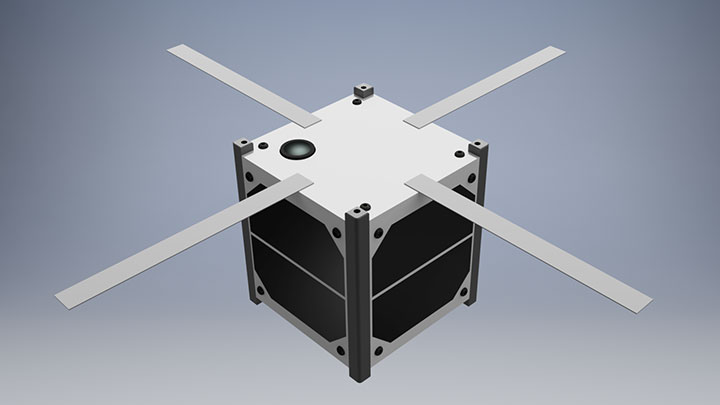
“The Curtin team has managed to put all the systems required to operate the satellite, including the power, computer, steering and communications, on a single eight-layer printed circuit board, which at 10cm by 10cm by 2.5cm is about the size of a rather small sandwich,” Professor Bland said.
“Having everything on a single circuit board means there is more room for what the satellite is carrying, which in this case will be a camera that will capture beautiful images of Australia taken from orbit.”
A diagram of the CubeSat in development in the Binar Cubesat Program at Curing University.
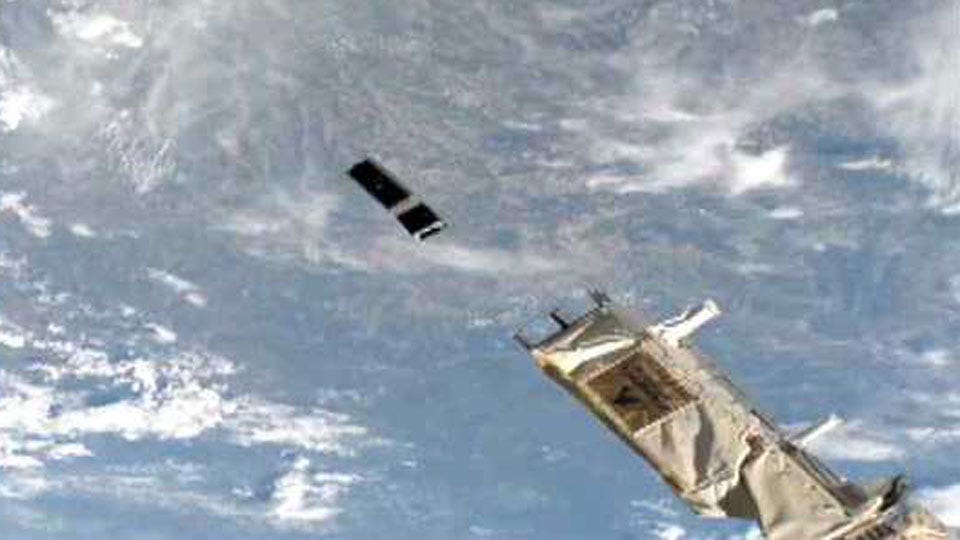
Three Virginia university satellites were deployed into nearly simultaneous orbit from the International Space Station via the NanoRacks CubeSat Deployer at 10:50 a.m. EDT this morning. The Virginia CubeSat Constellation mission is a collaborative project of the Virginia Space Grant Consortium and four of its member universities: Old Dominion University (ODU), Virginia Tech (VT), University of Virginia (UVA), and Hampton University (HU). The three nano-satellites, each about 4 inches cubed and weighing approximately 3 pounds, have been developed and instrumented (one each at ODU, VT and UVA) to obtain measurements of atmospheric properties and quantify atmospheric density with respect to orbital decay.
Deployment of three Virginia CubeSat Constellation satellites from the ISS. Photo credits: Virginia Space Grant Consortium
Data collected will ultimately contribute to the scientific knowledge base around orbital decay and will be widely shared. Ground stations at UVA, ODU and Virginia Tech will now begin making contact with their satellites. Data analysis will take place using an analytical tool being developed by students from Hampton University’s Atmospheric and Planetary Sciences Department.
“To know that all three satellites are now in orbit is extremely gratifying. Kudos to the students who have worked hard and gained immeasurable knowledge and experience from participating in this student-led mission and to the faculty who have advised them,” said Mary Sandy, Virginia Space Grant director and mission principal investigator. “Achieving Earth orbit is a huge mission milestone. These are the first student-developed satellites in orbit for all three of the universities.”
…
More than 150 undergraduate students across many disciplines at the participating universities have worked on the mission for the past three years under the guidance of faculty advisors
KRAKsat is a project focused on sending scientific satellite into space, made by students of University of Science and Technology and Jagiellonian University. Not only it is one of the first Cubesat type satellites in Poland but also the first satellite in the world which uses magnetic liquid, called ferrofluid, for orientation control.
A CubeSat from the Polish company SatRevolution was also deployed from the ISS along with KRAKsat. Find updates on the two projects at
UPDATE: The #LightSail2 mission team has opted to spend another day testing the spacecraft’s attitude control system. Sail deployment now expected no earlier than Tuesday, 9 July. The spacecraft is healthy. https://t.co/PvaKKe0iIr
— Planetary Society (@exploreplanets) July 8, 2019



 .
.