F-1 engines recovered by Bezos venture are from Apollo 11

Bezos Expeditions, which is funded by Jeff Bezos of Amazon.com, has confirmed that the F-1 rocket engines they recovered from the Atlantic ocean floor are in fact from the Apollo 11 Saturn vehicle: F-1 Engine Recovery – Bezos Expeditions

SERIAL NUMBER 2044

When we stepped off the Seabed Worker four months ago in Port Canaveral, we had enough major components to fashion displays of two flown F-1 engines. We brought back thrust chambers, gas generators, injectors, heat exchangers, turbines, fuel manifolds and dozens of other artifacts – all simply gorgeous and a striking testament to the Apollo program. There was one secret that the ocean didn’t give up easily: mission identification. The components’ fiery end and heavy corrosion from 43 years underwater removed or covered up most of the original serial numbers. We left Florida knowing the conservation team had their work cut out for them, and we’ve kept our fingers crossed ever since.

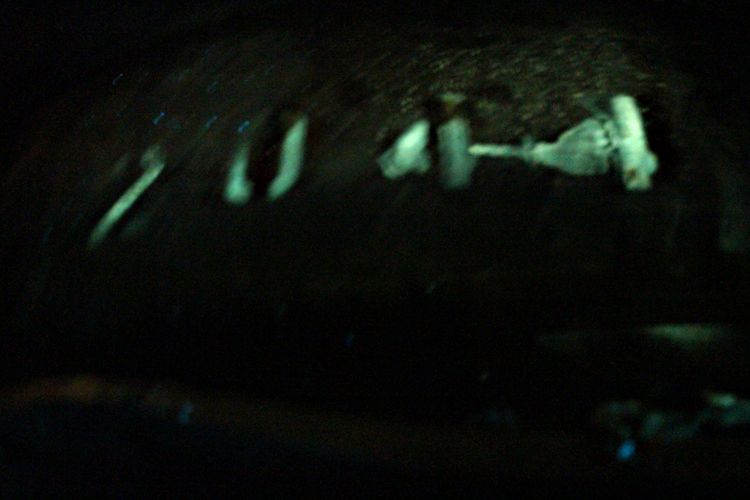
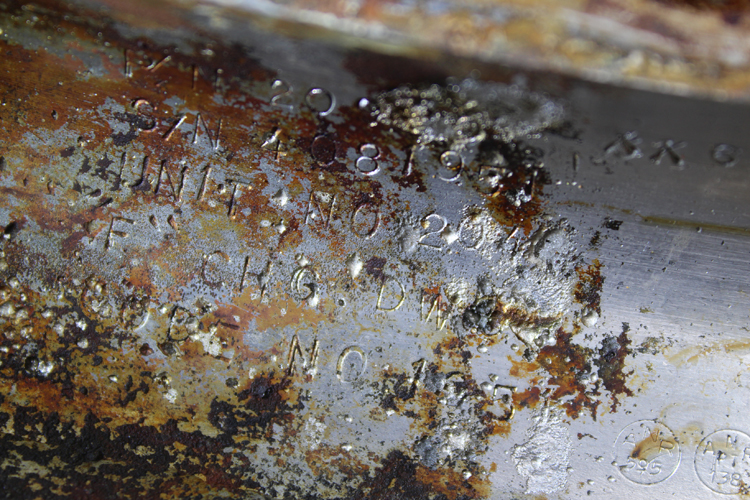
Today, I’m thrilled to share some exciting news. One of the conservators who was scanning the objects with a black light and a special lens filter has made a breakthrough discovery – “2044” – stenciled in black paint on the side of one of the massive thrust chambers. 2044 is the Rocketdyne serial number that correlates to NASA number 6044, which is the serial number for F-1 Engine #5 from Apollo 11. The intrepid conservator kept digging for more evidence, and after removing more corrosion at the base of the same thrust chamber, he found it – “Unit No 2044” – stamped into the metal surface.
Bezos Expeditions

Bezos Expeditions

44 years ago tomorrow Neil Armstrong stepped onto the moon, and now we have recovered a critical technological marvel that made it all possible. Huge kudos to the conservation team at the Kansas Cosmosphere and Space Center in Hutchinson, Kansas. Conservation is painstaking work that requires remarkable levels of patience and attention to detail, and these guys have both.

This is a big milestone for the project and the whole team couldn’t be more excited to share it with you all.

Sincerely,

Jeff

===

See also

Space policy roundup – July.19.13

Some space policy related items for today:


Neutron star collisions are golden

That gold in your rings probably didn’t come from a supernova but from the big super collision of two neutron stars:


Music video: “The Thought of Floating in Space” by Simon Lacey with violinist Jack Liebeck

Composer Simon Lacey points me to his new music video, The Thought of Floating In Space with Jack Liebeck on solo violin. It combines marvelous views of earth taken from the International Space Station with gorgeous music.

The work is part of Lacey’s project A Quarter Of A Million Miles, which was inspired by Michael Collins’ famous book Carrying The Fire in which Collins described his role as the Command Module pilot during the Apollo 11 mission.

Collins’ poetic and eloquent account conveys the infinity and beauty of space and tells the story of humans pushing themselves up to (and possibly beyond) what was thought possible. The style and sound of the music is an attempt to evoke this story – melodic classical influences combined with a modern, cinematic production, half of the pieces featuring a classical soprano and the others having a solo violin at the forefront. Real instruments are combined with sound effects, atmospheres, synths and snatches of speech from the Apollo mission to give the pieces a unique flavour.

The status of the album:

The first recording sessions for A Quarter Of A Million Miles took place in London in December 2012 with some very exciting and talented collaborators and the album is scheduled to be completed in 2013. The soprano parts are sung by classical chart topper and Classical Brit nominee Natasha Marsh and the violin solos were performed by Jack Liebeck, who was recently featured on the soundtracks to the films Jane Eyre and Anna Karenina and was a Classical Brit winner in 2010 for Young British Classical Performer.

The Space Show: The Evoloterra ceremony + Mars 2020

In what has become an annual tradition, Rand Simberg and Bill Simon came on the Space Show to discuss the Evoloterra ceremony they created to celebrate when humans landed for the first time on another world.  Rand Simberg, Bill Simon, EVOLOTERRA, Tuesday, 7-16-13 | Thespaceshow’s Blog

TheEvoloterra program

remembers and honors the first time humans left Earth for another planet.  Apollo 11 launched for the Moon on July 19, 1969 and landed on the Moon on July 20, 1969.  You can learn more about Evoloterra and actually do the ceremony this Saturday evening, July 20, with your friends and families by visiting www.evoloterra.com.  Click on the astronaut’s helmet to go to the pdf of the Evoloterra ceremony.

They also discussed Rand’s new book, Safe Is Not an Option and various aspects of space policy and history.

===

In the latest Hotel Mars segment on The John Batchelor Show, the plans for the Mars 2020 rover (see earlier post here) were discussed: The John Batchelor Show Hotel Mars, Wednesday, 7-17-13 | Thespaceshow’s Blog.

Everyone can participate in space