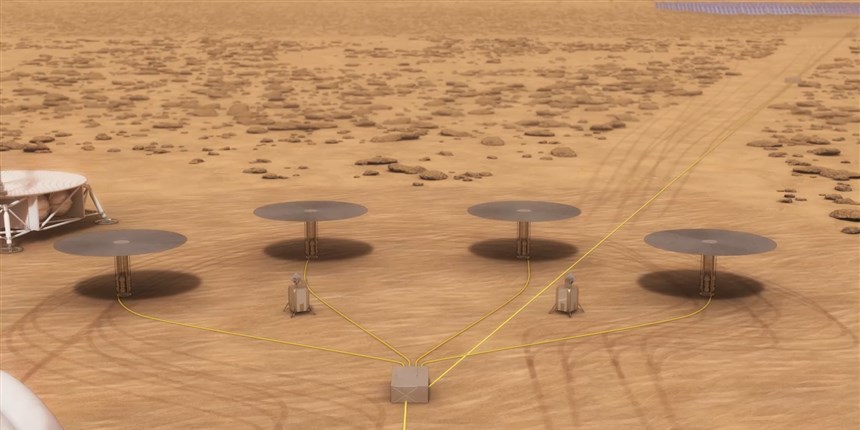
Here is the latest Space to Ground report from NASA on activities related to the International Space Station:
A video about a new low-temperature research system going to the ISS:
An experiment in self-replicating systems on the ISS:
=====
Here is the latest Space to Ground report from NASA on activities related to the International Space Station:
A video about a new low-temperature research system going to the ISS:
An experiment in self-replicating systems on the ISS:
=====
Some miscellaneous rocket related items:
** Antares/Cygnus Launch: Orbital ATK is set to launch an Antares rocket early Sunday morning, May 20th from Wallops Island, Virginia to send a Cygnus cargo spacecraft to the International Space Station. There is a five-minute launch window at 5:04-5:09 am EDT (0904-0909 GMT).
[ Update: The launch has slipped to Monday: OA-9 Mission – Orbital ATK.]

Depending on the weather conditions, the launch should be visible over a large area along the East Coast. Check these sites for info on viewing opportunities:
For the OA-9 Mission, the Cygnus will carry 3,350 kg (7,385 lb) of supplies, equipment, science and technology R&D experiments, etc. Here are articles about the science and technology payloads:
** Falcon 9 Block 5: Here is a description of the new Block 5 version of SpaceX Falcon 9 rocket and an overview of why it is so significant: With Block 5, SpaceX to increase launch cadence and lower prices – NASASpaceFlight.com
The Everyday Astronaut gives his explanation of what the Block 5 is all about:
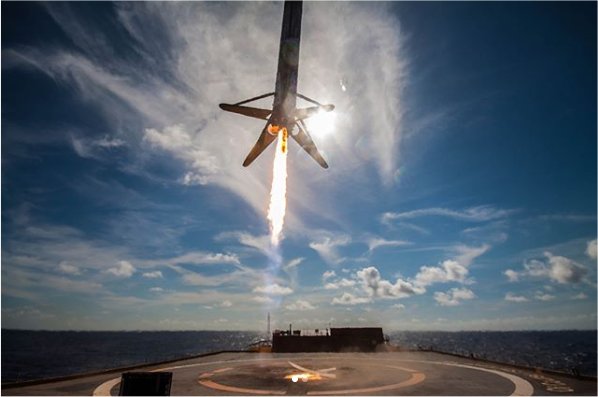
A view of the Block 5 first stage booster coming down for a landing after launching Bangladesh’s first satellite on May 11th:
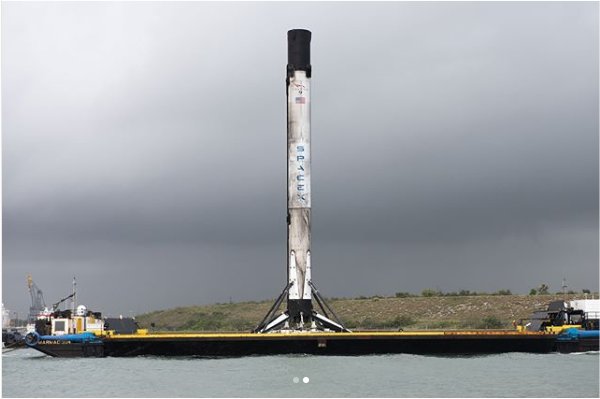
And here is the booster coming into Port Canaveral for inspection and eventual re-flight:
An amateur video of the launch from nearby Playa Linda Beach:
A beautifully made short film by Ryan Chylinski for SpaceFlight insider:
** Nexø II: This summer Copenhagen Suborbitals plans to launch Nexø II, the most advanced rocket the all-volunteer group has ever flown. This video walks “you through the engine section of the rocket”:
Here is recent report on the testing of the rocket
** Chinese commercial rockets: Startup rocket companies have started appearing in China in the past couple of years. This week, for example, OneSpace Technologies flew a rocket on a suborbital test to 40 km: Chinese company OneSpace sends OS-X rocket to 40 km in maiden flight – GBTimes.
Link Space is developing rockets with reusable first stages in the manner of SpaceX. Here is a Chinese TV news report on the company:
====
The latest news from ESO (European Southern Observatory):
ALMA and VLT Find Evidence for Stars Forming
Just 250 Million Years After Big Bang
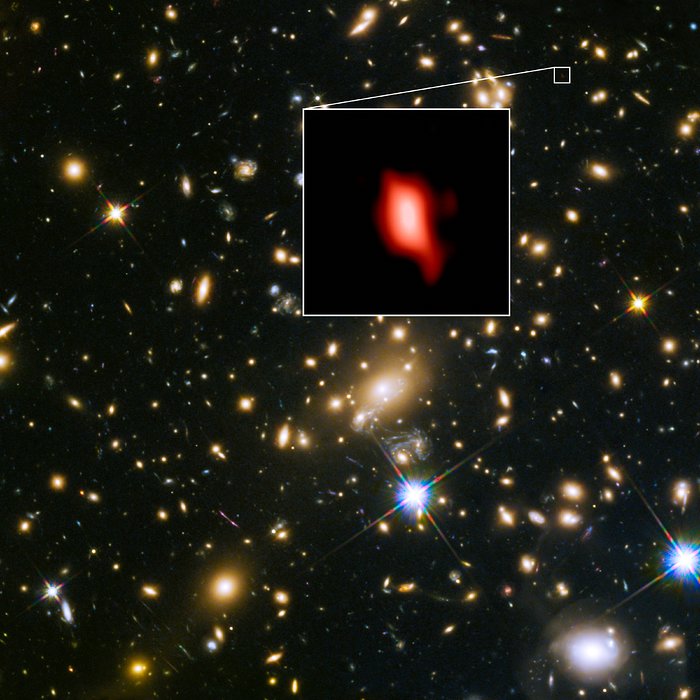
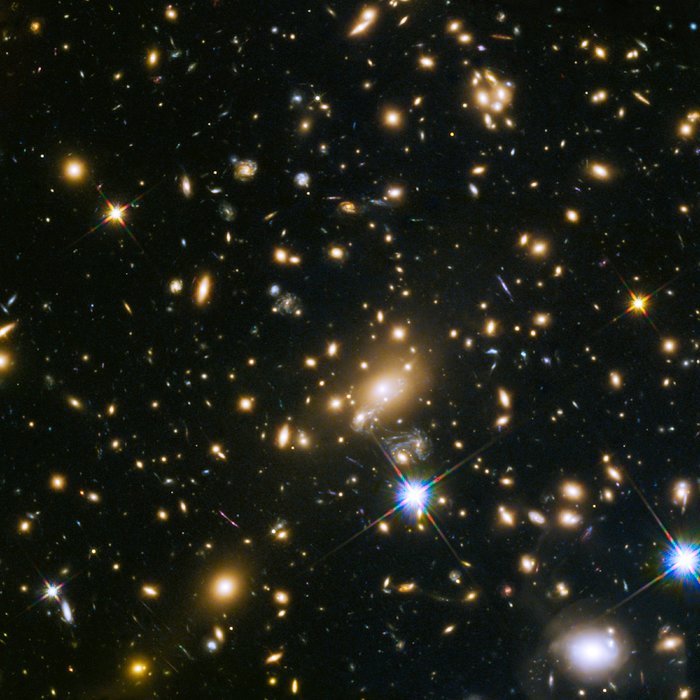
Astronomers have used observations from the Atacama Large Millimeter/submillimeter Array (ALMA) and ESO’s Very Large Telescope (VLT) to determine that star formation in the very distant galaxy MACS1149-JD1 started at an unexpectedly early stage, only 250 million years after the Big Bang. This discovery also represents the most distant oxygen ever detected in the Universe and the most distant galaxy ever observed by ALMA or the VLT. The results will appear in the journal Nature on 17 May 2018.
An international team of astronomers used ALMA to observe a distant galaxy called MACS1149-JD1. They detected a very faint glow emitted by ionised oxygen in the galaxy. As this infrared light travelled across space, the expansion of the Universe stretched it to wavelengths more than ten times longer by the time it reached Earth and was detected by ALMA. The team inferred that the signal was emitted 13.3 billion years ago (or 500 million years after the Big Bang), making it the most distant oxygen ever detected by any telescope [1]. The presence of oxygen is a clear sign that there must have been even earlier generations of stars in this galaxy.
“I was thrilled to see the signal of the distant oxygen in the ALMA data,” says Takuya Hashimoto, the lead author of the new paper and a researcher at both Osaka Sangyo University and the National Astronomical Observatory of Japan. “This detection pushes back the frontiers of the observable Universe.”
In addition to the glow from oxygen picked up by ALMA, a weaker signal of hydrogen emission was also detected by ESO’s Very Large Telescope (VLT). The distance to the galaxy determined from this observation is consistent with the distance from the oxygen observation. This makes MACS1149-JD1 the most distant galaxy with a precise distance measurement and the most distant galaxy ever observed with ALMA or the VLT.
“This galaxy is seen at a time when the Universe was only 500 million years old and yet it already has a population of mature stars,” explains Nicolas Laporte, a researcher at University College London (UCL) in the UK and second author of the new paper. “We are therefore able to use this galaxy to probe into an earlier, completely uncharted period of cosmic history.”
For a period after the Big Bang there was no oxygen in the Universe; it was created by the fusion processes of the first stars and then released when these stars died. The detection of oxygen in MACS1149-JD1 indicates that these earlier generations of stars had been already formed and expelled oxygen by just 500 million years after the beginning of the Universe.
But when did this earlier star formation occur? To find out, the team reconstructed the earlier history of MACS1149-JD1 using infrared data taken with the NASA/ESA Hubble Space Telescope and the NASA Spitzer Space Telescope. They found that the observed brightness of the galaxy is well-explained by a model where the onset of star formation corresponds to only 250 million years after the Universe began [2].
The maturity of the stars seen in MACS1149-JD1 raises the question of when the very first galaxies emerged from total darkness, an epoch astronomers romantically term “cosmic dawn”. By establishing the age of MACS1149-JD1, the team has effectively demonstrated that galaxies existed earlier than those we can currently directly detect.
Richard Ellis, senior astronomer at UCL and co-author of the paper, concludes:
“Determining when cosmic dawn occurred is akin to the Holy Grail of cosmology and galaxy formation. With these new observations of MACS1149-JD1 we are getting closer to directly witnessing the birth of starlight! Since we are all made of processed stellar material, this is really finding our own origins.”
Notes
[1] ALMA has set the record for detecting the most distant oxygen several times. In 2016, Akio Inoue at Osaka Sangyo University and his colleagues used ALMA to find a signal of oxygen emitted 13.1 billion years ago. Several months later, Nicolas Laporte of University College London used ALMA to detect oxygen 13.2 billion years ago. Now, the two teams combined their efforts and achieved this new record, which corresponds to a redshift of 9.1.
[2] This corresponds to a redshift of about 15.
A re-examination of data from the Galileo probe that orbited Jupiter from 1995 to 2003 indicates that a 1997 pass near Europa flew through a plume of water vapor emitted from the moon: Old Data Reveal New Evidence of Europa Plumes – NASA JPL
Scientists re-examining data from an old mission bring new insights to the tantalizing question of whether Jupiter’s moon Europa has the ingredients to support life. The data provide independent evidence that the moon’s subsurface liquid water reservoir may be venting plumes of water vapor above its icy shell.
Data collected by NASA’s Galileo spacecraft in 1997 were put through new and advanced computer models to untangle a mystery — a brief, localized bend in the magnetic field — that had gone unexplained until now. Previous ultraviolet images from NASA’s Hubble Space Telescope in 2012 suggested the presence of plumes, but this new analysis used data collected much closer to the source and is considered strong, corroborating support for plumes. The findings appear in Monday’s issue of the journal Nature Astronomy.
More about the new findings in old data:
====
Next Big Coins hosts the latest Carnival of Space.