A sampling of links to recent space policy, politics, and government (US and international) related space news and resource items that I found of interest (find previous space policy roundups here):
- Schedule:
- Biden space:
- Biden Team Engaging with NASA, Industry – SpacePolicyOnline.com
- Biden space advisers urge cooperation with China – POLITICO
- Space Force Officials Meet with Biden Team as First Anniversary Nears – SpacePolicyOnline.com
- Gen. John W. Raymond, Space Force chief of space operations, begins Joe Biden transition team talks – Washington Times
- Trump space:
- White House Releases Space Nuclear Power and Propulsion Policy Directive – SpacePolicyOnline.com
- White House releases space nuclear power strategy – SpaceNews
- Memorandum on the National Strategy for Space Nuclear Power and Propulsion (Space Policy Directive-6) | The White House
- NASA Supports America’s National Strategy for Space Nuclear Power and | NASA
- White House Paves Policy For Nuke-Powered Rockets & Reactors On Moon – Breaking Defense
- Op-ed | Space commerce accelerating – SpaceNews
- What you may have missed in the new National Space Policy – Brookings
- NASA selects the next Artemis moonwalkers while SpaceX flies a Starship | TheHill
- Trump will leave a lasting mark on space – Axios
- Congressional space:
- Senate Passes NASA Authorization Bill as 116th Congress Comes to A Close – SpacePolicyOnline.com
- House passes two space bills – SpaceNews
- House Passes Legislation to Protect Lunar Heritage Sites – SpacePolicyOnline.com
- House Passes Peters Bipartisan Legislation to Protect the Apollo Landing Sites – U.S. Senator Gary Peters of Michigan
- NASA launch:
- NASA Management:
- SLS/Orion:
- Lunar programs:
- Mars programs:
- Space industry:
- Commercial space:
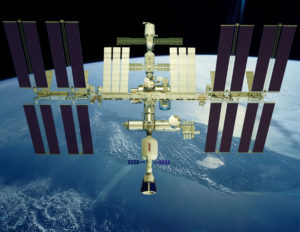
- ISS:
- Utilizing the International Space Station to enable humans to reach Mars | TheHill
- New Science Airlock Expands Station’s Research Capacity – Space Station/NASA
- SpaceX CRS21 Delivers Life Science to the ISS National Lab – ISS National Lab
- MIT Tests Smart, Electronic Textiles for Spacesuits and Spacecraft – ISS National Lab
- Regulation/Spectrum:
- Space law:
- UN and NASA to promote peaceful use of outer space – SpaceWatch.Global
- NASA Administrator Signs Statement of Intent with Brazil on Artemis | NASA
- Breaking Ground – A Lunar Resources Trust, Signed Its First MoU – SpaceWatch.Global
- “Breaking Ground” – A Lunar Resources Trust – Open Lunar Foundation
- NASA Nudges Space Policy in Pro-Commerce Direction – National Review
- Space traffic:
- US states space:
- US Defense space:
- Launch:
- Commercial tech :
- Space Force commander explains how the new military service operates like a startup | TechCrunch
- And the Answer Is — Guardians – SpacePolicyOnline.com
- Op-ed | What’s next for Space Force as it celebrates its first anniversary – SpaceNews
- Space Force trying to change negative perceptions about military procurement – SpaceNews
- Space Force Commands Working Together to Grow in Year Two – Air Force Magazine
- Space Force Poised to See Major Growth, New Uniforms in 2021 | Military.com
- Building a 21st-Century Space Force – The Atlantic
- Activism:
International space
- Global:
- Brazil:
- Canada:
- China:
- China Future Space Goals Detailed – LeonardDavid.com
- Biden space advisers urge cooperation with China – POLITICO
- China plans to launch four manned spacecraft in next two years – Xinhua
- China Focus: China to encourage international cooperation on moon research – Xinhua
- Why Is China Going to the Moon? – The Diplomat
- Next lunar mission to sample pole or far side – ecns.cn
- China lands its Moon rocks in Inner Mongolia – Science/AAAS
- China’s Lunar Sample Return Capsule Successfully Recovered – SpacePolicyOnline.com
- Chinese sample return capsule lands on Earth after round-trip flight to moon – Spaceflight Now
- China recovers Chang’e-5 moon samples after complex 23-day mission – SpaceNews
- Commentary: China’s new samples a fresh start for lunar research, space exploration – Xinhua
- China to encourage international cooperation on moon research – Xinhua
- China to share portion of lunar samples with other countries – CGTN
- Moon exploration will call for laws and cooperation, is it possible? – CGTN
- China slowly catching up in the race to space – Asia Times
- Europe
- First European Service Module for Artemis accepted and handed over to NASA – Airbus
- ESA Council appoints Josef Aschbacher as next ESA Director General – ESA
- New ESA director general sees EU relations and commercialization as priorities – SpaceNews
- ArianeGroup signs contract with ESA to develop Themis reusable stage demonstrator – ArianeGroup
- ESA and CNES sign contract to maintain and modernise Spaceport- ESA
- ESA partnering on UK’s new space thruster test site – ESA
- India:
- India launches PSLV rocket with CMS-01 communications satellite – NASASpaceFlight.com
- India launches CMS-01 communications satellite – SpaceNews
- ISRO successfully launches India’s 42nd communication satellite CMS-01 – Business Insider India
- PM meets space industry leaders; Spaceport in Tuticorin, fund for startups on agenda – Hindustan Times
- Indonesia:
- Japan:
- Asteroid dust recovered from Japan’s daring Hayabusa2 mission – Nature
- JAXA: Hayabusa2 mission complete success | NHK WORLD
- Japan scientists left ‘speechless’ by samples from asteroid 300 million km away | South China Morning Post
- Japan’s Office of National Space Policy signs historic MOU with the U.S. Space Force – United States Space Force
- Russia:
- Russia’s space chief cannot seem to get “gentle” SpaceX out of his mind | Ars Technica
- Developer of Russian Space Robot Dismisses ‘Absurd’ Claims His Creation Caused Fissure on ISS – Sputnik International
- Vostochny space center to carry out first fully commercial launch on Friday – TASS
- Launch of the Angara-A5 rocket went perfectly, Roscosmos Chief says – TASS
- Russia Launches Angara-5 After Six Year Hiatus – SpacePolicyOnline.com
- Russia’s Roscosmos chief confirms plans to launch two Angara carrier rockets in 2021 – TASS
- Roscosmos CEO skeptical about US program Artemis in its current shape – TASS
- US must take care of its Moon orbiter’s compatibility with Russian spacecraft – Roscosmos – TASS
- Russia has launched an anti-satellite missile test, US Space Command says | Space.com
- Russia tests direct-ascent anti-satellite missile – United States Space Command
- Space Force official: Russian missile tests expose vulnerability of low-orbiting satellites – SpaceNews
- UK:
Webcasts:
** China Aero & Space Weekly News Round-Up – Episode 12 (14th -20th Dec. 2020) – Dongfang Hour – YouTube
Topics discussed include:
1) Long March 8 Launch on Sunday 20/12
2) Chang’e-5 Return to Earth
3) New JV between China Eastern, Juneyao Group, and China Telecom
4) Baidu is Considering Making its own Electric Vehicle
** David Buehler – How Is CHPS [Cislunar Highway Patrol System] Going To Benefit Space Force? – Cold Star Technologies – YouTube
Captain David Buehler of the Air Force Research Lab’s Space Vehicles Directorate is on the Cold Star Project to talk about the CHPS program. The CHPS program will monitor cislunar space, extending to 272,000 and beyond: a 10X reach in range and 1000X increase in volume. With host Jason Kanigan, Capt. Buehler discusses:
– Why is cislunar space of interest to the AFRL?
– What is CHPS?
– Why has the AFRL chosen to develop CHPS?
– What are some of the technical challenges with Space Domain Awareness in cislunar space?
– Why don’t TLEs work in cislunar space?
– What are some long term benefits to the Space Force for develping CHPS?
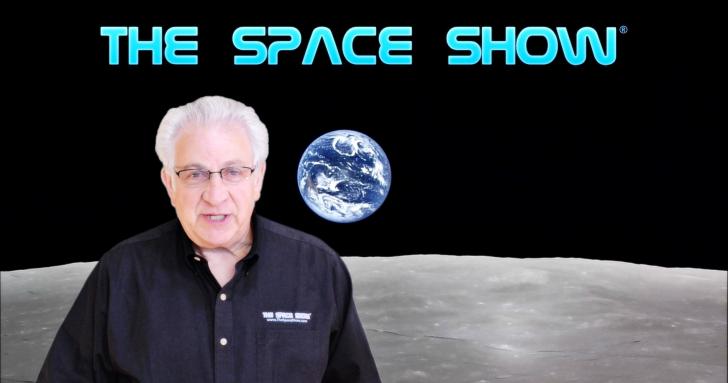
** The Space Show – Tuesday, Dec.15.2020 – Robert Zimmerman responded to “Many callers” and discussed “multiple topics, a few 2021 predictions”.
** The Space Show – Friday, Dec.18.2020 – Dr. James A. Vedda and Karen Jones discussed their paper on space based solar power, Space-Based Solar Power: A Near-Term Investment Decision (pdf), for the Center For Space Policy and Strategy at The Aerospace Corp.
** E45 – NASA’s Artemis Roadshow (with Jim Vedda and Mike Gold) – Aerospace Corp – Center for Space Policy & Strategy (CSPS)
https://vimeo.com/489529341
** Why Do We Need “A Robotic Space Station for the 2020s”? – Gordon Roesler – Cold Star Technologies – YouTube
Past DARPA program manager and Robots In Space founder Dr. Gordon Roesler is on the Make Space Boring News show to share some details about his new paper, A Robotic Space Station for the 2020s. Why do we need this space infrastructure, and why now? Dr. Roesler’s paper: https://coldstartech.com/rssroesler
** Space Café WebTalk – Prof. Steven Freeland – 24. November 2020 – spacewatch. global – News Room – YouTube
In this week’s Space Cafè WebTalk, Prof. Steven Freeland, Professor of International Law, Western Sydney University, Sydney, Australia talked about the Multifaceted Nature of Space and the Role / Rule of Law. Prof. Steven Freeland talked about:
Australia’s initiatives on the commercial space side,
National law – what are the important issues to consider for each country and why?,
International law – how the initiatives of one or several countries can be an input to broader discussions and why we need broad ‘buy in’ on the really big issues,
Civil Society – how industry, academia and broader civil society have important voices on space in many ways?
Prof. Freeland also answered relevant questions from the audience.
This Space Cafè WebTalk, held on 24 November 2020, was hosted by Torsten Kriening, publisher of SpaceWatch.Global.
** Flocks of Satellites, Virtualized Constellations and the Tenet of Interoperability – Constellations Podcast
Listen to Jeff Guido talk about Planet, a company founded by three NASA scientists in a garage. Learn about a “flock” of small satellites imaging the entire Earth’s land mass every day, delivery data images almost instantaneously over the Internet. How is that possible? Jeff discusses vertically integrating a cloud-based imaging platform and the digital transformation of the industry. They are both key to getting remote sensing data immediately out to the market, helping everyone from small farmers to governments optimize their resources. Jeff talks about managing large numbers of satellites by getting them to work in concert through automation and interoperability. Learn about the difference between CMOS and push broom cameras and how the imagery obtained from those cameras can be analyzed to detect change. Finally, what is a virtual constellation and why is it important?
** December 15, 2020 Zimmerman/Batchelor podcast
** December 18, 2020 Zimmerman/Batchelor podcast
====
=== Amazon Ads ===
America’s New Destiny in Space

====
Space Is Open for Business:
The Industry That Can Transform Humanity