Folio edition of “A Man on the Moon” by Andrew Chaikin

Andrew Chaikin sent me this announcement of a new fully-illustrated Folio edition of his classic A Man on the Moon, a vivd history of the Apollo missions. Andrew says he “did all the photo selection and image prep work for the edition, which I think has turned out beautifully“.

A Man on the Moon
The Voyages of the Apollo Astronauts
Andrew Chaikin

With a new preface by the author
Foreword by Tom Hanks
‘I’ve been there. Chaikin took me back.’  Gene Cernan, Apollo 17 Commander
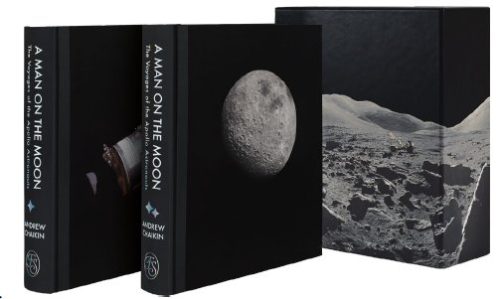
Almost a decade in the writing, A Man on the Moon is the definitive story of the Apollo programme. Andrew Chaikin’s authoritative account is based on hundreds of hours of interviews with the astronauts, as well as the scientists, engineers and flight controllers who shared every heartbeat of their voyages. This spectacular two-volume Folio edition features an exclusive selection of photography, along with a new preface by the author and a foreword by Tom Hanks.
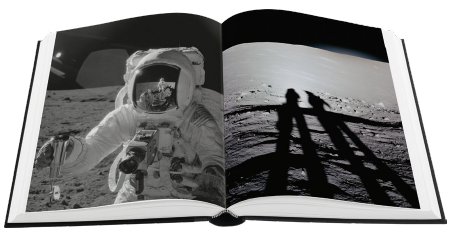
Packed with a photography selection curated by the author from his personal archive that features previously unpublished images and sharp new scans of frames from NASA films, this is the ultimate edition of Chaikin’s awe-inspiring history. As well as nearly 200 colour and black-and-white photographs integrated within the text, it has additional full-colour sections – including an eight-page fold-out in each volume – that show off the superb images to their best advantage. The author has expertly matched each image to the text, giving us a complete and unrivalled visual and oral history of the Apollo missions.
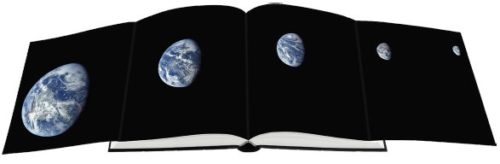
A Man on the Moon spans the whole of the Apollo programme. With its exhilarating minute-by-minute accounts of the missions, Chaikin vividly captures what Tom Hanks calls in his 1998 preface the ‘romantic, epic, historic adventure of it all’. It is the complete story of humankind’s greatest feat of exploration, from the deadly Apollo 1 capsule fire, the pioneering flight of Apollo 8 and Neil Armstrong’s ‘giant leap for mankind’ to near-catastrophe aboard Apollo 13. It is also includes the often-overlooked later missions, which saw scientists and astronauts test the limits of lunar exploration and deliver geological insights that revolutionised our understanding of both the moon and our own planet.

Product information

  • Three-quarter bound in blocked cloth with printed paper front boards.
  • Set in Apollo with Futura as display.
  • 800 pages across 2 volumes.
  • 56 pages of plates plus an 8-page fold-out per volume.
  • 9¼˝ x 8¼˝.
  • Pictorial slipcase.
  • UK £150.00 US $225.00 Can $285.00 Aus $350.00

For over 70 years, The Folio Society has been publishing beautiful illustrated editions of the world’s greatest books. It believes that the literary content of a book should be matched by its physical form. With specially researched images or newly commissioned illustrations, many of its editions are further enhanced with introductions written by leading figures in their fields: novelists, journalists, academics, scientists and artists. Exceptional in content and craftsmanship, and maintaining the very highest standards of fine book production, Folio Society editions last for generations.

=== Amazon Ad ===

A Man on the Moon:
The Voyages of the Apollo Astronauts

Videos: “Space to Ground” + Other ISS reports – Mar.12.2021

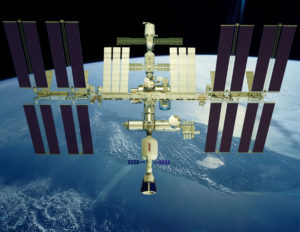
Here is the latest episode in NASA’s Space to Ground weekly report on activities related to the International Space Station:

** This Year The Space Station Is Getting Its First Major Expansion in a Decade – Scott Manley

The last major addition to the International Space Station was in 2011, after that the forced retirment of the Space Shuttle meant that new hardware was necessarily small, but this year we’re seeing a number of new pieces of hardware which will be attached to the station which will expand it and change the way it looks.

** WE ARE RESILIENT: A Message from NASA Astronauts – NASA

It has been one year since the United States began its battle against the COVID-19 pandemic. This year has been tough and has changed the way all of us live. And yet despite extraordinary circumstances, NASA still accomplished extraordinary things. Aboard the International Space Station, NASA Astronauts Mike Hopkins and Victor Glover have a message for all of us: Take care of each other and we’ll get through this together.

** Expedition 64 Nanoracks – March 10, 2021 – NASA Video

Aboard the International Space Station, Expedition 64 Flight Engineers Victor Glover and Shannon Walker of NASA discussed the new Nanoracks Bishop Airlock on the orbital outpost during an in-flight question and answer session with Nanoracks officials March 10. The airlock was delivered to the station on a SpaceX cargo Dragon vehicle in December and was attached to the Tranquility module by the Canadian-built Canadarm2 robotic arm.

** Spacewalks above, pandemic below – how one ISS crew member experienced 2020 | Aeon Videos

In September 2019, the Swedish-American biologist and NASA astronaut Jessica Meir realised her lifelong dream of travelling to space when she launched from Kazakhstan to the International Space Station (ISS), where she would serve as flight engineer for the next seven months. Featuring remarkable footage – including Meir’s euphoric first steps into the ISS and her participation, with fellow astronaut Christina Koch, in the first-ever all-female spacewalk – this short documentary captures scenes from Meir’s roundtrip journey with intimacy and grandeur. Occurring over the course of many tumultuous months on Earth, including the outbreak of the COVID-19 pandemic, the film also ponders what it’s like to experience the trials of humanity from 254 miles above.

=== Amazon Ad ===

Outpost in Orbit:
A Pictorial & Verbal History of the Space Station

====

LEGO Ideas International Space Station Building Kit,
Adult Set for Display,
Makes a Great Birthday Present
(864 Pieces)

Space policy roundup – Mar.8.2021

A sampling of links to recent space policy, politics, and government (US and international) related space news and resource items that I found of interest (find previous space policy roundups here):

International space

Webcasts:

** Jielong-3 rocket to launch in 2022, QS-T raises 100M¥ of funding – China Space News Roundup Ep 23 – Dongfang Hour – YouTube

1) Qiansheng Exploration (QS-T) Announces RMB 100M+ Series A Round …
2) Jielong-3 to make its maiden launch in 2022 …
3) An interesting piece by the Beijing Daily on Beijing’s commercial space ecosystem …

See also the show summary: Dongfang Hour China Aerospace News Roundup 1 – 7 March 2021 – SpaceWatch.Global

** Space Café WebTalk – Dr. Marco Ferrazzani – 2. February 2021 – spacewatch. global – News Room – YouTube

In this week’s Space Cafè WebTalk, Dr. Marco Ferrazzani, Chief of Legal services at the European Space Agency, Paris, France talked about legal considerations on Europe in space.

We discussed the following topics of current interest in European space:

the current state of legal competences in the European landscape ,
ESA for the EU space programme – institutional cooperation and coordination, with an outlook on the FFPA negotiations,
an ever more competitive European space industry – how law and regulations sustain innovation and foster competition,
European exploration: how ESA and NASA team up on the way “Forward to the Moon”, sustained by law and international commitments.
Dr. Marco Ferrazzani also answered relevant questions from the audience.

** The Space Show – Friday , Mar.5.2021 – Dr. Clive Neal discussed “the Moon, lunar water and resources, policy, China, lunar exploration, settlement, Mars and lots more“.

** The Space Show – Thursday, Mar.4.2021 – James Burk discussed the Mars Society project MarsVR.

** The Space Show – Tuesday, Mar.2.2021 – Dr. Christopher Morrison provided “news and updates about nuclear power in space. We focused nuclear power for surface usage plus propulsion.”

** March 3, 2021 Zimmerman/Batchelor podcast

https://audioboom.com/posts/7814976

https://audioboom.com/posts/7814978

====

=== Amazon Ads ===

America’s New Destiny in Space

====

Space Is Open for Business:
The Industry That Can Transform Humanity

The Space Show this week – Mar.8.2021

The guests and topics of discussion on The Space Show this week:

1. Monday, Mar. 8, 2021; 7 pm PDT (9 pm CDT, 10 pm EDT: No program today.

2. Tuesday, Mar. 9, 2021; 7 pm PDT (9 pm CDT, 10 pm EDT): We welcome Dr. Jeffery Greenblatt, Chief Scientist and Chief Visionary Officer for Orbital Assembly Corp.

3. Wednesday, Mar. 10, 2021: Hotel Mars TBA pre-recorded. See upcoming show menu on the home page for program details.

4. Thursday, Mar. 11, 2021; 7-8:30 pm PDT (9-10:30 pm CDT, 10-11:30 pm EDT): No program today.

5. Friday, Mar.12, 2021; 9:30-11 am PDT (11:30 am-1 pm CDT, 12:30-2 pm EDT): We welcome Amir Notea to discuss commercial space in Israel.

6. Sunday, Mar.14, 2021; 12-1:30 pm PDT (3-4:30 pm EDT, 2-3:30 pm CDT): No program today.

Some recent shows:

** Sunday, March 7, 2021 – Dr. Mark J. Sundahl and Tanja (T.L.) Masson-Zwaan “joined us to discuss legal challenges for lunar and Martian plans. The challenges talked about were both US domestic and international space law challenges.”

** Friday , Mar.5.2021 – Dr. Clive Neal discussed “the Moon, lunar water and resources, policy, China, lunar exploration, settlement, Mars and lots more“.

** Thursday, Mar.4.2021 – James Burk discussed the Mars Society‘s project: MarsVR – Virtual Reality for Mars Exploration. [See also: Mars Society Launches New Indiegogo Crowdfunding for MarsVR Project to Support Humans-to-Mars – The Mars Society.]

** Tuesday, Mar.2.2021 – Dr. Christopher Morrison provided “news and updates about nuclear power in space. We focused nuclear power for surface usage plus propulsion.”

** See also:
* The Space Show Archives
* The Space Show Newsletter
* The Space Show Shop

The Space Show is a project of the One Giant Leap Foundation.

The Space Show - David Livingston
The Space Show – Dr. David Livingston

=== Amazon Ads ===

Liftoff: Elon Musk and the Desperate Early Days
That Launched SpaceX

====

America’s New Destiny in Space

ESO: Most distant “radio-loud” quasar found and studied with the Very Large Telescope (VLT)

The latest report from the European Southern Observatory (ESO):

Most distant quasar with powerful radio jets discovered

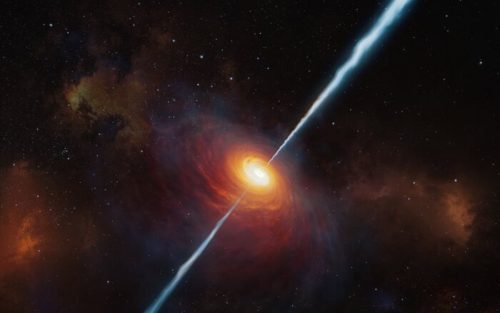
This artist’s impression shows how the distant quasar P172+18 and its radio jets may have looked. To date (early 2021), this is the most distant quasar with radio jets ever found and it was studied with the help of ESO’s Very Large Telescope. It is so distant that light from it has travelled for about 13 billion years to reach us: we see it as it was when the Universe was only about 780 million years old.Credits: ESO

With the help of the European Southern Observatory’s Very Large Telescope (ESO’s VLT), astronomers have discovered and studied in detail the most distant source of radio emission known to date. The source is a “radio-loud” quasar — a bright object with powerful jets emitting at radio wavelengths — that is so far away its light has taken 13 billion years to reach us. The discovery could provide important clues to help astronomers understand the early Universe.

Quasars are very bright objects that lie at the centre of some galaxies and are powered by supermassive black holes. As the black hole consumes the surrounding gas, energy is released, allowing astronomers to spot them even when they are very far away.

The newly discovered quasar, nicknamed P172+18, is so distant that light from it has travelled for about 13 billion years to reach us: we see it as it was when the Universe was just around 780 million years old. While more distant quasars have been discovered, this is the first time astronomers have been able to identify the telltale signatures of radio jets in a quasar this early on in the history of the Universe. Only about 10% of quasars — which astronomers classify as “radio-loud” — have jets, which shine brightly at radio frequencies [1].

P172+18 is powered by a black hole about 300 million times more massive than our Sun that is consuming gas at a stunning rate.

“The black hole is eating up matter very rapidly, growing in mass at one of the highest rates ever observed,”

explains astronomer Chiara Mazzucchelli, Fellow at ESO in Chile, who led the discovery together with Eduardo Bañados of the Max Planck Institute for Astronomy in Germany.

The astronomers think that there’s a link between the rapid growth of supermassive black holes and the powerful radio jets spotted in quasars like P172+18. The jets are thought to be capable of disturbing the gas around the black hole, increasing the rate at which gas falls in. Therefore, studying radio-loud quasars can provide important insights into how black holes in the early Universe grew to their supermassive sizes so quickly after the Big Bang.

“I find it very exciting to discover ‘new’ black holes for the first time, and to provide one more building block to understand the primordial Universe, where we come from, and ultimately ourselves,” says Mazzucchelli.

P172+18 was first recognised as a far-away quasar, after having been previously identified as a radio source, at the Magellan Telescope at Las Campanas Observatory in Chile by Bañados and Mazzucchelli.

“As soon as we got the data, we inspected it by eye, and we knew immediately that we had discovered the most distant radio-loud quasar known so far,” says Bañados.

However, owing to a short observation time, the team did not have enough data to study the object in detail. A flurry of observations with other telescopes followed, including with the X-shooter instrument on ESO’s VLT, which allowed them to dig deeper into the characteristics of this quasar, including determining key properties such as the mass of the black hole and how fast it’s eating up matter from its surroundings. Other telescopes that contributed to the study include the National Radio Astronomy Observatory’s Very Large Array and the Keck Telescope in the US.

While the team are excited about their discovery, to appear in The Astrophysical Journal, they believe this radio-loud quasar could be the first of many to be found, perhaps at even larger cosmological distances.

“This discovery makes me optimistic and I believe — and hope — that the distance record will be broken soon,” says Bañados.

Observations with facilities such as ALMA, in which ESO is a partner, and with ESO’s upcoming Extremely Large Telescope (ELT) could help uncover and study more of these early-Universe objects in detail.

Links

=== Amazon Ads ===

Extraterrestrial:
The First Sign of Intelligent Life Beyond Earth

===

Imagined Life: A Speculative Scientific Journey among the Exoplanets
in Search of Intelligent Aliens, Ice Creatures, and Supergravity Animals

Everyone can participate in space