Category Archives: Science and Technology

John G. Cramer on Space Drives

Professor John G Cramer, a theoretical physicist at the Univ. of Washington, has had a column for many years in the magazine Analog Science Fiction & Fact in which he writes about topics at the leading edge of science and beyond. His latest column is about two concepts for propellantless propulsion systems and some intriguing experimental results: Is It Space Drive Time – Alternate View/Analog.

Here are some resources :

Here is a video of the talk – Exotic Paths to the Stars – by John G. Cramer at the Starship Century Symposium in June 2013 (see post here):

Gary Hudson, of the Space Studies Institute, gave a talk at NASA’s Innovative Advanced Concepts (NIAC) Symposium (see post here) in which he discussed (starting at aound 1:17:30 into the video) of SSI’s support for Woodward’s research.

Robert Winglee,  David Wettergreen, & Gary Hudson
Watch live streaming video from niac2014 at livestream.com

Sci-Tech: DARPA funded advanced prosthetic arm approved by FDA

An announcement from DARPA:

From Idea To Market In Eight Years, DARPA-Funded
DEKA Arm System Earns FDA Approval

DARPA’s Revolutionizing Prosthetics program delivers on goal of providing
advanced prosthetic upper limb with near-natural control mechanisms to amputees 

DARPA launched the Revolutionizing Prosthetics program with a radical goal: gain U.S. Food and Drug Administration (FDA) approval for an advanced electromechanical prosthetic upper limb with near-natural control that enhances independence and improves quality of life for amputees. Today, less than eight years after the effort was launched, that dream is a reality; the FDA approved the DEKA Arm System.

“DARPA is a place where we can bring dreams to life,” said Dr. Geoffrey Ling, M.D., Director of DARPA’s Biological Technologies Office . Dr. Ling is a retired Medical Corps neuro-critical care officer who served in combat hospitals in both Iraq and Afghanistan. He launched the Revolutionizing Prosthetics program in 2006 with a desire to provide better care “to repay some of the debt we owe to our Service members.”

prostheticswebfeature_500x750

The newly approved system expands prosthetic choices for amputees, who have generally used body-powered prosthetics – in particular the split-hook device invented in 1912. DARPA took up the challenge to advance the field of modular upper-limb prosthetics and committed to making the significant research and development investment required.

The system allows for simultaneous control of multiple joints using a variety of input devices including wireless signals generated by innovative sensors on the user’s feet. The battery-powered arm system is of similar size and weight to a natural limb and has six user-selectable grips. The DEKA Arm System is indicated for individuals 18 and older.

Many technological breakthroughs at the intersection of biology and engineering were necessary to enable the creation of the arm system: for example, miniaturization of parts for motors, computer controls and sensors, and manufacturing processes with lightweight, but strong materials.

A number of federal agencies contributed to the Revolutionizing Prosthetics program. The FDA reviewed information from a Department of Veterans Affairs-funded Optimization Study, which included data from 36 participants. The United States Army Medical Research and Materiel Command provided funding assistance to enable completion of tests and trials required to meet FDA requirements. The U.S. Army Research Office provided contract management support.

“Interagency collaboration has been critical to the Revolutionizing Prosthetics program to allow for independent assessments of the technology, incorporation of user feedback into the design, and identification of regulatory strategies and transition paths,” said Dr. Justin Sanchez, the current program manager. “We could not have achieved our goal so quickly without the support of many partners in government.”

The DEKA Arm System was developed by DEKA Integrated Solutions in Manchester, N.H. FDA approval allows DEKA to pursue manufacturing and commercial opportunities to bring the arm to market.

Payload Carrier for small experiments ready for XCOR Lynx flight test

An announcement from Citizens in Space:

New Space Research Platform Ready For Flight Test
Lynx Cub Payload Carrier Developed at Texas A&M

College Station, Texas (May 7, 2013) – The United States Rocket Academy announced the delivery of the first Lynx Cub Payload Carrier, a new research platform which promises to dramatically reduce the cost of access to space for small scientific and education payloads.

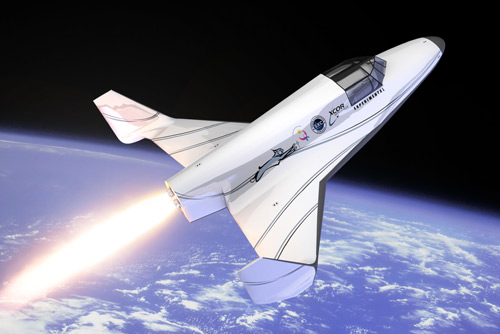
The Lynx Cub Carrier will fly on the XCOR Lynx spacecraft, which is now under construction at the Mojave Air and Space Port.
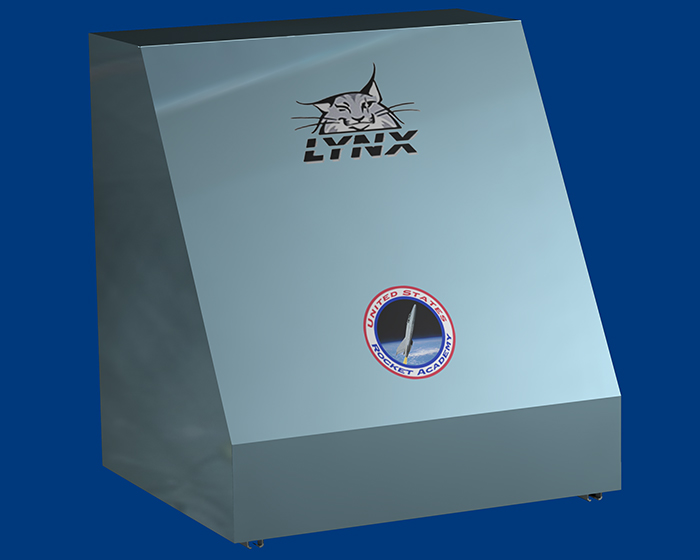
Lynx Cub Payload Carrier (artist's concept)Lynx Cub Payload Carrier

“The Lynx Cub Payload Carrier is a versatile system that installs in the Lynx cabin, behind the pilot’s seat, allowing small experiments to be carried as secondary payloads on any Lynx flight,” said United States Rocket Academy chairman Edward Wright. “The Cub Carrier can be installed and removed quickly for frequent, low-cost flight opportunities.

“The Lynx Cub Carrier is an ideal platform for small materials-processing, fluid-physics, life-science, and engineering experiments. University teaching and research, K-12 education, citizen science, government and industrial R&D will all benefit from the convenient simple interfaces, rapid integration, and affordability of Lynx Cub experiments.”
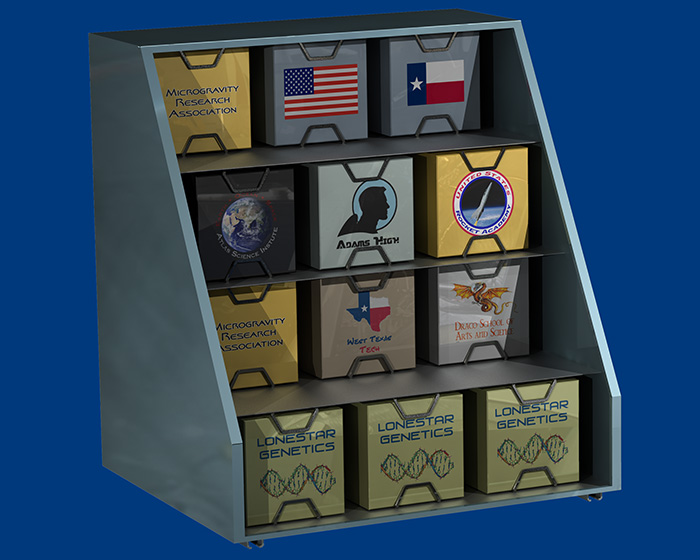
Lynx Cub Payload Carrier (artist's concept) internal viewExperiment payloads in the carrier

The Lynx Cub Carrier was developed by the United States Rocket Academy and the Space Engineering Research Center, part of the Texas A&M Engineering Experiment Station (TEES), with support from XCOR Aerospace. Design and fabrication of the Lynx Cub Carrier were performed by Texas A&M faculty and students and TEES researchers.

Citizens in Space, a project of the United States Rocket Academy, will use the Lynx Cub Carrier on 10 Lynx missions. The Lynx Cub Carrier will also be made available to other XCOR customers, as ready-to-fly hardware or as an open-source hardware design.

“Lynx Cub payloads are based on the popular 1U, 2U, and 3U CubeSat form factors, which are de facto international standards for small scientific payloads,” said Chip Hill, Director of the Space Engineering Research Center. “The payload carrier provides physical accommodations, electrical power, and limited thermal control for Lynx Cub experiments.”

The Lynx Cub Carrier will be part of the XCOR Lynx flight-test program, which is expected to begin later this year.
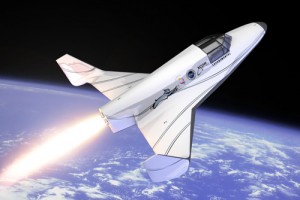
new_11-07-21_lynx-new-ascent-500xXCOR Lynx

“For the test flights, we will load the Lynx Cub Carrier with payload simulators, accelerometers, gyroscopes, and environmental sensors,” Wright said. “While XCOR is proving out the vehicle, we’ll be gathering baseline data on the thermal environment, acoustical environment, acceleration, vibration, and other parameters — data that will help guide experimenters in their payload design.”

“I am excited by the connection to K-12 education,” said Dr. Justin Yates, a professor at the Texas A&M Department of Systems and Industrial Engineering who served as a project lead. “I am proud that Texas A&M University industrial engineers could play a part in this project, which will excite, engage, and educate the next generation of scientists.”

“The Lynx Cub Carrier development was a great learning experience,” said Austin Goswick, a senior Systems and Industrial Engineering student who worked on the project. “This project tested me in every way, advancing my communication skills as well as my engineering skills. I can’t wait to hear how it performs in the flight test.”

The Space Engineering Research Center, part of the Texas A&M Engineering Experiment Station in College Station, is also a member of XCOR’s global network of payload integrators, which provides value-added services for Lynx payload customers. TEES is an engineering research agency of the State of Texas and a member of The Texas A&M University System.

XCOR Aerospace, which is developing the suborbital, fully reusable Lynx spacecraft for a variety of scientific and commercial missions, is currently headquartered in Mojave, California. The company will relocate its headquarters to Midland, Texas later this year.

The United States Rocket Academy, a non-profit educational organization that studies and promotes the scientific, military, and commercial applications of human spaceflight, is also located in Texas. Citizens in Space is the United States Rocket Academy’s flagship program.

Microbial astronauts now and in the past

Life’s spread into the solar system may have gotten inadvertent transport via earth’s spacecraft:

Life probably spread already from earth via debris thrown into space from giant meteorite impacts in the distant past:  How Life-Bearing Rocks from the Chicxulub Asteroid Impact must have Spread through the Solar System: Earth rocks capable of carrying and protecting life have probably to travelled to Europa, Titan and beyond, say astrobiologists – The Physics arXiv Blog

Also, if life originated on Mars, it would have colonized earth in a similar manner:

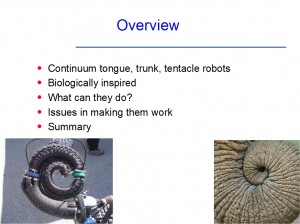
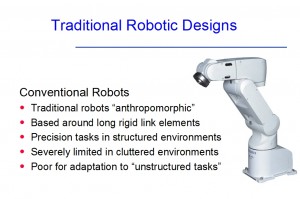
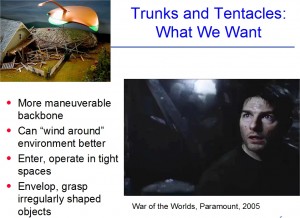
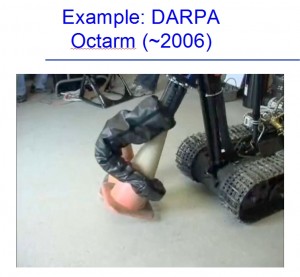
FISO: Continuum trunk & tentacle robots for space – Ian Walker, Clemson

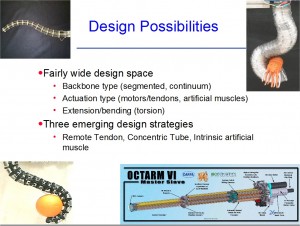
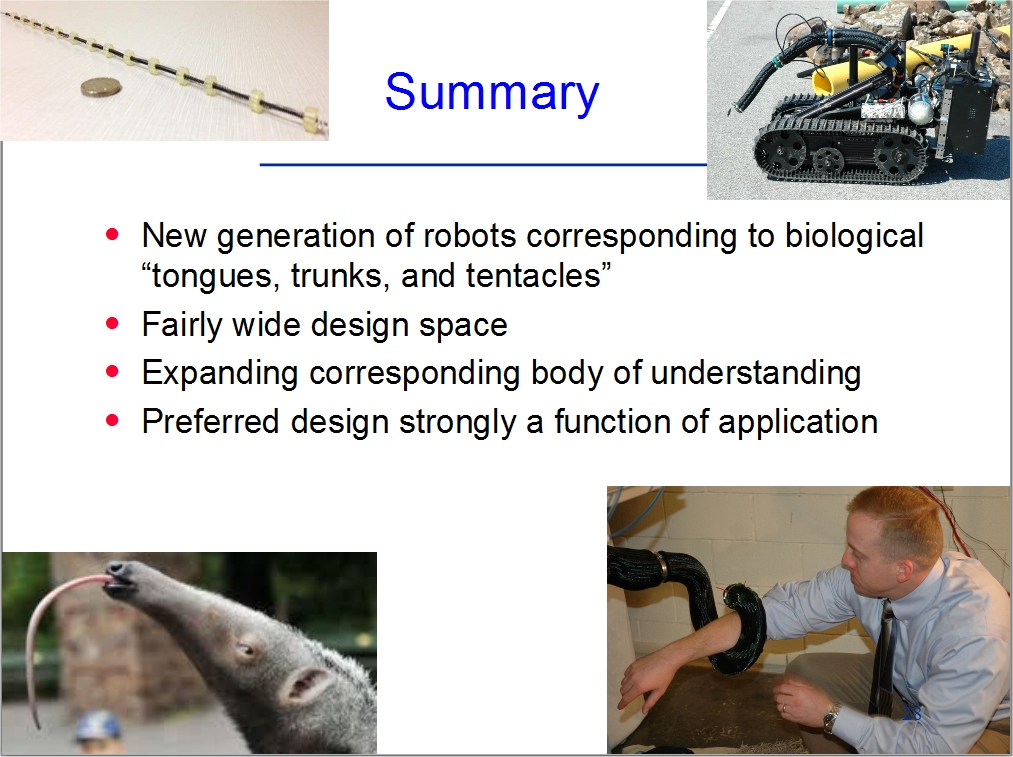
The latest presentation to the Future In-Space Operations (FISO) study group is now posted in the FISO Working Group Presentations Archive. Slides and movies are available in a zip file and there is an audio (mp3) available for the talk, Continuum Trunk and Tentacle Robots for Space Applications, Ian Walker , Clemson University – April.30.2014.

Here is a sampling of Walker’s slide’s:

Overview

TraditionalRobots

TrunksAndTentacles

Octarm

Designs


Summary