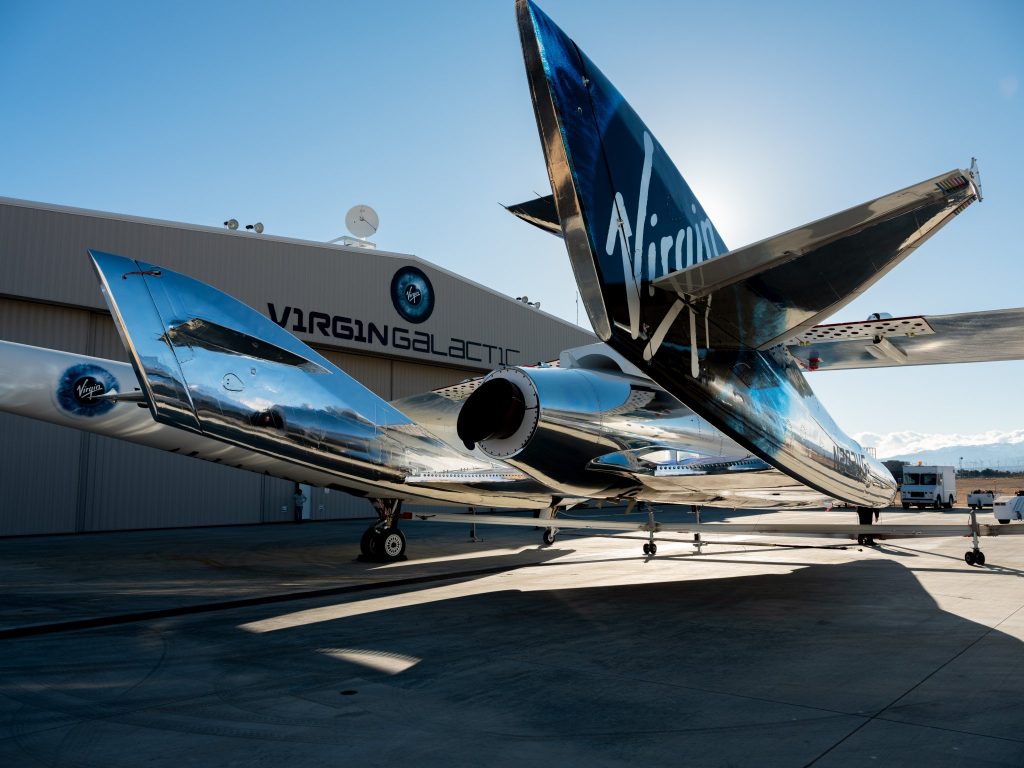
More imagery from Friday’s flight of the SpaceShipTwo VSS Unity (see previous postings here and here):
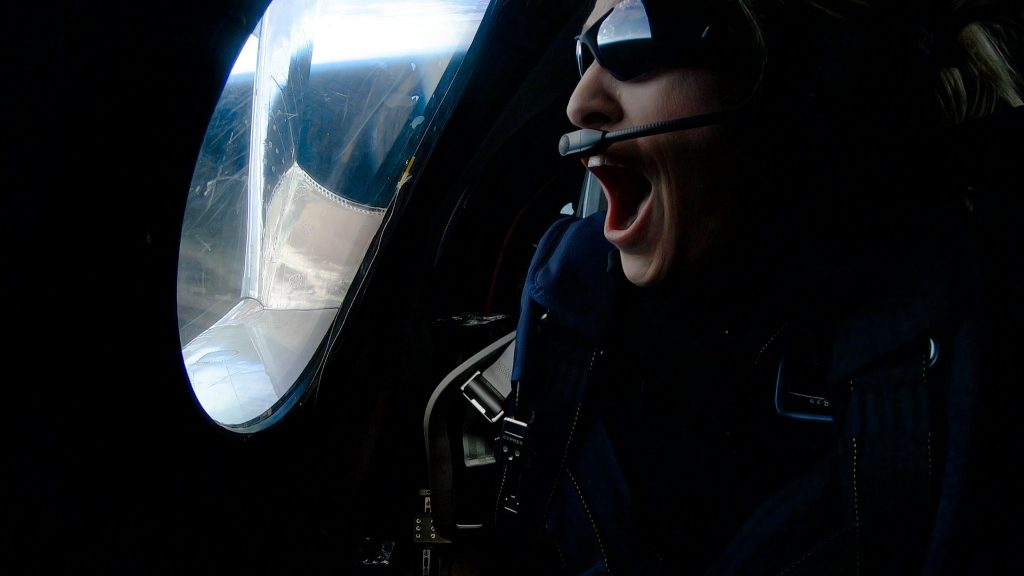
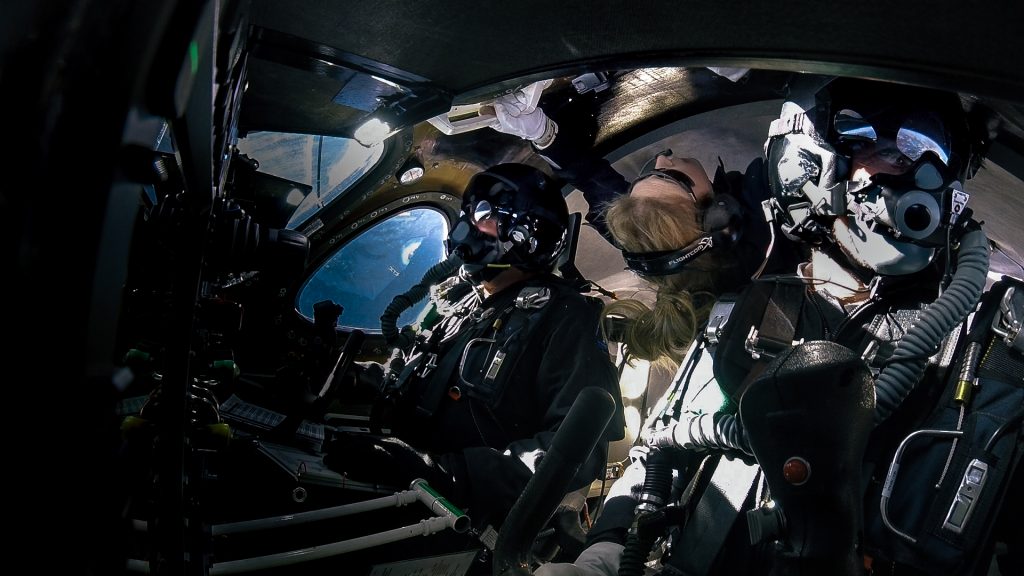
**Beth Moses enjoys the view from space:
“The face you make when you look back on Earth from space. Our Chief Astronaut Instructor, Beth Moses, is the 571st person to fly to space and the first woman to fly on board a commercial spaceship.” – Virgin Galactic
** Flight highlights:
** Post-flight interviews with Moses, Chief Pilot Dave Mackay, Co-Pilot Michael “Sooch” Masucci, and Virgin Galactic CEO George Whitesides:
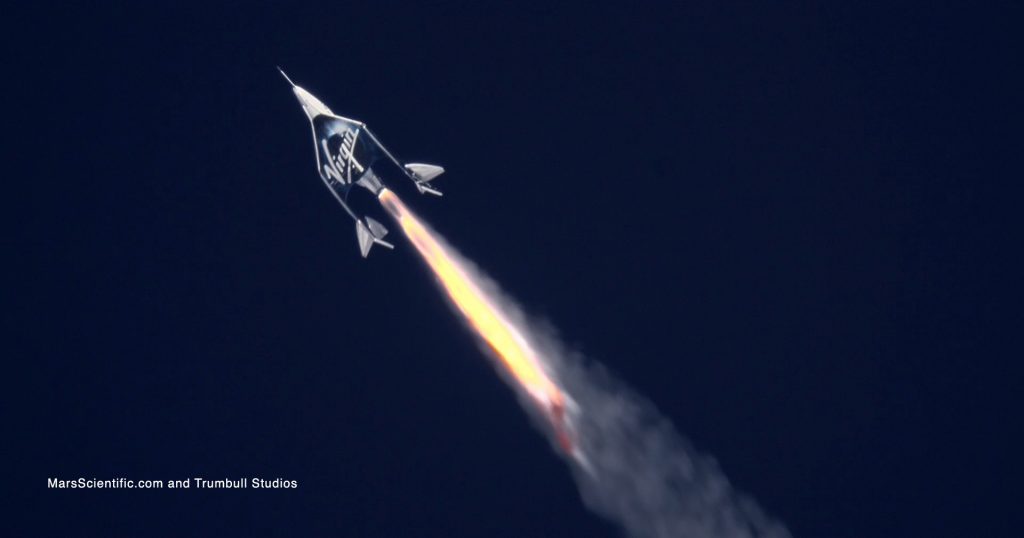
**Feather reentry mode as seen from a camera on one of the booms:
Another sampling of items related to traveling to and through space:
**SpaceX Crew Dragon Demo Mission passes review – NASA and SpaceX held a flight readiness review (FRR) today to determine if the Falcon 9/Crew Dragon combo is ready for the first test flight to the ISS. The uncrewed Demo-1 mission is set for March 2nd. The FRR concluded with approval of the mission. Demo-1 Flight Readiness Concludes – Commercial Crew Program
Following a full day of briefings and discussion, NASA and SpaceX are proceeding with plans to conduct the first uncrewed test flight of the Crew Dragon on a mission to the International Space Station. Launch is scheduled for 2:48 a.m. EST Saturday, March 2 from Launch Complex 39A at NASA’s Kennedy Space Center in Florida. It will be the first time a commercially built and operated American rocket and spacecraft designed for humans will launch to the space station.
At 6 p.m., NASA will broadcast a post-flight readiness review briefing from Kennedy, with the following representatives:
William Gerstenmaier, associate administrator, NASA Human Exploration and Operations
Kathy Lueders, manager, NASA Commercial Crew Program
Hans Koenigsmann, vice president, Build and Flight Reliability, SpaceX
Kirk Shireman, manager, International Space Station Program
Norm Knight, deputy director, NASA Johnson Space Center Flight Operations
Assuming this uncrewed mission goes well, there will be one more uncrewed demonstration mission before a crew flies. That demo will test the in-flight abort system with the Crew Dragon vehicle separating from the rocket at the point, a minute or so after liftoff, when the vehicle experiences maximum dynamic pressure, i.e. maximum stress from the combination of the opposing forces of the engines and atmospheric drag. The flight will use the same booster that flew on yesterday’s launch of the Indonesian comm-sat and SpaceIL lunar lander.
**SpaceX Falcon 9 launches comm-sat plus two secondaries including an Israeli spacecraft going to the Moon. On Thursday evening at Cape Canaveral, SpaceX’s second F9 launch of the year put the Indonesian Nusantara Satu communications satellite on track to a geostationary orbit. The two secondary payloads included the S5 USAF technology demo satellite and SpaceIL‘s lunar lander spacecraft, which is named Beresheet (Hebrew for “genesis” or “in the beginning”). The F9 booster, which was on its third mission, landed safely on a floating platform in rough seas after coming back from the highest altitude so far for a recovered booster.
The SpaceIL non-profit, volunteer project began as an entry in the Google Lunar X PRIZE but continued after the GLXP ended. It will be the first privately funded mission to the Moon. If successful, Israel will be only the fourth country (after US, Soviet Union, and China) to put a lander onto the Moon.
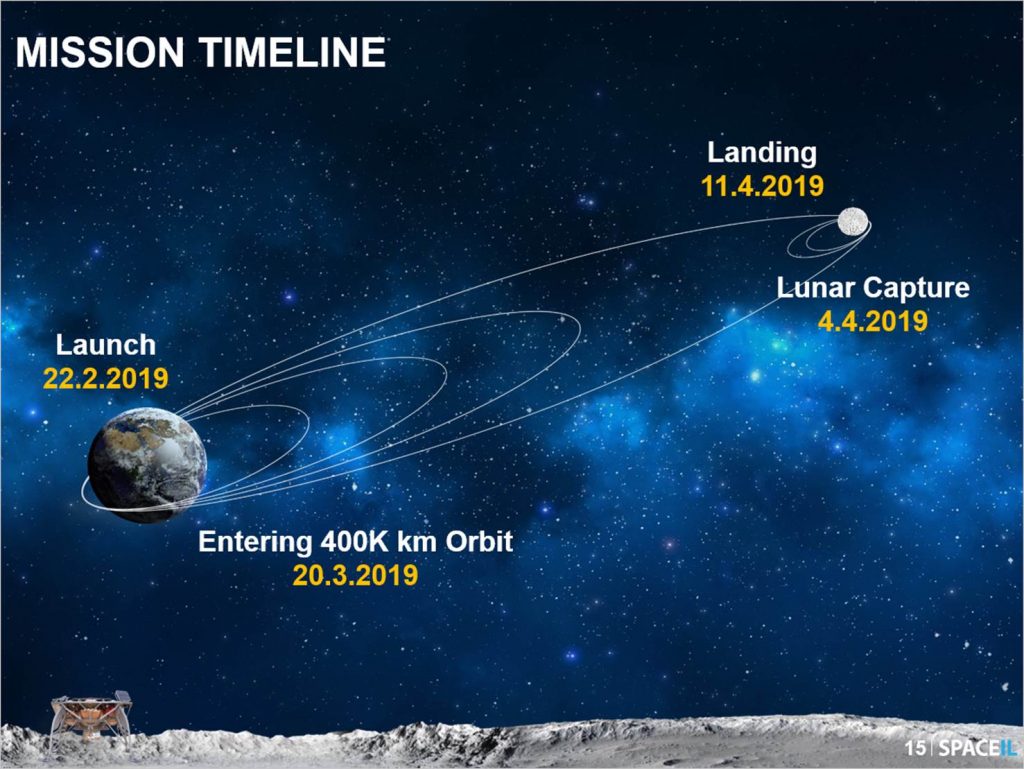
****The Beresheet journey to the Moon will take seven weeks. As shown in this video, the Beresheet craft will use its onboard propulsion system to bring the apogee of its earth orbit closer and closer to the Moon’s orbit.
Once it is close enough, the engine will fire to allow for the Moon’s gravity to capture it. This is scheduled to happen on April 4th. A week later the craft will make its landing attempt. Here is the time table:
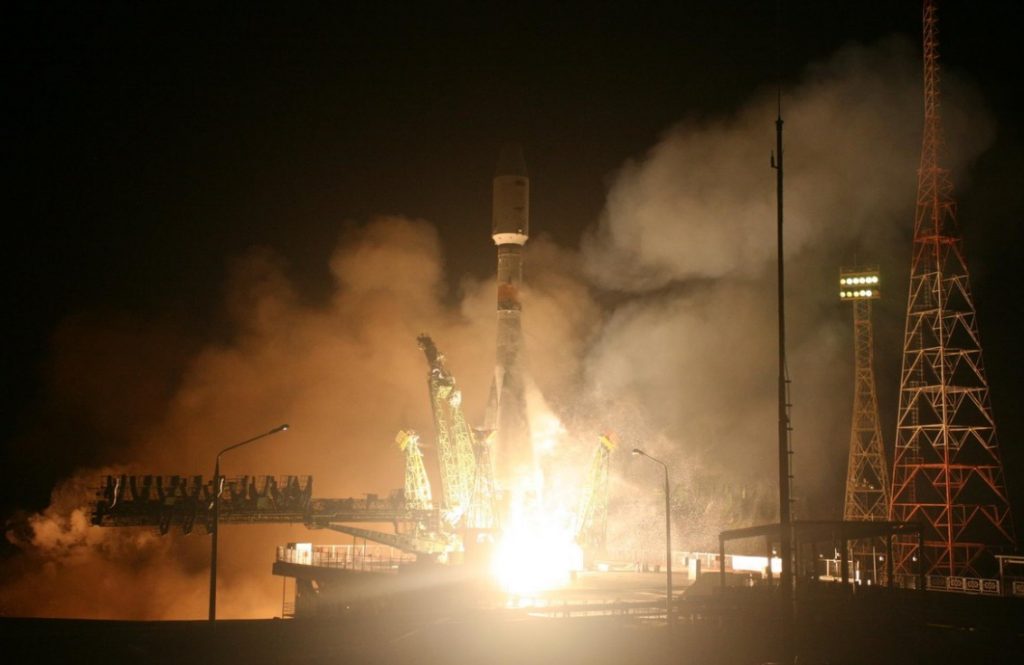
**Soyuz 2-1B launches EgyptSat-A earth observation satellite successfully from the Baikonur Cosmodrome despite a problem with the third stage booster:
CLOSE CALL: TASS now confirms “issues” during today’s Soyuz launch, but, fortunately, Fregat space tug compensated for apparent underperformance of the third stage, successfully completing the EgyptSat-A’s orbital insertion: https://t.co/4OkWrMzdv1
At an event at Cape Canaveral on Feb. 22, Florida officials and Firefly Aerospace CEO Tom Markusic announce plans for the company to open a rocket factory at the Cape and to launch the vehicles there.
From the Verge article:
Texas-based spaceflight company Firefly Aerospace is moving into a new launch site in Cape Canaveral, Florida — the location of US’s premier spaceport. Thanks to a deal with Space Florida, a government agency that spurs development in the state, Firefly will be taking over a pad called SLC-20 at Cape Canaveral Air Force Station as well as building a nearby manufacturing facility. That means the launch provider now has secured two launchpads for the rockets it has been developing: one in Florida and another at Vandenberg Air Force Base in California.
Black Arrow Space Technologies is developing its own spaceship – a seaborne spaceport which will be used to launch satellites of up to, initially, 500 kg in to Low Earth Orbit. The “spaceship” will be based in a South Wales port, along with its support vessels, and will enable rockets to be launched North or South without overflying populated areas. We are creating a flexible British launch capability to support the thriving British satellite industry which will allow launches to take place from the best place to achieve the required orbit. This CGI animation, created for us by Animated Technologies, gives a great impression of what we are aiming to achieve.
The company’s rocket is powered with liquid natural gas and can put up to 500 kg into Low Earth Orbit.
The simply-named company, Launcher, provided CNBC with a first look at the company’s E-2 engine, which was made in Germany by AMCM using its specialized M4K printer. Launcher has only five full-time employees but credits its ability to develop E-2 quickly to the advances made in 3D printing.
“With 3D printing, we’re now in a world where a start-up like us can now access [advanced] liquid oxygen propulsion technologies,” Launcher founder Max Haot told CNBC.
**** Elon Musk commented on Tweeter that the first full-scale Raptor engine underwent increasingly strenuous test firings until it reached the point where it failed as expected. A second engine will begin testing soon.
Merlins. The max chamber pressure run damaged Raptor SN 1 (as expected). A lot of the parts are fine for reuse, but next tests will be with SN 2, which is almost done.
Flight Follows December’s Fourth Rocket-Powered Flight and First Space Flight
Mojave, California, USA (22 Feb 2019): Today, Virgin Galactic conducted its fifth powered test flight and second space flight of its commercial SpaceShipTwo, VSS Unity. Please find reporting materials below for news coverage and multimedia reporting.
[ Update: Will add new media here as it becomes available.
B-roll & Images: Getty Press FTP: https://www.image.net/virgingalactic Please visit periodically throughout the day and week for updates and additional test flight content.
News of the day and Richard Branson reaction quotes, per full copy below. Available for immediate use. Please cite original source: Virgin Galactic.
In its fifth supersonic rocket powered test flight, Virgin Galactic reached space for the second time today in the skies above Mojave CA. Spaceship VSS Unity reached its highest speed and altitude to date and, for the first time, carried a third crew member on board along with research payloads from the NASA Flight Opportunities program.
Virgin Galactic Makes Space for Second Time in Ten Weeks with Three On Board
This space flight means Chief Pilot Dave Mackay and co-pilot Michael “Sooch” Masucci become commercial astronauts and the 569th and 570th humans in space. Beth Moses, Virgin Galactic’s Chief Astronaut Instructor, flew as the third crew member in a first, live evaluation of cabin dynamics. She is the 571st person to fly to space and the first woman to fly on board a commercial spaceship.
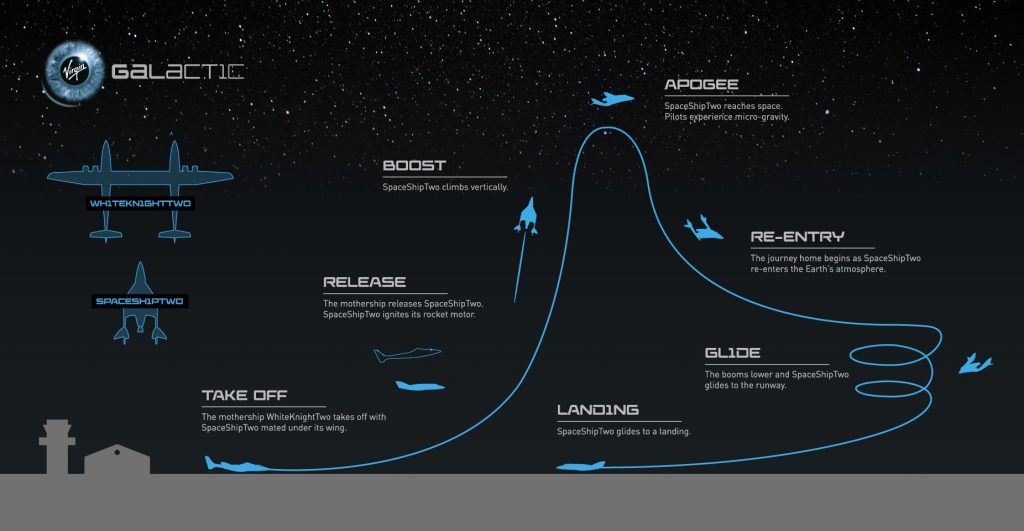
In addition to this element of envelope expansion, VSS Unity flew higher and faster than ever before, as its world record-holding hybrid rocket motor propelled the spaceship at Mach 3.04 to an apogee of 295,007ft.
Beth Moses unbuckles and floats inside SS2.
The crew enjoyed extraordinary views of Earth from the black skies of space and, during several minutes of weightlessness while the pilots “feathered” the spaceship in preparation for a Mach 2.7 re-entry, Beth floated free to complete a number of cabin evaluation test points. The human validation of data previously collected via sensors, and the live testing of other physical elements of the cabin interior, are fundamental to the provision of a safe but enjoyable customer experience.
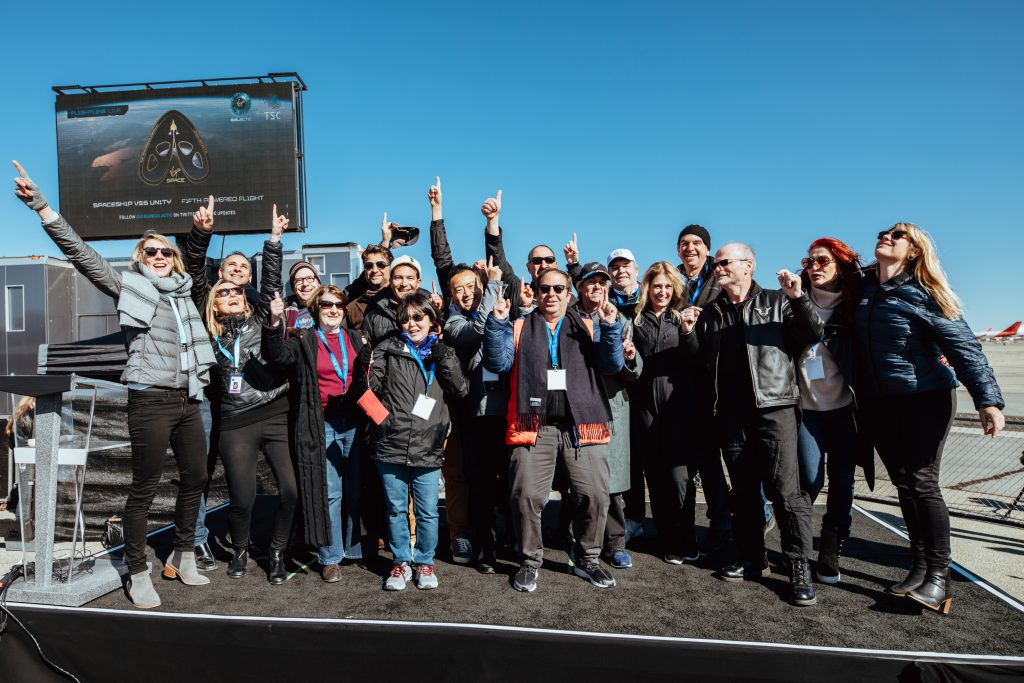
The glide back home was followed by a smooth runway landing and a rapturous reception from the crowd on the flight line, which included staff and some of Virgin Galactic’s 600 Future Astronaut customers.
Chief Pilot Dave Mackay, a born and bred Scotsman as well as an ex-RAF test pilot and Virgin Atlantic Captain, led his crew of newly qualified astronauts from VSS Unity accompanied by a kilted piper.
Post flight celebration.
Today’s flight notched several additional firsts for the industry: The flight was the first time that a non-pilot flew on board a commercial spaceship to space, and it was the first time that a crew member floated freely without restraints in weightlessness in space onboard a commercial spaceship; it was the first time that three people flew to space on a commercial spaceship, and Dave Mackay became the first Scottish-born astronaut (Brian Binnie, who was raised in Scotland, flew to space in 2004).
Addressing colleagues and guests Dave said:
“Beth, Sooch and I just enjoyed a pretty amazing flight which was beyond anything any of us has ever experienced. It was thrilling yet smooth and nicely controlled throughout with a view at the top, of the Earth from space, which exceeded all our expectations. I am incredibly proud of my crew and of the amazing teams at Virgin Galactic and The Spaceship Company for providing a vehicle and an operation which means we can fly confidently and safely. For the three of us today this was the fulfillment of lifelong ambitions, but paradoxically is also just the beginning of an adventure which we can’t wait to share with thousands of others.”
Sir Richard Branson said:
“Flying the same vehicle safely to space and back twice in a little over two months, while at the same time expanding the flight envelope, is testament to the unique capability we have built up within the Virgin Galactic and The Spaceship Company organizations. I am immensely proud of everyone involved. Having Beth fly in the cabin today, starting to ensure that our customer journey is as flawless as the spaceship itself, brings a huge sense of anticipation and excitement to all of us here who are looking forward to experiencing space for ourselves. The next few months promise to be the most thrilling yet”
12:14 pm EST: Max altitude is reportedly 294,000 feet, or 89.6 km, or 55.7 miles. [Update: 295,007 feet, or 89.9 km, or 55.87 miles.]
12:08 pm EST: The SpaceShipTwo VSS Unity is back safely on the ground after a second successful powered flight to the edge of space. Official apogee not yet announced. Unity definitely achieved 50+ miles, which crosses the USAF/NASA definition for the boundary altitude to space.
11:56 am EST: The motor has finished firing and the vehicle reached Mach 3.
11:55 am EST: Unity has been released and its motor is firing.
11:28 am EST: The WK2/SS2 combo should reach the launch altitude in about half an hour and release the SS2 for its powered test flight. There are three crew persons on the SS2 today:
We have a 3rd crew member in the cabin of SpaceShipTwo today, Chief Astronaut Instructor, Beth Moses. She will provide human validation for the data we collect. Including aspects of the customer cabin and spaceflight environment from the perspective of people in the back. pic.twitter.com/WiUxhuf2zv
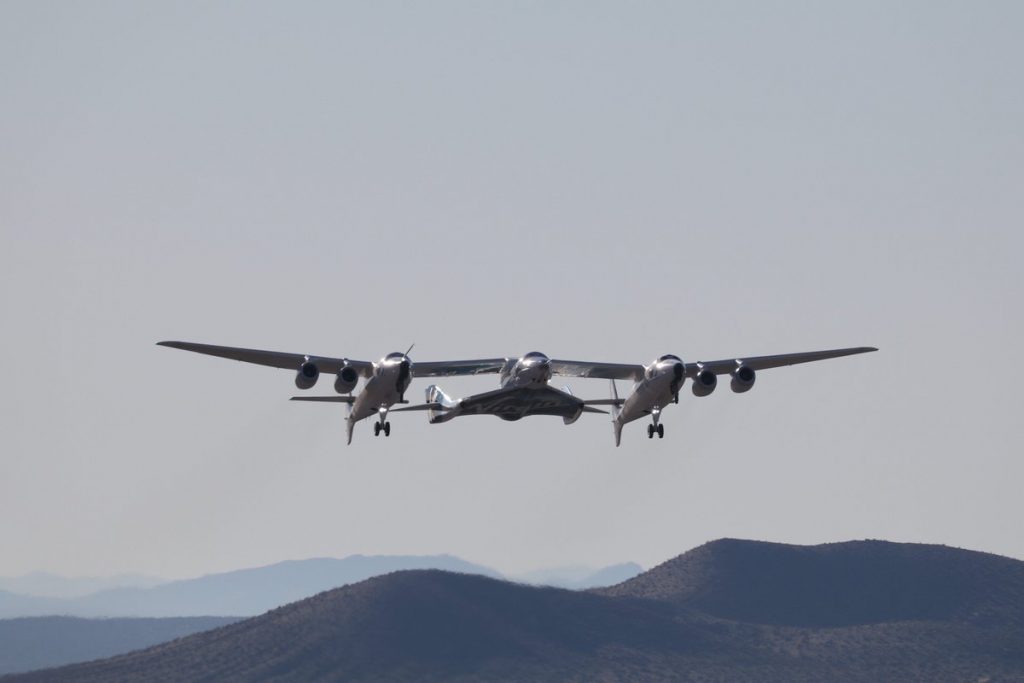
WhiteKnightTwo VMS Eve and SpaceShipTwo VSS Unity take off from Mojave space port.
]
Virgin Galactic plans to fly SpaceShipTwo VSS Unity to the edge of space today. This will be the fifth rocket powered flight and the second to to go to 80+ kilometers in altitude. Currently, the schedule has the WhiteKnightTwo with the SS2 hung beneath it taking off from Mojave Air & Space Port at 8:00 am PST local time (11:00 noon EST).
[ Update Feb.20: The test flight has been postponed due to weather issues:
Our test flight window opened this morning, but the Mojave weather isn’t cooperating. We plan to try again in the next few days. We’ll keep you posted.
Virgin Galactic plans to send the SpaceShipTwo “VSS Unity” once again to the border of space on Wednesday morning in Mojave, California (see earlier posting). No target time posted yet for takeoff of the WhiteKnightTwo with the SS2 hung beneath. Winds could always lead to delays. Once the duo takes off, it takes about 45 minutes to reach the altitude for the drop of the SS2. Check updates at Virgin Galactic (@virgingalactic) | Twitter.
This new video released on Tuesday focuses on the pilots:
Here are tweets about the two pilots, Dave Mackay and Mike ‘Sooch’ Masucci:
Get to know @VirginGalactic Chief Pilot, Dave Mackay. He has over forty years’ experience as a pilot, flying more than 140 types of aircraft. He has flown everything from Harrier jump jets, to Boeing 747’s and SpaceShipTwo. He’ll be in the cockpit for our next test flight. pic.twitter.com/HvYoOiXyz6
Co-piloting SpaceShipTwo for our fifth supersonic powered test flight will be Mike ‘Sooch’ Masucci. He’s flown over 80 different types of aircraft and accumulated more than 10,000 hours in the air as a pilot. Our test flight window opens tomorrow morning. pic.twitter.com/pn94WNvUsa