Category Archives: Space Systems

Ecliptic Enterprises avionics supported successful launch of SSO-A mission

Rex Ridenoure of Ecliptic Enterprises forwarded to me the update below on the company’s involvement with the launch of 64 satellites, including many university CubeSats, on a single SpaceX Falcon 9 rocket last December. The SSO-A mission was organized by Spaceflight.

(I’ll note that Ecliptic is leading the development of the Planetary Society‘s LightSail 2, which should launch as a secondary on a SpaceX Falcon Heavy this spring.)

Avionics from Ecliptic Enterprises Corporation Key to Successful SSO-A Mission

Pasadena, California – 2019 February 1. The novel Sun-Synchronous Orbit-A mission (SSO-A) successfully completed on December 3 last year relied significantly on error-free operation of an extensive suite of avionics supplied by Ecliptic Enterprises Corporation (Pasadena, California). Conceived in 2015 by Spaceflight (Seattle, Washington), SSO-A was the first fully dedicated rideshare mission, where 64 small satellites were integrated onto a single large launch vehicle (a SpaceX Falcon 9) via a modular stack of support structure, launched into Low Earth orbit and then separately deployed from the support structure to become independent Earth-orbiting satellites. This mission set a new U.S. record for the most satellites launched by a single launch vehicle: 64.
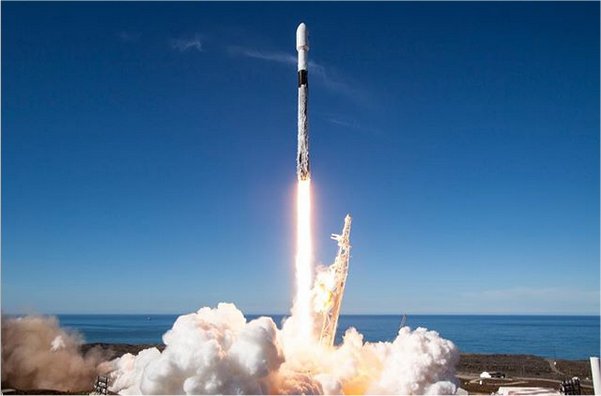
Liftoff of the SpaceX Falcon 9 from Vandenberg AFB with the 64 satellites of the SSO-A mission. Photo credit SpaceX.

Once reaching orbit, avionics on the Falcon 9 rocket’s upper stage initiated six deployment events: separation of a large module called the Upper Free-Flyer (UFF), separation of a smaller module called the Lower Free-Flyer (LFF) and release of four small satellites which were attached to a structural module that remined with the second stage. All of the satellites deployed from the UFF and LFF were of the microsat/CubeSat class—20 on the UFF and 40 on the LFF. Ecliptic’s avionics interfaced with five different separation system designs from four different vendors.

The UFF and LFF were both outfitted with a redundant suite of Ecliptic-supplied control avionics, battery packs, radio transmitters and wire harnesses. Separation from the Falcon 9 activated these systems, and for several more hours a combined 60 spacecraft release events were commanded by the electronics, following complex, thoroughly tested event sequences stored in non-volatile memory. Confirmation signals verifying spacecraft release and other important engineering telemetry were also captured and relayed to various tracking stations around the globe.

“Ecliptic’s products and services were the key to mission success,”

wrote Spaceflight’s SSO-A Mission Director Jeff Roberts as he commended the firm for its support of the mission. Ecliptic began its contract with Spaceflight over two years before the launch, stepping through requirements-definition and design phases, build-up of development model test versions of the system, and finally build-up and environmental testing of the flight units. As part of the overall effort, Ecliptic opened a new wiring harness lab and for over a year and a half designed, fabricated and tested over two miles of test and flight harnesses.

“Programmatically and technically, this was a very challenging effort,” said Ecliptic’s COO Riki Munakata, who also served as Project Manager for the contract. “The hardware, software and harnessing designs had to be flexible enough to deal with many changes in the SSO-A payload manifest during the course of the contract, and we knew that the overall operation ultimately had to be flawless for the mission to succeed 100%.”

About Ecliptic Enterprises Corporation: Ecliptic, a privately held firm based in Pasadena, California, provides space avionics and sensor systems to commercial, civil and defense-related markets in the U.S. and abroad. Its popular RocketCam™ family of onboard video systems provides improved situational awareness on rockets and spacecraft, while its variants of experiment and payload control avionics manage complex sequencing, monitoring, datahandling and data-routing functions for a wide range of mission applications. Ecliptic also supports selected small satellite- and CubeSat-class engineering, integration, testing and operations activities, including hosted payload accommodations. See more at http://www.EclipticEnterprises.com. RocketCam™ is a trademark of Ecliptic Enterprises Corporation.

About Spaceflight: Spaceflight is revolutionizing the business of spaceflight by delivering a new model for accessing space. A comprehensive launch services and mission management provider, the company provides a straightforward and cost-effective suite of products and services including state-of-the-art satellite infrastructure and rideshare launch offerings that enable commercial and government entities to achieve their mission goals on time and on budget. A service offering of Spaceflight Industries, Inc. in Seattle, Spaceflight provides its services through a global network of partners and launch vehicle providers. For more information, visit http://www.spaceflight.com.

Space access roundup – Jan.29.2019

A sampling of items regarding rockets, spaceships, etc:

** China’s Long March 5, the country’s largest heavy lift rocket, is set to launch again this year : China Plans Return-to-Flight of Long March-5 Booster – LeonardDavid.com

An essential launcher for China’s future space station and Moon exploration plans is being readied for a July flight.

The third Long March-5 takeoff follows a mishap of this booster-class on July 2, 2017. An intensive investigation was carried out to identify why the rocket failed less than six minutes after liftoff.

China’s Xinhua news agency reports that Yang Baohua, vice president of the China Aerospace Science and Technology Corporation (CASC), that the cause of the failure had been found.

2019 will be another busy launch year for China: China will attempt 30-plus launches in 2019, including crucial Long March 5 missions – SpaceNews.com.

And Chinese commercial launch companies are ramping up as well: Chinese companies OneSpace and iSpace are preparing for first orbital launches – SpaceNews.com.

** The USAF’s X-37 reusable spaceplane is still in orbit after nearly a year and a half: U.S. Air Force Space Plane Wings Past 500 days of Earth Orbiting – LeonardDavid.com

The secretive mission of a U.S. Air Force X-37B mini-space plane has winged past 500 days of flight. This robotic drone is performing classified duties during the program’s fifth flight.

This mission – tagged as Orbital Test Vehicle (OTV-5) — was rocketed into Earth orbit on September 7, 2017 atop a SpaceX Falcon 9 booster from Launch Complex 39A at NASA’s Kennedy Space Center in Florida.

** Feb 19: An Arianespace Soyuz rocket will launch the first ten satellites of the OneWeb global broadband Internet constellation, which will eventually total over 900 satellites.

** Firefly Aerospace shows off an engine test:

** Vector Launch is testing as well:

** SpaceX:

*** A local TV news station reports on activity at the SpaceX launch facility near Brownsville, Texas:

*** The first Falcon Heavy commercial mission, and the second flight of the launch system, looks to happen in March and a third flight with mostly military payloads could happen in April: After government re-opened, SpaceX sought two Falcon Heavy permits | Ars Technica

Of potentially more interest are applications for two permits related to the launch of the next Falcon Heavy mission, Arabsat 6A, and the landing of two side boosters and the central core. These applications indicate that the launch of the Arabsat 6A mission will occur no earlier than March 7 from Kennedy Space Center’s Launch Complex 39A. This is consistent with existing estimates for the current launch date.

The landing permit also confirms that SpaceX will seek to land the two side boosters at its landing zone along the Florida coast—setting up for a repeat of the dramatic side-by-side landings during the inaugural Falcon Heavy test flight last February. The company will also attempt to land the center core on an ocean-based drone ship in the Atlantic Ocean about 1,000km offshore. During the first test flight of the Falcon Heavy rocket, SpaceX narrowly missed landing the center core.

…

There is a lot riding on these landings, as SpaceX intends to reuse both the side boosters and the center core for its third Falcon Heavy mission, Space Test Program-2. This flight could occur as early as April, although some slippage to the right seems likely, as a one-month turnaround of three boosters is ambitious. The payloads for this ride-share mission, bought by the US Air Force, include six weather research satellites, several demonstration missions, and academic projects.

See also:

*** Two Falcon 9 missions are set for February:

*** The Falcon 9 fairing catcher ship is traveling from the West Coast to Florida, where it will have more opportunities to use its net to snag nose-cone fairings ejected from the rockets during satellite launches: SpaceX fairing catcher Mr. Steven heads for Panama Canal after one last drop test – Teslarati.com

Iconic fairing recovery vessel Mr. Steven appears to have quietly departed for SpaceX’s Florida launch facilities a few days after completing (successfully or not) one final controlled fairing catch test in the Pacific Ocean.

While bittersweet for those that have closely followed the vessel’s development and many attempted Falcon fairing recoveries, this move should ultimately give Mr. Steven around three times as many opportunities to attempt fairing recoveries thanks to SpaceX’s significantly higher East Coast launch cadence.

For updates on Mr. Steven, check out: SpaceXFleet Updates (@SpaceXFleet) | Twitter.

** Other items:

====

Telescopes and Binoculars at Amazon

Student and amateur CubeSat news roundup – Jan.27.2019

A sampling of recent articles, press releases, etc. about student and amateur CubeSat / SmallSat projects and programs:

** From Basement to Orbit – A New Class of Personal Satellites by Joe Latrell — Kickstarter – Crowdfunding the launch of a picosat PocketQube.

Development is nearly complete. The design for the PocketQube is finalized, and the hardware is now functional. There are still some integration processes and software work to do along with various testing requirements. We are also in the process of getting our licensing with the FCC, ITU, and other government agencies. We have spent nearly $50,000 getting to this point. To take it across the finish line, we need to raise $50,000 more. Our plan is to launch Discovery in 2019 into a 500 km (310 miles) Sun synchronous orbit. This location gives the Discovery optimal viewing of the Earth and makes it easier for us to retrieve data and upload new instructions. But in order to be ready to fly, we have to finish a lot of fine details between now and then.

More at Kickstarter campaign starts to finance launch of garage-built cubesat | Behind The Black.

** Winner Announced for the 2018 Altair Feko Student Competition – HPC Wire – Design of a CubeSat antenna by Didier Goulet-Tran, an under-graduate student from Polytechnique Montreal, Canada, wins student tech contest-

Goulet-Tran’s entry utilized Feko to design planar reflect array antenna, where the whole antenna system can be folded on one side of the satellite and saving space for CubeSat application. The challenge in the design of reflect array is to choose the shape of the printed surfaces to form a collimated beam over a reasonable bandwidth. The designed reflect array was fabricated and its performance validated using measurements in anechoic chamber achieving a bandwidth of 6.5%.

** JAXA launches its first startup-built satellite RAPIS-1 & 6 other satellites | SpaceTech Asia – Japanese launch included the following university smallsats:

  1. AOBE-VELOX-4, a 2U cubesat designed by Japan’s Kyutech and Singapore’s Nanyang Technological University (NTU) to observe and image the Lunar Horizon Glow
  2. Hodoyoshi 2 or RISESat (Rapid International Scientific Experiment Satellite), a 50-kg satellite developed  by the University of Tokyo, and carrying 8 international scientific payloads
  3. OrigamiSat 1, a 3U Cubesat with a membrane deployment system, by Tokyo Institute of Technology (TITech), and
  4. NEXUS, a 1U cubesat for amateur radio, designed at Nihon University in collaboration with Japan AMSAT Association (JAMSAT).

** Sky is no limit for students at Space Kidz India – The Sunday Guardian Live – A recent launch of India’s PSLV included the secondary payload Kalamsat-V2, a student-built cubesat for technology demos.

HYDERABAD: When minutes after the Indian Space Research Organisation (ISRO)’s PSLV-C44 rocket soared into skies at 11.39 pm on Thursday, Chairman Dr K. Sivan congratulated one and all in his teams, but importantly the students from Chennai, who made Kalamsat V2, the world’s lightest satellite that went into space along with DRDO’s Microsat and their leader Dr Srimathy Kesan.

Dr Srimathy Kesan, who runs Space Kidz India (SKI) from T. Nagar in Chennai, was the center of applause from across the country for her school boys who built the tiny cube satellite weighing just 1.2 kg. She went ecstatic with her mobile continuously getting calls and messages since Friday morning and told this newspaper on phone from Chennai that: “My dream comes true and I am overwhelmed.”

See also India’s 1st Rocket Launch of 2019 Sends 2 Satellites Into Orbit – space.com.

** AMSAT news on student and amateur CubeSat/smallsat projects: ANS-027 AMSAT News Service Special Bulletin

  • OrigamiSat-1 Requests Help for Testing 5.84 GHz Downlink
  • OrigamiSat-1 Reception Challenges
  • AO-85 Operations Re-Started – Telemetry Requested
  • ARISS TV Transmitter Back on Earth for Inspection, Possible Repair
  • ARISS Officers Elected
  • Upcoming ARISS Contact Schedule
  • Limited ISS SSTV Scheduled for January 30 – February 1
  • Registration Open for “VHF Super Conference”
  • AMSAT 50th Anniversary Awards Program
  • Upcoming Satellite Operations
  • NASA Administrator Addresses Furloughed Employees
  • Australia’s First Commercial Launch Facility to be Built
  • India Will Fly 100 Student Satellites
  • Satellite Shorts From All Over

General CubeSat/SmallSat info:

====


Check out the Best Selling Electronics at Amazon

Student and amateur CubeSat news roundup – Jan.20.2019

A sampling of recent articles, press releases, etc. about student and amateur CubeSat / SmallSat projects and programs:

** On-Orbit Frequency Change Announced for UWE-4 CubeSat – ARRL.org

The Satellite Technology group at the University of Würzburg has announced a change of frequency for the UWE-4 CubeSat, launched on a December 27 Soyuz flight. The 1U CubeSat carries an electric propulsion experiment and a 70-centimeter 9.6 k AX.25 digipeater.

“After 2 weeks in orbit, UWE-4 is in very good shape,” the group reported. “After the early-orbit phase, we are looking forward to some interesting experiments with the attitude determination sensors and the propulsion system. Unfortunately, our uplink success rate is very poor, which currently prevents these experiments.”

** AMSAT news on student and amateur CubeSat/smallsat projects: ANS-020 AMSAT News Service Special Bulletin

  • Knacksat in Safe Mode: Reports Needed
  • NEXUS Launch Update
  • OrigamiSat-1 Launch Update
  • AMSAT 50th Anniversary Awards Program
  • CubeSat Postdoc Job Opening at University of Arizona
  • CubeSat Training Offered April 23-25, 2019
  • Upcoming Satellite Launches Announced
  • Upcoming Satellite Operations
  • ARISS News
  • Shorts from All Over

General CubeSat/SmallSat info:

====


Check out the Best Selling Electronics at Amazon

Student and amateur CubeSat news roundup – Jan.6.2019

A sampling of recent articles, press releases, etc. about student and amateur CubeSat / SmallSat projects and programs:

** South Africa launches ZACube-2 nanosatellite – Telecompaper

The ZACube-2 weighs 4 kg and is South Africa’s second nanosatellite to be launched into space. It is three times the size of its predecessor, TshepisoSat. It is a precursor to the MDASat, a constellation of nine nanosatellites that will be developed to provide very high frequency data exchange communication systems to the maritime industry.

The Department of Science and Technology (DST) has invested ZAR 16.5 million in the Cape Peninsula University of Technology (CPUT) for the project in support of Operation Phakisa. The project is managed by the DST’s South African National Space Agency (SANSA), in cooperation with the University of Montpellier, the French Embassy and the Paris Chamber of Commerce.

** MySat-1 opens up opportunities for UAE youth in space sector – GulfNews. com

Dubai: UAE students who built MySat-1, a ‘CubeSat’ launched last year to the International Space Station (ISS), are now more informed and capable to contribute to the developing space sector of the country.

The 10-centimetre cube satellite MySat-1 was developed by students of the UAE-based Khalifa University of Science and Technology and was successfully launched to space on board the Northrop Grumman Cygnus spacecraft.

MySat-1’s launch came on the heels of launch of KhalifaSat, the UAE’s first 100 per cent Emirati-made satellite launched on October 29.

** Eager for space experience? ULA invites K-12 students to submit payloads – Florida Today -This involves suborbital projects but good prep for small satellite development.

Twenty teams from kindergarten through 12th grade will be invited to design, build and launch payloads – objects, experiments and instruments – that will eventually take flight on an intern-built, 35-foot-tall Future Heavy Super Sport rocket. Next summer is the target launch window.

Teams can also compete for a chance at $5,000 for their school or organization. That competition is based on how close their payload gets to a target on the ground.

** Nepal launching own satellites by mid-May – The HimalayanTimes.com

According to Rabindra Prasad Dhakal, chief of technical department, Nepal Academy of Science and Technology, the two have been provided Rs 20 million to launch the satellites named ‘Birds 3’. The amount was released to develop three satellites simultaneously and preparations are under way for the launch by mid-May.

The satellites will take photos of various parts of the country on a daily basis and also disseminate information about possible disasters. NAST scientists and the Minister of Science and Technology are scheduled to leave for Japan before the launch of the satellites.

** PW-Sat2 deorbit sail deployment – on-board camera footage | Southgate Amateur Radio News

PW-Sat2, the second Polish student satellite, also launched on the SpaceX Falcon 9 SSO-A flight with AMSAT Fox-1Cliff, is a student project with the goal to test a new deorbit sail.

The sail was deployed on December 29, 2018. On-Board camera footage of the event can be viewed at

** AMSAT news on student and amateur CubeSat/smallsat projects: ANS-… AMSAT News Service Special Bulletin

  • Recurring Donations Feature Added to AMSAT.org
  • D-STAR ONE Launched, Telemetry Received
  • Ham Talk Live Podcast Featuring W6RO Satellite Operation
  • PW-Sat2 Deorbit Sail Deployment – On-Board Camera Footage
  • JAMSAT NEXUS V/U Mode-J CubeSat Scheduled to Launch January 17
  • Australian National Scout Jamboree – AJ2019
  • DL50AMSAT Callsign IG HamSpirit Satellite Weekend January 18-20
  • VUCC Awards-Endorsements for December 2018
  • AMSAT South Africa Dual-Band VHF/UHF Yagi
  • Upcoming Satellite Operations
  • AMSAT at Thunderbird Hamfest in Glendale AZ, 12 January 2019
  • Satellite Shorts From All Over

General CubeSat/SmallSat info:

====

Galaxy Girls: 50 Amazing Stories of Women in Space.