Category Archives: Space Systems

The Opportunity Rover mission declared over but other missions on Mars continue

After several months of futile efforts to contact Opportunity, which went silent last year during a dust storm that covered most of Mars, NASA today officially declared the end of the rover’s mission:

This video gives a brief review of Opportunity’s 15 years of exploration:

Opportunity left a long trail of accomplishments behind it: Look Back at Opportunity’s Record-Setting Mission – NASA
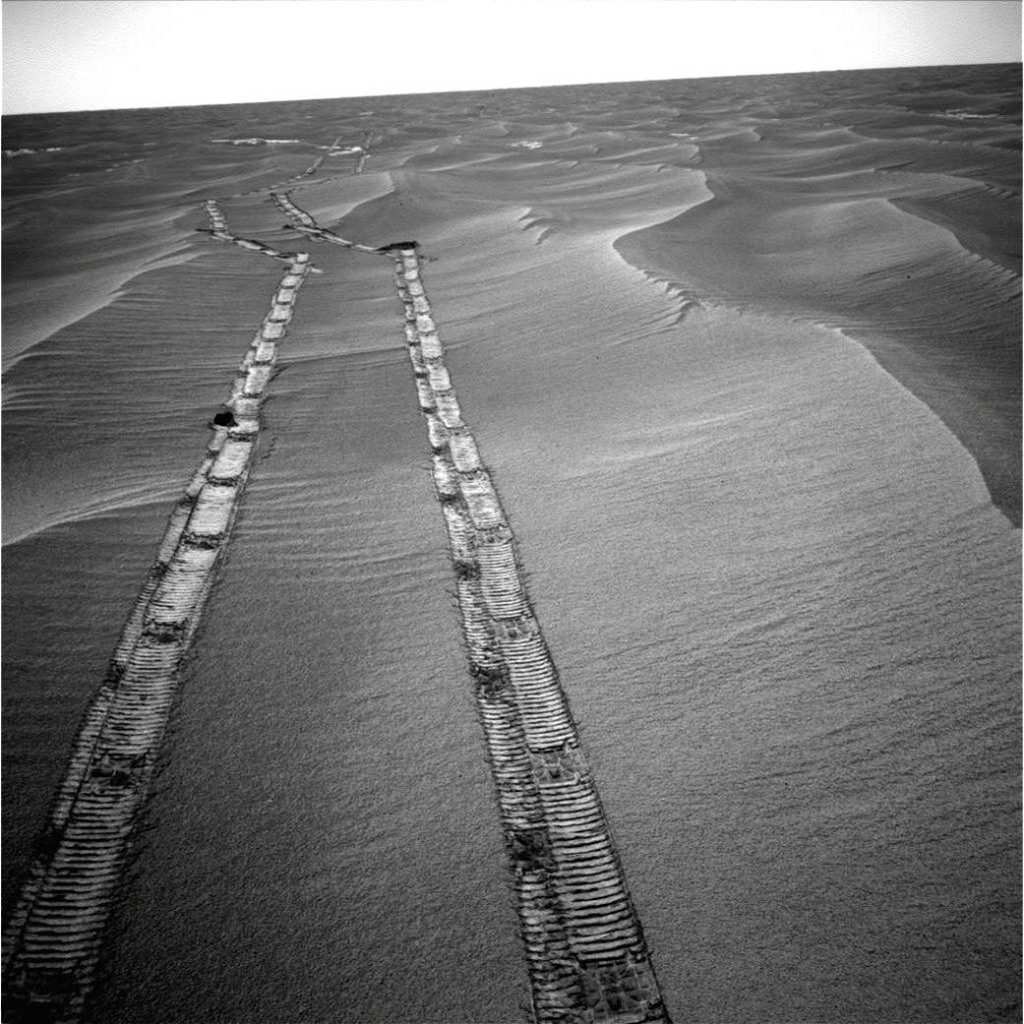
In this image from 2010, Opportunity used its navigation camera for this northward view of tracks the rover left on a drive from one energy-favorable position on a sand ripple to another. The rover team called this strategy “hopping from lily pad to lily pad.”

The Opportunity rover stopped communicating with Earth when a severe Mars-wide dust storm blanketed its location in June 2018. After more than a thousand commands to restore contact, engineers in the Space Flight Operations Facility at NASA’s Jet Propulsion Laboratory (JPL) made their last attempt to revive Opportunity Tuesday, to no avail. The solar-powered rover’s final communication was received June 10.

Designed to last just 90 Martian days and travel 1,100 yards (1,000 meters), Opportunity vastly surpassed all expectations in its endurance, scientific value and longevity. In addition to exceeding its life expectancy by 60 times, the rover traveled more than 28 miles (45 kilometers) by the time it reached its most appropriate final resting spot on Mars – Perseverance Valley.

The final transmission, sent via the 70-meter Mars Station antenna at NASA’s Goldstone Deep Space Complex in California, ended a multifaceted, eight-month recovery strategy in an attempt to compel the rover to communicate.

===

Meanwhile, activities of the other missions on Mars continue. The InSight lander in December deployed the seismometer and this week placed the heat probe onto the surface:

From the NASA JPL article:

NASA’s InSight lander has placed its second instrument on the Martian surface. New images confirm that the Heat Flow and Physical Properties Package, or HP3, was successfully deployed on Feb. 12 about 3 feet (1 meter) from InSight’s seismometer, which the lander recently covered with a protective shield. HP3 measures heat moving through Mars’ subsurface and can help scientists figure out how much energy it takes to build a rocky world.

Equipped with a self-hammering spike, mole, the instrument will burrow up to 16 feet (5 meters) below the surface, deeper than any previous mission to the Red Planet. For comparison, NASA’s Viking 1 lander scooped 8.6 inches (22 centimeters) down. The agency’s Phoenix lander, a cousin of InSight, scooped 7 inches (18 centimeters) down.

“We’re looking forward to breaking some records on Mars,” said HP3 Principal Investigator Tilman Spohn of the German Aerospace Center (DLR), which provided the heat probe for the InSight mission. “Within a few days, we’ll finally break ground using a part of our instrument we call the mole.”
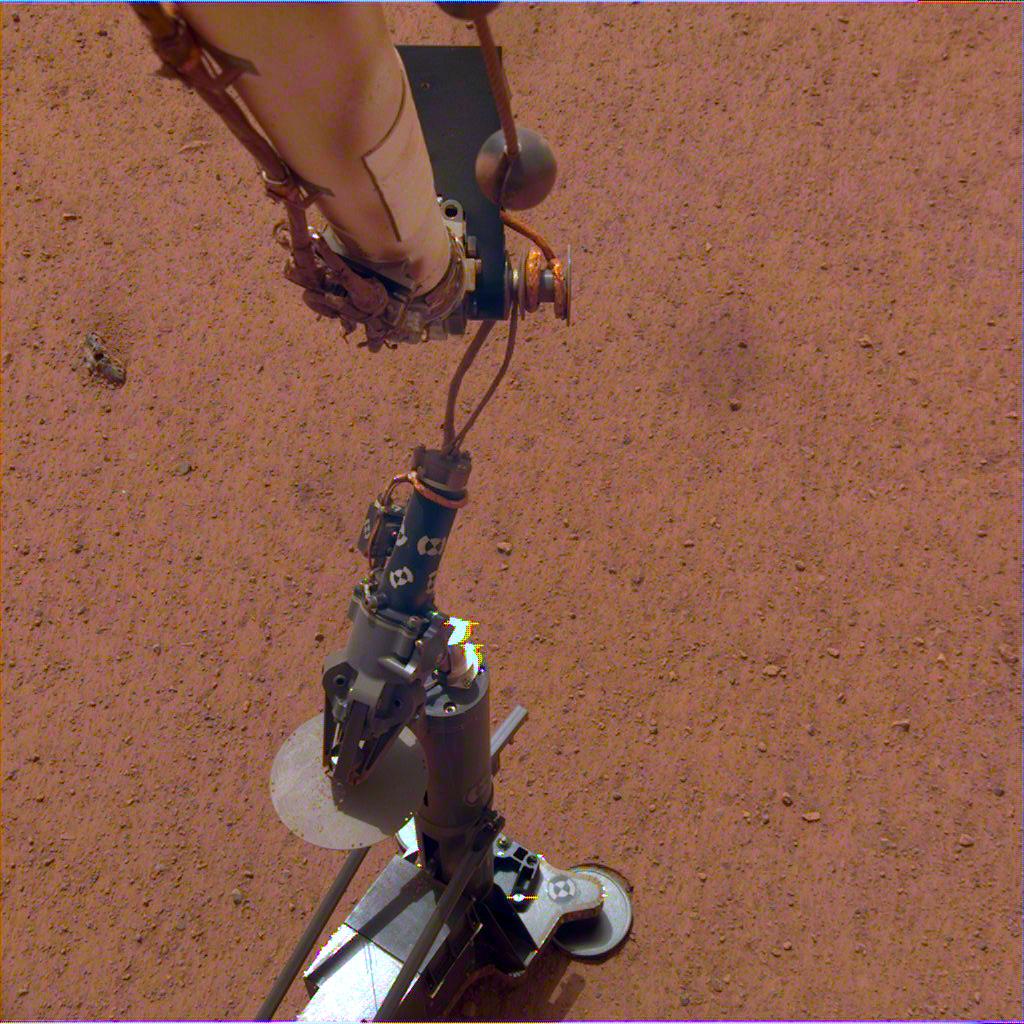
NASA’s InSight Prepares to Take Mars’ Temperature. NASA’s InSight lander set its heat probe, called the Heat and Physical Properties Package (HP3), on the Martian surface on Feb. 12. Credit: NASA/JPL-Caltech/DLR. › Full image and caption

===

Check out a selection of recent images of Mars from the Curiosity Rover: Curiosity Mars Rover: Scenic Shots – LeonardDavid.com
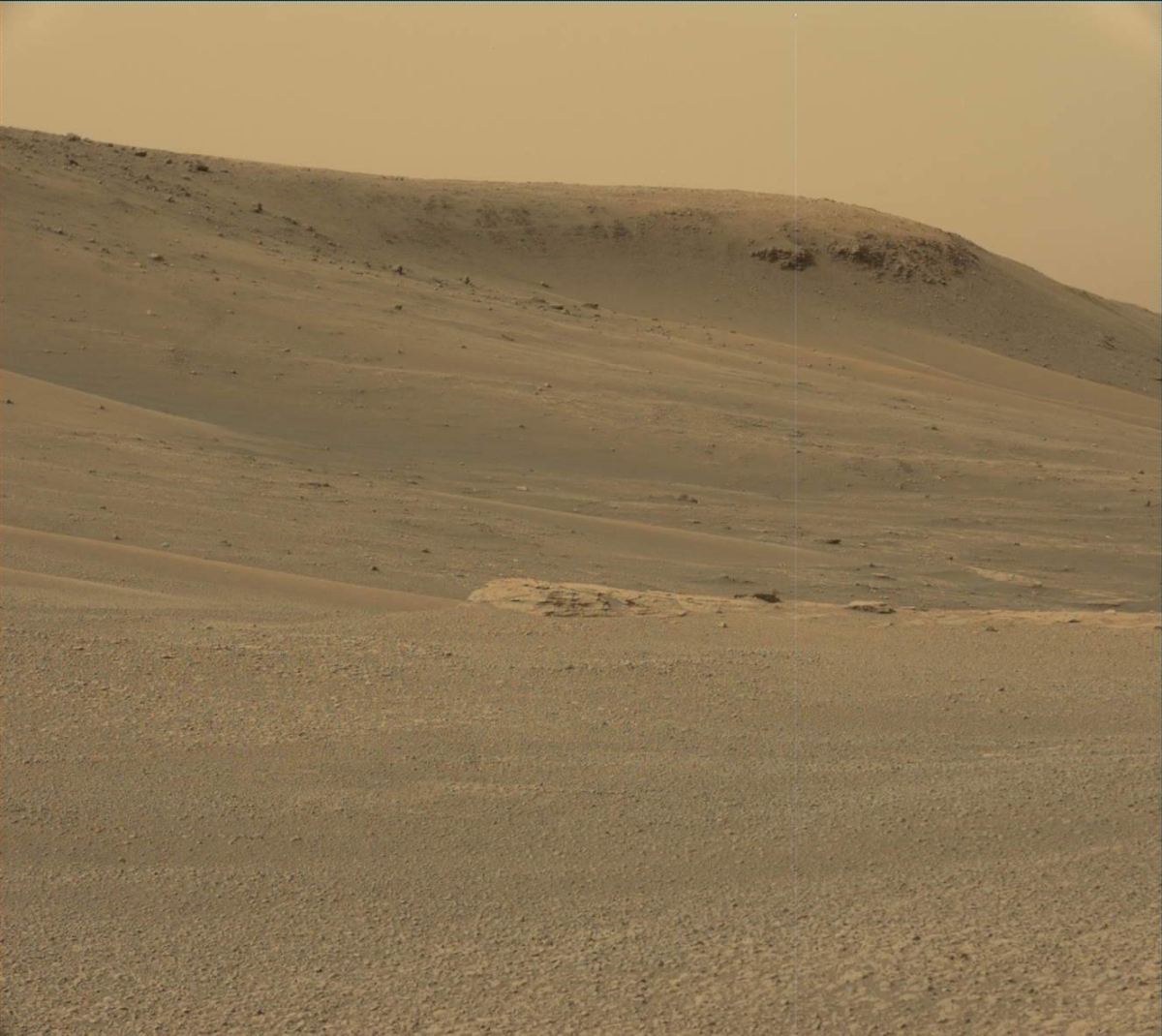
Curiosity Mastcam Left Sol 2313 February 7, 2019
Credit: NASA/JPL-Caltech/MSSS

====

Chasing New Horizons: Inside the Epic First Mission to Pluto

Space access roundup – Feb.10.2019

A sampling of items related to traveling to and through space:

** Virgin Galactic pilots Mark ‘Forger’ Stucky and CJ Sturckow received Commercial Astronaut Wings from the FAA for flying to space on SpaceShipTwo:

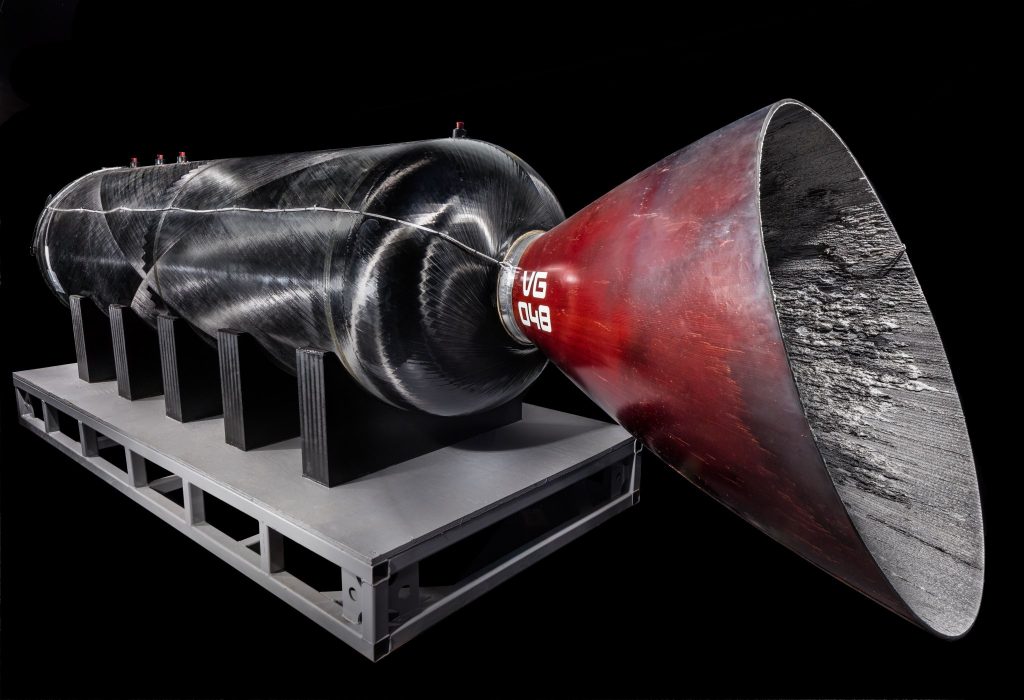
The SpaceShipTwo motor from the flight was also given some special recognition:

Richard Branson never ceases to be optimistic on flight schedules: Richard Branson says he’ll fly to space by July – AFP/phys.org.

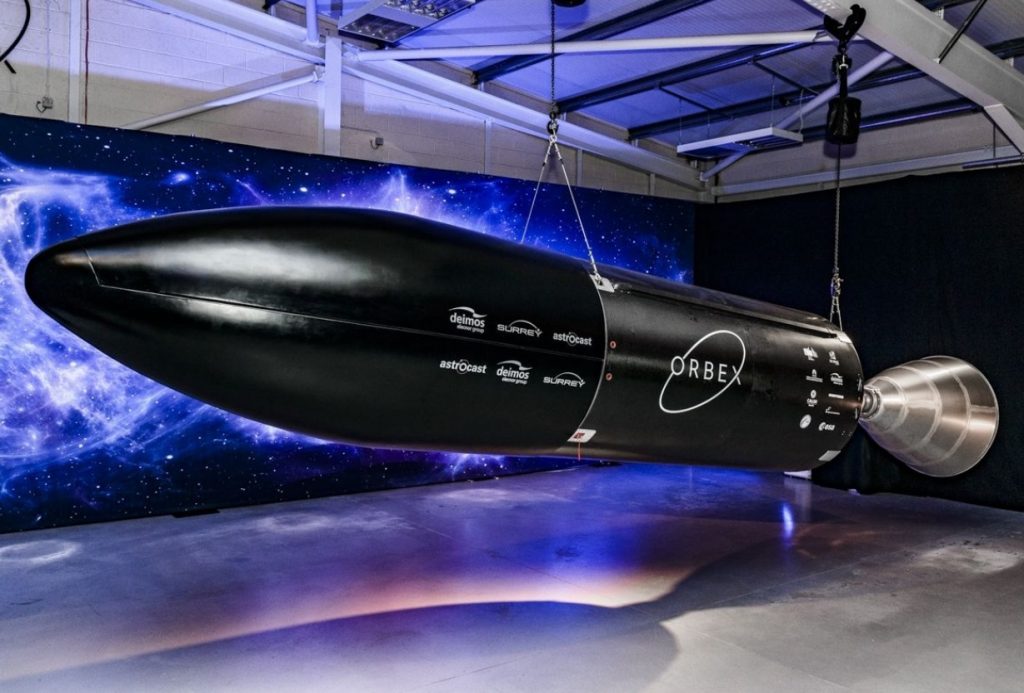
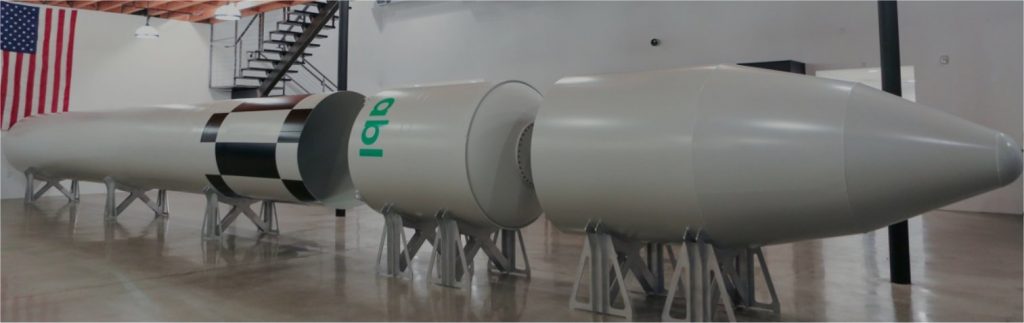
** Orbex Space in the UK shows a

completed engineering prototype of the Stage 2 rocket (the stage that will transit into orbital flight after launch) [that] is made from a specially-formulated lightweight carbon fibre and aluminium composite and includes the world’s largest 3-D printed rocket engine.

Orbex upperstage engineering prototype “#Prime, the completed stage 2 rocket and the world’s most efficient #smallsat launcher. It includes the world’s largest 3D printed rocket engine and designed to run on bio-propane, a #clean, #renewable energy source”.

More about the roll out:

The first stage booster will be reusable. Orbex has not shown a prototype of the booster or given details about its design.

Orbex is aiming for the first orbital launch in 2021.

Orbex has also obtained launch contracts with two companies:

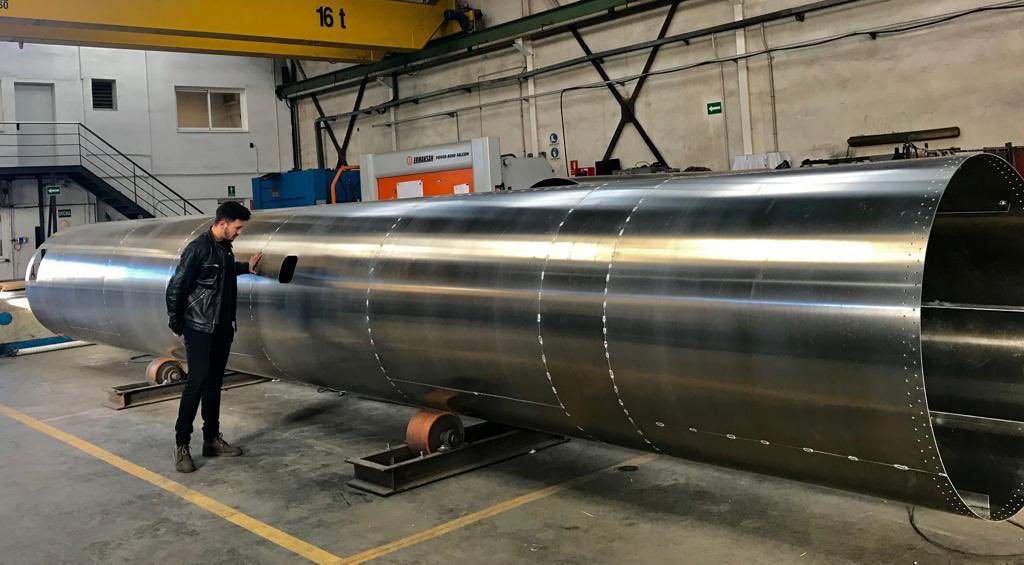
** PLD Space of Spain also makes progress in development of a smallsat launcher with a reusable first stage booster:

PLD Space reusable first stage prototype.

Plus:

** Intro to NASA’s Launch Services Program, which hires commercial rockets to launch the agency’s unmanned payloads:

** Space elevator proponents continue to pursue this replacement for rockets:

From the magazine article:

While most engineered structures operate at a fraction of their material’s tensile strength—how far they can be pulled without breaking—most biological structures, such as tendons, operate near their max.  That’s because biological structures are constantly breaking themselves down and rebuilding, which allows for continual repair.

Space elevators won’t require such a strong cable if the cable also continually renews itself, Sun and Popescu reason. This feat could be achieved, they suggest, by developing a cable that’s constantly serviced by autonomous robots. Rather than waiting for breaks in the cable, these robots can dynamically break down and rebuild the cable to make sure it’s always in good working order. This cable would be segmented so that if a break occurred, it wouldn’t extend beyond a small site, note the researchers, who recently reported their solution on the pre-print website arXiv.

** SpaceX:

*** Latest pictures of StarHopper work underway in Texas:

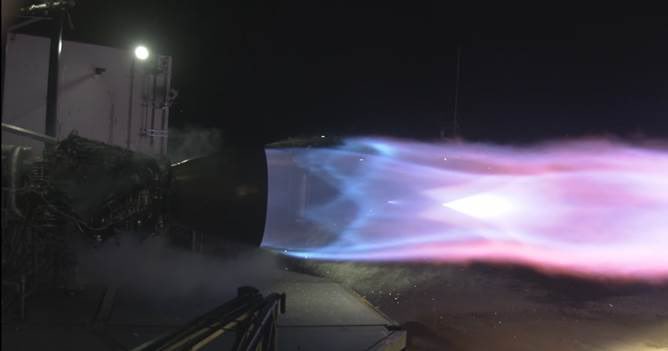
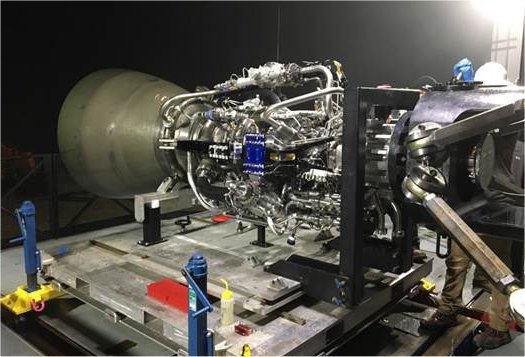
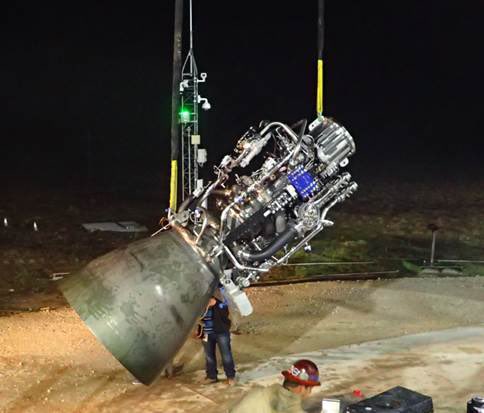
*** More about Raptor engine tests:

*** More on Crew Dragon demo mission scedule -test flight with no one onboard is now set for no earlier than March 2: First unpiloted test flight of SpaceX Crew Dragon capsule reset for March 2 – Spaceflight Now

*** Other SpaceX related items:

** Rocket news included in the latest TMRO.tv space news report: SpaceX Engine Tests, ISRO Spaceflight, Lunar Craters and SpaceIL

====

Telescopes and Binoculars at Amazon

Videos: “Space to Ground” ISS report – Feb.8.2019

Here is NASA’s latest Space to Ground report on activities related to the International Space Station:

A Northrop Grumman Cygnus cargo ship has been berthed to the ISS since it arrived on November 19th following the launch from NASA Wallops Island on November 17th aboard an Antares 230 rocket. Today the Cygnus left the station: Astronauts Release U.S. Spacecraft from Station – Space Station

The vehicle will maneuver to higher orbits for the release of several cubesats for NanoRacks. It will then de-orbit on Feb. 25th and burn up in the atmosphere over the Pacific Ocean.

More at NG-10 Cygnus departs ISS after 3 month science, supply mission – NASASpaceFlight.com.

====

The High Frontier: An Easier Way

Student and amateur CubeSat news roundup – Feb.4.2019

A sampling of recent articles, press releases, etc. about student and amateur CubeSat / SmallSat projects and programs:

** NTU Singapore Deploys Its Ninth Satellite Into Space – Asian Scientist Magazine

Nanyang Technological University (NTU), Singapore, has successfully launched and deployed its ninth satellite. NTU’s first foray into space began 20 years ago. The first project was a communication payload codenamed Merlion, while the main satellite body was developed by the University of Surrey, UK. The latest satellite, called the AOBA VELOX-IV cube satellite, was built by a team led by Mr. Lim Wee Seng, executive director of NTU’s Satellite Research Centre, while its new altitude determination and control algorithm was developed by Professor Cho Mengu’s research team at the Kyushu Institute of Technology, Japan. It was launched from the Japan Aerospace Exploration Agency (JAXA) Epsilon-4 rocket.

** USI students make history with UNITE CUBE SAT deployment – 14NEWS.com

Two years of hard work came to fruition Wednesday morning when students from USI [University of Southern Indiana] watched their handmade satellite launched from the International Space Station.

The team was selected to design, build, and monitor the UNITE CUBE SAT satellite. The device is designed to measure plasma levels in the ionosphere, study the Earth’s orbit and measure temperature readings when the satellite re-enters the atmosphere.

“It was a lot of testing and development,” said Ryan Loehrlein, a USI senior and assistant team leader on the UNITE project. “We were doing prototyping with the boards. We were outside in below freezing temperatures at times just making sure the satellite would work. So actually seeing it launch today and getting to see it launched into space it’s one of those things that…it’s hard to let go of it because we’ve been doing it so long.”

See also Satellite made by USI students launched into space – 14News.com

** New nanosatellite system captures better imagery at lower cost — ScienceDaily

Ben-Gurion University researchers have developed a new satellite imaging system that could revolutionize the economics and imagery available from space-based cameras and even earth-based telescopes.

“This is an invention that completely changes the costs of space exploration, astronomy, aerial photography, and more,” says Angika Bulbul, a BGU Ph.D. candidate under the supervision of Prof. Joseph Rosen in the BGU Department of Electrical and Computer Engineering.

In a paper published in the December issue of Optica, the researchers demonstrate that nanosatellites the size of milk cartons arranged in a spherical (annular) configuration were able to capture images that match the resolution of the full-frame, lens-based or concave mirror systems used on today’s telescopes.

** AMSAT news on student and amateur CubeSat/smallsat projects: ANS-034 AMSAT News Service Special Bulletin

  • AMSAT Announces 50th Anniversary Space Symposium in Washington, DC
  • Es’hail-2/P4A Designated Qatar-OSCAR 100 (QO-100)
  • NEXUS Designated as Fuji-OSCAR 99 (FO-99)
  • OrigamiSat-1 Granted FO-98 OSCAR Number
  • Frank Bauer KA3HDO Appears on Ham Talk Live
  • The ARISS Team Thanks You for Your Tremendous Support in 2018!
  • ARRL Board Creates Permanent ARISS Committee
  • European Astro Pi Challenge 2018/19: Mission Zero
  • 2019 HamSCI Workshop Call for Papers and Speakers
  • AMSAT-DL Website Now Multilingual
  • Changes to the AMSAT-NA TLE Distribution for January 31, 2019
  • How to Support AMSAT
  • Upcoming Satellite Operations
  • Satellite Shorts from All Over

** General CubeSat/SmallSat info:

===

** Reposting –  From Basement to Orbit – A New Class of Personal Satellites by Joe Latrell — Kickstarter – Crowdfunding the launch of a picosat PocketQube.

Development is nearly complete. The design for the PocketQube is finalized, and the hardware is now functional. There are still some integration processes and software work to do along with various testing requirements. We are also in the process of getting our licensing with the FCC, ITU, and other government agencies. We have spent nearly $50,000 getting to this point. To take it across the finish line, we need to raise $50,000 more. Our plan is to launch Discovery in 2019 into a 500 km (310 miles) Sun synchronous orbit. This location gives the Discovery optimal viewing of the Earth and makes it easier for us to retrieve data and upload new instructions. But in order to be ready to fly, we have to finish a lot of fine details between now and then.

More at Kickstarter campaign starts to finance launch of garage-built cubesat | Behind The Black.

====


Check out the Best Selling Electronics at Amazon

Space access roundup – Feb.1.2019

A sampling of items about space transport projects:

** Virgin Orbit Payload Processing – The latest video from VO “gives you an inside look at how we take care of our payloads once they’re delivered to our front door in Long Beach”:

** ABL Space Systems smallsat launcher design has been modified and the price lowered: ABL Space Systems increases performance and cuts price of its small launch vehicle – SpaceNews.com

[ABL] is offering an upgraded version of the RS1 rocket at a price of $12 million a launch, down from an earlier price of $17 million. The vehicle’s performance has been increased from 900 to 1,200 kilograms to low Earth orbit.

Company executives say the change in performance and cost comes after a year and a half of work to refine the design of the vehicle and better understand what it would take to produce the vehicle.

Prototoype of the ABL Space Systems RS1 rocket

** Copenhagen Suborbitals presents the non-profit volunteer project’s “next generation of rocket engines, the BMP100, which will propel our manned Spica rocket above the edge of space. Here we discuss our current progress on the engine design after our initial design project called BPM100 in 100 days.”

** Blue Origin New Glenn, which is to start flying in 2021, gets another customer: Blue Origin to Launch Telesat’s Advanced Global LEO Satellite Constellation – Blue Origin

Blue Origin is honored that Telesat has selected our powerful New Glenn rocket to launch Telesat’s innovative LEO satellite constellation into space. We are excited to be partnering with this industry leader on their disruptive satellite network architecture. New Glenn’s 7-meter fairing, with its huge mass and volume capabilities, is a perfect match for Telesat’s constellation plans while reducing launch costs per satellite.

** ULA Atlas V to launch NASA asteroid mission – ULA wins contract to launch NASA’s Lucy mission to visit unexplored asteroids – Spaceflight Now

The launch contract is valued at $148.3 million, a figure that includes the launch service and other mission-related costs, according to NASA.

ULA said NASA selected the Atlas 5 rocket after a “competitive launch service task order evaluation” by the space agency’s Launch Services Program. ULA’s Atlas 5 and Delta 4 rockets are certified to launch NASA’s robotic interplanetary science missions, alongside SpaceX’s Falcon 9 launcher. Both companies are expected to submit bids for each task order competition managed the Launch Services Program.

** SpaceX:

**** A nose-cone fairing “catch” comes tantalizingly close to success:

**** New photos of the first operational Raptor engine, which will be test fired at the company’s McGregor, Texas facility:

More on Elon’s latest comments on the

**** New photos from Boca Chica Beach

**** Rocketing from composites to steel – Tim Dodd, the Everyday Astronaut, explains Elon’s rationale for changing the structure of the Super Heavy booster and Starship: from carbon composites to stainless steel:

Here’s another view of the change:

**** A report on SpaceX’s crew transport:

** For more space transport news, see Rocket Report: Secret CIA smallsat launcher, Falcon 9 test, Soyuz passes 50 | Ars Technica.

====

Telescopes and Binoculars at Amazon