Category Archives: Education

Space at the Cheltenham Science Festival – June.2-7.2015

Below is an announcement of a science festival in Cheltenham, in the Cotswolds area of England this June. The festival will feature lots of space related events:

SPACE EVENTS AT CHELTENHAM SCIENCE FESTIVAL

The Times Cheltenham Science Festival (2-7 June 2015) brings another stellar programme to Cotswolds this summer. Over the course of six days, the Festival hopes to inspire, challenge, surprise and entertain visitors in equal measure. It showcases ground-breaking research, debates big questions and introduces audiences to some of the world’s greatest thinkers. The 2015 Festival also has a fascinating range of space-themed events.

Particle physicist, retired rock star and presenter of the BBC’s Wonders of the Solar System, Brian Cox is the Royal Society’s newly appointed Professor for Public Engagement in Science at Manchester University. Join Brian as he talks with Adam Rutherford about particle physics, the importance of getting people engaged with science and why the UK needs to aspire to be the best place for science in the world.
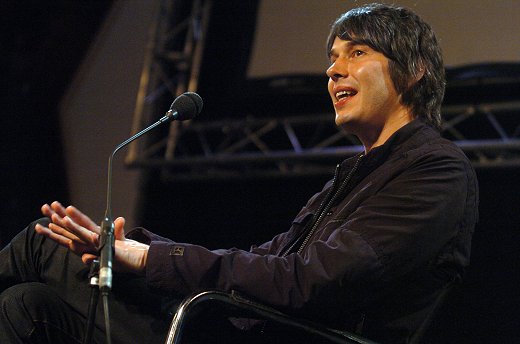
Brian Cox cr Becky Matthews (1016)Brian Cox will participate in the Time Cheltenham Science Festival.

What does the long-range future hold? Is there just one universe, or is ours one of many? Past President of the Royal Society Martin Rees goes from Mars to the multiverse, with astonishing recent developments in astronomy and cosmology: from unmanned spacecraft exploring our own solar system, to telescopes that reach as far as the Big Bang — and perhaps gives hints of other big bangs!

Mars is our nearest neighbour, but how do we get a better look at it? Land a 1 tonne, car-sized, laser-eyed nuclear powered robot laboratory named Curiosity on its surface, that’s how! Since 2012, the rover has been tasting, vaporising and rolling over the Martian landscape. Join Sanjeev Gupta, Peter Grindrod and John Bridges to get the latest on the red planet from Curiosity.

In 2014, Rosetta finally reached its destination after a ten-year, 6 billion km journey, becoming the first spacecraft in history to orbit a comet and land a probe on its surface. Join astrobiologist Lewis Dartnell, Rosetta project scientist Matt Taylor and planetary and space scientist Monica Grady to find out what happened when Philae touched down, the latest discoveries from Rosetta and what exciting breakthroughs are yet to come.

In 2014, cosmologists were thrilled to report ripples emanating from the beginning of time. But in a widely-publicised debacle these were proved false, the results most likely due to dust in the Milky Way. Andrew Pontzen joins experts Andrew Jaffe and George Efstathiou as they explain what went wrong, the effect this had on cosmology and what happens next as we continue searching for the moments after the Big Bang.

Space is an expensive business; this recent Rosetta mission is said to have cost £1.4bn. Although space research is often seen as glamorous and exciting, should research here on earth take priority? Asking whether we can justify the cost are Monica Grady, who organised a Kickstarter campaign to fund a mission to the moon, Director of RAL Space Richard Holdaway and former European Commission Chief Scientific Adviser Anne Glover.

For more than 50 years, giant telescopes like those at Jodrell Bank Observatory have searched the skies for evidence of alien civilisations. Join Jodrell Bank’s Tim O’Brien as he describes recent progress in the Search for Extra-terrestrial Intelligence (SETI), including live data links to giant telescopes, and considers what the future may hold in our attempts to make contact with our cosmic neighbours.

Festival visitors can join the Cotswold Astronomical Society for an evening of stargazing or for a bit of Festival fun, audiences can join a spoof mission to Mars. Masquerading as highly trained astronauts, participants should be prepared to face the worst case scenario!

The full Festival programme is available at cheltenhamfestivals.com

Chicagoland Boy Scouts and Explorers to send research projects to the ISS

An announcement from  Center for the Advancement of Science in Space (CASIS), which manages R&D on the Int. Space Station, and the Boy Scouts of America and Exploring programs:

New Partnership Enables Chicagoland Boy Scouts and Explorers
to Send Research Projects to International Space Station

(Chicago, IL) March 26, 2015– Chicagoland Boy Scouts and Explorers will soon design and build research projects for a chance to have their experiment flown to the International Space Station.

This incredible opportunity is the result of a newly formed partnership between the Center for the Advancement of Science in Space (CASIS), which manages the U.S. National Laboratory on the International Space Station (ISS); and local Boy Scouts of America (BSA) and Exploring programs.

CASIS and the BSA Pathways to Adventure Council will launch the Space Station National Design Challenge student research competition in Chicago this spring in an effort to spark interest and innovation in young men and women in the fields of science, technology, engineering and mathematics (STEM).

While the partnership is new, the BSA has a historic connection to the space program. In fact, 11 of the 12 astronauts who walked on the moon were Scouts. Additionally, former astronaut and CASIS President and Executive Director Gregory H. Johnson is a proud Eagle Scout.

“The Boy Scouts of America has created leaders for more than 100 years and our youth must now take the lead in STEM,” said Nancy Elder, Director for Strategic and Corporate Alliances for Pathway to Adventure Council. “Scouting has long embraced STEM by providing young people with real-world hands-on learning experiences ranging from cleaning habitats in national parks to programming robots. The partnership with CASIS will engage our youth and volunteers in a unique and cutting-edge experience by adding their research projects to the final frontier: space.”

The U.S. National Lab’s microgravity environment offers researchers the exclusive opportunity to conduct experiments in a setting free from the effects of gravity present on Earth. Since systems act differently in this microgravity environment, researchers are able to gather valuable insight that can help advance their work on Earth.

Space Station National Design Challenge participants will work in teams of 10-20 young men and women to conceptualize and execute their experiments, which must fit into miniature labs about half the size of a shoebox. Along with aspiring engineers and scientists, teams will include members with interests in graphic arts, drafting, moviemaking, programming and many other fields. CASIS and its industry partners will facilitate technical workshops and provide support to each team.

CASIS will then select three winning experiments to be flown to the International Space Station in the summer of 2016.

“Inspiring the next generation of explorers is at the heart of the CASIS mission,” said CASIS Director of Operations and Education Ken Shields. “This partnership exemplifies a concerted effort by both organizations to engage and energize students about STEM through an authentic learning experience that leverages the International Space Station.”

To learn more about the contest, including upcoming information sessions and how to submit a proposal, please visit: http://www.iss-casis.org/Opportunities/Solicitations/RFANationalDesignChallenge2015.aspx

‘Story Time From Space’ – Stories and science demos in space on videos for kids

The Story Time From Space program was born when NASA astronaut Alvin Drew read the story “Max Goes to the Moon” by Jeffery Bennett on the final Space Shuttle mission in 2011.  The goal of the organization is to create a collection of videos of stories read from space plus science demonstrations and combine them all with free educational materials. The first set of five Max stories have been sent to the ISS.

The organization has opened a crowd-funding campaign for the project at Science & Stories on the Space Station – Indiegogo

At Story Time From Space, our goal is to use the magic and wonder of space to improve STEM (science, technology, engineering and math) and literacy learning in K-12 education programs all over the world. We are raising $55,000 to fund science demonstration equipment that will be sent to the International Space Station early this summer. We will use the hardware to produce nine fun videos showcasing the role of gravity in basic science principles. Once edited these demonstrations will join the story book readings read on orbit and then integrated with accompanying curriculum. All these videos the story book readings and science demonstrations will be available at little or no cost to schools, science centers and families everywhere. 

With real astronauts performing this accurate science in an orbiting laboratory 240 miles above Earth, the Story Time From Space team hopes to bring compelling, meaningful lessons in STEM to students and educators everywhere. Together, we can turn the space station into the world’s coolest classroom to improve STEM learning and inspire the next generation of scientists, engineers, inventors and explorers! 

Here is a video from TMRO about the Story Time from Space project:

And here is the video on the Story Time From Space Indiegogo site:

Here is Al Drew reading Max Goes to the Moon from the Shuttle Discovery in space in 2011:

And here is astronaut Mike Hopkins on the Int Space Station reading Max Goes to the International Space Station:

Help crowd-fund research to answer “How old is the Milky way Galaxy?”

Aaron Webster, Ted von Hippel, and Elliot Robinson at Embry Riddle Aeronautical University have opened a crowd-funding campaign to raise $3500 to support their research into the question of How Old is the Milky Way Galaxy? – Experiment –

We derive the ages and other properties of stars by combining theoretical astrophysics, data from the best telescopes, Bayesian statistical analyses, and advanced computational techniques. We have developed an algorithm that allows us to combine the age information from multiple white dwarf stars to derive the age of our Galaxy.

We request funds to support converting our algorithm to high-performance software code. From this we will both derive the age of the Galaxy as well as make our code publicly available for other research groups.

This video provides more details on their project:

https://vimeo.com/118054821

===

Note that this campaign is based at experiment.com, which hosts many such crowd-funding efforts in many scientific fields. See their FAQ for details.


‘Team America Rocketry Challenge’ – thousands of students participate in rocketry competition

An announcement from the Aerospace Industries Association about the annual Team America Rocketry Challenge:

Thousands of students participate in world’s
largest rocketry competition

The Team America Rocketry Challenge launches into
qualifying rounds for the 2015 contest

Arlington, Va. – Nearly 4,000 middle and high school students across the country are gearing up for the 2015 Team America Rocketry Challenge (TARC), the aerospace and defense industry’s flagship program to inspire young people to explore careers in science, technology, engineering and math (STEM). This year, close to 700 teams representing 48 states, the District of Columbia, Puerto Rico and the U.S. Virgin Islands are designing and building model rockets as they contest to qualify for the national finals scheduled for Saturday, May 9 in The Plains, VA.

Structured to emulate the aerospace industry’s engineering design process, TARC challenges teams to design and build a model rocket that can travel to a height of 800 feet and back within 46 to 48 seconds. Each rocket will carry one raw egg that must return safely to the ground undamaged. Scores are determined by how close the rockets come to the required height and time; damaged eggs disqualify flights. To encourage ingenuity and creativity, students are challenged with new design and flight requirements each year.

Sponsored by the Aerospace Industries Association, the National Association of Rocketry and 27 industry partners, the contest aims to strengthen U.S. student engagement with STEM. “TARC has evolved from a one-time celebration of flight to an established and globally-recognized STEM education program,” said AIA President and CEO Marion C. Blakey. “We’re confident that the contest will continue to inspire students to advance their studies in science and math, and eventually consider career opportunities in the aerospace and defense industry.”

This year’s contest has attracted a wide variety of American youth including 41 all-girl teams, several teams utilizing 3-D printers to develop rocket components, a marching band and six Boy Scout troops. Teams have until March 30 to launch and submit their qualifying flight scores. The top 100 scoring teams will advance to the National Finals.

Participants compete for scholarships and prizes totaling more than $60,000 and the title of champions of the world’s largest student rocketry competition. The winning team will also travel to the Paris International Air Show in June courtesy of the Raytheon Company to compete in the International Rocketry Challenge. The American team will face off against teams from the United Kingdom and France in hopes of claiming the gold.

For more information about the Team America Rocketry Challenge, please visit www.rocketcontest.org. TARC is made possible by the generous support of our industry sponsors listed below:

Diamond Sponsor:         The Raytheon Company

Platinum Sponsors:       Lockheed Martin Corporation and Thales USA

Gold Sponsor:                  Microsemi Corporation

Silver Sponsors:              Accenture, Aerojet Rocketdyne, Aurora Flight Sciences, The Boeing Company, Cubic Corporation, Elbit Systems of America , Embraer Aircraft Holding, GE Aviation, Harris Corporation, Honeywell Aerospace, Iron Mountain, Kaman Aerospace, L-3 Communications Corporation, LMI Aerospace, Micro-Coax, Northrop Grumman Corporation, Parker Aerospace, Rockwell Collins, Rolls Royce North America, RTI International Metals, Space Exploration Technologies, United Technologies Corporation, and Woodward, Inc.

—

Here’s a video from last year’s competition: