Category Archives: Education

Videos: New Glenn animation + Global rocket race + Space communicators + SpaceX’s Gwynne Shotwell

A selection of space related videos:

** New Glenn: Blue Origin’s Big Reusable Rocket – YouTube – A nice animation of Blue Origin’s New Glenn rocket, including the return and landing of the first stage onto a ship platform at sea.

New Glenn is a 7-meter-diameter (23 ft) two-stage orbital launch vehicle with an optional third stage and a reusable first stage. The first stage will be powered by seven BE-4 methane/oxygen engines—designed and manufactured by Blue Origin—producing 17,000 kN (3,800,000 lbf) of liftoff thrust. Launches of the New Glenn are planned to be made from Spaceport Florida Launch Complex 36 in 2020

** SpaceX Killer – The Great Rocket Race | MUST WATCH – YouTube – A look at rocket projects around the world that are aiming to lower the cost of getting to space.

In this video we look into the Competitors of SpaceX, some of whom have great plans to take on SpaceX , by launching reusable rockets like Jeff Bezos’s Blue origin or by simple efficient and low cost manufacturing process as implemented by India, whose low cost seems to have baffled even the experts.

We look at different countries from Arianne Group (EU) to China and India, and also different companies like Blue origin , ULA , Virgin Orbit , who may give SpaceX the run for the buck in this new era of Space Race.

** Talking Science Communication with @thespacegal, Emily Calandrelli – YouTube

“Emily Calandrelli is here to talk with me all about what it’s like to be the SpaceGal. A full blown science rockstar with e masters degrees from Harvard in Aeronautics and Astronautics, author of “Ada Lace”, a TV producer and host of “Xploration Station” on Fox and corespondent on “Bill Nye Saves the World.””

** SpaceX’s plan to fly you across the globe in 30 minutes | Gwynne Shotwell – YouTube – An on-stage interview with SpaceX President and COO Gwynne Shotwell from last May at a TED conference:

What’s up at SpaceX? Engineer Gwynne Shotwell was employee number seven at Elon Musk’s pioneering aerospace company and is now its president. In conversation with TED curator Chris Anderson, she discusses SpaceX’s race to put people into orbit and the organization’s next big project, the BFR (ask her what it stands for). The new giant rocket is designed to take humanity to Mars — but it has another potential use: space travel for earthlings.

====
 

Video: Cosmonauts throw student CubeSats into orbit during ISS spacewalk

On Wednesday, Russian flight engineers Oleg Artemyev and Sergey Prokopyev made a spacewalk outside the International Space Station.  Their initial tasks included hurling four student-built smallsats into orbit: Spacewalkers toss nanosatellites into orbit, hook up bird migration monitor – Spaceflight Now

The spacewalkers’ first task was the deployment — by hand — of four CubeSats built by Russian students.

The cosmonauts carried with them two Tanyusha satellites, each about the size of a small toaster oven, built by students at Southwestern State University with demo payloads to study spacecraft autonomy technology and to measure the vacuum of space. Another pair of SiriusSat CubeSats, assembled by Russian schoolchildren and equipped with particle detectors, was also with the cosmonauts.

Prokopyev tossed the four nanosatellites into space by hand just outside the Pirs airlock, using a manual release method used on previous Russian spacewalks.

Here is a video of the hand-tossed orbital deployments plus views of the tiny satellites drifting away from the station:

Most of the rest of the nearly 8 hour long EVA involved installation of an antenna and related equipment for a German project to track animals wearing GPS transmitters:

Then the duo turned their attention to the installation of antennas and cables for a German-developed instrument package to track global animal movements. The equipment was placed outside the station’s Zvezda service module in a multi-step procedure that took a couple of hours longer than originally planned.

Called Icarus, the project aims to reveal changes in migratory routes, animal connections and other animal behavior. The antenna for Icarus was carried aloft in February, and a computer launched on a Russian Progress mission last year to help process the signals coming from tracking units tagged to animals on Earth.

“Icarus is a global collaboration of research scientists that are interested in life on the globe, and once we put together all the information on mobile animals, then we have a different and new understanding of life on Earth,” said Martin Wikelski, lead scientist on the Icarus project, director of the Max Planck Institute of Ornithology, and professor the University of Konstanz in Germany.

The Icarus project will start by tracking small animals, such as birds, bats and flying foxes, according to DLR, the German Aerospace Center. Tags fixed to the animals will transmit information on their migratory behavior — such as their GPS coordinates, acceleration and environmental data — up to a receiver on the space station.

See also

====


Video: Abby Garrett and “Go for Launch” comic books for kids

Check out this Epic Future Space interview with author and artist Abby Garrett who has created a series of terrific comics for youngsters on the theme of rockets:

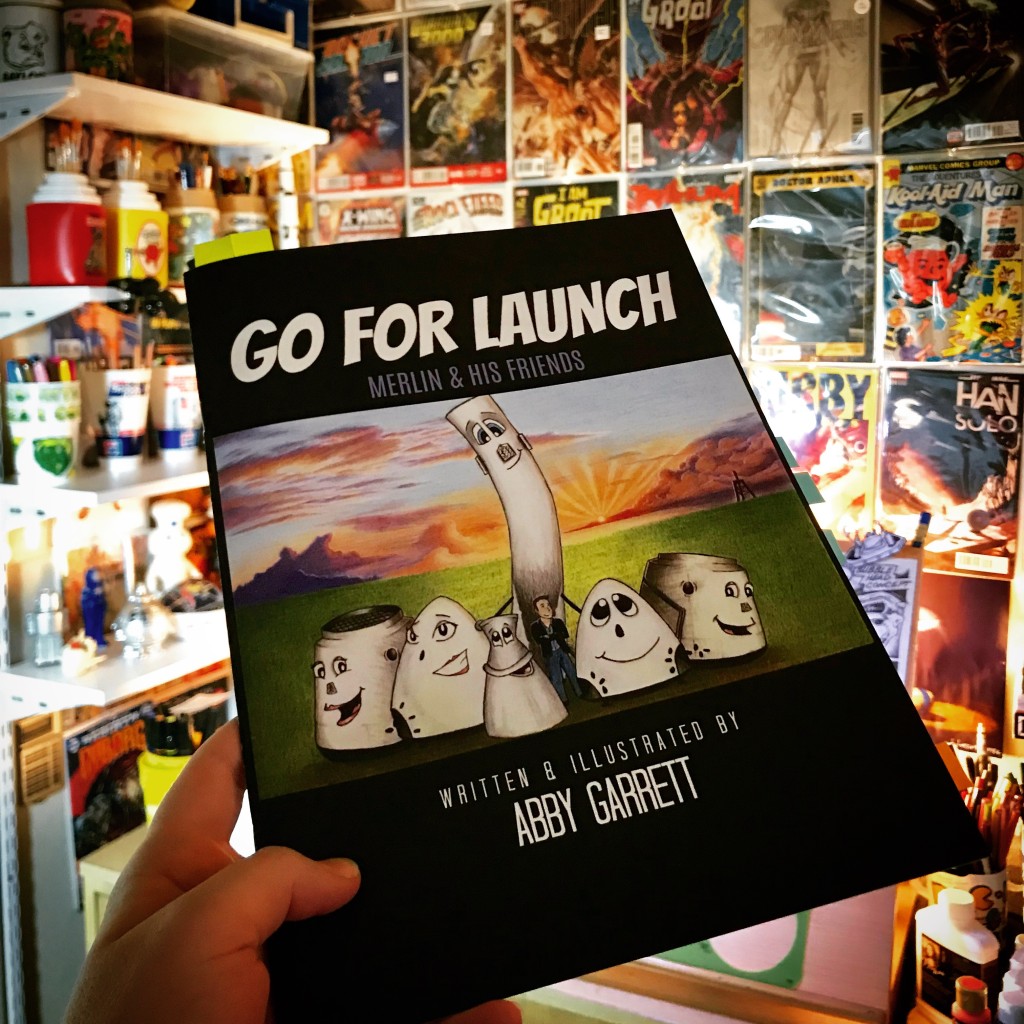
A cover from one of the “Go for Launch: Merlin & His Friends” books, which brings to life the SpaceX rockets:

GO FOR LAUNCH: Merlin & His Friends – children’s books written and illustrated by Abby Garrett

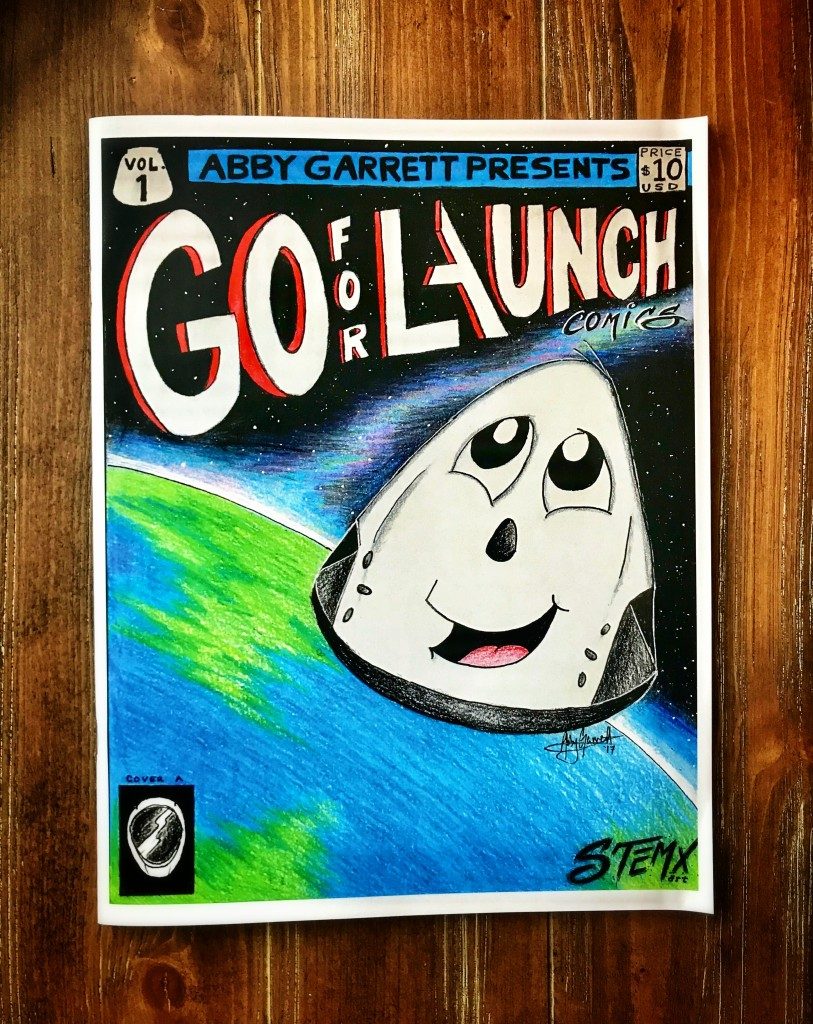
The cover of the first Go For Launch book:

GO FOR LAUNCH COMIC VOL. 1: 32-page Go For Launch Comic Vol. 1.

See some of the pages in the books on her COMICS webpage

====


“Launchboxes” provided by Purdue for K-12 student experiments on suborbital spaceflights

A Purdue group has developed a simple box for grade school kids to fly experiments on suborbital spaceflights of the Blue Origin New Shepard rocket vehicle:

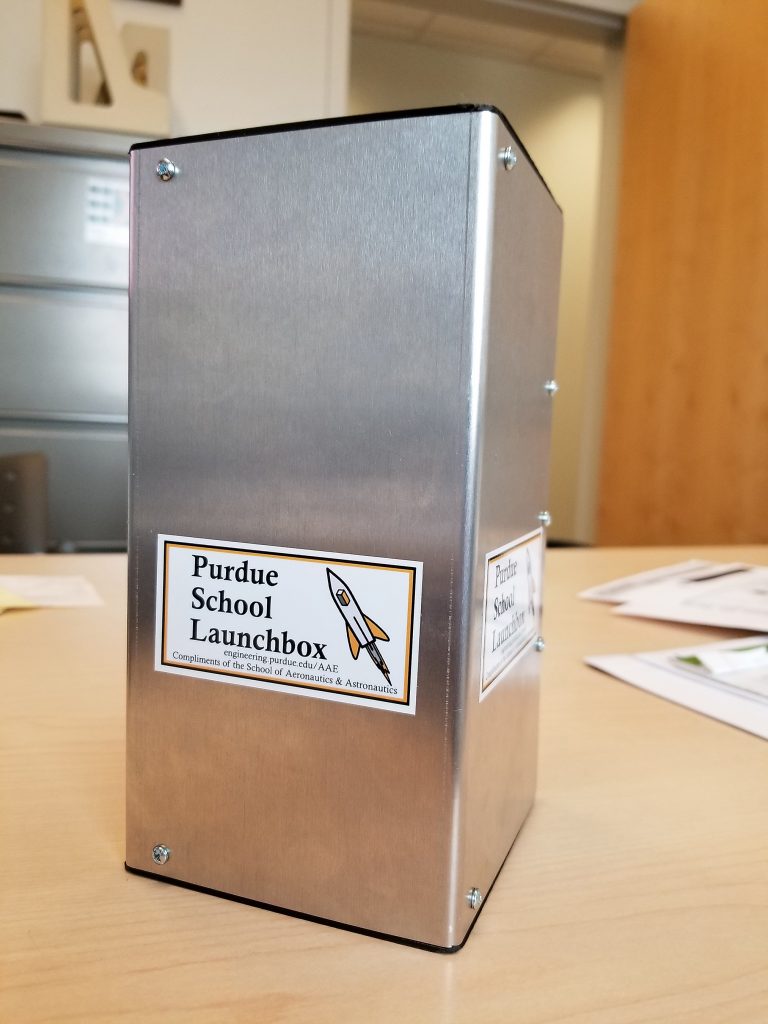
Purdue School Launchboxes available to send school experiments into space

Standing less than a foot tall and weighing a few ounces, the rectangular box doesn’t seem like much but Purdue’s School of Aeronautics and Astronautics hope it will represent the first step for schools nationwide wanting to conduct zero-gravity experiments in space.

A few aluminum Launchboxes already have been shipped out this summer and more interest is expected as students return to K-12 schools across the nation, said Steven Collicott, professor of aeronautics and astronautics.

Collicott said the Launchboxes allow schools to focus on the experiments they want to send up on private suborbital rockets and also expose students and teachers to Purdue engineering.

“Teachers should be thinking and working with students about what’s going inside the box and the purpose of their experiment, not how to house it on the rocket,” Collicott said. “These Purdue School Launchboxes enable more schools to fly their own original experiments to space by taking this mundane, low-tech stumbling block out of the way for teachers.”

The 8-inch by 4-inch aluminum Launchbox being distributed by Purdue’s School of Aeronautics and Astronautics is intended to help K-12 schools prepare experiments to launch aboard suborbital rockets. (Photo/School of Aeronautics and Astronautics)

In December, Collicott and his students finished a two-year project working with second-graders from Cumberland Elementary School in West Lafayette to send up an experiment aboard a Blue Origin rocket launch to determine whether fireflies could light up in space.

Compliments from Blue Origin officials about the box used for the firefly experiment led Collicott to look into possible production. His findings: Launchboxes were so inexpensive that they could be given away to interested schools and other organizations.

“We email the schools some computer files for 3D printing the plastic end caps,” he said. “Then we ship them the pre-formed aluminum for the box plus the fasteners and instructions for assembly.

“It’s a simple solution that stayed simple.”

Once completed, the boxes are 8 inches by 4 inches and allow schools to work within the 1-pound payload limit. The boxes are strong enough to support a 15-pound weight to prove that their strength is sufficient for the stresses of the launch to space.

The Blue Origin New Shepard rocket reaches space at a height of 60 miles in the air, much higher that any balloon or aircraft.

“That flight opportunity is now available to schools all over the world at roughly half the cost of high school football uniforms,” Collicott said. “Any school district in the country that plays football can now afford space flight.

“Just like their athletic booster clubs, schools can finance these flights with a “Rocket Booster Club,” he added.

Schools or other organizations interested in getting a Purdue School Launchbox can email Collicott at collicott@purdue.edu and include “Purdue School Launchbox” in the subject line.

Writer: Brian L. Huchel, 765-494-2084, bhuchel@purdue.edu

Source: Steven Collicott, 765-494-2339, collicott@purdue.edu

=====


Rocket Lab to launch an Electron with 5 payloads including Irvine CubeSat built by high schoolers

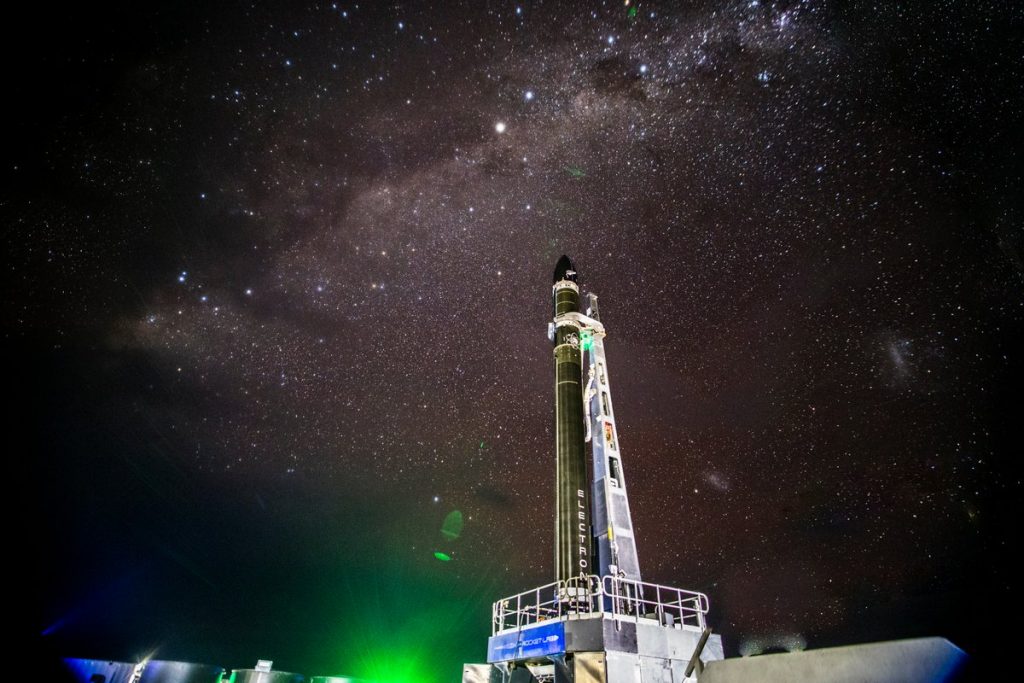
This evening US time and Saturday afternoon New Zealand time, Rocket Lab will attempt to launch the third Electron rocket into orbit.

The Electron on the pad at Mahia. (Photo credits Kieran_Fanning)

The rocket is to lift off from the Mahia Peninsula on the east coast of New Zealand‘s North Island. You can watch the launch via the rocketlabusa.com/live-stream webcast.

The vehicle is carrying four payloads for commercial companies plus the Irvine CubeSat built by high school students in Irvine, California.

The Irvine CubeSat Program is a revolutionary STEM initiative based in Irvine, California. With over 100 members from six public high schools, the program collectively strives to assemble, test, and launch a solar powered CubeSat. It aims to inspire the next generation of innovative thinkers, creators, programmers, and explorers.

Here is a video about the program:

The company’s press kit (pdf) has lots of information about the mission. See also Rocket Lab set for first operational Electron launch with five payload elements – NASASpaceFlight.com.

====