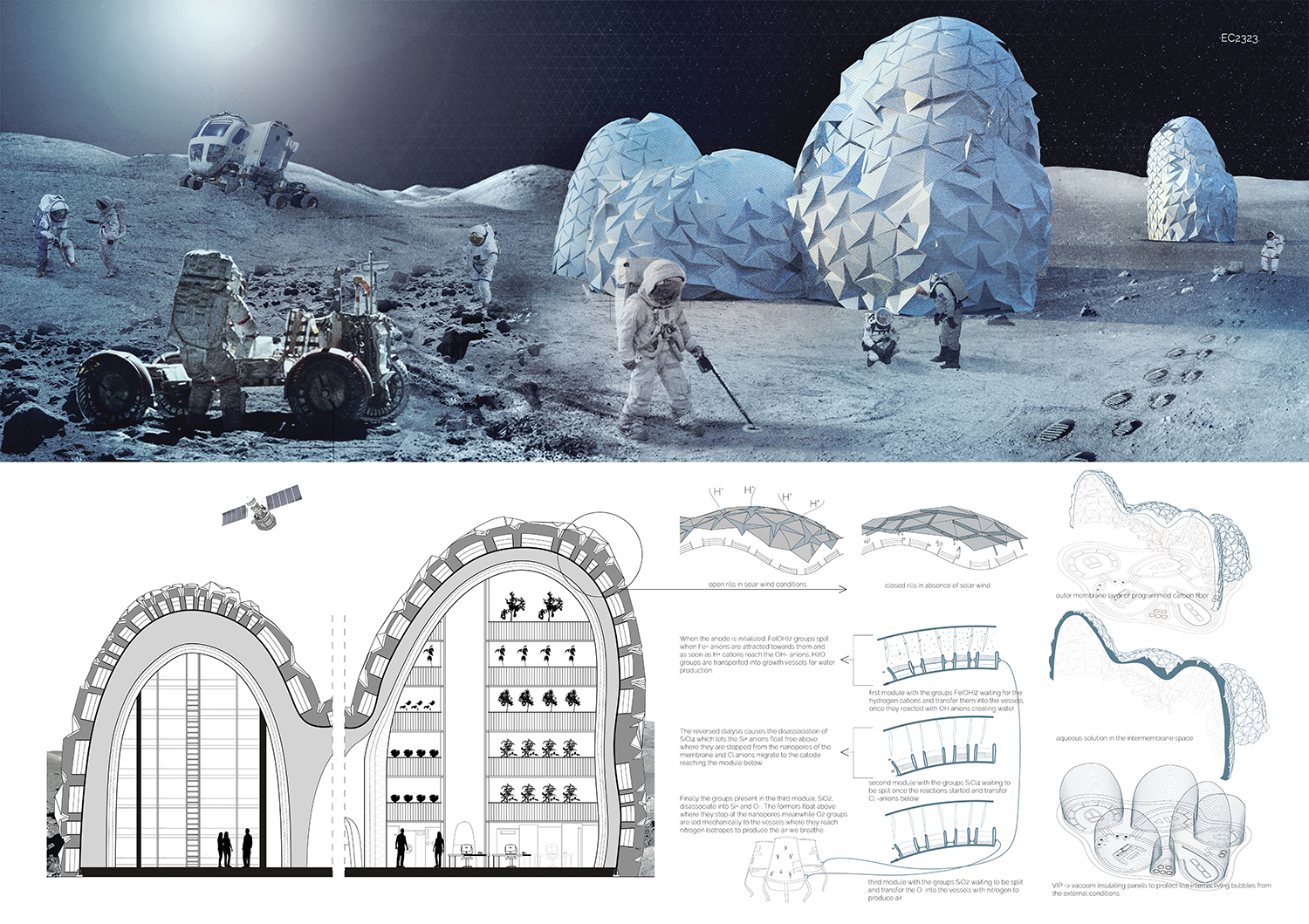
The Testlab settlement is based on the idea of the Russian Babushka Doll – one layer protects the next. On the very inside of the settlement are the Pods, which inhabit the private sleeping quarters, the communal rooms, the greenhouse, as well as the experimental labs and the necessary machinery to sustain life on the moon. Between the pods and the outer most protective membrane is the void that acts as yet another protective layer between livable and unlivable space.
Currently spanning 7km from the city to the space elevator port and growing. Awaiting teraforming landscape update and expansion of the drone membrane artificial atmosphere.
While the 0.376 g gravity of Mars can’t be generated, they try to simulate as much as they can. Whenever a crew person goes outside, for example, they must wear a space suit. Communications between the crew and anyone on “earth” have lengthy time delays added.
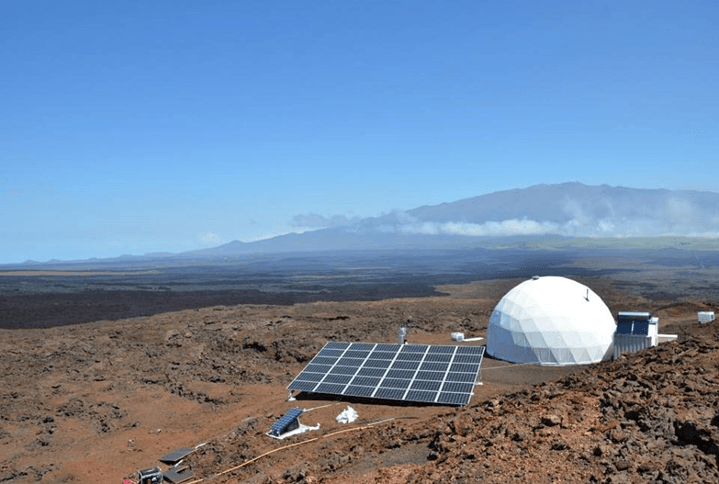
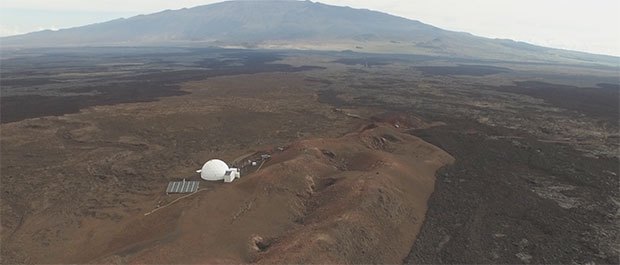
A team of six people entered the geodesic domed facility on January 19th to begin an eight month stay:
During the eight-month HI-SEAS Mission V the crew will perform exploration tasks such as geological fieldwork and life systems management. The isolated and confined conditions of the mission, including 20-minutes of delayed communication and partial self-sufficiency, have been designed to be similar to those of a planetary surface exploration mission. Daily routines include food preparation from only shelf-stable ingredients, exercise, research and fieldwork aligned with NASA’s planetary exploration expectations.
Under the watchful eye of the research team and supported by experienced mission control, the crew will participate in eight primary and three opportunistic research studies. The NASA-funded primary research will be conducted by scientists from across the U.S. and Europe who are at the forefront of their fields.
The primary behavioral research includes a shared social behavioral task for team building, continuous monitoring of face-to-face interactions with sociometric badges, a virtual reality team-based collaborative exercise to predict individual and team behavioral health and performance and multiple stress, cognitive countermeasure and monitoring studies.
Lisa Stojanovski reveals the 6 humans chosen for an 8 month simulated Mars mission, HI-SEAS Mission V, and explains where they’ll live, and the kinds of research they’ll perform. For more information on HI-SEAS visit hi-seas.org
The crew are: Ansley Barnard, Samuel Payler, James Bevington, Joshua Ehrlich, Laura Lark and Brian Ramos.
TMRO.tv videos are viewer supported:
TMRO Space Pods are crowd funded shows. If you like this episode consider contributing to help us to continue to improve. Head over to http://www.patreon.com/spacepod for information, goals and reward levels. Don’t forget to check out our weekly live show campaign as well over at http://www.patreon.com/tmro
Here is this week’s episode of NASA’s Space to Ground report on activities related to the International Space Station:
In this video, ISS chief scientist Dr. Julie Robinson talks about the science research on the station, including an example where a project contributed to better understanding of an osteoporosis drug now in use:
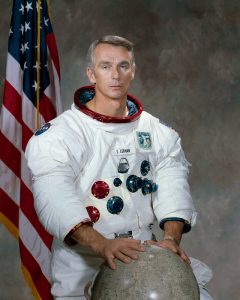
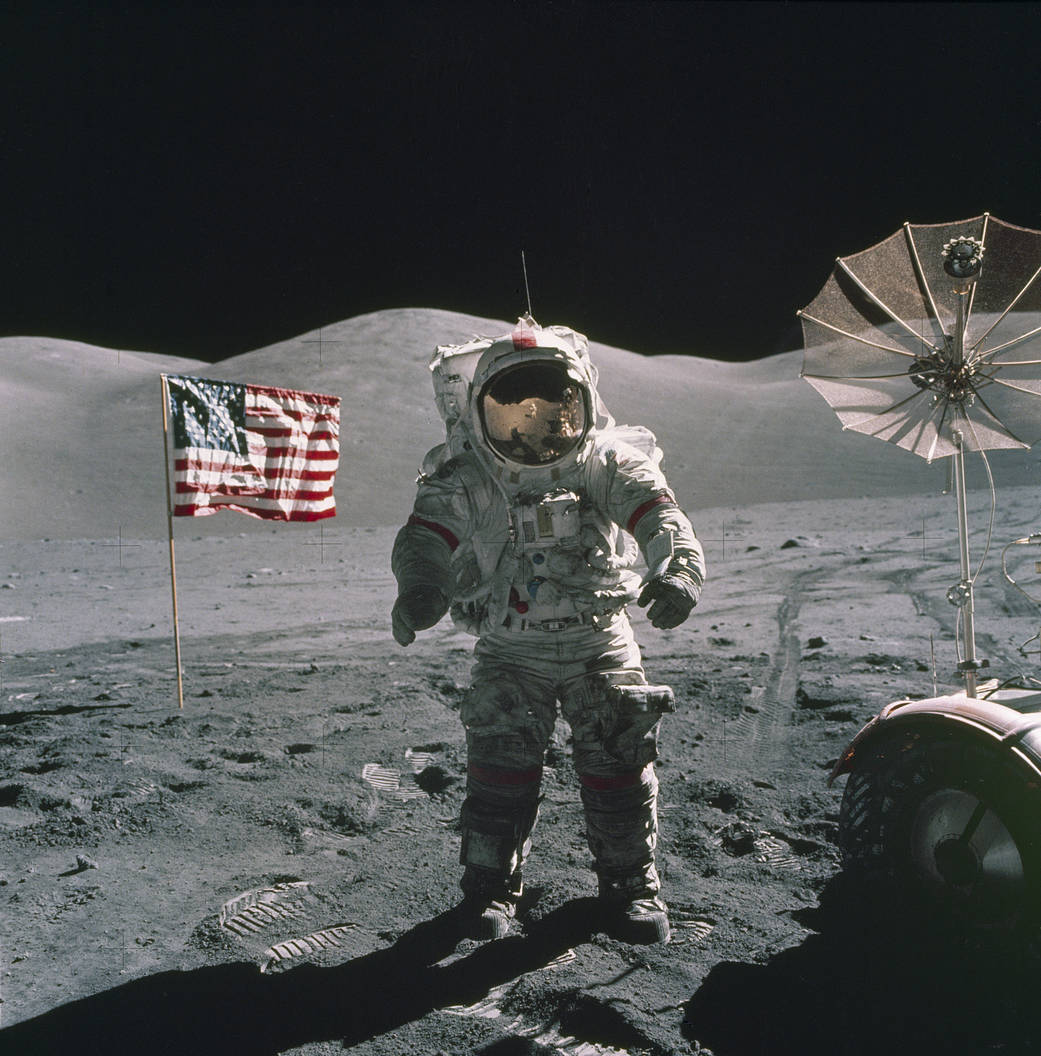
Apollo 17 astronaut Gene Cernan has died at the age of 82. He became the last person to have walked on the Moon when he climbed up the ladder of the lunar module. He and Harrison Schmitt had spent three days on the Moon from Dec.11 to Dec. 14, 1972.