Category Archives: Space participation

Video: B612 press conference at Seattle’s Museum of Flight

Here is the complete briefing event held recently by the B612 Foundation on the latest findings for asteroid impacts on earth: Video GalleryB612 Foundation – B612 Foundation. (See also the asteroid impacts video in the earlier post here.)

From the caption: 

In a special Earth Day program on April 22, Seattle’s Museum of Flight hosted three prominent US Astronauts supporting the B612 Foundation for a press conference which unveiled a new video showing the surprising number of asteroid impacts on Earth during the last decade, and the even more surprising fact that we can prevent future asteroid impacts.

“The visualization shows data from the nuclear weapons test warning network supplied by Peter Brown, Western University of Canada. This network has detected 26 multi-kiloton explosions since 2001, all of which are due to asteroid impacts. This shows that asteroid impacts are NOT rare — but actually 3-10 times more common than we previously thought.” stated Dr. Lu “The fact that none of these asteroid impacts shown in the video was detected in advance shows that the only thing preventing a catastrophe from a “city-killer” sized asteroid is blind luck. The goal of the B612 Sentinel Mission is to find and track asteroids decades before they hit Earth, allowing us to easily deflect them.”

The B612 Foundation is partnered with Ball Aerospace to build the Sentinel Infrared Space Telescope Mission. From a Venus-like orbit around the Sun, Sentinel will be the most capable system for finding and tracking asteroids ever built.

During the Press Conference, Apollo 8 astronaut Bill Anders unveiled a new mural that highlights the importance of the Sentinel Mission. His EARTHRISE photo shows the Earth rising above the crater-strewn surface of the Moon, and will remain on display at the Seattle Museum of Flight. “We began Apollo 8 thinking we were going to learn about the Moon, instead, we began a new understanding of our Earth.” The EARTHRISE photo will serve as the backdrop for the morning Press Conference.

Tom Jones, four-time US Shuttle Astronaut and President of the Association of Space Explorers, explained the recent UN resolution calling for international cooperation for detection of dangerous asteroids.
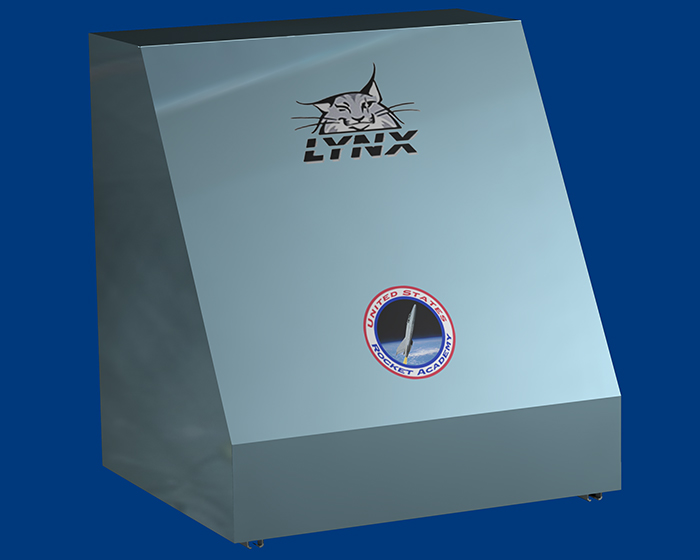
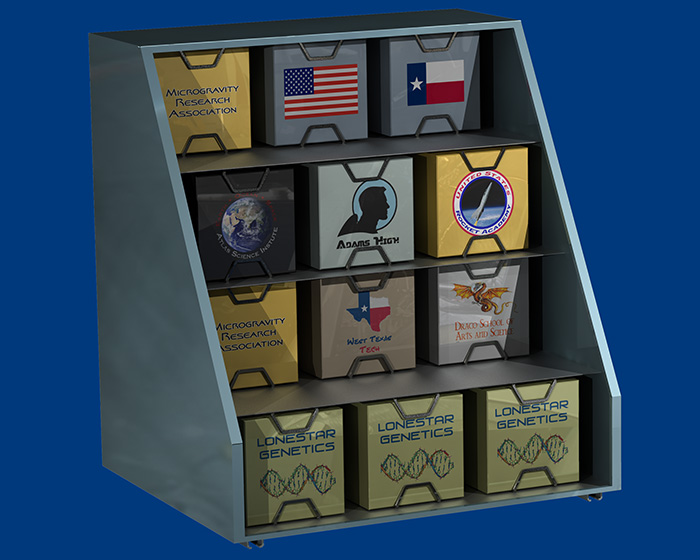
Payload Carrier for small experiments ready for XCOR Lynx flight test

An announcement from Citizens in Space:

New Space Research Platform Ready For Flight Test
Lynx Cub Payload Carrier Developed at Texas A&M

College Station, Texas (May 7, 2013) – The United States Rocket Academy announced the delivery of the first Lynx Cub Payload Carrier, a new research platform which promises to dramatically reduce the cost of access to space for small scientific and education payloads.

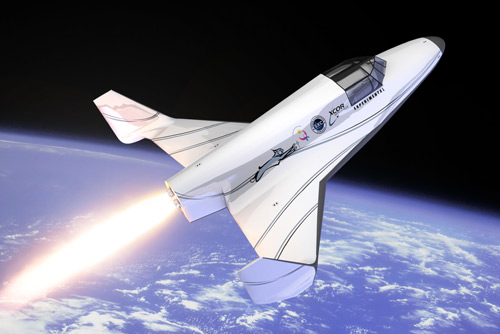
The Lynx Cub Carrier will fly on the XCOR Lynx spacecraft, which is now under construction at the Mojave Air and Space Port.

Lynx Cub Payload Carrier (artist's concept)Lynx Cub Payload Carrier

“The Lynx Cub Payload Carrier is a versatile system that installs in the Lynx cabin, behind the pilot’s seat, allowing small experiments to be carried as secondary payloads on any Lynx flight,” said United States Rocket Academy chairman Edward Wright. “The Cub Carrier can be installed and removed quickly for frequent, low-cost flight opportunities.

“The Lynx Cub Carrier is an ideal platform for small materials-processing, fluid-physics, life-science, and engineering experiments. University teaching and research, K-12 education, citizen science, government and industrial R&D will all benefit from the convenient simple interfaces, rapid integration, and affordability of Lynx Cub experiments.”

Lynx Cub Payload Carrier (artist's concept) internal viewExperiment payloads in the carrier

The Lynx Cub Carrier was developed by the United States Rocket Academy and the Space Engineering Research Center, part of the Texas A&M Engineering Experiment Station (TEES), with support from XCOR Aerospace. Design and fabrication of the Lynx Cub Carrier were performed by Texas A&M faculty and students and TEES researchers.

Citizens in Space, a project of the United States Rocket Academy, will use the Lynx Cub Carrier on 10 Lynx missions. The Lynx Cub Carrier will also be made available to other XCOR customers, as ready-to-fly hardware or as an open-source hardware design.

“Lynx Cub payloads are based on the popular 1U, 2U, and 3U CubeSat form factors, which are de facto international standards for small scientific payloads,” said Chip Hill, Director of the Space Engineering Research Center. “The payload carrier provides physical accommodations, electrical power, and limited thermal control for Lynx Cub experiments.”

The Lynx Cub Carrier will be part of the XCOR Lynx flight-test program, which is expected to begin later this year.

new_11-07-21_lynx-new-ascent-500xXCOR Lynx

“For the test flights, we will load the Lynx Cub Carrier with payload simulators, accelerometers, gyroscopes, and environmental sensors,” Wright said. “While XCOR is proving out the vehicle, we’ll be gathering baseline data on the thermal environment, acoustical environment, acceleration, vibration, and other parameters — data that will help guide experimenters in their payload design.”

“I am excited by the connection to K-12 education,” said Dr. Justin Yates, a professor at the Texas A&M Department of Systems and Industrial Engineering who served as a project lead. “I am proud that Texas A&M University industrial engineers could play a part in this project, which will excite, engage, and educate the next generation of scientists.”

“The Lynx Cub Carrier development was a great learning experience,” said Austin Goswick, a senior Systems and Industrial Engineering student who worked on the project. “This project tested me in every way, advancing my communication skills as well as my engineering skills. I can’t wait to hear how it performs in the flight test.”

The Space Engineering Research Center, part of the Texas A&M Engineering Experiment Station in College Station, is also a member of XCOR’s global network of payload integrators, which provides value-added services for Lynx payload customers. TEES is an engineering research agency of the State of Texas and a member of The Texas A&M University System.

XCOR Aerospace, which is developing the suborbital, fully reusable Lynx spacecraft for a variety of scientific and commercial missions, is currently headquartered in Mojave, California. The company will relocate its headquarters to Midland, Texas later this year.

The United States Rocket Academy, a non-profit educational organization that studies and promotes the scientific, military, and commercial applications of human spaceflight, is also located in Texas. Citizens in Space is the United States Rocket Academy’s flagship program.

Uwingu offers first Mother’s Day Gifts on Mars

An announcement from Uwingu:

World’s First Mother’s Day Gifts Available on Mars — From Uwingu!
Gift givers can now say “Happy Mother’s Day” in a way that’s
truly out of this world

Uwingu, a company helping people personally connect with space exploration and astronomy, today announced a world-wide, first-ever opportunity to honor moms on Mother’s Day from Mars— by naming a feature for her on Uwingu’s new Mars map.

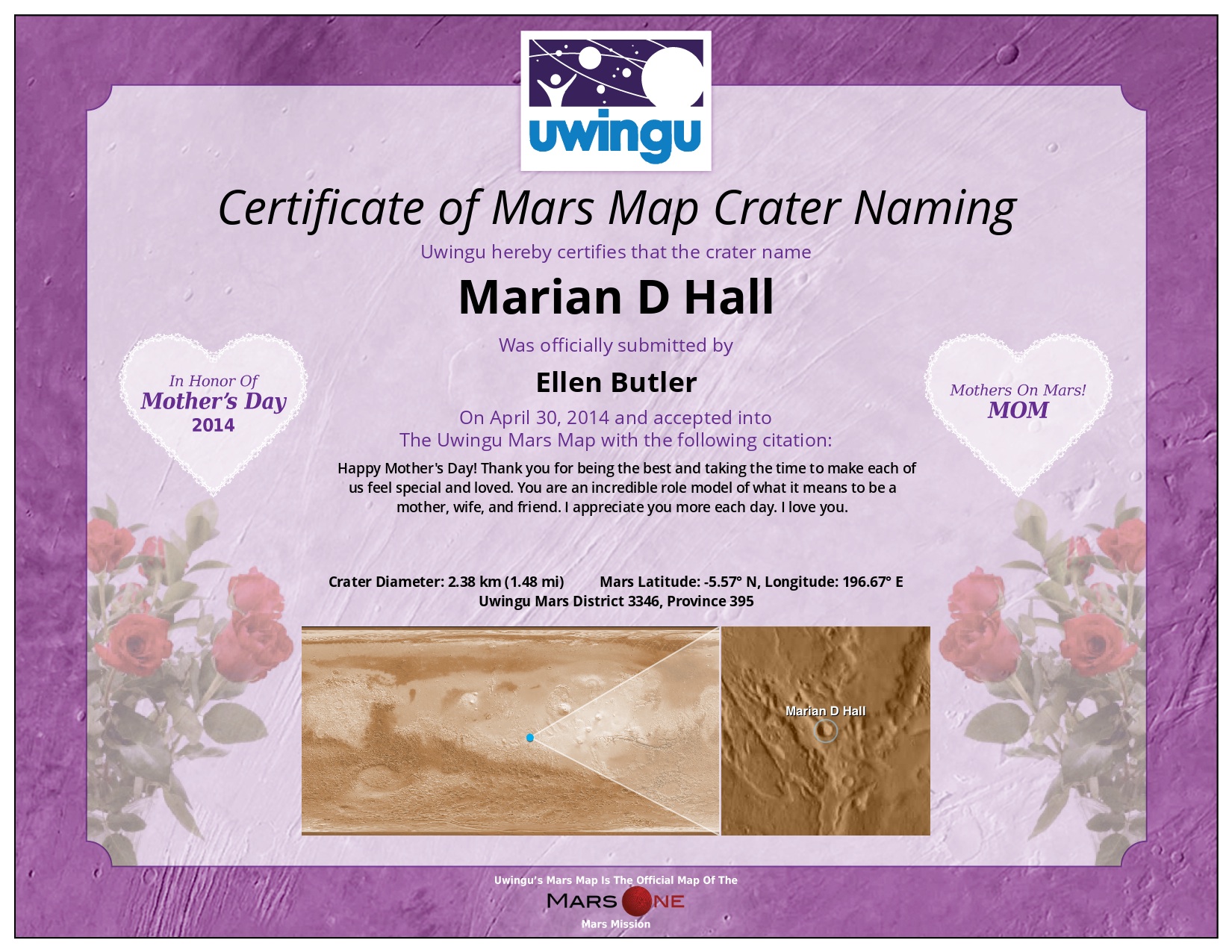
Until Mother’s Day, May 11, Uwingu is offering a gift pack which includes a special Mother’s Day certificate for anyone choosing to name a crater for mom. All names will be lodged on permanent record and sent to Mars on the private Mars One mission, ensuring every honored mom a permanent place in history.

MOM-Uwingu-Certificate

Uwingu’s Mars Map Crater Naming Project allows anyone to help name the approximately 590,000 unnamed, scientifically cataloged craters on Mars, starting at $5 each. Uwingu aims to raise $10 million for The Uwingu Fund, which provides grants to further space exploration, research and education.

Thanks to the sale of almost 10,000 crater names to date, the Uwingu Fund has already funded grants to projects and organizations including the Astronomers Without Borders, Students for the Exploration and Development of Space, Mars One mission, the Galileo Teacher Training Program, Explore Mars and the Allen Telescope Array at SETI.

“Our mission is to raise funds for space research while growing a successful company that gets people excited about space exploration and education”, said Alan Stern, planetary scientist, founder, and CEO of Uwingu, who formerly directed all science programs and missions at NASA.

Boulder, Colo.-based Uwingu employs of a growing team of scientists, educators, NASA veterans and prominent businesspeople who are passionate about space exploration and education.

Mars One round one selection leaves 705 Mars settler candidates

An announcement from Mars One:

705 potential Mars settlers remain in Mars One’s
astronaut selection process

Amersfoort, 5th of May 2014 – Mars One announced that 353 hopefuls from around the world have been eliminated from the selection program to become the first human Mars colonists. The number of people remaining in this once in many lifetimes opportunity is now just 705.

The remaining candidates will be interviewed by the Mars One selection committee. Mars One Chief Medical Officer Norbert Kraft, MD says, “we’re incredibly excited to start the next phase of Round 2, where we begin to better understand our candidates who aspire to take such a daring trip. They will have to show their knowledge, intelligence, adaptability and personality.” Mars One is in negotiations with media companies to report on those interviews. Once the television deal is finalized and the interviews begin, the stories of the 705 aspiring Martians will be shared with the world.

In December 2013, Mars One announced the selection of 1058 candidates from the original pool of over 200,000 applicants. Mars One asked them to complete two tasks by March 2014: to provide a medical statement of health from their physician and open their online Mars One applicant profile to the public. The 418 men and 287 women who successfully completed both tasks will be invited for a personal interview. 313 candidates originally come from the Americas, 187 from Europe, 136 from Asia, 41 from Africa, and 28 from Oceania.

The group of candidates that will not continue to the interview round dropped out due to personal reasons and medical reasons. The withdrawals due to personal reasons were mostly in the age group 40-50. Candidates who had to withdraw from their dream due to medical reasons were mostly in the age group of 20-35. Mars One Chief Medical Officer Norbert Kraft, MD says, “what really left an impression with us is the fact that the medical tests turned out to have a major impact on the candidate’s lives, as some of them found out that they needed to undergo an operation, were sick and needed medical attention, or even had a malignant form of cancer that otherwise would not have been detected in such an early stage.”

After the interview round, the group of candidates will be narrowed down to several international teams consisting of two women and two men. These teams of prospective Mars settlers will be prepared for the mission by participating full time in an extensive training program. Training to go to Mars will be their full time job. Whole teams and individuals might be selected out during training when they prove not to be suitable for the mission. Mars One will repeat the selection process regularly to train additional teams to replace eliminated teams and crews of settlers that have successfully left Earth to live on Mars.

About Mars One
Mars One is a not-for-profit foundation that will establish permanent human life on Mars. Human settlement on Mars is possible today with existing technologies. Mars One’s mission plan integrates components that are well tested and readily available from industry leaders worldwide. The first footprint on Mars and lives of the crew thereon will captivate and inspire generations. It is this public interest that will help finance this human mission to Mars.

Update on “I want to be an Astronaut” documentary

Back in January I mentioned the crowd-funded documentary film I Want To Be An Astronaut, which was in final preparations for the film festival circuit. On Friday, David Livingston interviewed David Ruck, the maker of the film about its status: David Ruck, Friday, 5-2-14 – Thespaceshow’s Blog,

Here’s a recent article about the film: I Want to Be an Astronaut’ reignites space travel dream – CNN.com – Apr.11.14

IWantToBeAnAstronaut

See also I want to be an Astronaut – tumblr.