Category Archives: Space participation

Citizen Science: Use CosmoQuest Image Detective to study the earth using ISS astronaut photos

An announcement from the CosmoQuest public participation in space exploration initiative:

Public Invited to Test New Tool to Study Earth using Photos
Taken by International Space Station Astronauts
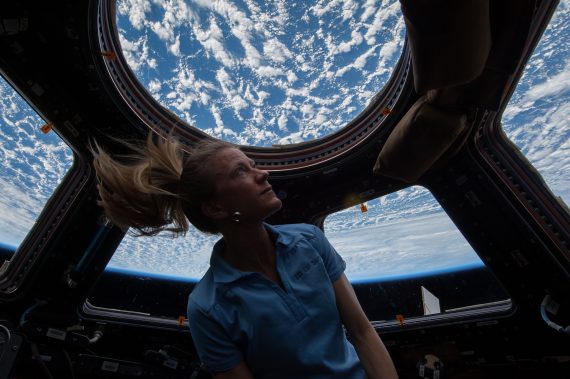
A phenomenal view – the world as seen by NASA astronaut Karen Nyberg from the Cupola of the International Space Station.

CosmoQuest’s Image Detective, a NASA-funded citizen science project, invites the public to identify Earth features in photographs taken by astronauts from the International Space Station (ISS). Citizen scientists are asked to help identify geographic features (natural or human-made) in astronaut photographs and then determine the location on Earth where the photo is centered. CosmoQuest is led by principal investigator Dr. Pamela L. Gay from the Astronomical Society of the Pacific (ASP).

You can become part of Image Detective by visiting http://cosmoquest.org/ImageDetective. [Alt site: https://cosmoquest.org/x/beta/]

“The astronauts’ photos of Earth are visually stunning, but more than that, they can be used to study our changing Earth,” says Dr. Gay, the Director of Technology and Citizen Science at the ASP. “From erupting volcanoes, to seasonal flooding, these images document the gradual changes that happen to our landscape. The trick is, we need to make these images searchable, and that means taking the time to sort through, analyze, and label (add metadata) the unidentified images within the database of 1.5 million plus photos.”

Originally developed by NASA Johnson Space Center (JSC) science experts within the JSC Astromaterials Research and Exploration Science (ARES) Division, Image Detective’s upgrade provides new and improved options for citizen scientists to help enhance NASA’s growing online database of astronaut imagery, also referred to as Crew Earth Observations (CEO) imagery.
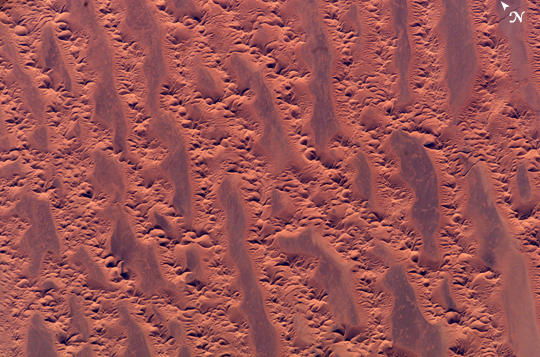
Algerian desert from the ISS

Image Detective lets anyone with an Internet connection advance the usefulness of NASA’s vast catalogue of astronaut imagery. Since construction began in 2000, more than 200 people from 18 nations have visited the International Space Station (ISS). Orbiting just 250 miles above the Earth, this platform provides astronaut photographers an amazing platform for imaging our planet. As part of their day-to-day work on the ISS, astronauts are asked by the ESRS team at Johnson Space Center to take numerous photos of our planet Earth’s land surface, oceans, and atmosphere, including impressive auroral displays. Crews also take images of other solar system bodies, such as the Moon, planets, and stars. These images now need carefully labeled.

Image Detective spreads the significant work necessary to label all of the images out to citizen scientists across the world. “This is a unique, powerful, and beautiful image data set that has already yielded excellent research science. But the data set needs the many eyes and minds of citizen scientists to reach its full potential as a publicly available, searchable catalog,” said Dr. Jennifer Grier, a Senior Scientist and Senior Education and Communication Specialist at Planetary Science Institute (PSI) and CosmoQuest’s lead support scientist. “With the additions that citizen scientists as detectives can make, professional research scientists will be able to conduct more research into our changing world, and do so much more effectively.”

Your efforts can enhance NASA’s database of images taken by International Space Station Astronauts!

These efforts are supported by NASA under cooperative agreement award number NNX17AD20A. Any opinions, findings, and conclusions or recommendations expressed are those of this project and do not necessarily reflect the views of the National Aeronautics and Space Administration (NASA). Image Detective was produced through a collaboration of the Astronomical Society of the Pacific, the Astromaterials Research and Exploration Science (ARES) Division at the NASA Johnson Space Center, the Planetary Science Institute, Youngstown State University, and Southern Illinois University Edwardsville. NASA’s Gateway to Astronaut Photography of Earth (GAPE), the official online database of more than 1.5 million astronaut images, is curated by the Earth Science and Remote Sensing (ESRS) Unit, within the ARES Division at JSC. Photos used in Image Detective are courtesy of The Earth Science and Remote Sensing Unit and NASA Johnson Space Center. NASA’s official online database of astronaut imagery is available at: https://eol.jsc.nasa.gov.

The Astronomical Society of the Pacific, established in 1889, is a 501(c)3 nonprofit organization whose mission is to use astronomy to increase the understanding and appreciation of science and to advance science and science literacy. The ASP connects scientists, educators, amateur astronomers and the public together to learn about astronomical research, improve astronomy education, and share resources that engage learners of all kinds in the excitement and adventure of scientific discovery. In addition to CosmoQuest, current ASP programs and initiatives support college faculty, K-12 science teachers, amateur astronomy clubs, science museums, libraries, park rangers, and girl scouts to name a few.
Space music: An anthem for the Team Indus mission to the Moon

Indian musician Ram Sampath has composed a song dedicated to the Team Indus lunar lander project. The song is performed by Sona Mohapatra and the band Sanam. Read the background story to the TeamIndus anthem.

Team Indus is a finalist in the Google Lunar XPRIZE competition to send the first privately funded lander and rover to the lunar surface. The team has reserved a spot on an Indian PSLV rocket but it’s not clear yet if they can raise sufficient funding to pay for the launch, which must happen before the March 31, 2018 deadline if they are to have a chance to win the GLXP $20M first prize.

====

Video: ISS astronaut dons spacesuit created from paintings by children with cancer

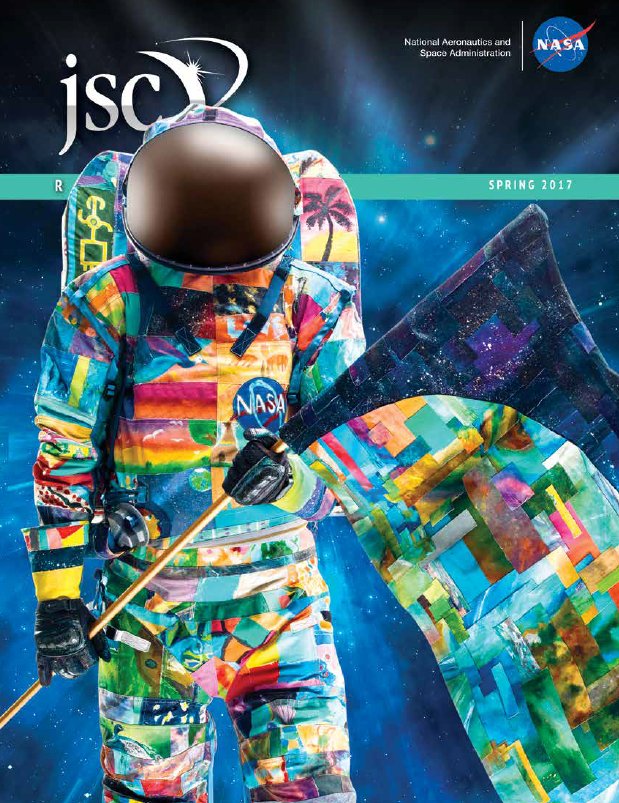
The Spacesuit Art Project gives children battling cancer an opportunity to express themselves in art and then see that art taken to space. As described in a recent issue of the NASA JSC Roundup newsletter (pdf):

Using simple paintbrushes and paint, pediatric cancer patients employed whorls of color to form creations that would make anyone smile. These mini masterpieces, painted on fabric canvas, were later stitched together into intricate, flamboyant spacesuits that any superhero (or astronaut) would be proud to don. But what became evident throughout the process to create these stunning works is that the real superheroes embodying Hope, Courage and Unity—the names of the spacesuits—were the children all along.

The program was “initiated by the MD Anderson Cancer Center Arts in Medicine Program in collaboration with NASA Johnson Space Center, spacesuit manufacturer ILC Dover, retired astronaut Nicole Stott and later with the agency’s international partners”.

An artistic spacesuit was delivered to the International Space Station on a recent cargo flight of the SpaceX Dragon. And on Wednesday, ISS  astronaut Jack Fischer wore the beautiful suit during a live downlink with some of the participants in the project: Colorful spacesuit painted by children with cancer worn by astronaut in space | collectSPACE.

Expedition 52 flight engineer Jack Fischer donned “Unity,” a patchwork costume spacesuit decorated by children with cancer in the U.S., Russia, Germany, Japan, and Canada — the same countries that operate the space station. The multicolor garment, a product of the Spacesuit Art Project, was pieced together by ILC Dover, the same company that furnishes the softgoods for NASA’s real spacesuits. 
…
“It is tricky to get into, but it is worth it, kind of like the real suit,” said Fischer during a live downlink with the project’s organizers and some of the children who contributed to the design. “The real suit, you have the reward of getting to go outside and seeing an amazing view. [With] this suit, you have the reward of the opportunity – or rather the honor, to represent the bravest kids in the world who actually put it together.”

Here is a video of the downlink event:

Here’s an earlier video about the project:

Video: The Space Age began long before Sputnik

Commercial space ventures such as SpaceX, Blue Origin, Bigelow Aerospace, and Stratolaunch that are backed by wealthy moguls are often described as representing a brand new phenomena. However, NASA historian Alex MacDonald has a new book out called The Long Space Age: The Economic Origins of Space Exploration from Colonial America to the Cold War, in which he shows that private space initiatives actually go back to the early 1800s.
Those early space moguls did not fund rockets but instead back most of the large astronomical observatories in the USA. Lick Observatory, for example, funded by California railroad magnate James Lick in  the 1870s, is comparable to  a $1.5 billion dollar project today.

I’ll note that before World War II, the US federal government funded very little science or technology R&D. Most all such activities were supported either by private organizations such as companies, universities and institutions like the Smithsonian or by private individuals. This changed during WWII with the emergence of Big Science projects including the successful development of radar and the atomic bomb. Federal support for science and R&D after the war was further encouraged by the Cold War technology competition with the USSR.

For more about MacDonald’s book and the history of private space initiatives in the US, see:

And here is a talk by MacDonald at the “The Dawn of Private Space Science” symposium held this past June in NY City:

=====

Juno: Flyby of Jupiter’s Great Red Spot

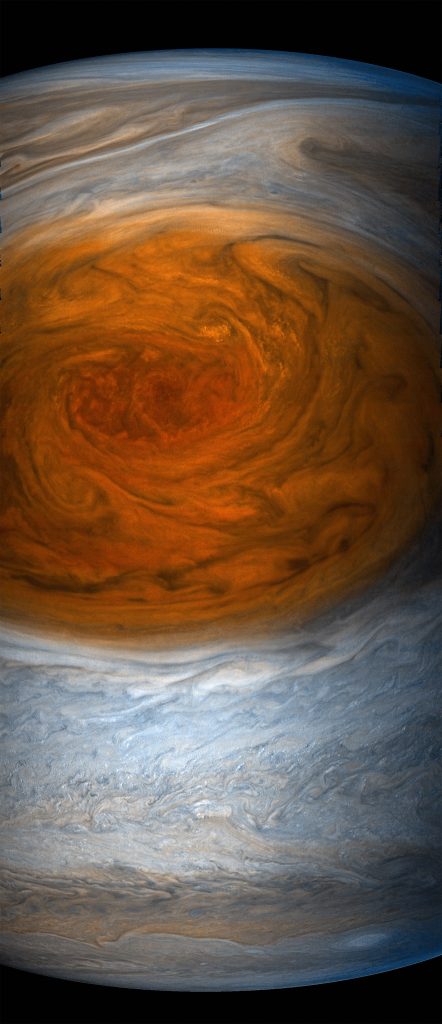
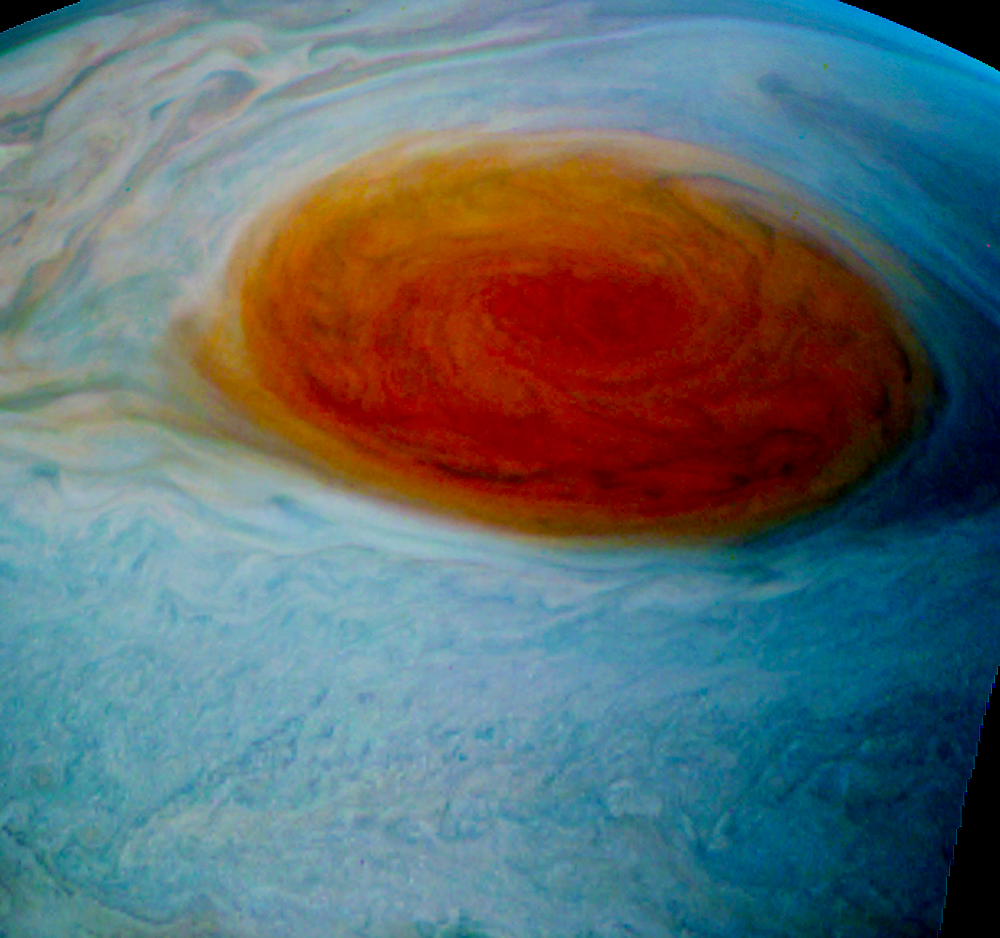
The Juno spacecraft made a low altitude flyover of Jupiter’s Great Red Spot this week: NASA’s Juno Spacecraft Completes Flyby over Jupiter’s Great Red Spot. Here are a couple of images made by Citizen Scientists quickly processing the raw images: JunoCam : Processing | Mission Juno .

Great Red Spot [ 060 ] V1  – 2017-07-12 17:09 UT – Credit : NASA / SwRI / MSSS / Gerald Eichstädt / Seán Doran
Sleepy Eye – 2017-07-12 12:00 UT – Credit : Tom Momary © CC NC SA


====