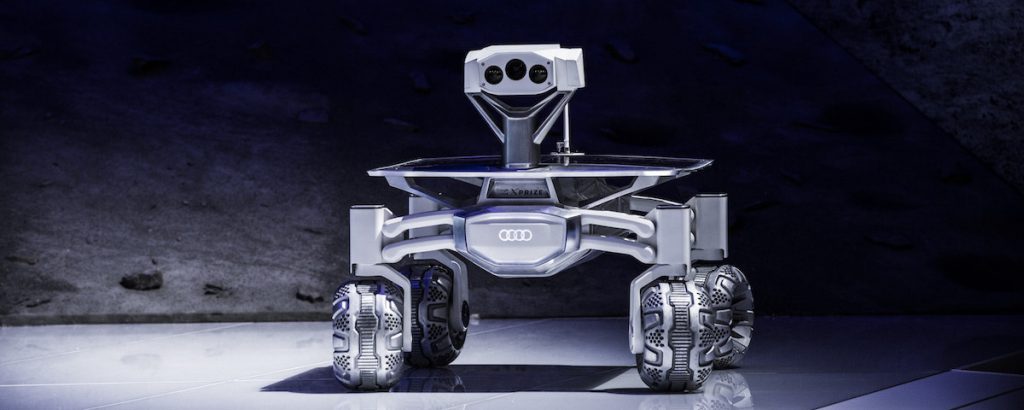
Jonny Smith of the Fully Charged Show on line program visited the Part Time Scientists group in Berlin, which is partnering with Audi and Vodafone on a private mission to the Moon. In this video, Smith gets to drive the Audi Lunar Quattro, “a remote controlled solar powered electric moon buggy”.
PT Scientists began as a team competing for the Google Lunar XPRIZE, which ended without any winners, However, like several other GLXP teams, a commercial company emerged from the effort and will continue to pursue lunar ventures.
“Equipped with a four-wheel electrical drive chain, tilt-able solar panels, rechargeable batteries and science-grade high definition cameras, the Audi lunar quattro rovers will deploy and operate a series of scientific and technological payloads on the Moon.”
The first Las Cruces Space Festival (LCSF) will be held from April 12 – 14, 2018 to celebrate space-related activity and interest in the Las Cruces region. Locals as well as visitors are invited to join this inaugural celebration of all things space! We’re making space for everyone!
Space activity is an area of huge interest for many people, part of our culture and of our heritage. We all benefit from previous space innovations, including cell phones, GPS and weather tracking, just to name a few!
There is already much space-related activity in the area, and it’s also set to increase over the coming years, offering new prospects to our youth and drawing in experienced experts in the field to this area to help achieve our space goals.
More details about the Festival and events will continue to be updated on this site as they become available. Check back often for new events and details! We can’t wait for LCSF 2018 – it’s going to be out of this world!
On Thursday, April 12, events will be geared toward children and families in a celebration of the anniversary of human space flight. Yuri’s Night, celebrated worldwide, marks the 1961 date when the Soviet Union launched Yuri Gagarin into orbit around the Earth.
Events will take place on the New Mexico State University campus and will include a mobile planetarium and a tech center featuring a space flight simulation. There will also be educational NMSU Space Talks and stargazing. Las Cruces Public Schools is also planning events earlier in the week.
On Friday, April 13, a Space Showcase at Mesilla Valley Mall will offer an opportunity for budding astronauts, curious minds and science buffs to interact with and ask questions from experts in space travel, aerospace and space exploration.
Festival organizers are also aiming to set up a space tour from Las Cruces to Spaceport America. KTAL 101.5 Community Radio in Las Cruces will broadcast special features and interviews throughout the week of the festival.
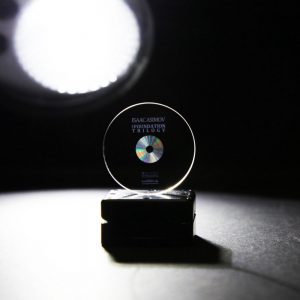
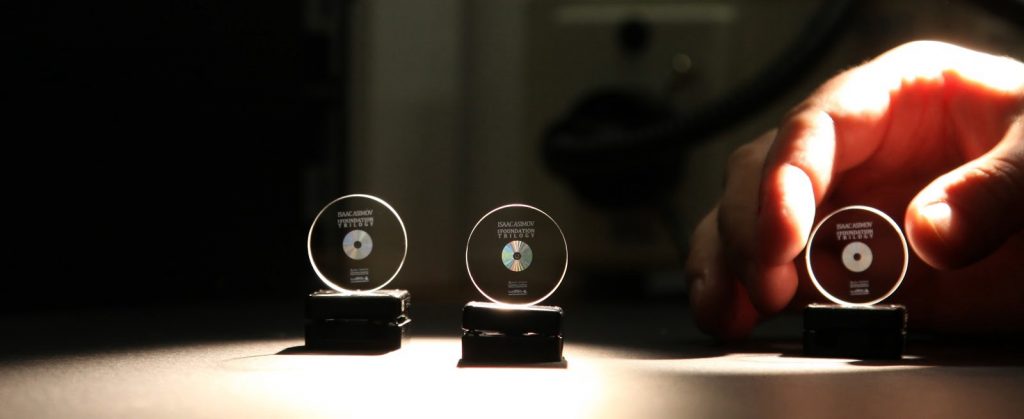
Along with the Tesla Roadster launched yesterday into deep space by the SpaceX Falcon Heavy, there was a unique optical recording disk made of long lasting quartz. The Arch Mission Foundation disk contains a copy of the famous Foundation Trilogy books by Isaac Asimov. Arch Mission co-founder Nova Spivack describes the payload and goals of the organization:
Arc Mission library disk on Falcon Heavy payload with recording of Isaac Asimov’s Foundation Trilogy.
Our goal at the Arch Mission Foundation™ is to permanently archive human knowledge for thousands to billions of years. We exist to preserve and disseminate humanity’s knowledge across time and space, for the benefit of future generations.
To accomplish this we have begun building special Arch™ libraries (pronounced: “Arks”). Our first Arch libraries are data crystals that last billions of years. We plan to use many media types over time however — whatever material is the best available for the goal.
We are very happy to announce that our first Arch library, containing the Isaac Asimov Foundation Trilogy, was carried as payload on today’s SpaceX Falcon Heavy launch, enroute to permanent orbit around the Sun.
We are eternally grateful to Elon Musk and his incredible team for advocating the Arch Mission Foundation and giving us our first ride into space.
Watch as SpaceX describes the inclusion of the Arch payload during their launch event here [at 19:51 into webcast video]:
Here is a short video about what the Arch Mission is doing:
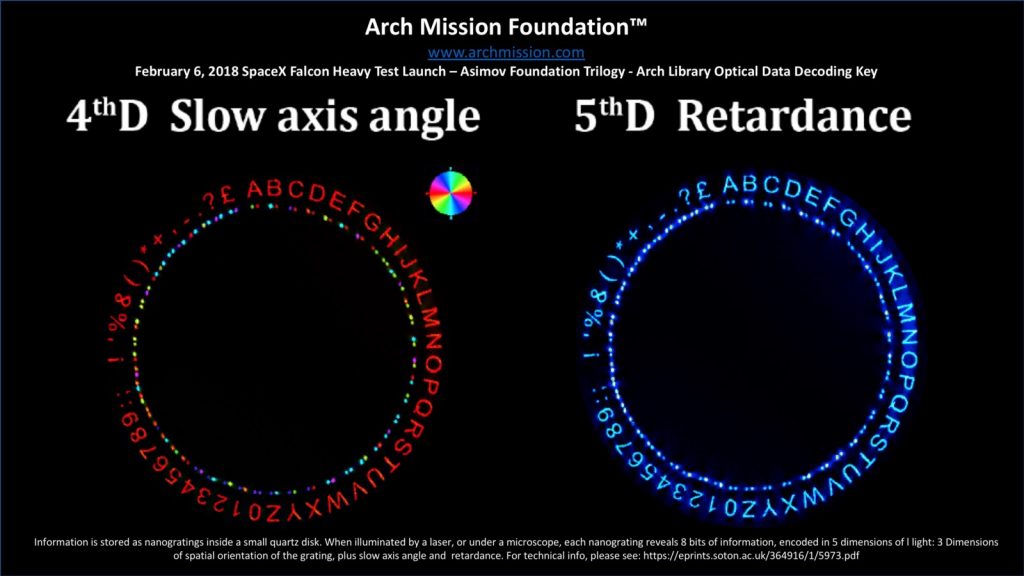
The Arch library that was included on the Falcon Heavy today was created using a new technology, 5D optical storage in quartz, developed by our advisor Dr. Peter Kazansky and his team, at the University of Southampton, Optoelectronics Research Centre.
This Arch library will orbit the Sun for at least millions of years alongside Elon’s Tesla Roadster. The Roadster will likely be the oddest object in the solar system, and thus is the perfect place to put an Arch library so that it can be noticed and retrieved in the distant future.
We are so honored that Elon is the recipient of the first 2 Arch libraries ever made. If anyone deserves them, it’s him. Arch1.1 now resides in Elon’s personal library, while Arch 1.2 is enroute with SpaceX to permanent Solar orbit.
Arch 1.1 and 1.2 are the first in a series of 5, and are two of the longest-lasting storage objects ever created by humans. They are immensely valuable artifacts; the product of decades of work to invent a new form of storage capable of serving the needs of the growth of big data.
We also owe a debt of gratitude to our incredible group of renowned advisors, without whom none of this would be possible. We would especially like to thank Michael Paul and Stephen Wolfram for their close support and advice.
Asimov’s Foundation Series was the inspiration for the Arch Mission Foundation, many years ago when we first conceived of this project. It is a metaphor for what we hope this can become, and it is the perfect cornerstone as our mission begins.
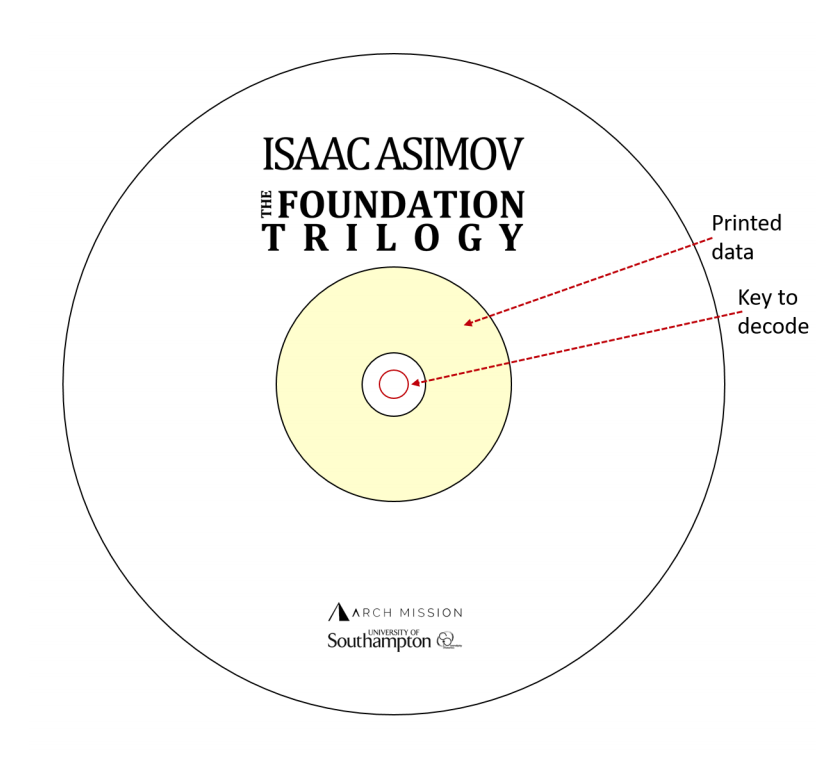
Layout diagram for the Arch Mission disk.
For this, we would also like to thank Asimov’s agent, Mel Berger, at WME Entertainment, for giving us permission to send this epic trilogy, to space, as an homage to Asimov’s brilliance and vision.
If you are not familiar, Asimov’s Foundation Series is important for its symbolism. The series’ protagonist Hari Seldon endeavors to preserve and expand upon all human culture and knowledge through a 30,000 year period of turmoil. We felt this was a very fitting first payload to include in the Arch.
What’s Next?
In subsequent Arch Mission updates we’ll add more curated information in more locations around the solar system, and on Earth as well, and using more forms of next-generation long-term storage media as well.
5D optical storage in quartz, decoding key
This will backup our civilization for eternity in a manner that will make it impossible to ever be lost or not rediscovered, and that will also make it impossible for anyone in the future who does find it to hoard the knowledge — the Arch libraries will be in too many locations for anyone to control access to them.
You can read all about our plans on our website, www.archmission.com, but a brief summary is provided here.
The Solar Library™ will orbit the Sun for billions of years. We will continue to add to it over time with additional Arch libraries. Think of it as a ring of knowledge around the sun. This is only the first step of an epic human project to curate, encode, and distribute our data across the Solar system, and beyond.
We are developing a special Arch library that will be delivered to the surface of the Moon by 2020. This Arch will start the Lunar Library™, a collection of the most important documents, photos, videos and data of our species and will last for as long as the Moon itself.
We are also designing an Arch library to land on Mars. The Mars Library™ will be designed to supply a future human settlement on Mars with a vast collection of important knowledge from Earth — including perhaps a copy of a large portion of the Internet.
The Mars Library will seed a backup of Earth on Mars, in the event that the connection between Mars and Earth is ever lost in the future. It will also provide colonists on Mars with a massive data set with which to seed a local Internet and Web on Mars.
By eventually connecting the Arch Libraries, and the Arch storage devices they contain, through a decentralized read-write data sharing network, that spans the Solar system, we can begin to grow and share a collective decentralized library of everything humanity learns, on every planet in our solar system, and even beyond, as we spread.
This truly can evolve into Asimov’s vision of an Encyclopedia Galactica someday — an encyclopedia containing all the knowledge accumulated by a galaxy-spanning civilization.
a bright, blinking satellite now orbiting Earth, visible to the naked eye in the night sky. Launched on #StillTesting, The Humanity Star is designed to encourage everyone to look up and consider our place in the universe.
More about the project:
Visible from space with the naked eye, the Humanity Star is a highly reflective satellite that blinks brightly across the night sky to create a shared experience for everyone on the planet.
Created by Rocket Lab founder and CEO Peter Beck, the Humanity Star is a geodesic sphere made from carbon fibre with 65 highly reflective panels. It spins rapidly, reflecting the sun’s rays back to Earth, creating a flashing light that can be seen against a backdrop of stars.
Orbiting the Earth every 90 minutes and visible from anywhere on the globe, the Humanity Star is designed to be a bright symbol and reminder to all on Earth about our fragile place in the universe.
The sphere will stay in orbit for about 9 months. You can use the tracking app on the website to find when it will pass over your location.
— Challenge Allows Students Ages 13-18 to Submit
Flight Concepts for Microgravity Research —
–Two Student Projects Will be Selected and Launched
to the International Space Station —
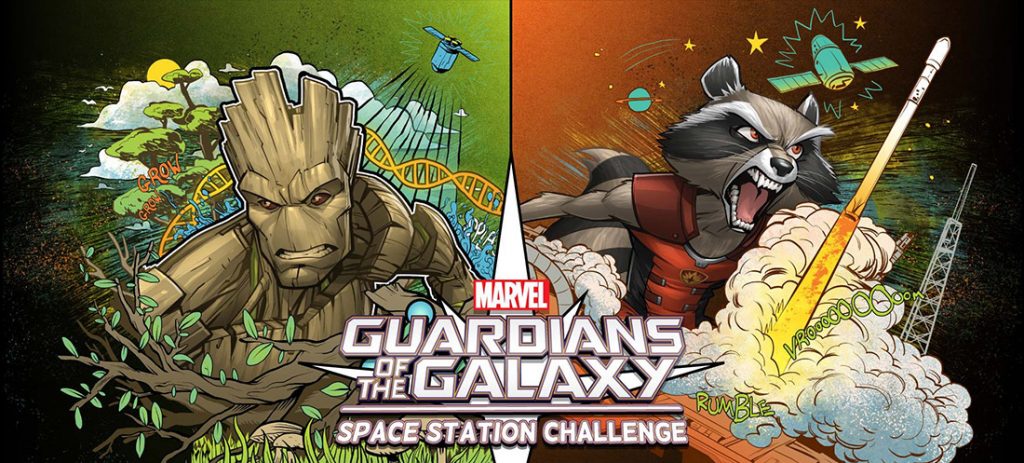
KENNEDY SPACE CENTER, FL. (January 10, 2018) – The Center for the Advancement of Science in Space (CASIS) and Marvel Entertainment today announced the Guardians of the Galaxy Space Station Challenge is open for American students ages 13-18 to submit microgravity flight experiment concepts that could be conducted on the International Space Station (ISS) U.S. National Laboratory. The contest focuses on Rocket and Groot, characters from the Guardians of the Galaxy comic book franchise, and students are encouraged to develop flight proposals based on the attributes of these Super Heroes. The contest will run through January 31, 2018. After the contest concludes, two student-submitted flight concepts will see their vision turned into reality and become an official ISS National Lab investigation, launching to the space station in 2018.
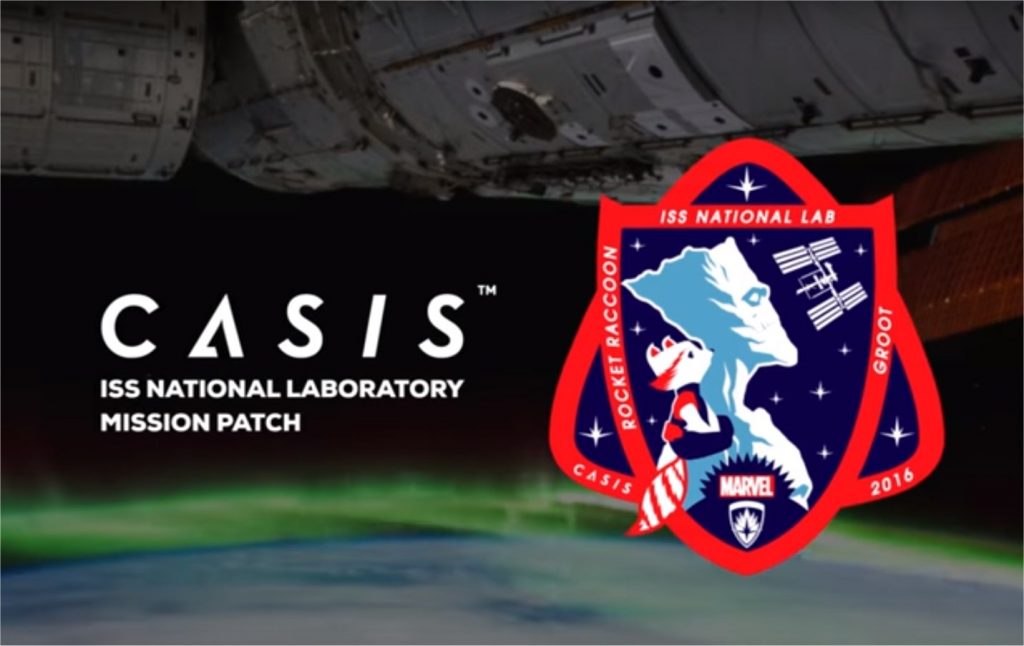
In 2016, CASIS and Marvel partnered to develop a mission patch featuring Rocket and Groot that represented all ISS National Lab investigations from the calendar year. Now the two entities seek to engage and excite American students by providing a truly unique opportunity to send experiments to the space station inspired by Rocket and Groot in far-reaching scientific areas.
The contest is divided into two separate research opportunities: TeamRocket, and Team Groot. Students with an interest in materials sciences, engineering and enabling technology development are encouraged to submit flight concepts through Team Rocket – Who has strong ties to innovation and engineering. Students interested in fundamental biological and regenerative science concepts are encouraged to submit flight proposals under Team Groot – Who is the embodiment of genetics and plant biology.
The student(s) who submit flight concepts through the challenge will be asked to explain their flight experiment proposal, and ultimately how microgravity has the potential to enhance findings that otherwise can be explored on Earth-based laboratory settings. Additionally, students will be asked to consider the size of their proposal experiment. Winning concepts will be housed in a NanoRacks NanoLab (in partnership with education partner DreamUp) and Space Tango’s TangoLab, which are both project facilities that are currently flying aboard the ISS National Lab and provide investigators the ability to access microgravity for a wide variety of research.
“The ability to partner with a brand as recognizable as Marvel to bring awareness, opportunity and excitement to our nation’s students is a great way to bridge the comic book community with the space community to advance Science, Technology, Engineering and Math (STEM) education,” said CASIS Director of Operations and Educational Opportunities Kenneth Shields. “Both Rocket and Groot have characteristics that are researched onboard the ISS daily, and to allow students to propose experiments based on their favorite Super Heroes will be an exciting way to engage our Nation’s youth about STEM principles and the space station.”
To learn more about this challenge, including previous experiments conducted on the ISS, and how to submit a proposal, please visit: www.spacestationexplorers/marvel
About CASIS: The Center for Advancement of Science in Space (CASIS) is the non-profit organization selected to manage the ISS National Laboratory with a focus on enabling a new era of space research to improve life on Earth. In this innovative role, CASIS promotes and brokers a diverse range of research in life sciences, physical sciences, remote sensing, technology development, and education.
Since 2011, the ISS National Lab portfolio has included hundreds of novel research projects spanning multiple scientific disciplines, all with the intention of benefitting life on Earth. Working together with NASA, CASIS aims to advance the nation’s leadership in commercial space, pursue groundbreaking science not possible on Earth, and leverage the space station to inspire the next generation.
About the ISS National Laboratory: In 2005, Congress designated the U.S. portion of the International Space Station as the nation’s newest national laboratory to maximize its use for improving life on Earth, promoting collaboration among diverse users, and advancing STEM education. This unique laboratory environment is available for use by other U.S. government agencies and by academic and private institutions, providing access to the permanent microgravity setting, vantage point in low Earth orbit, and varied environments of space.
 books by Isaac Asimov. Arch Mission co-founder Nova Spivack describes the payload and goals of the organization: