Category Archives: Space Radio

Student and amateur CubeSat news roundup – Feb.11.2020

A sampling of recent articles, press releases, etc. related to student and amateur CubeSat / SmallSat projects and programs (find previous smallsat roundups here):

** Arizona State Univ. Phoenix CubeSat set to deploy from ISS on Feb.12th. The first ASU undergraduate student built satellite, Phoenix will study Urban Heat Islands with observations of the earth using an infrared camera. The team welcomes help in visual tracking and amateur radio contacts.

After deployment, it will take some trial and error before we are able to confirm our spacecraft’s TLEs before we can comfortably predict its orbit. The more people who can help us spot our spacecraft, the sooner our operations phase can officially begin! If you would like to help listen for Phoenix, you can do so with the information below. 

If you think you’ve heard from Phoenix and you are a member of the SatNOGS network, please publish your observation on the Libre Space community page, and tag @sarah_srogers in the post.

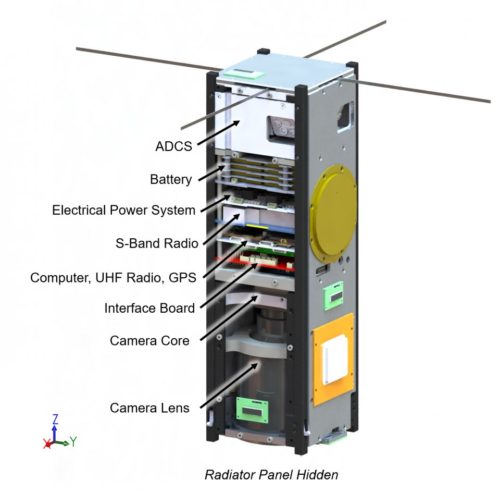
ASU Phoenix Cubesat Diagram
Component diagram of the ASU Phoenix Cubesat.

See also Phoenix CubeSat upcoming deployment – Southgate Amateur Radio News

** Orbital Factory-2 communicates with the Univ. Texas at El Paso team that built the CubeSat in collaboration with Lockheed-Martin. The spacecraft was released into orbit via a Nanoracks deployment system on February 3rd  from the Northrop-Grumman Cygnus cargo vehicle after it departed from the ISS. UTEP Successfully Communicates With Satellite to Cap Monumental Project – Univ. Texas at El Paso

Joel Quintana, Ph.D., research assistant professor of mechanical engineering and a UTEP alumnus, said 25 students from various engineering disciplines worked on the OF-2 project throughout the course of two years. He was with a group of those students at a cSETR research space provided by the City of El Paso near the UTEP campus as they waited on notification from OF-2.

“Seeing their excitement when the first ping came in when they were able to communicate with the satellite as it orbited over El Paso was priceless,” Quintana said. “They leave this program knowing how to design, build and test spacecraft, making them really high in demand and industry experts.”

With this milestone reached, cSETR will now set off on a set of new initiatives including the development of spacecraft capabilities for on-orbit manufacturing, and planetary and lunar exploration. The center will conduct this work concurrently with its primary mission of training El Paso talent and cultivating a space technology workforce.

** AMSAT news on student and amateur CubeSat/smallsat projects: ANS-040 AMSAT News Service Special Bulletin

  • Clayton Coleman, W5PFG, Elected AMSAT President
  • Phoenix CubeSat Upcoming Deployment
  • New ISS Tour Video Goes Inside Cygnus NG-12
  • Changes to AMSAT-NA TLE Distribution
  • HuskySat-1 Gains Enthusiastic Following
  • Robert Bankston, KE4AL, Proposes amsatLink Project
  • 10 US Schools Moved Forward in ARISS Selection Process
  • AMSAT at Yuma (Arizona) Hamfest, 14-15 February 2020
  • Hamfests, Conventions, Maker Faires, and Other Events
  • Upcoming Satellite Operations
  • Satellite Shorts From All Over

General CubeSat/SmallSat info:

** Jeff Dillon – Cubesat to Mars22nd Annual International Mars Society Convention [October 17-20, 2019]

** NASA’s Cube Quest Challenge Crowdsources Ideas for Deep Space CubeSats

Pushing the boundaries of space technology, NASA’s first in-space competition invites the public to design, build and launch small satellites capable of advanced operations near and beyond the Moon. Three winners from the ground competition, completed in 2017, are readying their CubeSats for launch on Artemis I, the first uncrewed flight of NASA’s Space Launch System (SLS) rocket and the Orion spacecraft. Want to get in on the action? Additional teams can compete in the Deep Space Derby and Lunar Derby by securing their own launch opportunity. Explore more about NASA’s Cube Quest Centennial Challenge: http://www.nasa.gov/cubequest

== Amazon Ad ==

Introduction to CubeSat Technology and Subsystem:
Orbit Design, Debris Impact, and Orbital Decay Prediction

Student and amateur CubeSat news roundup – Feb.4.2020

A sampling of recent articles, press releases, etc. related to student and amateur CubeSat / SmallSat projects and programs (find previous smallsat roundups here):

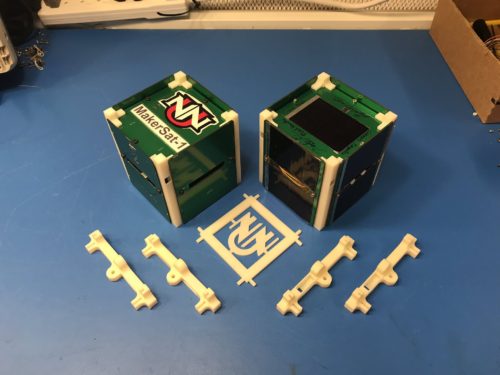
MakerSat-1 components for easy assembly. Credits: and NanoSats.eu

** After ISS departure, Cygnus resupply vehicle releases 14 CubeSats including several built by university groups:

The university satellites include:

A demo of the MakerSat 1 quick assembly:

** AMSAT news on student and amateur CubeSat/smallsat projects: ANS-033 AMSAT News Service Special Bulletin

  • HuskySat-1 Deployed, Telemetry Beacon Active
  • Free Digital Copy of “Getting Started with Amateur Satellites” Now Available for New or Renewing Members
  • Joe Spier, K6WAO, Resigns as AMSAT President
  • Melissa Pore To Be Honored at Hamcation February 2020
  • W1ANT Pro Satellite Tracker Announced
  • AMSAT Argentina Drifting APRS Buoy on 145.825 MHz
  • VUCC Awards-Endorsements for February 2020
  • Upcoming Satellite Operations
  • Upcoming AMSAT Events
  • ARISS News
  • Satellite Shorts from All Over

General CubeSat/SmallSat info:

** Judi Sandrock – Modular Smallsat Teaching Tools with Xinabox – Cold Star Project S02E17

Xinabox co-founder Judi Sandrock from South Africa is on the Cold Star Project with host Jason Kanigan, and we’re talking about their modular smallsat teaching tools.

== Amazon Ad ==

Introduction to CubeSat Technology and Subsystem:
Orbit Design, Debris Impact, and Orbital Decay Prediction

Student and amateur CubeSat news roundup – Feb.1.2020

A sampling of recent articles, press releases, etc. related to student and amateur CubeSat / SmallSat projects and programs (find previous smallsat roundups here):

The KRAKsat CubeSat.

** A review of KRAKsat performance after its deployment from the ISS in June 2019. The satellite was developed by students at the AGH University of Science and Technology  and Jagiellonian University in Kraków, Poland. It was “one of the first Cubesat type satellites in Poland but also the first satellite in the world which uses magnetic liquid, called ferrofluid, for orientation control”. KRAKsat was active in orbit for about two weeks before a cascade of problems led it into an unstoppable reboot cycle.

This slow energy drain continued until the voltage dropped to the point that the power supply shut down, and that’s were things really started going south. Once the satellite shut down the batteries were able to start charging back up, which normally would have been a good thing. But unfortunately the KRAKsat had no mechanism to remain powered down once the voltage climbed back above the shutoff threshold. This caused the satellite to enter into and loop where it would reboot itself as many as 150 times per orbit (approximately 90 minutes).

The paper then goes into a laundry list of other problems that contributed to KRAKsat’s failure. For example, the satellite had redundant radios onboard, but the software on them wasn’t identical. When they needed to switch over to the secondary radio, they found that a glitch in its software meant it was unable to access some portions of the onboard flash storage. The team also identified the lack of a filesystem on the flash storage as another stumbling block; having to pull things out using a pointer and the specific memory address was a cumbersome and time consuming task made all the more difficult by the spacecraft’s deteriorating condition.

** Recognition for the CubeSat projects of the students at The Weiss School (preK-8) in Palm Beach Garderns, Florida:

More about the two Weiss School CubeSats

** AMSAT news on student and amateur CubeSat/smallsat projects: ANS-026 AMSAT News Service Special Bulletin

  • HuskySat-1 With AMSAT VHF/UHF Linear Transponder Planned for Deployment Soon
  • Celebration of 50th Anniversary of Australis-OSCAR 5
  • ARRL to Argue for Continued Access to 3-GHz Spectrum as FCC Sets Comment Deadlines
  • FO-99 (NEXUS) 1st Anniversary Report
  • Amateurs in the News: “96-year-old Amateur Radio operator at Ontario Science Centre speaks with astronaut”
  • Upcoming ARISS Contacts
  • Upcoming AMSAT Events
  • Upcoming Satellite Operations
  • Satellite Shorts From All Over

General CubeSat/SmallSat info:

  • Resources:
    • PolySat – “PolySat is a student run, multidisciplinary independent research lab. We are the CubeSat development team of Cal Poly, an originator and leader for launches in the CubeSat community.”
    • Pauline Faure – Inside the CubeSat Lab at Cal Poly – Cold Star Project

Dr. Pauline Faure, Assistant Professor at California Polytechnic State University’s Aerospace Engineering Department, is on the Cold Star Project with host Jason Kanigan. We’re talking about what it’s like to be a student in Cal Poly’s CubeSat Lab. Dr. Faure has international experience in Europe, Japan and the USA. The lab has completed eight missions in the past year including the bus for Lightsail 2. This is a great interview for space students.

== Amazon Ad ==

Introduction to CubeSat Technology and Subsystem:
Orbit Design, Debris Impact, and Orbital Decay Prediction

Student and amateur CubeSat news roundup – Jan.16.2020

A sampling of recent articles, press releases, etc. related to student and amateur CubeSat / SmallSat projects and programs (find previous smallsat roundups here):

** ACRUX-1 CubeSat was launched by the Melbourne Space Program last summer on a Rocket Lab Electron rocket. The goal of the not-for-profit organization is “to launch the next generation of technology pioneers”. The CubeSat project was three years

… in the making. In June 2019, Melbourne-based volunteer students from various Australian universities across multi-disciplinaries designed, built from scratch and successfully launched a working CubeSat satellite called “ACRUX-1” into lower earth orbit on Rocket Lab’s Electron rocket mission called Make It Rain. This was part of a ridesharing mission through Spaceflight, a launch service provider.

The next project is ACRUX-2

ACRUX-2 is the MSP’s next exciting nano-satellite mission that will be focused on the concept of responsible use of space.

Given the success of ACRUX-1, the MSP team have been given permission to think big! The plan is to build and launch a 3U Cubesat. Currently, the project is in the mission planning stage and the finer details of the mission are still to be finalised – so stay tuned for more info!

Check out the MSP news page for info on the ACRUX-1 and updates on ACRUX-2:

A video about the project: Insights into successfully designing, building and launching a CubeSat

Video of a live stream presentation by Hydrix electronics engineer, Blake Fuller, sharing his journey in helping to design and launch the ACRUX-1 CubeSat. The event was hosted by the Space Association of Australia

** AMSAT news on student and amateur CubeSat/smallsat projects: ANS-012 AMSAT News Service Special Bulletin

  • Virgin Orbit Plans Flight Test of LauncherOne Rocket in February
  • AMSAT Awards Update
  • AMSAT at Cowtown Hamfest – Ft. Worth – January 17-18
  • JARL Announces FO-29 Activation Schedule
  • CAMSAT Says CAS-6 Activation for Amateur Use has been Delayed
  • Telemetry Dashboard Available for SMOG-P and ATL PocketQubes
  • MIT Radio Society W1MX January Lecture Series on “Everything Radio”
  • AMSAT-DL Announces a New QO-100 DownConverter V3d
  • AMSAT South Africa Space Symposium 2020 First Call for Papers
  • Upcoming ARISS Contact Schedule
  • Upcoming Satellite Operations
  • Satellite Shorts From All Over

General CubeSat/SmallSat info:


== Amazon Ad ==

Introduction to CubeSat Technology and Subsystem:
Orbit Design, Debris Impact, and Orbital Decay Prediction

Student and amateur CubeSat news roundup – Jan.6.2020

A sampling of recent articles, press releases, etc. related to student and amateur CubeSat / SmallSat projects and programs (find previous smallsat roundups here):

** Guatemalan university student team’s Quetzal-1 CubeSat heading for the ISS for deployment from the Japanese Kibo module: Guatemalan first CubeSat delivered to JAXA : Experiment – International Space Station – JAXA

On December 3, 2019, the CubeSat “Quetzal-1” designed and built by students and researchers of the Universidad del Valle de Guatemala (University of the Valley of Guatemala) was delivered to the JAXA at Tsukuba Space Center by the satellite development team.

“Quetzal-1” is the Guatemalan first satellite, selected at the second round of the KiboCUBE Programme which has been jointly promoted by JAXA and United Nations Office for Outer Space Affairs (UNOOSA). Since the first orbital deployment of CubeSats from Kibo in 2012, this is the 13th mission of CubeSat deployment using the JEM Small Satellite Orbital Deployer (J-SSOD). Quetzal-1 will be deployed from the ISS Kibo in the spring of 2020.

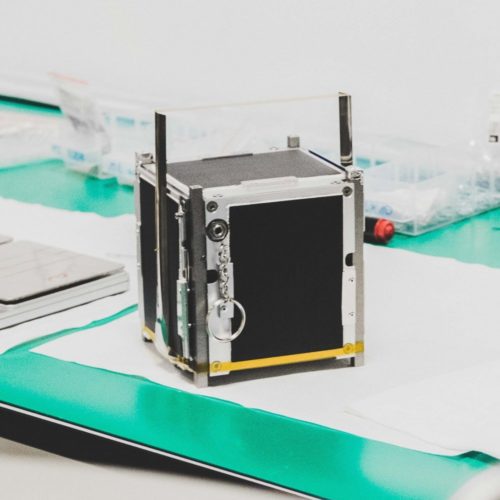
JAXA’s JEM CubeSat deployer on left and the Quetzal-1 CubeSat built by students at the Universidad del Valle de Guatemala. Credit: JAXA

See also  An University Team from Guatemala Selected for Second Round of KiboCUBE- JAXA.

** The UC Irvine CubeSat  team gives an update on their project:

** AMSAT news on student and amateur CubeSat/smallsat projects: ANS-005 AMSAT News Service Special Bulletin

  • AMSAT Member KC9ZJX Receives 2020 Martin Luther King Jr. Award
  • Changes to AMSAT-NA TLE Distribution for January 2, 2020
  • Space Fence nearing operational acceptance by U.S. Air Force
  • VUCC Awards-Endorsements for January 2020
  • Winter Field Day to Include Limited Satellite Operations
  • Hamfests, Conventions, Maker Faires, and Other Events
  • Upcoming Satellite Operations
  • Satellite Shorts From All Over

General CubeSat/SmallSat info:

    • How Tiny Satellites Can Help Us Weather Through Hurricanes | Dr. Kerri Cahoy | TEDxBocaRaton:

Kerri Cahoy is an Associate Professor in Aeronautics and Astronautics at the Massachusetts Institute of Technology. Kerri leads the Space Telecommunications, Astronomy, and Radiation (STAR) Laboratory, and design, builds, launches, and operates shoebox-sized satellites called CubeSats. Kerri works with CubeSats to improve hurricane tracking using an instrument called a microwave radiometer. Her team flies miniature microwave radiometers on CubeSats and has shown that they work as well as larger and more expensive satellites with the Microsized Microwave Atmospheric Satellite (MicroMAS-2A). The next step is to go from only having one CubeSat in orbit to several, so that they can fly over the same location more often, like every fifteen minutes instead of only two or three times a day. Kerri has a Ph.D. and master’s in Electrical Engineering from Stanford University, and a bachelor’s in Electrical Engineering from Cornell University.

Join Spire Aviation from Freightwaves for an introduction to impactful uses of our global ADS-B data to illuminate trends in aircraft operation. In addition, we will also demonstrate our Aviation Weather Product.

== Amazon Ad ==

Introduction to CubeSat Technology and Subsystem:
Orbit Design, Debris Impact, and Orbital Decay Prediction